Coming home to Nez Perce country the Niimíipuu campaign to repatriate their exploited heritage
|
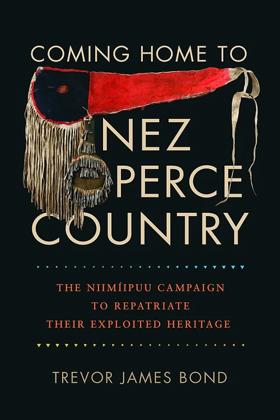
Missionary Henry Spalding shipped two barrels of "Indian curiosities" to Ohio in 1847. The author delves into the story of the exquisite Nez Perce shirts, dresses, baskets, and horse regalia, the tribe's grassroots campaign to restore their exploited cultural heritage, and the ethics of acquiring and selling Native cultural history- In 1847, two barrels of “Indian curiosities” were shipped by missionary Henry Spalding to Dr. Dudley Allen in Kinsman, Ohio. The items inside included exquisite Nez Perce shirts, dresses, baskets, and horse regalia—some decorated with porcupine quills and others with precious dentalium shells and rare elk teeth. Donated to Oberlin College in 1893 and transferred to the Ohio Historical Society (OHS) in 1942, the Spalding-Allen Collection languished in storage until Nez Perce National Historic Park curators rediscovered it in 1976. The OHS loaned most of the artifacts to the National Park Service, where they received conservation treatment and were displayed in climate-controlled cases. Josiah Pinkham, Nez Perce cultural specialist, notes that they embody “the earliest and greatest centralization of ethnographic objects for the Nez Perce people. You don’t have a collection of this size, this age, anywhere else in the world.” Twelve years later, the OHS abruptly recalled the collection, but after public pressure and extended negotiations, agreed to sell the articles to the Nez Perce at their full appraised value of $608,100 and a six-month deadline. The tribe formed the Nez Perce Heritage Quest Alliance and mounted a brilliant grassroots fundraising campaign. One day before the deadline, they met their goal. The author draws on interviews with Nez Perce experts and extensive archival research to tell the Spalding-Allen Collection story. He also examines the ethics of acquiring, bartering, owning, and selling Native cultural history, as Native American, First Nation, and Indigenous communities continue their efforts to restore their exploited cultural heritage from collectors and museums—pieces that are living, breathing, intimately connected to their home region, and inspirational for sustaining cultural traditions.- Provided by publisher |
| Author(s): | Trevor James Bond |
| Document: | Book · Paperback · CIRC [ 0 ] |
| Edition: | 1st Edition |
| Published: | 2021 |
| Physical Description: | 206 pages : illustrations (chiefly color) ; 23 cm |
| Genre: | |
| Contents: | Introduction Part 1 Collecting1. The Nez Perce and the Missionary Collector2. Collecting Native American Material Culture 3. The Spaldings and the AllensPart 2 Away from Home4. The Ohio Years: From an Indian Cabinet of Curiosities to Oberlin College5. A Return to Self-Governance6. Asserting Their Rights7. Raising Their Voices: A Portrait of Two InstitutionsPart 3 The Campaign8. From Loan to Recall9. Appraisals and Greed10. Securing the Collection11. Idaho School Kids, NPR Listeners, and Grunge Bands Do Their Part12. The Nation Rallies to the Nez Perce Side13. Chief Joseph's Shirt at Auction14. Reflections on Spalding and the Spalding-Allen Collection15. Sacred Places and a Private Golf Course16. The International Marketplace for Cultural Heritage17. ConclusionAcknowledgmentsNotesWorks CitedIndex |
| Subjects: | Anthropology Private collections, Cultural property Repatriation, Native American Graves Protection and Repatriation Act (United States), Nez Percé Culture matérielle, Nez Percé Indians Material culture, Patrimoine culturel Restitution, Spalding, Henry Harmon, 1803-1874, Spalding, Henry Harmon, 1803-1874 Ethnological collections, United States |
Circulation
Here are a list of places where this title can be found and the various formats it can be found in.
| Collection | Resource | Available | Edition | Published | Publisher |
|---|---|---|---|---|---|
| This title is not currently available in digital format online. | |||||
Last updated: 2025-01-15