Catalog of British Columbiana and Pacific Northwest Americana
Encyclopedia Cascadia Catalog contains book titles of mostly non-fiction Pacific Northwest Coast of North America Titles (primarially British Columbia, Idaho, Oregon and Washington State) in an easy-to-understand title catalog. If you see a link with this badge ONLINE CIRC it means that there is an online institution that provides free access to that title. In some cases there may be more than one institution hosting the title digitally.
| Catalog Title | Published |
|---|---|
|
Notes on the cosmogony and history of the Squamish Indians of British Columbia by Charles Hill-Tout, Royal Society of Canada 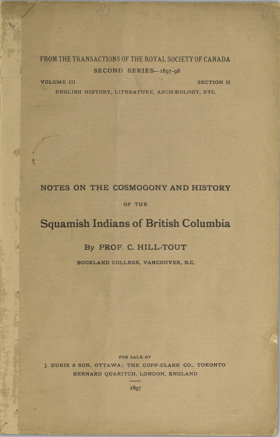
Published in 1897 within the Transactions of the Royal Society of Canada, Charles Hill-Tout’s ethnographic monograph provides an early, detailed record of the oral traditions, creation myths, and social structures of the Squamish (Sḵwx̱wú7mesh) people of British Columbia. A keen insight drawn from the text is how Hill-Tout’s underlying framework of "salvage anthropology"—the assumption that he was documenting a doomed, vanishing race—inadvertently highlights the immense, destructive pressure that colonial assimilation policies were already exerting upon Indigenous communities at the turn of the century. The work meticulously catalogs their ancestral stories, complex cosmology, and historical origins in a dedicated effort to preserve their cultural heritage. Despite being heavily filtered through the paternalistic academic lens of its era, the publication remains a crucial archival resource for understanding the early linguistic and cultural history of the Coast Salish peoples. 85-90 pages 25 cm ONLINE CIRC [ 1 ]
|
1897 |
|
Notes from the century before a journal from British Columbia by Edward Hoagland
|
1982 |
|
Not on a silver platter settling the Willamette Valley and Salem, Oregon, 1858-1904 by Beatrice L. Bliss White 
"The Adams family's new life in Oregon, the Territory and the new state." 498 pages : illustrations ; 24 cm CIRC [ 1 ]
|
1989 |
|
Northwest women an annotated bibliography of sources on the history of Oregon and Washington women, 1787-1970 by Karen J. Blair 
Northwest Women features concise descriptions of more than 700 books and articles that examine the contributions of Washington and Oregon women -- bringing to light generations of scholarship about celebrated and anonymous women, from Native American basket makers to Japanese-Americans interned during World War II x, 134 pages : illustrations ; 28 cm CIRC [ 1 ]
|
1997 |
|
Northwest voices language and culture in the Pacific Northwest by Kristin E. Denham 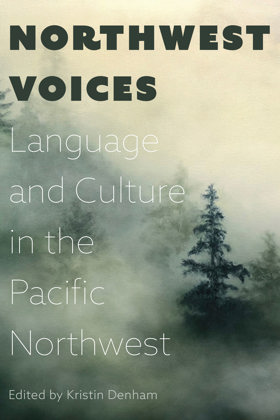
The Pacific Northwest has long been a linguistically rich region, yet there are few books devoted its unique linguistic heritage. The essays collected in Northwest Voices examine the historical background of the Pacific Northwest, the contributions of indigenous languages, the regional legacy of English, and the relationship between our perceptions of people and the languages they speak. Although not often considered a bastion of diversity, linguistic or otherwise, in fact the Pacific Northwest has had a surprising number of influences on the English language, and a great number of other languages have left their mark on the region in a variety of ways. Individual essays examine the region’s linguistic diversity, explore the origins and use of place names, and detail efforts to revive indigenous languages. Written for both general readers and language scholars, Northwest Voices brings together research and perspectives from linguistics, history, and cultural studies to help readers understand how and why the language of our region is of utmost importance to our pasts, presents, and futures. 192 pages : illustrations, maps ; 23 cm CIRC [ 0 ]
|
2019 |
|
Northwest passage the great Columbia River by William Dietrich 
In this new edition of Northwest Passage , Dietrich updates the status of the mighty Columbia River, discussing the health of its salmon runs, the state of its dams, and the river’s growing importance in light of climate change. 448 pages : illustrations, maps ; 23 cm CIRC [ 0 ]
|
2016 |
|
Northwest native arts basic forms by Robert E. Stanley 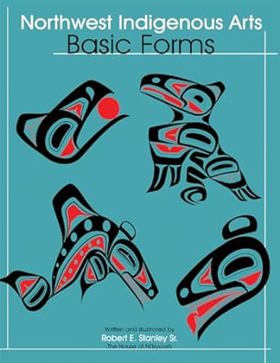
Learn how to draw the Wolf, the Eagle, the Killer Whale and other powerful illustrations of the native arts with help from this step-by-step guide. The second coloring book in the Northwest Indigenous Arts Series. Learn about some of the real and legendary creatures revered by the natives of the West Coast by using these templates to create spectacular pictures. Over 80 instructional drawings of indigenous art. Learn to draw indigenous art! First Nations artist Robert E. Stanley Sr. shares his knowledge and technique in rendering classic northwest native drawings. Now you too, can learn to draw some of the legendary animals of the First Nations tribes, by learning Robert's techniques passed down to him from generation to generation. 64 pages : illustrations (some color) ; 28 cm CIRC [ 1 ]
|
2002 |
|
Northwest history articles from the Pacific Northwesterner Quarterly by Jerome Peltier 
Authored by regional historian Jerome Peltier, Northwest History Articles from the Pacific Northwesterner Quarterly compiles a diverse collection of scholarly essays exploring the colorful characters, military engagements, and economic milestones of the inland Pacific Northwest. The volume draws upon meticulous archival research to examine forgotten pioneer trails, early territorial politics, and the complex interactions between native populations and American settlers across Washington, Idaho, and Montana. Through these rigorously detailed historical vignettes, the text preserves the intricate texture of frontier life beyond the Cascade Mountains. A keen insight drawn from the work is how regional historical journals serve as vital repositories for the micro-histories that grand national narratives routinely overlook; by rescuing obscure local disputes and personal journals from archival obscurity, the collection demonstrates that the true fabric of westward expansion was woven from countless localized conflicts and compromises rather than sweeping political decrees. vxiii, 164 pages : illustrations ; 26 cm CIRC [ 1 ]
|
1996 |
|
Northwest disaster avalanche and fire by Ruby El Hult 
Gives a narrative history of 2 separate disasters that happened in the northwest US in 1910. One was an avalanche that killed 96 people at Wellington, Washington. The other was the huge forest fires of 1910 in Montana and Idaho. The emphasis on the fire portion of this book is on the fires in Idaho 228 S., Taf. Ill. CIRC [ 1 ]
|
1973 |
|
Northwest Coast Indian art an analysis of form by Bill Holm 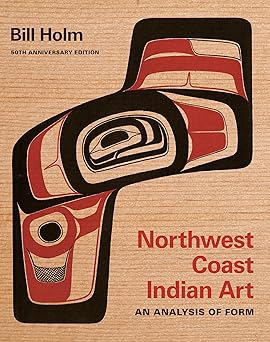
"The masterworks of Northwest Coast Native artists are admired today as among the great achievemments of the world's artists. The painted and carved wooden screens, chests and boxes, rattles, crest hats, and other artworks display the complex and sophisticated northern Northwest Coast style of art that is the visual language used to illustrate inherited crests and tell family stories. In the 1950s Bill Holm, a graduate student of Dr. Erna Gunther, former director of the Burke Museum, began a systematic study of northern Northwest Coast art. In 1965, after studying hundreds of bentwood boxes and chests, he published Northwest Coast Indian Art: An Analysis of Form, a foundational reference on northern Northwest coast Native art. Through his careful studies, Holm described this visual language using terminology that has become part of the established vocabularly that allows us to talk about works like these and understand changes in style both through time and among individual artists' styles. Holm examines how these pieces, although varied in origin, material, size, and purpose, are related to a surprising degree in the organization and form of their two-dimensional surface decoration. Holm presents an incisive analysis of the use of color, line, and texture; the organization of space; and such typical forms as ovoids, eyelids, U forms, and hands and feet. The evidence on which he based his conclusions constitutes a repository of valuable information for all succeeding researchers in the field." --Inside front cover xxvii, 114 pages : illustrations (some color), color map ; 24 cm. CIRC [ 0 ]
|
2015 |
|
Northwest birds in winter by Alan Contreras 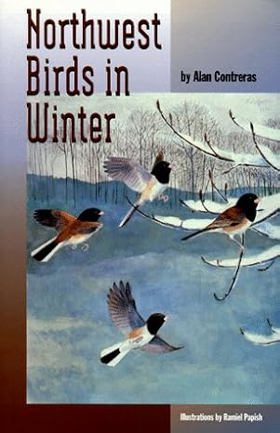
Observing birds in the Pacific Northwest in winter is both challenging and rewarding. Despite the weather and the fact that many birds are not in their brightest plumage, winter birding is growing increasingly popular. Unlike the breeding season, when many birds are territorial and observers must travel widely to see them, in winter many birds concentrate and a field trip can find amazing densities and species variety in a small area. Northwest Birds in Winter is the first guide to the distribution and abundance of birds that winter in Oregon, Washington, Idaho, and southern British Columbia. It offers a summary of winter status and distribution information for the nearly 380 regularly occurring species in the region. Detailed winter range maps and 30-year population trend data are provided for many of the species. In addition, the book includes suggestions as to the best winter birding sites in the Pacific Northwest and photographs of the region's most unusual winter birds. This seasonal guide is an essential addition to the literature on Northwest birds and a valuable new resource for birders in the Pacific Northwest. xxiv, 264 pages : illustrations, maps ; 22 cm CIRC [ 0 ]
|
1997 |
|
Northwest bastion the U.S. Army barracks at Vancouver, 1849-1916 by Ted Van Arsdol, Heritage Trust of Clark County (Wash) 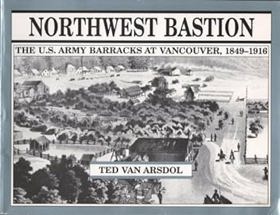
The U.S. Army, obeying the command, arrived May 13, 1849, to establish a military presence north of the Columbia River. The Hudson's Bay Co. moved from the Bastion to Victoria on Vancouver Island and slowly sold or abandoned its holding below the 49th parallel. A new chapter began in American history that year, as the bugle call was heard up and down the Columbia River. The United States extended from "sea to shining sea" and the country began to develop fully its economic, social, and cultural identity. Ch. 1 speaks of the Ninth Regiment stationed at Fort Vancouver and the famous Shanghai drill that was performed daily. The Indian Frontier (1849-1860) is the title of the first chapter. Ch. 2 talks of Volunteers Take Over (1861-1866) because the Civil War was beginning, and an early effect of that war was the removal of most regular Army units. Trained soldiers were required in the East. Some officers resigned and joined the Confede rates. This era at the fort was called the volunteer era. They had to let go of men like Sheridan, Augur, an Ingalls, and a Grant. Ch. 3 is about Pacifying The Natives (1867-1882) and the worry for Indian Tribes in the area. The troops at Vancouver were called out to curb tribes in the surrounding area. By 1882 the last Indian war of the Pacific NW was fought, and transition was under way into a different era. Ch. 4 speaks of Marking Time (1883-1898) because during this time the life of the fort was a round of dinner parties, dances, and theatricals. Ch. 5 is all about preparing troops for overseas duty, hence, Troops For Overseas (1898-1906). They were going "to the front" - artillery troops were leaving for Cuba from Vancouver. And later for the Philippines. Ch. 6 is called, Heading to Armageddon (1907-1916). Germany was exercising an expanding role in Europe at this time. Initially there were no big concerns about building up armed forces. 7 yrs. later this all changed. xii, 110 pages : illustrations, facsimiles, map ; 22 x 28 cm CIRC [ 1 ]
|
1991 |
|
Northern Paiutes of the Malheur high desert reckoning in Oregon Country by David H. Wilson 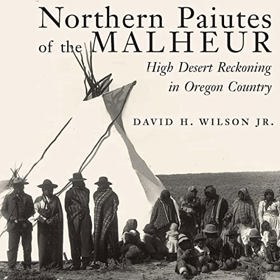
"In Northern Paiutes of the Malheur, David H. Wilson Jr. recounts the epic story of settler colonialism and protracted periods of warfare between Northern Paiutes and White settlers in the Oregon Country from the early 1850's to the Indian New Deal in the 1930s. The engaging narrative of Northern Paiute survivance in the face of 19th-Century war, population decline, and eventual tribal resurgence is a tale of resistance, adaptation, and tribal strategies to retain land and sovereignty"-- Provided by publisher xxiii, 305 pages : illustrations, maps ; 24 cm CIRC [ 0 ]
|
2022 |
|
Northern Idaho resources & opportunities by North Idaho Chamber of Commerce (Issuing body)
Published circa 1922 by the North Idaho Chamber of Commerce, Northern Idaho: Resources & Opportunities functions as a classic example of aggressive civic boosterism designed to lure Eastern capital, agricultural settlers, and corporate investment to the rugged Idaho Panhandle. The promotional pamphlet meticulously inventories the region's vast timber reserves, lucrative mining districts, and fertile river valleys, marketing the Inland Northwest as an untapped utopia of unlimited economic potential. Operating simultaneously as a geographic catalog and a capitalist manifesto, the booklet reflects the organized efforts of local commercial elites to accelerate northern Idaho's transition from a remote frontier into a highly structured, resource-extraction economy. A keen insight drawn from the work is how civic promotional literature operated as a profound mechanism of both ecological and cultural erasure; by exclusively framing the complex natural landscapes of the Panhandle as a blank slate of commodified raw materials awaiting Anglo-American harvest, the Chamber of Commerce actively marketed a vision of the region that structurally erased the ongoing presence and sovereignty of Indigenous peoples such as the Coeur d'Alene and Nez Perce. This rhetorical strategy successfully sanitized the colonial project, presenting the imminent, large-scale industrial logging and mining of the territory not as a devastating ecological rupture or an act of territorial dispossession, but as the righteous, inevitable manifestation of modern progress. 40 pages : illustrations, 1 map ; 23 cm CIRC [ 1 ]
|
1922 |
|
North Pacific temperate rainforests ecology & conservation by Gordon H. Orians , John W. Schoen 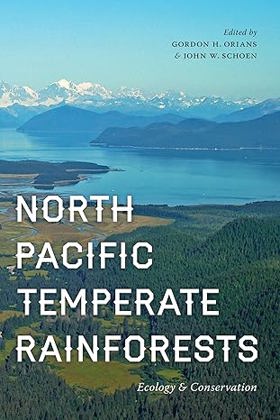
The North Pacific temperate rainforest, stretching from southern Alaska to northern California, is the largest temperate rainforest on earth. This book provides a multidisciplinary overview of key issues important for the management and conservation of the northern portion of this rainforest, located in northern British Columbia and southeastern Alaska. This region encompasses thousands of islands and millions of acres of relatively pristine rainforest, providing an opportunity to compare the ecological functioning of a largely intact forest ecosystem with the highly modified ecosystems that typify most of the world's temperate zone. The book examines the basic processes that drive the dynamic behavior of such ecosystems and considers how managers can use that knowledge to sustainably manage the rainforest and balance ecosystem integrity with human use. Together, the contributors offer a broad understanding of the challenges and opportunities faced by scientists, managers, and conservationists in the northern portion of the North Pacific rainforest that will be of interest to conservation practitioners seeking to balance economic sustainability and biodiversity conservation across the globe. xi, 383 pages : illustrations, maps ; 24 cm CIRC [ 0 ]
|
2013 |
|
North Idaho memories the early years : 1800s-1939 by Couer d'Alene Press, Museum of North Idaho 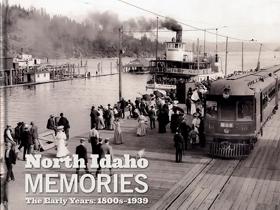
Welcome to North Idaho Memories: The Early Years, 1800s-1939. We hope you enjoy this pictorial expedition down memory lane published as a joint venture by the Coeur d’Alene Press and the Museum of North Idaho. While this book is not intended to be a comprehensive account of North Idaho’s history, it does offer many fascinating snapshots of the people and places that help define our rich heritage. The Museum of North Idaho graciously provided the vast majority of photos and caption information, and noted local historian Robert Singletary penned the chapter introductions after much diligent research. Since 1892, The Press has been an integral part of our region’s history. And for more than half a century, newspapers owned by The Hagadone Corp. throughout North Idaho have been faithfully recording not just the events around us, but insight into the people who shaped those events. This book is an extension of our mission. 128 pages : illustrations (black and white photographs) ; 23 cm CIRC [ 0 ]
|
2012 |
|
North Coast odyssey the Inside Passage from Port Hardy to Prince Rupert by Kenneth Campbell 
Published by Kenneth Campbell, North Coast Odyssey: The Inside Passage from Port Hardy to Prince Rupert captures the dramatic geography and rich maritime heritage of British Columbia's isolated northern marine highway. The book chronicles a coastal voyage through labyrinthine fjords, treacherous narrows, and wind-swept archipelagos, blending nautical adventure with local history, Indigenous lore, and observations of the region's abundant marine wildlife. Through vivid descriptive prose, the author details the weathered cannery towns, lighthouses, and remote settlements that cling to a magnificent yet unforgiving coastline. A keen insight drawn from the work is how the Inside Passage functions as a liquid highway that simultaneously isolates and connects; by relying entirely on maritime transit through a maze of stone and water, coastal inhabitants experience a profound sense of remoteness that can only be bridged by a deep, respectful attunement to the fickle rhythms of the Pacific tides. 202 pages : illustrations, maps, portrait ; 23 cm CIRC [ 1 ]
|
1993 |
|
North Bank claiming a place on the Rogue by Robin Carey 
It was a fly fisher's dream - a cabin on the lower Rogue River in southern Oregon. But for Robin Carey, this new home also meant learning a new home river. In North Bank, Carey explores how new places gradually become familiar. His engaging essays describe how old memories - of family, of certain fish, of other rivers - and fresh experiences - scouting river canyons, volunteering at a fish hatchery, remodeling the cabin - have combined to shape this place on the Rogue into a place he calls home. That process, of creating home ground in a new place, is the subject of North Bank, a rich and poignant look at fly fishing, favorite rivers, and the desire for familiar landscapes 122 pages : illustrations ; 24 cm CIRC [ 1 ]
|
1998 |
|
Nootka Sound and the surrounding waters of Maquinna by Heather Harbord 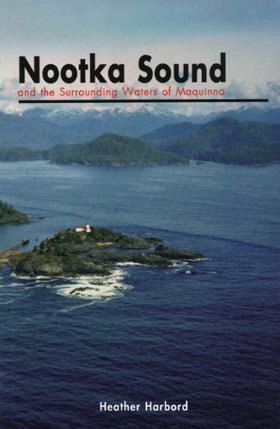
Nootka was the home base of avarice and slaughter as the sea otter was rendered extinct by traders. It gained further infamy with the enslavement of John Jewitt in 1803. Since the author's discovery of Nootka Sound some 15 years ago she has lived off the local waters and been fortunate to witness the return of the sea otter. She shares her experiences with the reader and describes the routes and sights that new visitors can enjoy.-- Backroad jaunts in pristine wilderness 122 pages : illustrations, maps, portraits ; 22 cm CIRC [ 1 ]
|
1996 |
|
|
1949 |
|
Nooksack place names geography, culture, and language by Allan Richardson, Brent Douglas Galloway 
Place names convey a people's relationship to the land, their sense of place. For indigenous peoples, place names can also help to revive endangered languages. This book takes readers on a voyage into the history, language, and culture of the Nooksack people of Washington State and BC as it documents more than 150 places named by elders and mentioned in key historical texts. Descriptions of Nooksack history and naming patterns - with maps, photographs, and linguistic analyses of the place names - give life to a nearly extinct language and illuminate the intertwined relationships of place, culture, language, and identity xviii, 228 pages : illustrations, maps, portraits ; 24 cm. CIRC [ 1 ]
|
2011 |
|
No small potatoes how a family potato salad recipe is fast becoming a billion dollar business by Al Reser, Kerry Tymchuk, Oregon State University Alumni Association 
In 1960 when twenty-five-year-old Al Reser became president of the potato salad manufacturing business which his parents began in their Oregon farmhouse kitchen ten years earlier, the company had a dozen or so part-time employees and annual sales of $300,000. Accountants told Al that the business was a likely candidate for bankruptcy. What the balance sheets didn’t account for, however, was the perseverance, hard work, and ingenuity of Al Reser. Today, Reser’s Fine Foods is one of the most respected and admired companies in the food industry, boasting over 2,600 employees and annual sales approaching one billion dollars. Reser’s salads, side dishes, dips, Mexican food specialties, snack foods, and desserts are familiar sights in kitchens in all fifty states, as well as in Canada and Mexico. The philanthropy of Al and his family has also made the Reser name familiar to America’s college football fans, as the Oregon State University Beavers play their home football games at Reser Stadium. In No Small Potatoes, Al Reser not only shares the inspiring story of his rise from poverty to the top of the business world, he also recounts the tough decisions that spurred Reser’s phenomenal growth, and the values that have guided his steps. It is a book that will inspire anyone who hopes to grow a small business into something bigger, and is proof that small potatoes and big dreams are a perfect recipe for success. 132 pages : illustrations ; 23 cm CIRC [ 0 ]
|
2010 |
|
No place like home the unincorporated towns and communities of Coos County, Oregon by Andie E. Jensen , Bert Dunn , Yvonne-Cher Skye 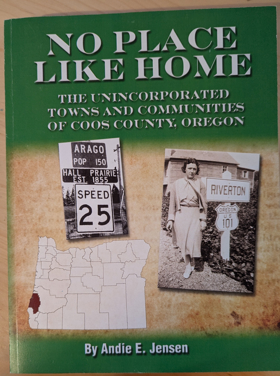
From Aberdeen to Yarrow, NO PLACE LIKE HOME: THE UNINCORPORATED TOWNS AND COMMUNITIES OF COOS COUNTY, OREGON provides the history of the past and present communities of Coos County. Nine chapters provide details of the communities of the Bandon, Coos Bay, Coal, Coos River, Coquille Valley, Isthmus Slough and Beaver Slough, Myrtle Point, North Bend, Powers and Tenmile regions. Additionally, there is a detailed Introduction and a chapter dedicated the Coos and Milluk Native-Americans who possessed the land before the Euro-American settlers. This text relied on several local books of local history by local authors, internet writings, newspaper articles, museum research and personal interviews. There are over 550 photographs, maps, business advertisements and other documents. 322 pages : illustrations, maps ; 28 cm CIRC [ 1 ]
|
2017 |
|
No free man Canada, the Great War, and the enemy alien experience by Bohdan S. Kordan 
Presents the history of approximately 8,000 Canadians, who were imprisoned during the First World War because of their ethnic origins from Germany, Austria-Hungary and other enemy nations xvi, 394 pages : illustrations ; 24 cm CIRC [ 0 ]
|
2016 |
|
Nl̳ekèpmxcín Thompson River Salish speech by Steven M. Egesdal , M. Terry Thompson , Mandy N. Jimmie
Published in 2011 by Steven M. Egesdal, M. Terry Thompson, and Mandy N. Jimmie, Nl̳ekèpmxcín: Thompson River Salish Speech is a comprehensive linguistic and cultural collection documenting the traditional language of the Nlaka'pamux people of British Columbia. The massive volume compiles dozens of authentic narratives, traditional orations, prayers, and conversations gathered from fluent speakers, complete with detailed interlinear morphological glosses and English translations. By bridging raw oral recordings with rigorous academic analysis, the text preserves complex grammatical structures and cultural knowledge directly from the source. A keen insight drawn from the work is how meticulous documentation of this caliber transcends traditional academic linguistics; by capturing spoken oral history in the native tongue, the book functions as a vital, community-rooted lifeline for language revitalization against the pressures of generational attrition xiv, 596 pages : illustrations, map ; 29 cm. CIRC [ 0 ]
|
2011 |