James Colnett 1755-1806
British naval officer and maritime fur trader James Colnett played a central, albeit unintentional, role in shaping the geopolitical destiny of the Pacific Northwest. Arriving at Vancouver Island's Nootka Sound in 1789 aboard the Argonaut with plans to construct a permanent British trading post, he was promptly arrested and his ships seized by the Spanish commander Esteban José Martínez. This dramatic confrontation sparked the Nootka Crisis, an international incident that brought Britain and Spain to the brink of war over territorial control of the Pacific coast. Although Colnett was eventually released, his capture ultimately forced Spain to yield its exclusive claims to the region through the Nootka Conventions, paving the way for joint British and American expansion into the territory.
An officer of the British Royal Navy, an explorer, and a maritime fur trader. He served under James Cook during Cook's second voyage of exploration. Later he led two private trading expeditions that involved collecting sea otter pelts in the Pacific Northwest of North America
Biographical Overview
- Lived from 1755 to 1806
- Born: Nov 1, 1755, England
- Died: Sep 1, 1806, France
Historical Events
- No referenced events linked
Bibliography for James Colnett
A listing of books related by subject
A Voyage to the Northwest Side of America The Journals of James Colnett, 1786-89 by James Colnett, Robert Galois
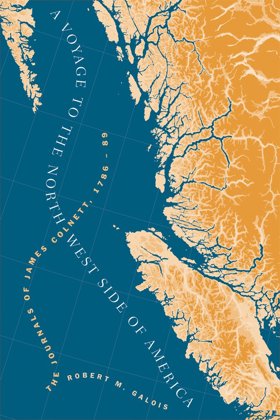
The journal of James Colnett is the last unpublished account of the early maritime fur trade on the Northwest Coast. Between 1786 and 1789, Colnett's expedition traversed the coast from Prince William Sound to the Strait of Juan de Fuca. Its members were the first Europeans to encounter the Tsimshian and the southern Heiltsuk, and the first to land on the southern Queen Charlotte Islands. The journal is reproduced with full scholarly apparatus, as well as extracts from a second journal by Andrew Bracey Taylor, 3rd mate on one of the ships in Colnett's command. Focusing on the expedition's remarkable encounters with the Native peoples of the Northwest Coast, Galois' introductory essay also addresses the geopolitical context of the voyage and the intellectual background that shaped the writing of the journals. This fascinating account gives us a new understanding of early European presence in the Northwest and of Native responses to these developments. It will interest historians, geographers, and ethnographers of the Northwest Coast and beyond.
xiii, 441 pages : illustrations, maps ; 24 cm
Non-circulating [ 1 ]
Entry Details
Related Online Resources
- No external online resources or related links found
Last updated: 2026-09-30