John R. Jewitt 1783-1821
An English armourer who survived the capture of the ship Boston. He spent three years living among the Nuu-chah-nulth people as a slave to Chief Maquinna, writing a famous memoir of his captivity.
Biographical Overview
- Lived from 1783 to 1821
- Born: May 21, 1783, Boston, England
- Died: Jan 7, 1821, Hartford, CT
Historical Events
- No referenced events linked
Bibliography for John R. Jewitt
A listing of books related by subject
The adventures and sufferings of John R. Jewitt, captive of Maquinna by John R. Jewitt, Hilary Stewart
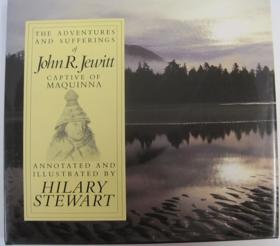
The Adventures and Sufferings of John R. Jewitt, Captive of Maquinna, originally published in 1815 and expertly annotated and illustrated by Hilary Stewart in 1987, is a classic maritime captivity narrative set on the rugged coast of Vancouver Island. The book recounts the harrowing two-year ordeal of an English blacksmith who survived an 1803 attack on his trading ship and was integrated into the Nuu-chah-nulth First Nation under Chief Maquinna. Ultimately, enhanced by Stewart’s detailed ethnographic drawings and historical context, it serves as an invaluable firsthand account of early European contact and traditional Indigenous life in the Pacific Northwest.
192 pages : illustrations ; 24 x 27 cm
Non-circulating [ 1 ]
The adventures and sufferings of John R. Jewitt only survivor of the ship Boston during a captivity of nearly three years among the savages of Nootka Sound : with an account of the manners, mode of living, and religious opinions of the natives. America printed by John R. Jewitt, Richard Alsop
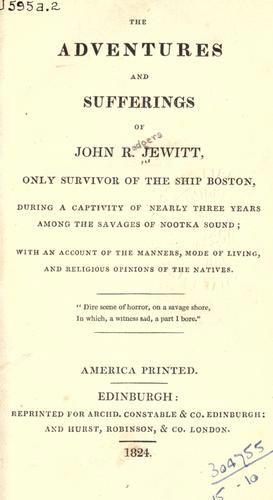
John R. Jewitt and Richard Alsop’s The adventures and sufferings of John R. Jewitt provides a vital firsthand ethnographic and spatial record of early nineteenth-century maritime commerce and sovereign Indigenous power along the exposed outer coast of Vancouver Island. Following the 1803 capture of the American trading ship Boston at Friendly Cove (Yuquot), the narrative documents the sophisticated political economy, hereditary governance, and seasonal riverine-to-maritime migrations of the Mowachaht Nuu-chah-nulth under Chief Maquinna. Jewitt’s survival as an enslaved blacksmith hinged upon a precarious, negotiated interdependence, where his specialized metalworking skills were mobilized to fabricate weapons, harpoons, and trade goods that directly augmented Mowachaht regional prestige and marine resource harvesting. Ultimately, the chronicle captures an era when Indigenous nations maintained absolute maritime and territorial jurisdiction over Pacific coastal waters, dictating trade logistics decades before colonial authorities attempted to superimpose permanent administrative infrastructure onto the region.
1 online resource (iv, 237 pages)
ONLINE Circulation [ 1 ]
Entry Details
Related Online Resources
- No external online resources or related links found
Last updated: 2026-09-29