City of Spokane Spokane County, Washington
Mapped Location
City of Spokane: The mapped location is an approximation and should not be used for navigation or wayfinding.
Information
General information on City of Spokane
- Feature Type: Incorporated
Official, historical, colloquial and alternative toponyms for City of Spokane
A brief list of names that this geographic feature has been named
| Name | Description |
|---|---|
| City of Spokane | Official |
| Spokane | Official |
Origin Notes and History of City of Spokane
References to City of Spokane that document the origin of its place name
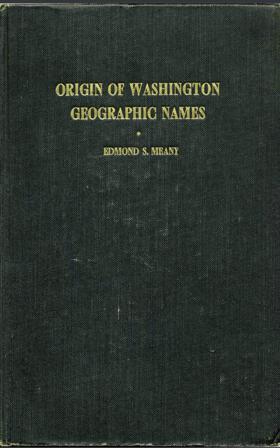
SPOKANE, an Indian word which has attained great geographical use in the State of Washington. A wealthy county wears the name and its capitol, with the same name, is the beautiful and proud "Metropolis of the Inland Empire." It was first applied to the Indians, then to the river and the region it drained. Lewis and Clark, in 1805, wrote of the Indians and the falls, but used the name "Skeetsomish." (Elliott Coues, History of the Lewis and Clark Expedition, Volume III., pages 990-992.) On June 8 and August 11, 1811, David Thompson, of the Northwest Company of Montreal, referred to the Spokane River and Spokane House, while on his map the river is charted as "Skeetshoo." (Narrative, Champlain Society edition, pages 461, 530, and map,) The Spokane House mentioned by Mr. Thompson had been established under his authority in 1810 by Jaco Finlay and Finan McDonald at the junction of the Spokane and the Little Spokane Rivers. A short distance away the Pacific Fur Company (Astorians) built a rival Fort Spokane in 1812. (T. C. Elliott, "Columbia Fur Trade Prior to 1811," in the Washington Historical Quarterly, Volume VI., page 9.) Although the river was then known by another name and although the two trading posts were abandoned, they helped materially to fix the name on the country. The Astorians' post was taken over by the Northwest Company of Montreal during the War of 1812. The Northwest Company was absorbed by the Hudson's Bay Company in 1821 and in 1827 that company established Fort Colville and abandoned Spokane House. In the meantime Hudson's Bay Company men were making use of the name, Spokane River. David Douglas, the botanist, used it in his entry following the date of March 24, 1826. (Journal, 1823-1827, page 62.) John Work used the name on August 2, 1826. ("Journal," in the Washington Historical Quarterly, Volume VI., page 36.) For a time, the upper part of the river, from the junction of what is now Little Spokane River to Lake Coeur d'Alene, was known and charted as Coeur d'Alene River. (Pacific Railroad Reports, 1853, Volume XI, chart 3; Volume XII., Part I., map.) Later the name Spokane River was extended to the lake and the tributary became known as Little Spokane River. The first law to organize Spokane County was approved by the Legislature of Washington Territory on January 29, 1858. The city was incorporated in 1881. (N. W. Durham, Spokane and the Inland Empire, page 362.) For years the official name of the city was Spokane Falls. The meaning of the native Indian word has been much discussed. Rev. Myron Eells, who gave a life-time to missionary work among Indians and whose father was one of the first missionaries to work with the Spokane Indians, says:
"Spokane has some reference to the sun. Ross Cox says that in 1812 he met there the head chief of the Spokane tribe, whose name was Il-lim-spokanee, which he says means 'son of the sun.' Il-li-mi-hum, however, in that language means 'chief,' while skok-salt means 'son.' Illim is evidently a contraction of illimihum, and I think that the name, as given by Ross Cox, means 'chief of the sun people,' not probably the name of the chief, but his title." (In American Anthropologist for January, 1892.)
N. W. Durham says that M. M. Cowley settled on the Kootenai River, near Bonner's Ferry, Idaho, in 1867 and moved to Spokane Valley in 1872. Mr. Cowley says:
"I always thought that the fur traders must have named these Kootenai Siwashes 'The Spokanes.' The Indians called themselves Sinkomahnahs. If the Indians had wanted to call themselves 'children of the sun,' they would have made it Spo-kan-ee; that means 'sun,' and the ordinary Indian greeting, instead of 'good morning' is 'Hust-Spokanee,' which merely means 'good sun'." (Spokane and the Inland Empire, page 643.)
Edward S. Curtis says:
"Etymologically the word seems to be related to spukani, 'sun,' but the force of the reference is not apparent. It may conceivably have originated among a tribe which thus described a related people living 'towards the sun'."
Mr. Curtis is also authority for the statement that the name for Spokane Falls in the Indian language is Stluputqu, meaning 'swift water.' (The North American Indian, Volume VII., pages 56 and 60.) Out of such discussion, it is probable that a locally used definition, 'child of the sun,' will become fixed in speech and literature.
Related Catalog Titles
A Bibliography for City of Spokane, Spokane County, Washington
The Spokane Valley by Florence Boutwell (Compiler)
Compiled by local historian Florence Boutwell, The Spokane Valley chronicles the rapid transformation of Washington's inland plateau from an arid, pine-studded expanse into a flourishing agricultural and suburban community. Drawing on historical photographs, diaries, and local records, the book details the arrival of early homesteaders, the expansion of the Northern Pacific Railway, and the monumental irrigation efforts that turned the valley into a patchwork of prolific apple orchards and dairy farms. The text captures the close-knit social fabric of small pioneer settlements like Dishman, Millwood, and Opportunity as they gradually yielded to suburban expansion. A keen insight drawn from the work is how suburbanization in the Inland Empire inverted traditional migration patterns; unlike coastal regions where cities pushed outward, the Spokane Valley's agricultural hubs were explicitly established along irrigation canals first, forming rural clusters that later coalesced into a modern bedroom community.
3 volumes : illustrations, maps (1 folded) ; 29 cm
CIRC [ 1 ]
Spokane & the Inland Empire an interior Pacific Northwest anthology by David H. Stratton
Essential aspects about the prehistory, history, geography, and architecture of the Inland Pacific Northwest are presented here in one succinct volume. This landmark collection features essays by noted national and regional scholars, such as Donald W. Meinig, Carlos A. Schwantes, Henry Matthews, Clifford E. Trafzer, and Harvey S. Rice. Spokane and the Inland Empire outlines the region's historical geographic systems, Palouse tribal history, characteristics of prehistoric Plateau Indian dwellings, a century of Columbia Plateau agriculture, Spokane's bitter labor disputes that occurred prior to America's entry into World War I, the exceptional architecture of Spokane's Kirtland Cutter, and more. This updated edition includes some new material and has been revised from the original volume published in 1991. Extensive illustrations supplement the text.
xvii, 194 pages : illustrations, maps ; 24 cm
CIRC [ 1 ]
Spokane corona eras & empires by Edmund T. Becher

The historical corona of the "Spokane Country," rife with romance and intrigue, truly shines brightly. It outshines most areas of the world because the Inland Empire was the last section of the North American continent to come under the control and development of a single modern imperialistic nation. This tardy development came about because the Inland Empire was ringed by formidable mountain ranges, difficult to penetrate-The Rocky Mountains to the eat, to the north the Selkirks, the Cascades on the west the the Blue Mountains on the southern rim.Geographical remoteness set the stage for the most interesting historical dramas possible. The isolation retarded the rapid influx of agricultural settlers, elsewhere often a rather prosaic over-night affair, and instead, forced an unusually long and exciting period of human-interest events involving fiercely resisting Indians, rugged explorers, freedom loving fur traders, missionaries, prospectors, miners, soldiers, cattle and sheep raisers, adventurers, surveyors and railroad builders, all of whom, for six or seven decades, were permitted to operate in a wild romantic land, uncluttered with white populations
vii, 319 pages : illustrations, maps, portraits ; 24 cm
CIRC [ 1 ]
Spokane story by Lucile Foster Fargo
Related Online Resources
Spokane Historical
Spokane Historical is a web and mobile platform for telling stories of Spokane and Eastern Washington. Spokane Historical is a project of the Public History program at Eastern Washington University.
WEB LINK
Spokane County
- City of Airway Heights
- Alpha (historical)
- Amber
- Austin
- Babb
- Buckeye
- Chatnwaqhi'łpm Grove
- Chattaroy
- City of Cheney
- Chester
- Chnak'wa'qn Breaks
- Coey
- Colbert
- Country Homes
- Darknell
- Dartford
- Deep Creek
- City of Deer Park
- Denison
- Duncan
- Dynamite
- East Cheney
- East Farms
- East Spokane
- Elk
- Espanola
- Fairchild
- Town of Fairfield
- Fairwood
- Four Lakes
- Freedom
- Freeman
- Geib
- Geiger Heights
- Glenrose
- Grays Landing
- Green Bluff
- Hamann Corner
- Hayford
- Hazard
- Hazelwood
- Highland
- Hite
- Hutton Settlement
- Irwin
- Town of Latah
- City of Liberty Lake
- Lyons
- Marshall
- Mead
- City of Medical Lake
- Mica
- Milan
- City of Millwood
- Moab
- Mock
- Mount Hope
- Ne'sqhwaqhwe (historical)
- Newman Lake
- Nine Mile Falls
- North Pine
- Orchard Avenue
- Orchard Park
- Orchard Prairie
- Otis Orchards
- Parkwater
- Pasadena Park
- Peone
- Plaza
- Pocahontas Bay
- Rahm
- Town of Rockford
- Rodna
- Saxby
- Scribner
- Seven Mile
- Silver Lake
- South Cheney
- City of Spangle
- City of Spokane
- City of Spokane Valley
- Spring Valley
- Stringtown
- T Bridge Corner
- Town and Country
- Tyler
- Valleyford
- Velox
- Vera
- Wallner
- Town of Waverly
- West Fairfield
- Yardley
- Yts'piyits'p Flat
Political Boundaries
Last updated: 2023-10-16