Bayocean Atlantis of Oregon
|
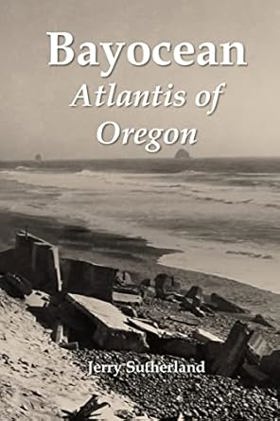
Like Plato's fictional island kingdom, most of Bayocean sank below the sea long ago. The rest lies buried beneath the shore pine, salal, and beach grass covering the four-mile-long spit that protects Tillamook Bay from the Pacific Ocean. This book chronicles the half-century this Oregon resort town existed, tells the stories of people who lived there, and explains its demise. Starting in 1907, urbanites in Oregon's Willamette Valley and across the Pacific Northwest were promised a grand resort where they could enjoy cool, ocean breezes during hot summers. Lots sold quickly at first, especially those along Bayocean's one-hundred-foot-high ridgeline where bay and ocean views were breathtaking. But Tillamook's remote location, an economic downturn, and insufficient financial reserves led to delays, litigation, and receivership. Though never grand, at one point or another Bayocean featured a massive natatorium, three hotels, forty-two rental cabins, a two-story mercantile, two restaurants, three dance halls, an amusement pavilion, and fifty-nine homes. Reed College students ran the resort one summer; a military academy for boys tried but failed another. A commune invigorated the town for a couple of years during the Great Depression, as did Coast Guard war dogs during World War II. These and other episodes in Bayocean's history make it more interesting than most, but the fact that nothing remains makes it matter. Erosion began pulling homes into the sea in the late 1920s and undercut the oceanside natatorium in 1932. As the spit's foredune continued to recede, more homes fell. In November 1952 a storm surge blew its narrow southern section into Tillamook Bay. Four years later, the Army Corps of Engineers built a breakwater to reconnect the island to Cape Meares, destroying what remained of the town in the process. It took geologists, geographers, and oceanographers two decades to figure out that the erosion had been caused by faulty jetty planning rather than natural forces. Their work prevented similar environmental disasters from occurring elsewhere. When Jerry Sutherland heard about Bayocean in 2014, he first read everything written about it. He then searched for additional information, traveling across the United States to look through personal and institutional archives. Along the way, he shared some of his discoveries with the public at www.bayocean.net and with the producers of television documentaries. But in his book, Sutherland shares it all.--Publisher |
| Author(s): | Jerry Sutherland |
| Document: | Book · Paperback · CIRC [ 0 ] |
| Edition: | 1st Edition |
| Published: | 2023 |
| Physical Description: | 282 pages : illustration, maps, portraits ; 23 cm |
| Genre: | local histories |
| Contents: | Introduction : why the Bayocean story matters A grand notion set in motion (1906-1911) Completing Bayocean Park (1911-1914) Litigation wreaks havoc (1914-1918) Receivers run the resort (1918-1926) Locals take control (1926-1932) Erosion escalates (1933-1939) Wartime community (1939-1947) End times (1947-1952) Recovery and resolution (1953-today) Conclusion : who to blame |
| Subjects: | 1900-1999, Bayocean (Or.) History, Beach erosion, Beach erosion Oregon Bayocean History 20th century, Coast changes, Coast changes Oregon History 20th century, Géographie historique, HISTORY / Historical Geography, HISTORY / United States / State & Local / Pacific Northwest (OR, WA), Histoires locales, Historical geography, History, Littoral M |
| Related Places: | Bayocean (historical) , Tillamook County |
Circulation
Here are a list of places where this title can be found and the various formats it can be found in.
| Collection | Resource | Available | Edition | Published | Publisher |
|---|---|---|---|---|---|
| This title is not currently available in digital format online. | |||||
Last updated: 2026-09-12