Marcus Whitman 1802-1847
Marcus Whitman was an American physician and Protestant missionary whose efforts to promote pioneer settlement profoundly and tragically altered the geopolitical landscape of the Pacific Northwest. In 1836, he and his wife, Narcissa, established the Waiilatpu Mission near present-day Walla Walla, Washington, initially aiming to minister to the local Cayuse tribe. However, Whitman increasingly shifted his focus to facilitating American expansion, most notably by traveling back to the East Coast and returning to help guide the "Great Emigration" of 1843. By successfully leading a massive wagon train of nearly 1,000 pioneers, he definitively proved the viability of overland migration via the Oregon Trail, directly hastening the United States' territorial acquisition of the Oregon Country. Tragically, this massive influx of settlers introduced deadly foreign pathogens. In 1847, a severe measles epidemic ravaged the Cayuse population; blaming Whitman, who was acting as a physician, for the disproportionate deaths of their children, a group of tribesmen attacked the mission. The resulting Whitman Massacre—in which Whitman, his wife, and eleven others were killed—immediately ignited the Cayuse War and spurred the United States Congress to officially organize the Oregon Territory in 1848, permanently accelerating federal military intervention and the displacement of Indigenous peoples in the region.
Biographical Overview
- Lived from 1802 to 1847
- Born: Sep 4, 1802, Rushville, NY
- Died: Nov 29, 1847, Walla Walla, WA
Historical Events
- No referenced events linked
Bibliography for Marcus Whitman
A listing of books related by subject
Marcus and Narcissa Whitman, and the opening of old Oregon by Clifford Merrill Drury
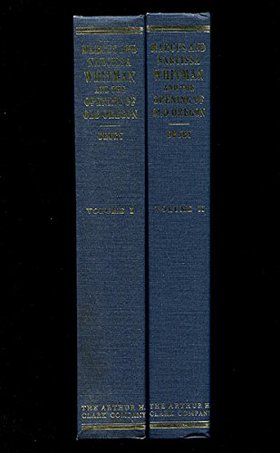
Marcus and Narcissa Whitman, and the opening of old Oregon examines the early Protestant missionary settlement and the grueling transcontinental pioneer migration situated within the arid interior steppes and vital river valleys of the Columbia Plateau. Drury details how the region's formidable interior topography—specifically the imposing overland barrier of the Blue Mountains, the sprawling, sun-baked expanses of the bunchgrass plateau, and the critical, sheltered riparian oasis of the Walla Walla River—strictly dictated the margins of early Euro-American agricultural outposts and established indigenous Cayuse transit. By mapping the strategic placement of the Waiilatpu mission as an isolated agrarian waystation at the exhausted terminus of a massive overland trail, the narrative highlights how this specific riverine geography anchored the volatile collision between surging pioneer overland transit and indigenous seasonal reliance. Ultimately, this biographical and historical record serves as a macro-level spatial history, demonstrating how the immense overland distances, harsh arid plateau constraints, and vital hydrological chokepoints of this Pacific Northwest interior fundamentally shaped the highly contested, pioneer-driven character of the early Oregon territory's opening.
2 volumes : illustrations ; 25 cm
Desiderata
Entry Details
Related Online Resources
- No external online resources or related links found
Last updated: 2026-09-30