Narcissa Whitman 1808-1847
An American missionary in the Oregon Country of what would become the state of Washington. One of the first European-American women to cross the Rocky Mountains in 1836.
Biographical Overview
- Lived from 1808 to 1847
- Died: Nov 29, 1847, Walla Walla, WA
Historical Events
- No referenced events linked
Bibliography for Narcissa Whitman
A listing of books related by subject
The letters of Narcissa Whitman by Narcissa Prentiss Whitman
Authored by pioneer missionary Narcissa Prentiss Whitman, The Letters of Narcissa Whitman compiles her poignant, firsthand correspondence sent to family and friends in New York while living among the Cayuse people at the Waiilatpu Mission in southeastern Washington from 1836 until her tragic death in 1847. The letters document the staggering physical isolation, cultural clashes, and domestic struggles of being among the first white American women to cross the Rocky Mountains and settle in the Pacific Northwest. Through her eloquent and deeply personal accounts, the text offers an unvarnished window into the mindset of evangelical expansionism and the heavy psychological toll of frontier life. A keen insight drawn from the work is how domestic correspondence functioned as an ideological tether for women on the religious frontier; by meticulously chronicling her daily efforts to transplant Victorian domesticity into an Indigenous landscape, Whitman's letters reveal how female missionaries attempted to domesticate foreign geopolitical spaces through the sheer force of written narrative and cultural replication.
266 pages, 1 unnumbered leaf of plates : illustrations, portrait ; 24 cm
Desiderata
Marcus and Narcissa Whitman, and the opening of old Oregon by Clifford Merrill Drury
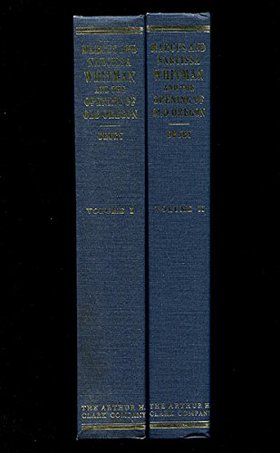
Marcus and Narcissa Whitman, and the opening of old Oregon examines the early Protestant missionary settlement and the grueling transcontinental pioneer migration situated within the arid interior steppes and vital river valleys of the Columbia Plateau. Drury details how the region's formidable interior topography—specifically the imposing overland barrier of the Blue Mountains, the sprawling, sun-baked expanses of the bunchgrass plateau, and the critical, sheltered riparian oasis of the Walla Walla River—strictly dictated the margins of early Euro-American agricultural outposts and established indigenous Cayuse transit. By mapping the strategic placement of the Waiilatpu mission as an isolated agrarian waystation at the exhausted terminus of a massive overland trail, the narrative highlights how this specific riverine geography anchored the volatile collision between surging pioneer overland transit and indigenous seasonal reliance. Ultimately, this biographical and historical record serves as a macro-level spatial history, demonstrating how the immense overland distances, harsh arid plateau constraints, and vital hydrological chokepoints of this Pacific Northwest interior fundamentally shaped the highly contested, pioneer-driven character of the early Oregon territory's opening.
2 volumes : illustrations ; 25 cm
Desiderata
Narcissa Whitman pioneer of Oregon by Jeanette Eaton , Woodi Ishmael (Illustrator), Cairns Collection of American Women Writers

Jeanette Eaton’s Narcissa Whitman pioneer of Oregon explores the profound personal endurance and complex cultural transitions that defined the earliest American homesteading efforts in the inland Pacific Northwest. The narrative illustrates how the demanding environmental realities of this vast landscape—spanning the grueling overland expanse of the Rocky Mountains and the isolated, arid plains of the Walla Walla Valley—required immense resilience and deep daily adaptation from the region's first pioneer families. By detailing Whitman’s foundational work to establish the Waiilatpu mission and the immense logistical challenges of sustaining an agrarian and medical outpost far from established supply lines, the text highlights the sheer determination necessary to cultivate a supportive community on the frontier. Ultimately, the account demonstrates that patiently enduring the profound geographic isolation of the Columbia Plateau and attempting to thoughtfully navigate the delicate, deeply complex cross-cultural intersections with the indigenous Cayuse people were defining elements in the early efforts to bridge the continental divide.
5 unnumbered preliminary leaves of plates, pages 3-318 : illustrations, map ; 23 cm
Non-circulating [ 1 ]
Entry Details
Related Online Resources
- No external online resources or related links found
Last updated: 2026-09-30