Benjamin W. Driggs 1858-1930
Benjamin Woodbury Driggs, Jr. was a pioneer and attorney who played a foundational role in the settlement and civic development of eastern Idaho's Teton Valley. In 1888, after scouting the region for its stock-raising potential, he and his brother Don Carlos Driggs established a small Mormon colony that was subsequently named the town of Driggs in their family's honor. He became a crucial leader for the growing community, utilizing his legal background to handle the village's incorporation in 1910 and serving as the first prosecuting attorney of the newly formed Teton County in 1915. Driggs further cemented his Pacific Northwest legacy by authoring the History of Teton Valley, Idaho (1926), preserving the region's early pioneer narratives before his death in 1930.
Biographical Overview
- Lived from 1858 to 1930
- Born: Oct 31, 1858, Knoxville, Pennsylvania
- Died: Jul 21, 1930, Driggs, Idaho
Historical Events
- No referenced events linked
Bibliography for Benjamin W. Driggs
A listing of books related by subject
History of Teton Valley, Idaho by B.W. Driggs
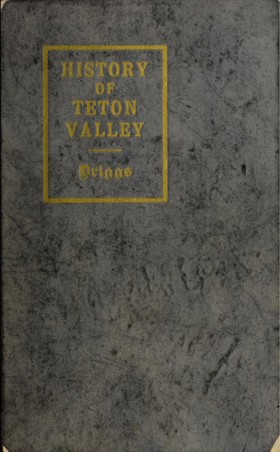
Published in 1926 by local attorney and pioneer descendant Benjamin Woodbury Driggs, History of Teton Valley, Idaho chronicles the transformation of the high-altitude Teton Basin—historically known as Pierre's Hole—from a seasonal Indigenous gathering ground and legendary fur-trade rendezvous into a settled agricultural community. The narrative explicitly bridges two distinct eras: the romanticized, lawless epoch of early mountain men and the subsequent, highly organized colonization of the valley by Mormon (LDS) pioneers. Driggs meticulously records the foundational efforts of these early agrarian settlers, emphasizing their communal resilience in taming a harsh, isolated environment and establishing permanent civic and religious institutions on the eastern edge of Idaho.
A keen insight drawn from the work is how the narrative strategically bifurcates the frontier experience to legitimize permanent settler occupation; by romanticizing the early fur trade era as a chaotic, adventurous prelude dominated by transient white trappers and shifting Native American tribes, Driggs effectively frames the subsequent arrival of Mormon pioneers not as an invasion, but as the valley's inevitable maturation into civil order. This historiographical maneuver subtly consigns Indigenous peoples to a closed chapter of frontier antiquity, ensuring that the eventual agricultural enclosure of the Teton Valley is celebrated as the righteous, divinely ordained culmination of American progress rather than an ongoing act of territorial dispossession.
227 pages, 9 unnumbered leaves of plates
ONLINE Circulation [ 1 ]
Entry Details
Related Online Resources
- No external online resources or related links found
Last updated: 2026-09-30