Sacagawea 1788-1812
Essential to the success of the Lewis and Clark expedition; her knowledge of the terrain and presence as a translator were critical.
Born into the Lemhi Shoshone nation and later captured and assimilated into a Hidatsa community, Sacagawea (1788–1812) served as a vital cultural and linguistic bridge during the Lewis and Clark Expedition. As the Corps of Discovery navigated the formidable terrain toward the Pacific Northwest coast, she utilized her deep environmental knowledge to identify essential food resources and recognize established overland trails. Her presence alongside her infant son served as a universal symbol of peace, allowing the explorers to forge critical interdependent alliances with interior indigenous nations to secure the horses necessary to cross the treacherous Bitterroot Mountains. Ultimately, her navigational instincts and translation skills proved indispensable in physically sustaining the expedition as they mapped early American routes onto the ancient geographic networks of the West.
Biographical Overview
- Lived from 1788 to 1812
- Born: Jan 1, 1788, near Salmon, ID
- Died: Dec 20, 1812, Fort Manuel Lisa, SD
Historical Events
- No referenced events linked
Bibliography for Sacagawea
A listing of books related by subject
Sacajawea's people the Lemhi Shoshones and the Salmon River country by John W. W. Mann
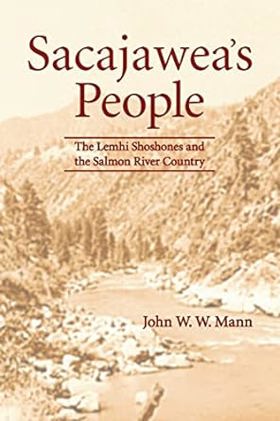
"John W.W. Mann offers an absorbing and richly detailed look at the life of Sacajawea's people before their first contact with non-Natives, their encounter with the Lewis and Clark Expedition in the early nineteenth century, and their subsequent confinement to a reservation in northern Idaho near the town of Salmon. He follows the Lemhis from the liquidation of their reservation in 1907 to their forced union with the Shoshone-Bannock tribes of the Fort Hall Reservation to the south. He describes how for the past century, surrounded by more populous and powerful Native tribes, the Lemhis have fought to preserve their political, economic, and cultural integrity. His compelling and informative account should help to bring Sacajawea's people out of the long shadow of history and restore them to their rightful place in the American story."--Jacket
1 online resource (xxiii, 258 pages) : illustrations, maps
Non-circulating [ 1 ]
Lewis & Clark in Lemhi County, Idaho August 12-September 4, 1805 by Richard R. Smith

Published by historian Richard R. Smith, Lewis & Clark in Lemhi County, Idaho: August 12-September 4, 1805 meticulously chronicles the Corps of Discovery's harrowing and pivotal traverse through the rugged continental divide. The book details the expedition's difficult encounters with the geography and the Agaidika (Salmon Eater) Shoshone people, highlighting the critical diplomatic negotiations and horse trades that ultimately enabled their passage over the Bitterroot Mountains. Drawing on journal entries, cartographic records, and local terrain analysis, the text traces the exact footpaths and campsites used during this grueling three-week window. A keen insight drawn from the work is how the expedition’s survival in the Salmon River country completely inverted the explorers' geographic expectations; instead of discovering an easy water route across the continent, Lewis and Clark were forced to humble themselves before indigenous mountain pathways, realizing that the West could only be crossed through collaborative reliance on native survival expertise.
v, 56, xi pages : color illustrations, maps ; 28 cm
Non-circulating [ 1 ]
The Lemhi Sacajawea's people by Brigham D. Madsen

Native American historian Brigham D. Madsen tells the story of the Mountain Shoshoni culture from the fateful day in 1805 when Chief Ca-me-ah-wait met Lewis and Clark to 1907 when the Lemhi moved to the Fort Hall Reservation.
214 pages : illustrations, maps ; 23 cm
Non-circulating [ 1 ]
Entry Details
Related Online Resources
- No external online resources or related links found
Last updated: 2026-09-29