Methow Okanogan County, Washington
Mapped Location
Methow: The mapped location is an approximation and should not be used for navigation or wayfinding.
Information
General information on Methow
- Feature Type: Place
Official, historical, colloquial and alternative toponyms for Methow
A brief list of names that this geographic feature has been named
| Name | Description |
|---|---|
| Methow | Official |
Origin Notes and History of Methow
References to Methow that document the origin of its place name
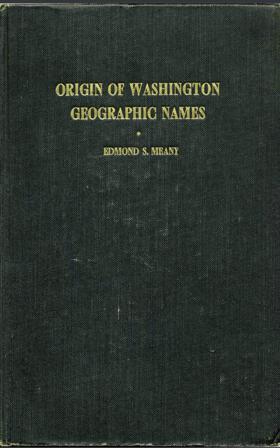
METHOW, the name of a town in Okanogan County, of a river flowing through that county into the Columbia River, and of rapids in the latter river below the mouth of Methow River. The tribe of Indians known as Methow formerly living on lands between that river and Lake Chelan now has some survivors on the Colville Reservation. (Bureau of American Ethnology, Handbook of American Indians, Volume I., page 850.) The Wilkes Expedition, 1841, gave the name "Barrier River." (Hydrography, Volume XXIII., Atlas, chart 67.) Alexander Ross says the Indian name for the river was "Buttle-mule-emauch." (Oregon Settlers, page 150.) As early as July 6, 1811, David Thompson wrote the name "Smeetheowe" for the tribe he met there. (Oregon Historical Society Quarterly, Volume XV., page 51.) In 1853, George Gibbs called the stream Methow or Barrier River. (Pacific Railroad Reports, Volume I., page 412.) The name as now used has passed through many forms of spelling.
Related Catalog Titles
A Bibliography for Methow, Okanogan County, Washington
A view of the Methow from Moccasin Lake Ranch by James C. Pigott
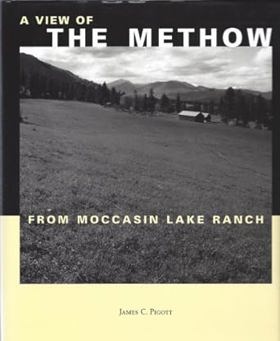
Published in local editions, James C. Pigott’s A View of the Methow from Moccasin Lake Ranch offers an evocative reflection on the landscape, history, and stewardship of Washington’s rugged Methow Valley. The book weaves personal memoir with regional lore, capturing the distinct seasonal rhythms of high-desert ranching, wildlife conservation, and the quiet isolation of the north-central Cascades. Through detailed observations of the local terrain and watershed, Pigott chronicles the delicate balance required to live harmoniously within a stunning yet demanding environment. A keen insight drawn from the text is how multi-generational ranching memoirs serve as intimate ecological barometers; by documenting decades of subtle shifts in local water availability and wildlife patterns, the author reveals that true land stewardship requires a profound, lived surrender to the cyclical limits of the natural world rather than attempts to conquer it.
167 pages : color illustrations, maps ; 25 cm
CIRC [ 1 ]
The smiling country a history of the Methow Valley by Sally Portman

Published by local presses, Sally Portman’s The Smiling Country: A History of the Methow Valley chronicles the colorful evolution of north-central Washington's dramatic river valley from its indigenous roots to its modern incarnation as a recreational haven. The book details the arduous lives of early homesteaders, gold miners, stockmen, and orchardists who carved a living out of a geographically isolated landscape defined by scorching summers and brutal winters. Through extensive oral histories and rich archival imagery, the text preserves the rugged character of communities like Winthrop and Twisp as they transitioned from extractive resource economies to tourism. A keen insight drawn from the work is how the valley's iconic moniker, "the smiling country," serves as a historical mask for the harsh economic realities of frontier survival; it reflects an enduring human impulse to romanticize an unforgiving high-desert ecosystem that frequently tested the limits of those who tried to tame it.
381 pages : illustrations ; 22 cm
CIRC [ 1 ]
Okanogan County
- Aeneas
- Anglin
- Barker
- Belvedere
- Bodie
- City of Brewster
- Brown Lake
- Carlton
- Cherokee
- Chesaw
- Chillowist
- Chopaka
- Chopaka
- Town of Conconully
- Cordell
- Town of Coulee Dam
- Disautel
- Ellisforde
- Town of Elmer City
- Enterprise
- Epley (historical)
- Gilbert
- Havillah
- Janis
- Keystone
- Koontzville
- Lone Pine
- Loomis
- Loop Loop (historical)
- Malott
- Mason City (historical)
- Mazama
- Methow
- Molson
- Monse
- Mowich Illahee
- Town of Nespelem
- Nighthawk
- North Omak
- City of Okanogan
- Old Toroda
- Old Wauconda
- Olema
- City of Omak
- Ophir
- City of Oroville
- Paradise Hill
- City of Pateros
- Town of Riverside
- Ruby
- Seatons Grove
- Starr
- Synarep
- Thompson (historical)
- City of Tonasket
- Town of Twisp
- Vanderpool Crossing
- Virginia City (historical)
- Wakefield
- Wauconda
- Town of Winthrop
Political Boundaries
Last updated: 2017-03-04