Lake Chelan Feature
Mapped Location
Lake Chelan: The mapped location is an approximation and should not be used for navigation or wayfinding.
Information
General information on Lake Chelan
- Feature Type: Feature
Official, historical, colloquial and alternative toponyms for Lake Chelan
A brief list of names that this geographic feature has been named
| Name | Description |
|---|---|
| Lake Chelan | Official |
Origin Notes and History of Lake Chelan
References to Lake Chelan that document the origin of its place name
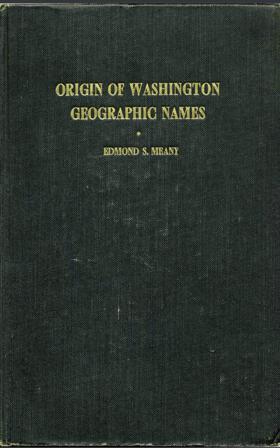
CHELAN. This is an Indian word to which two meanings have been given. Henry Gannett, of the United States Geological Survey, says it means "deep water." (Place Names in the United States.) John B. Wapato, grandson of Chief John Wapato, says he learned from his grandfather that the word means "land of bubbling water." (L. B. Sines, in Names MSS., Letter 860.) Probably the first time it was reduced to writing was by Alexander Ross, 1810-1813, and he showed its true Indian character by the spelling as follows: "passed a small but rapid stream, called by the native Tsill-ane, which descended over the rocks in white broken sheets." (Oregon Settlers, page 149.) The name has been given a wide geographic use. A long narrow lake extends from near the Columbia River for sixty miles pack into the Cascade Mountains. For a long time it was said to be "bottomless" in depth. Its depth is now known to extend below sea level. As applied to this lake the name might well mean "deep water." The lake drains into the Columbia River through the swift Chelan River in which are the Chelan Falls, and at the southern end of the lake is the town of Chelan. Chelan Butte has a height of 8892 feet, and overlooking the deep waters is a rugged ridge known as Chelan Mountains. In 1899 a new county was planned to be known as Wenatchee. The law was approved on March 18 of that year, but the name of the new county had been changed to Chelan.
LAKE CHELAN, extending from near the Columbia River northwestward into the Cascade Mountains. Captain (later General) George B. McClellan was at the lake on September 25, 1853, and refers to it as Lake Chelann. (Pacific Railroad Reports, Volume I., pages 377-389.) For a discussion of the name, see Chelan,
Related Catalog Titles
A Bibliography for Lake Chelan, Feature
"We left because the creek went dry" the people of the First Creek District, Lake Chelan, Washington, 1888-1932 by Elizabeth Watson Perry
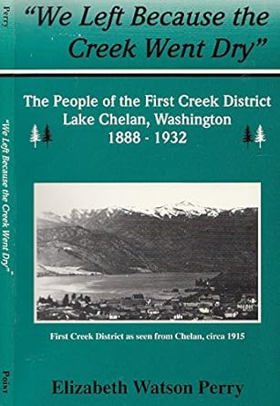
Authored by Elizabeth Watson Perry, "We Left Because the Creek Went Dry": The People of the First Creek District, Lake Chelan, Washington, 1888-1932 chronicles the rise and abandonment of an isolated homesteading community on the arid shores of north-central Washington. The book draws on diaries, family photographs, and oral histories to detail the immense physical and economic toll placed on pioneers attempting to farm steep, water-scarce canyon benches. Through intimate accounts of daily struggle, the text exposes the severe environmental limits that ultimately forced settlers to abandon their hard-won acreage. A keen insight drawn from the work is how agricultural boosterism recklessly ignored ecological realities; by romanticizing the arid Pacific Northwest as an endless land of agrarian promise, promotional literature lured families into fragile microclimates where a single vanishing water source could entirely erase a generation of backbreaking labor.
143 pages : illustrations, map ; 23 cm
CIRC [ 1 ]
A history of central Washington including the famous Wenatchee, Entiat, Chelan and the Columbia Valleys with an index and eighty scenic-historical illustrations by Lindley M. Hull

Published in 1929 and compiled by Lindley M. Hull for the Pioneer Association of Central Washington, A History of Central Washington is a massive, 624-page regional chronicle detailing the settlement of the Wenatchee, Entiat, Chelan, and Columbia valleys. Divided into two primary sections—"The Story of Pioneer Settlements" and "The Development Period"—the volume combines eighty scenic-historical illustrations with exhaustive biographical sketches of early white homesteaders. The text meticulously documents the physical transformation of the region, emphasizing the construction of irrigation ditches, the establishment of commercial orchards, and the founding of local civic institutions. Like many pioneer-driven histories of the era, the book operates as a triumphalist civic monument celebrating the rugged endurance and capitalist successes of the region's Anglo-American founders.
A keen insight drawn from the work is how the narrative conceptually weaponizes agricultural "development" to morally legitimize colonial displacement. By framing the region's history fundamentally around the engineering of irrigation canals and the cultivation of profitable cash crops, Hull’s compilation equates valid land ownership exclusively with industrial-scale agrarian capitalism. This historiographical maneuver effectively reduces the original Indigenous inhabitants and their complex, pre-existing territorial claims to mere background frontier trivia, occasionally noting them only as transient obstacles or linguistic curiosities. Consequently, the aggressive ecological enclosure and demographic replacement of the region is structurally sanitized, demanding that readers view the settlement of central Washington not as an act of territorial conquest, but as the righteous, inevitable unlocking of a previously "wasted" landscape's true economic destiny.
624 pages : illustrations ; 23 cm
CIRC [ 1 ]
Last updated: 2017-07-02