Skagit Valley Feature
Mapped Location
Skagit Valley: The mapped location is an approximation and should not be used for navigation or wayfinding.
Information
General information on Skagit Valley
- Feature Type: Feature
Official, historical, colloquial and alternative toponyms for Skagit Valley
A brief list of names that this geographic feature has been named
| Name | Description |
|---|---|
| Skagit Valley | Official |
Origin Notes and History of Skagit Valley
References to Skagit Valley that document the origin of its place name
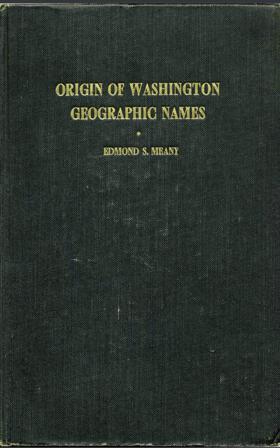
SKAGIT, the name of an indian tribe which lived on the river now known by the same name, The tribe also occupied part of Whidbey Island. As in the case of other Indian names there have been many forms of the word used. (Handbook of American Indians, Volume II., page 585.) John Work, of the Hudson's Bay Company, in 1824, referred to Scaadchet Bay. (Washington Historical Quarterly, July, 1912, page 225.) George Gibbs used the present form of the word on March 1, 1854. (Pacific Railroad Reports, Volume I., page 471.) The same form is used in the treaty by which the Skagits ceded their lands, January 22, 1855. The County bearing this name was created by the Legislature of the Territory of Washington on November 28, 1883. At the southern extremity of Whidbey Island is a bluff called Scatchet Head, another spelling of the same word. Near the northern extremity of the same island are Skagit Bay and Skagit Island. Skagit City began with Barker's trading post in 1869. The townsite was platted on the homestead of W. H. McAlpine. "It is no longer much of a place." (History of Skagit and Snohomish Counties, page 246.) The Wilkes Expedition, 1841, charted the island as "Skait Island" (Hydrography, Volume XXIII., Atlas, chart 90.)
Related Catalog Titles
A Bibliography for Skagit Valley, Feature
Letters from Kik-I-allus a farmer's perspective by Glen Johnson
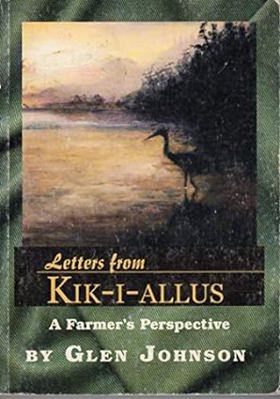
Published in local editions by Glen Johnson, Letters from Kik-I-allus: A Farmer's Perspective collects insightful essays and correspondence reflecting on rural life, environmental stewardship, and local history near the Skagit River delta. Written from the perspective of a working farmer tied to the ancestral homeland known as Kik-I-allus, the book chronicles the daily rhythms of agriculture, the seasonal cycles of the Pacific Northwest, and the mounting pressures of modern development on traditional farmlands. Through evocative prose, Johnson bridges personal agronomic experience with a deep-seated reverence for the surrounding watershed and its indigenous legacy. A keen insight drawn from the text is how the traditional agrarian viewpoint acts as an acute ecological barometer; by documenting the subtle, creeping degradation of local soils and water tables firsthand, the author reveals that the survival of family farming is inextricably bound to the broader health of the regional ecosystem.
246 pages : illustrations, map ; 18 cm
CIRC [ 1 ]
Last updated: 2017-06-29