Grays Harbor Feature
Mapped Location
Grays Harbor: The mapped location is an approximation and should not be used for navigation or wayfinding.
Information
General information on Grays Harbor
- Feature Type: Feature
Official, historical, colloquial and alternative toponyms for Grays Harbor
A brief list of names that this geographic feature has been named
| Name | Description |
|---|---|
| Grays Harbor | Official |
A Selected Bibliography of Grays Harbor, Feature
A compilation of essential readings detailing the history, geography, and culture of the region.
The river pioneers early days on Grays Harbor by Edwin Van Syckle, David A. James
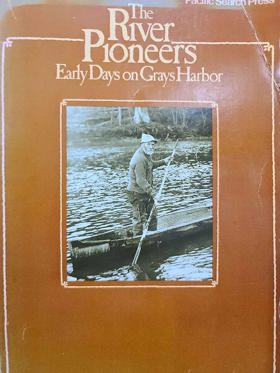
History of Grays Harbor, its coastal towns and river valleys in Grays Harbor County, Washington from 1775-1948. Narrative insights into the lives of the native Indians, early explorers and the pioneers who settled the valleys and established towns such as Aberdeen, Hoquiam, Cosmopolis and Grays Harbor City
423 pages, 48 unnumbered pages of plates : illustrations ; 24 cm
Non-circulating [ 1 ]
Grays Harbor, 1885-1913 by Robert A. Weinstein

Grays Harbor, 1885-1913 captures the explosive industrial transformation of a massive, rain-soaked estuarine basin situated along Washington’s rugged Pacific coast. Weinstein details how the region’s profound geographic convergence—where the Chehalis River and numerous coastal tributaries empty into a sprawling, sheltered deepwater harbor—created an unrivaled logistical hub for extracting the immense wealth of the surrounding old-growth timberlands. By mapping the rise of the twin mill towns of Aberdeen and Hoquiam, the narrative illustrates how the physical isolation of this dense coastal rainforest forced early timber operations to rely entirely on a massive fleet of lumber schooners that continuously braved the treacherous, shifting sandbars of the harbor entrance. Ultimately, this heavily photographic record serves as a localized environmental and economic history, demonstrating how the sheer scale of both the maritime topography and the towering Pacific seaboard forests fundamentally shaped one of the most intense periods of resource extraction in the Pacific Northwest.
190 pages : illustrations, map, portraits ; 25 cm
Non-circulating [ 1 ]
Last updated: 2015-06-23