Catalog of British Columbiana and Pacific Northwest Americana
Encyclopedia Cascadia Catalog contains book titles of mostly non-fiction Pacific Northwest Coast of North America Titles (primarially British Columbia, Idaho, Oregon and Washington State) in an easy-to-understand title catalog. If you see a link with this badge ONLINE CIRC it means that there is an online institution that provides free access to that title. In some cases there may be more than one institution hosting the title digitally.
| Catalog Title | Published |
|---|---|
|
British Columbia a new historical atlas by Derek Hayes 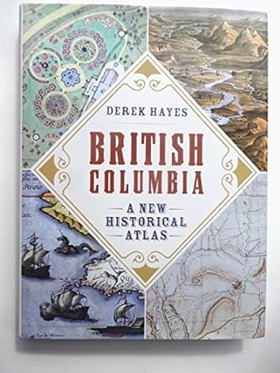
British Columbia was among the last temperate places on Earth to appear on the map of the world, a function of its position-remote from Europe. When gold was finally discovered in quantity in 1858, leading to the gold rush that created British Columbia as a new colony, the interior was mostly unknown except for the routes blazed by the fur traders seeking the "soft gold" that characterized the exploration of much of Canada. The efforts of the explorers, the fur traders, the gold seekers, and the railway builders all involved the production of maps that showed what they had found, the routes and the settlements, the plans and the strategies that developed the province into what we know today. In British Columbia: A New Historical Atlas, acclaimed map historian Derek Hayes has curated nearly a thousand maps the majority of which have never been published before along with concise text, and extensive captions. Added to numerous other illustrations, the result is a geographically visual history, a unique and fascinating viewpoint on our province's past. 1 atlas (368 pages) : illustrations (some color), maps (some color) ; 35 cm CIRC [ 1 ]
|
2012 |
|
Before the spud Indians, buckaroos, and sheepherders in pioneer Idaho by Evan E. Filby 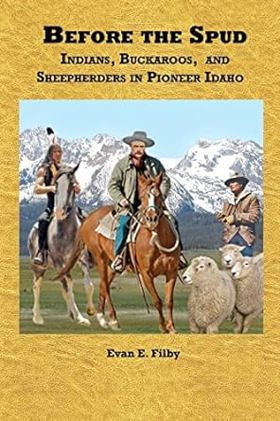
According to scholars, the Shoshone, Bannock, and Nez Percés Indians of Idaho obtained horses roughly three centuries ago. That makes them the "first stockmen of Idaho," although we know little of that history. Still, when the Lewis & Clark expedition visited the future state in 1805 and 1806, they met bands of skill horseback hunters and warriors, who owned vast herds of fine horses. Before the Spud details the history of Idaho stock raising during the century that followed that meeting iii, 245 pages : illustrations ; 24 cm CIRC [ 1 ]
|
2012 |
|
Lake Chelan the greatest lake in the world by John Fahey 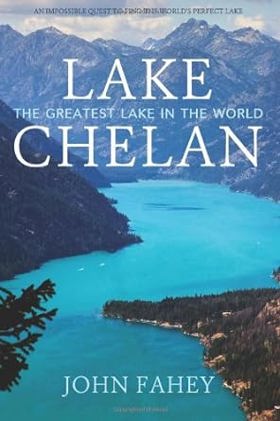
John Fahey fell in love with Lake Chelan at an early age and became convinced it is the world's greatest lake. As an adult, he set out to prove it. What unfolds is a story of remarkable endurance through extensive travel, exhaustive research, and countless baffled looks from friends and family. By foot, barstool, and paraglider, John explored Lake Chelan’s complex drainage system, from the cozy towns and vineyards to the glaciered peaks, and all the diverse microclimates in between. He determined to discover how this incredible body of water compared to others around the globe. 243 pages ; 23 cm CIRC [ 1 ]
|
2012 |
|
A river lost the life and death of the Columbia by Blaine Harden 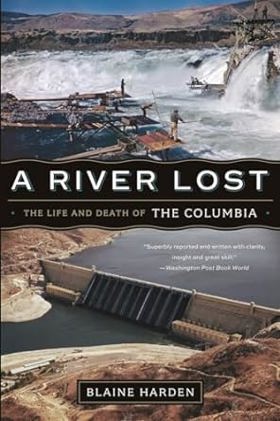
This is a book about how well-intentioned Americans dammed up the Columbia, "Great River of the West," fulfilling dreams of cheap electricity and gardens flourishing in the desert. It is also a narrative of exploitation: of Native Americans, of endangered salmon, of nuclear waste, and of a river - once wild - tamed to puddled remains. Harden's story is a journey of rediscovery. His home town, Moses Lake, Washington, once bone dry, could not have existed without gargantuan irrigation schemes. His father, a Depression migrant trained as a welder, helped build dams - including Grand Coulee - and later worked at the secret Hanford plutonium plant. Now he and his neighbors, who had thought of themselves as patriots, stood accused of killing the river. As Blaine Harden traveled the thousand miles of the Columbia - by barge, by car, and sometimes on foot - his own past seemed both foreign and familiar. He met rugged individualists (albeit with government subsidies), fervent environmentalists, and Native Americans reduced to consuming canned salmon. He also encountered a newly ascendant political force whose more subtle agenda was to preserve and conserve for its own pleasure and recreation 286 pages : maps ; 21 cm CIRC [ 1 ]
|
2012 |
|
Alpha the classic hills of Alpha Prairie, Washington by Victor J. Kucera 
A history of the area from about 14,000 years ago through the present day. The book also presents a chronicle of the early farm community Alpha Prairie, Washington. Many black and white illustrations and some maps. Also includes an events timeline, endnotes, bibliography and an index. xxiv, 480 pages : illustrations, maps ; 24 cm CIRC [ 1 ]
|
2012 |
|
Voyage to the Northwest Coast of America, 1792 Juan Francisco de la Bodega y Quadra and the Nootka Sound controversy by Juan de la Bodega y Cuadra, Freeman Tovell, Robin Inglis, Iris Wilson Engstrand 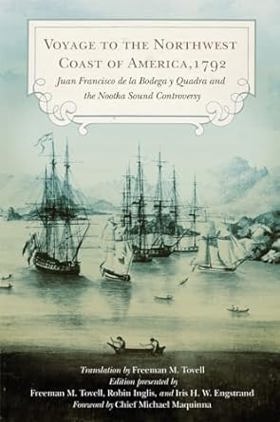
In 1792, Spanish naval officer and explorer Juan Francisco de la Bodega y Quadra sailed from San Blas, Mexico, to Nootka Sound, on the west coast of present-day Vancouver Island. For nearly three years, he had been immersed in the aftermath of the Nootka Crisis of 1789, a dispute between Britain and Spain over sovereignty in the North Pacific. He was journeying north as his government’s commissioner to hand over Spanish-occupied territory at Nootka. This book offers the first published English translation of Bodega’s journal, a remarkable account of his travels along the Northwest Coast of America, encounters with Native peoples—most notably, Chief Maquinna—and the friendship that developed between Bodega and his British counterpart, George Vancouver. Until now, Bodega’s journal has been available only in Spanish publications or in manuscript form. This much-needed English-language edition results from the collaboration of three preeminent scholars of the Pacific Northwest, who provide an in-depth introduction and extensive footnotes that make the translation accessible to a contemporary audience. Also included in this edition is a generous selection of Bodega’s original charts and illustrations created by the artists who worked with José Mariano Moziño and José Maldonado, two scientists who—at Bodega’s insistence—accompanied him on his expedition to Nootka. 196 pages : illustrations. CIRC [ 1 ]
|
2012 |
|
My memories by Philip A. Matson 
A collection of memories of growing up and beyond in Marshfield, Oregon during the midtwentieth century. 158 pages : illustrations, facsimiles, portraits ; 28 cm CIRC [ 1 ]
|
2012 |
|
The Columbia River's "Ellis Island" the story of Knappton Cove by Nancy Bell Anderson, Heather Bell Henry 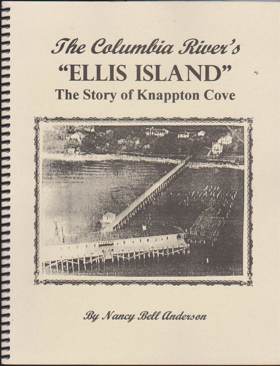
The United States mandated the medical inspection of all arriving immigrants in 1891. The Columbia River Quarantine Station in Knappton Cove, Washington, established 1899, was one of four points of entry on the west coast for immigrants coming to America. Thousands of European and Asian immigrants underwent health inspections at the station 98 pages : illustrations, maps ; 28 cm CIRC [ 0 ]
|
2012 |
|
The Punjabis in British Columbia location, labour, First Nations, and multiculturalism by Kamala E. Nayar 
"In this richly detailed study, Kamala Nayar documents the social and cultural transformation of the Punjabi community in British Columbia. From their initial settlement in the rural Skeena region to the communities that later developed in larger urban centres, The Punjabis in British Columbia illustrates the complex and diverse experiences of an immigrant community that merits greater attention. Exploring themes of gender, employment, rural and urban migrant life, and the relationships between the Punjabis and surrounding First Nations and other immigrant groups, Nayar creates a portrait of a community in transition. Shedding light on the ways in which economic circumstances affect immigrant communities, Nayar presents findings from interviews conducted with over one hundred participants. She details the relocation of Punjabi populations from the Skeena region to British Columbia's lower mainland during the decline of the forestry and fishery industries, how their second migration changed their professional and personal lives, and how their history continues to shape the identities and experiences of Punjabis in Canada today. A nuanced look at the complexities of social and cultural adaptation, The Punjabis in British Columbia adds an essential perspective to what it means to be Canadian."--Publisher xxi, 361 pages : illustrations, maps, portraits ; 24 cm CIRC [ 0 ]
|
2012 |
|
Blazing a wagon trail to Oregon a weekly chronicle of the great migration of 1843 by Lloyd W. Coffman 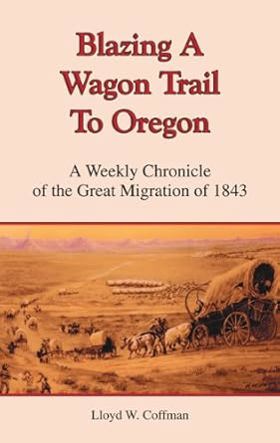
A determined group of American pioneers set out to move their families on wheeled vehicles from the settled frontier in Missouri to the far Pacific shore. Their incentive was simple enough. Times were tough in 1843, and they had heard of a lush new land existing in a place called Oregon, a land ready to be settled by hard-working farmers. Although a new life seemed to await them just over the horizon, none of them suspected how formidable that horizon really was vii, 192 pages : illustrations, maps ; 23 cm CIRC [ 0 ]
|
2012 |
|
Competitive struggle America's western fur trading posts, 1764-1865 by R. G. Robertson 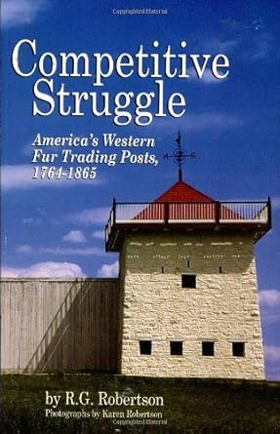
Competitive Struggle recounts the 101-year history of Americas western fur trade: from the founding of St. Louis in 1764 through 1865, the demand for beaver pelts and buffalo robes spawned a competitive fervor that enveloped mountain men, fur trading companies, national governments, and Native Americans.The book includes a series of easy-to-read flowcharts showing the evolution of the various fur companies. Extensive endnotes, an index, a glossary of terms, and a list of modern-day trading post replicas and their photographs make Competitive Struggle a musthave reference on America s fur trade. xxi, 330 pages : illustrations, maps ; 23 cm CIRC [ 0 ]
|
2012 |
|
The enemy never came the Civil War in the Pacific Northwest by Scott McArthur 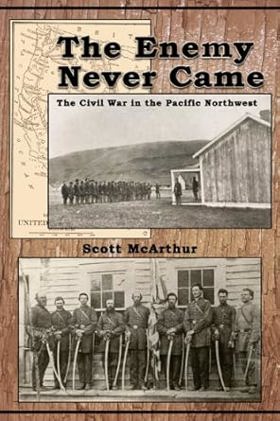
"Although the Pacific Northwest was the area furthest removed from the actual battles of the Civil War, it was nonetheless profoundly affected by the war. The Enemy Never Came examines the everyday lives of the volunteer soldiers who battled Native American renegades of the region and of the settlers who were deeply affected by the war yet unable to do much about it." - Back cover xviii, 268 pages : illustrations, map ; 23 cm CIRC [ 0 ]
|
2012 |
|
On the dark side of the moon a journey toward recovery by Mike Medberry 
In 2000, Medberry, an environmentalist, visited Craters of the Moon National Monument in southeast Idaho and suffered a stroke while there. In this memoir, he details his slow recovery and rehabilitation, the feelings he experienced, his problems with memory and language, what he learned along the way, and his return to Craters of the Moon vii, 165 pages : illustrations ; 22 cm CIRC [ 0 ]
|
2012 |
|
Oregon plans the making of an unquiet land use revolution by Sy Adler 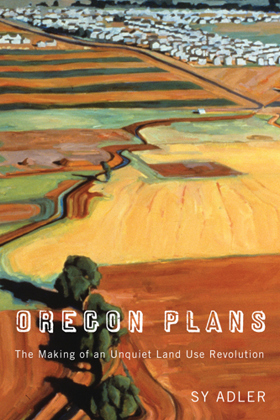
Oregon Plans provides a rich, detailed, and nuanced analysis of the origins and early evolution of Oregon’s nationally renowned land-use planning program. Drawing primarily on archival sources, Sy Adler describes the passage of key state laws that set the program into motion by establishing the agency charged with implementing those laws, adopting the land-use planning goals that are the heart of the Oregon system, and monitoring and enforcing the implementation of those goals through a unique citizen organization. Environmental activists, industry groups, local governments, and state officials all played significant roles. Adler brings these key actors—among them governors Tom McCall and Robert Straub, business leaders John Gray and Glenn Jackson, the Northwest Environmental Defense Center and the Oregon State Homebuilders Association—to life. Oregon Plans both informs those new to Oregon and reminds longtime residents about controversial historic issues and the consequential compromises and choices that were made to address them during the mid-1970s. The book will interest anyone involved in land use, conservation, and environmental issues—from citizens to officials to developers—in Oregon and beyond. 256 pages : illustrations, maps ; 23 cm. CIRC [ 0 ]
|
2012 |
|
Comrades of the quest an oral history of Reed College by John Sheehy 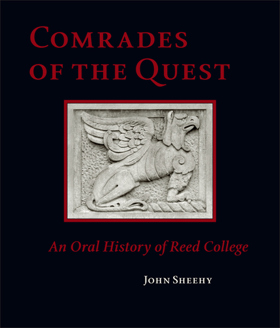
Visionary. Iconoclast. Rebel. William Trufant Foster set out in 1911 to launch the “ideal college,” and succeeded in building an intellectual liberal arts powerhouse that over the next one hundred years would perpetually seek to break the hard crust of custom and orthodoxy. Foster’s quest for excellence and truth generated a steady yield of students – ranging from poet Gary Snyder to muckraker Barbara Ehrenreich to Apple founder Steve Jobs – who left Reed College eager to challenge society’s dominant paradigms. Comrades of the Quest chronicles the colorful cultural and social history of this band of young and fiercely unorthodox West Coast intellectuals, and of the institution that nurtured them. Drawing from interviews with more than 1,400 people and from unpublished memoirs stretching back to the college’s first decades, John Sheehy weaves together a riveting story told from first-hand perspectives of this unique community’s ongoing efforts to bring Foster’s vision to life. With a punch considerably mightier than its weight, the Reed community undertakes an arduous journey through the political and educational developments of the past century— from the progressive education movement in the 1910s, the general education programs between the two world wars, scientific methodology in the 1950s, political relevance in the 1960s, theories of structuralism and deconstruction in the 1970s, the cultural wars in the 1980s, political correctness in the 1990s, to ideological bias in the 2000s—while keeping its founding ideals largely intact. At a time when America is struggling to sustain its innovative edge, Reed College remains an iconic model, equipping students with a rigorous set of skills and attitudes possible for questioning status quo thinking in a rapidly changing world. Its story, populated with a rich cast of characters, and marked by intense focus, demanding social freedom, and unconventional creativity, is no customary college history, but rather an intellectual thriller of American idealism played out against the hard world of social, religious, and political conformity, ascending great heights and persevering through near-fatal confrontations. 561 pages : illustrations ; 27 cm CIRC [ 0 ]
|
2012 |
|
Songs of power and prayer in the Columbia Plateau the Jesuit, the medicine man, and the Indian hymn singer by Chad Hamill 
Songs of Power and Prayer explores the role of song as a transformative force in the twentieth century. It traces a cultural, spiritual, and musical encounter that upended notions of indigeneity and the rules of engagement for Indians and priests in the Columbia Plateau. Chad Hamill’s narrative focuses on a Jesuit and his two Indian “grandfathers”—one a medicine man, the other a hymn singer—who together engaged in a collective search for the sacred. The priest became a student of the medicine man. The medicine man became a Catholic. The Indian hymn singer brought indigenous songs to the Catholic mass. Using song as a thread, these men weaved together two worlds previously at odds, realizing a promise born within prophecies two centuries earlier. Long before Jesuits appeared in Coeur d’Alene and Salish country, Indian prophets foretold their arrival. In their respective visions, Circling Raven and Shining Shirt were the first to behold the odd-looking men wearing long black robes, carrying with them little more than “crossed sticks” and words of a foreign prophet who lived and died a world away. Roughly a century later, the “Blackrobes” arrived, immediately translating liturgical texts and hymns into the Salish language. Calling on centuries of indigenous praxis in which song was prayer, the hymns were very quickly and consciously embodied by the Salish and Coeur d’Alene people, reinterpreted and re-sung as expressions of indigenous identity and spiritual power. Songs of Power and Prayer in the Columbia Plateau reveals how song can bridge worlds, both between the individual and Spirit and the Jesuits and the Indians. Whether sung in an indigenous ceremony or adapted for Catholic Indian services, song abides as a force that strengthens Native identity and acts as a conduit for power and prayer. xiii, 169 pages, 4 pages of plates : illustrations ; 23 cm. CIRC [ 0 ]
|
2012 |
|
To the promised land a history of government and politics in Oregon by Tom Marsh 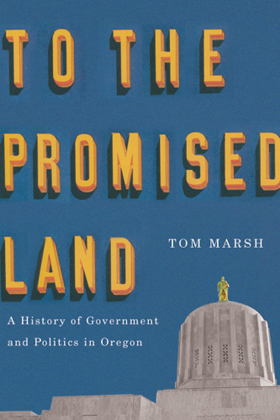
A comprehensive political history of Oregon, To the Promised Land examines the social and economic changes the state has pioneered over almost two hundred years. Highlighting major political figures, campaigns, and ballot measures, Tom Marsh traces the evolution of Oregon from incorporated territory to a state at the forefront of national environmental and social movements. From the first letter sent to Congress by Jason Lee, urging them to take possession of the Oregon Country for the United States, to John Kitzhaber’s precedent-setting third term as governor; from the land frauds of the early twentieth century to the state’s land-use planning goals; from the Beach Bill to the Bottle Bill, this book tells Oregon’s story. To the Promised Land provides the first general history of Oregon’s state government and political leaders. Marsh combines the clear expository style of a professional educator with the expertise of a political inside —a former U.S. history high school teacher, he also served two terms in the Oregon House of Representatives. Featuring interesting trivia, historical photographs, and biographical sketches of key politicians, this book will be a popular volume for general readers and public libraries as well as for textbook use in secondary and higher education classrooms. xvi, 508 pages : illustrations, maps ; 23 cm CIRC [ 0 ]
|
2012 |
|
Asserting native resilience Pacific rim indigenous nations face the climate crisis by Zoltán. Grossman, Alan Parker 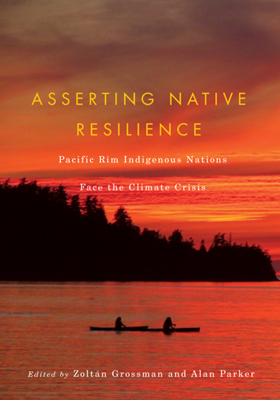
Indigenous nations are on the frontline of the current climate crisis. With cultures and economies among the most vulnerable to climate-related catastrophes, Native peoples are developing responses to climate change that serve as a model for Native and non-Native communities alike. Native American nations in the Pacific Northwest, First Nations in Canada, and Indigenous peoples around the Pacific Rim have already been deeply affected by droughts, flooding, reduced glaciers and snowmelts, seasonal shifts in winds and storms, and changes in species on the land and in the ocean. Having survived the historical and ecological wounds inflicted by colonization, industrialization, and urbanization, Indigenous peoples are using tools of resilience that have enabled them to respond to sudden environmental changes and protect the habitat of salmon and other culturally vital species. They are creating defenses to strengthen their communities, mitigate losses, and adapt where possible. Asserting Native Resilience presents a rich variety of perspectives on Indigenous responses to the climate crisis, reflecting the voices of more than twenty contributors, including Indigenous leaders and Native and non-Native scientists, scholars, and activists from the Pacific Northwest, British Columbia, Alaska, and Aotearoa/New Zealand. Also included is a resource directory of indigenous governments, non-governmental organizations, and communities that are researching and responding to climate change and a community organizing booklet for use by Northwest tribes. An invaluable addition to the literature on climate change, Asserting Native Resilience will be useful for students of environmental studies, Native studies, geography, and rural sociology, and will serve as an important reference for indigenous leaders, tribal members, rural planners, and environmental agency staff. 239 pages : illustrations, maps ; 26 cm CIRC [ 0 ]
|
2012 |
|
Multnomah the tumultuous story of Oregon's most populous county by Jewel Beck Lansing, Fred Leeson 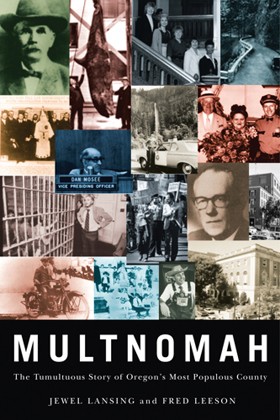
Covering people and events from 1854 to the present day, this definitive reference on the history, politics, and policy of Multnomah County provides compelling details about public works undertakings and political scandals. Oregon’s tiniest county geographically quickly grew to be the state’s most populous. Through nearly sixteen decades, Multnomah County’s history seldom has been calm and peaceful. From hangings that turned into grim public spectacles in the nineteenth century to a glaring failure to deal with urban growth in the middle of the twentieth, the county has survived frequent home rule charter changes and several attempts to revamp its structure or merge with Portland’s better-known municipal government. Highlighted episodes include the construction of the iconic Columbia River Highway between 1914 and 1918, the tragic flooding of Vanport City in 1948, the employee strike of 1980, the library scandal of 1989- 1990, and the same-sex marriage license debacle of 2004. Historian Jewel Lansing and journalist Fred Leeson make effective use of archival sources, oral histories, newspaper articles, and personal interviews. History buffs and informed Portland citizens will be particularly engaged by the regional trivia and narrative details. x, 326 pages : illustrations, maps ; 23 cm CIRC [ 0 ]
|
2012 |
|
Oregon geology by Elizabeth L. Orr, William N. Orr 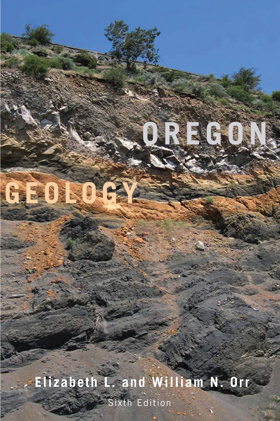
Because Oregon sits on the leading edge of a moving crustal plate, a striking diversity of geologic events have molded its topography. Over a century of study, a deeper understanding of the region’s tectonic overprint has emerged. In this timely update to the 2000 edition, Elizabeth and William Orr incorporate that new knowledge, addressing current environmental problems and detailing tectonic hazards. “Caught between converging crustal plates,” the Orrs write, “the Pacific Northwest faces a future of massive earthquakes and tsunamis.” A comprehensive treatment of the state’s geologic history, Oregon Geology moves through Oregon’s regions to closely examine the unique geologic features of each, from the Blue Mountains to the Willamette Valley, from the high lava Plains to the Coast Range. The book includes biographical sketches of notable geologists. It is lavishly illustrated and includes an extensive bibliography. 304 pages : illustrations, maps ; 28 cm CIRC [ 0 ]
|
2012 |
|
Voyage of a summer sun canoeing the Columbia River by Robin Cody 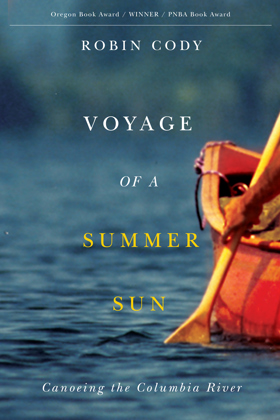
An Oregon State Library choice for “150 Books for the Oregon Sesquicentennial.” The story is the Columbia River, not the canoe and me, but I’ve learned that friends can’t hear me tell about the river until they know why I was out there. This is not an adventure story, though some adventure was unavoidable, and I didn’t set out to find myself if I could help it. Nor did I launch the trip with a large point to prove. It was a voyage of discovery, and its telling is the uncovering of surprise on a river I thought I knew… —Robin Cody, from the Prologue. On a June morning in 1990, high up in the Canadian Rockies, Robin Cody pushed his sixteen-foot Kevlar canoe through tall grass and mud to launch it on peaceful Columbia Lake, the nominal source of the river that heaves more water into the Pacific ocean than any other in North or South America. For the next eighty-two days, Cody would portage massive dams and revel in the rapids as the great river plunges 2,700 feet in 1,200 miles before reaching the river’s mouth in Astoria. Cody's canoe sneaks up on the bear and moose and raptors and beavers who make a living on the Columbia. He drops in on riverpeople: the trapper, the wind surfer, the archeologist, the lock operator, the native woman who grew up at riverside in a dwelling of tule reeds. With a generous and infectious spirit, Cody draws us into the mysteries of a much-altered and regulated river that is still, at heart, a life-giving place. 308 pages : illustrations, maps ; 23 cm CIRC [ 0 ]
|
2012 |
|
Standing at the water's edge Bob Straub's battle for the soul of Oregon by Charles K. Johnson 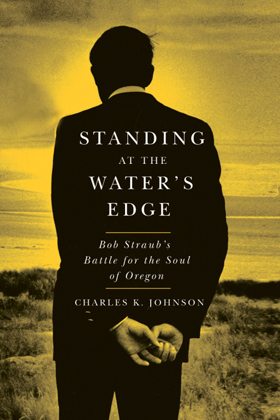
A man of intelligence, drive, creativity, and fascinating contradictions, Straub overcame personal challenges and inevitable comparisons to his charismatic predecessor and friendly Republican rival, Tom McCall, to have a lasting impact on Oregon and the nation. Charles Johnson shares insights into Straub’s significant legacy, focusing on his leading role in the state’s financial and environmental issues and his influence on McCall. Johnson also reveals much of Straub’s warm personal story, along with his secret struggles, including his battle with depression while Governor. Standing at the Water’s Edge offers rich descriptions of other intriguing political figures of the time as well, capturing the flavor of what has been called Oregon’s political “golden age” of the sixties and seventies—created in part by the symbiotic relationship between Straub and McCall—and describing how and why it ended. Standing at the Water’s Edge is an essential addition to the literature about Oregon’s political leaders for historians, political scientists, and general readers interested in Oregon history. xiv, 338 pages : illustrations ; 23 cm CIRC [ 0 ]
|
2012 |
|
The Indian school on Magnolia Avenue voices and images from Sherman Institute by Clifford E. Trafzer , Matthew Sakiestewa Gilbert , Lorene Sisquoc 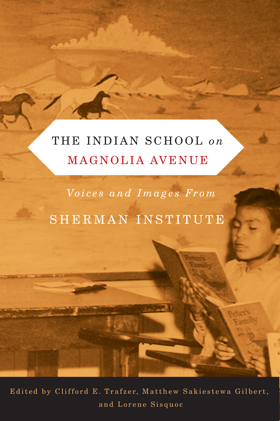
The first collection of writings and images focused on an off-reservation Indian boarding school, The Indian School on Magnolia Avenue shares the fascinating story of this flagship institution, featuring the voices of American Indian students. In 1902, the federal government opened Sherman Institute in Riverside, California, to transform American Indian students into productive farmers, carpenters, homemakers, nurses, cooks, and seamstresses. Indian students helped build the school and worked daily at Sherman; administrators provided vocational education and placed them in employment through the Outing Program. Contributors to The Indian School on Magnolia Avenue have drawn on documents held at the Sherman Indian Museum to explore topics such as the building of Sherman, the school’s Mission architecture, the nursing program, the Special Five-Year Navajo Program, the Sherman cemetery, and a photo essay depicting life at the school. Despite the fact that Indian boarding schools—with their agenda of cultural genocide— often prevented students from speaking their languages, singing their songs, and practicing their religions, most students learned to read, write, and speak English, and most survived to benefit themselves and contribute to the well-being of Indian people. The Indian School on Magnolia Avenue will be of interest to scholars and general readers in the fields of Native American studies, history, education, public policy, and historical photography. viii, 224 pages : illustrations ; 23 cm. CIRC [ 0 ]
|
2012 |
|
Transboundary river governance in the face of uncertainty the Columbia River Treaty : a project of the Universities Consortium on Columbia River Governance by Barbara Cosens 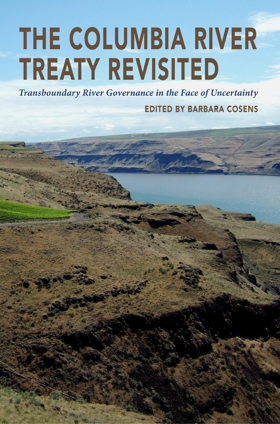
The Columbia River Treaty, passed in 1964, split hydropower and flood control regulation of the river between Canada and the United States. Some of its provisions will expire in 2024, and either country must give ten years’ notice of any desired alteration or termination. The Columbia River Treaty Revisited, with contributions from historians, geographers, environmental scientists, and other experts, is intended to facilitate conversation about the impending expiration. It allows the reader, through the close inspection of the Columbia River Basin, to better grasp the uncertainty of water governance. It aids efforts, already underway, to understand changes in the basin since the treaty was passed, to predict future changes, and to determine whether alteration of the treaty is ultimately advisable. The Columbia River Treaty Revisited will appeal to those interested in water basin management–scholars, stakeholders, and residents of the Columbia River basin alike. The Universities Consortium on Columbia River Governance, with representatives from universities in the U.S. and Canada, formed to offer a nonpartisan platform to facilitate an informed, inclusive, international dialogue among key decision-makers and other interested people and organizations; to connect university research to problems faced within the basin; and to expose students to a complex water resources problem. The Consortium organized the symposium on which this volume is based. 1 online resource (455 pages) : illustrations, maps CIRC [ 0 ]
|
2012 |
|
The history of Stuart Island by James Bergquist 
James Bergquist is telecommunications a living on Stuart Island. married to retired engineer He is Linda Ericksen Bergquist, a descendent of an early Stuart Island family. Jim and Linda have spent many years compiling historical information on Stuart Island and its people. Stuart Island is a favorite destination for boaters. They visit the marine state park and walk the roads to the lighthouse without experiencing the rich history of this remote island. This book documents the early settlers arriving on the island and their struggles to live in this remote corner of the United States. Stuart Islanders were farmers, fishermen, loggers, lighthouse keepers, and school teachers. Each has a story to tell. This book is a work in progress as there is much more history hidden in descendents' closets just waiting to be discovered. James Bergquist: August 22, 1943 - November 26, 2024 183 pages : illustrations ; 24 cm CIRC [ 1 ]
|
2012 |