Catalog of British Columbiana and Pacific Northwest Americana
Encyclopedia Cascadia Catalog contains book titles of mostly non-fiction Pacific Northwest Coast of North America Titles (primarially British Columbia, Idaho, Oregon and Washington State) in an easy-to-understand title catalog. If you see a link with this badge ONLINE CIRC it means that there is an online institution that provides free access to that title. In some cases there may be more than one institution hosting the title digitally.
| Catalog Title | Published |
|---|---|
|
The private journal of Captain G.H. Richards the Vancouver Island survey (1860-1862) by George Henry Richards, Linda Dorricott, Deidre Cullon 
Literary Nonfiction. History. Memoir. Native American Studies. Captain Richards's journal is an account of three survey seasons on Vancouver Island aboard two British Navy ships, the HMS Plumper and the HMS Hecate. Between 1860 and 1862 Richards and his dedicated crew surveyed and charted the entire coastline of Vancouver Island, creating baseline information for the nautical charts we use today. This monumental task, faithfully and often humorously recorded, also includes a lively description of California on the eve of the American Civil War as Richards sits in dry dock following the near wreck of the Hecate. Part of the private collection of a direct descendant of Captain Richards, the journal is a little known and untapped resource. Extensively annotated and supplemented with excerpts from the journals of Second Master John Gowlland, the journal provides a unique and personal view of the aboriginal, colonial, nautical and natural history of Vancouver Island. Richards is revealed as a man of immense energy and diplomacy; the descriptions of the First Nations he encounters are remarkably unbiased for the time and his keen observations are a portal into the social and political life of Vancouver Island during these formative years of the colony. The journal will appeal to historians, anthropologists, sailors, meteorologists and the general reading public alike. 271 pages, [32] pages of plates : illustrations (some color), maps, portraits ; 23 cm CIRC [ 1 ]
|
2012 |
|
Secret beaches of the Salish Sea the southern Gulf Islands by Theo Dombrowski 
The fourth volume in the Secret Beaches series, one of two on the Salish Sea, covers 93 beaches in the southern Gulf Islands, including Salt Spring, Galiano, Saturna, Mayne, Thetis and Pender. At some locations, the selling point is a view of sandstone eroded into astounding curves and honeycombed lattices. At others, it's the chance of seeing the resident orcas of J1, K1 and L1 pods, whose summer home is the Gulf Islands. Theo's hand-drawn maps are indispensable, as each island marks its public beach access points differently, if they mark them at all. His detailed entries give comprehensive descriptions and an illustrative photo or painting for each beach. As usual, the charming paintings and photos are done by Theo himself. Whether seconds from the ferry or farther along a twisting, unsigned back road, the beach best suited to your adventure waits to be found in Secret Beaches of the Salish Sea. 236 p. : col. ill., maps, port. ; 22 cm. CIRC [ 1 ]
|
2012 |
|
David Douglas a naturalist at work : an illustrated exploration across two centuries in the Pacific Northwest by Jack Nisbet 
"During a meteoric career that spanned from 1825 to 1834, David Douglas made the first systematic collections of flora and fauna over many parts of the greater Pacific Northwest. Despite his early death, colleagues in Great Britain attached the Douglas name to more than 80 different species, including the iconic timber tree of the region. David Douglas, a Naturalist at Work is a colorfully illustrated collection of essays that examines various aspects of Douglas's career, demonstrating the connections between his work in the Pacific Northwest of the 19th century and the place we know today"--Amazon xv, 191 pages : illustrations (some color), color maps ; 23 cm CIRC [ 1 ]
|
2012 |
|
Juan de Fuca's Strait voyages in the waterway of forgotten dreams by Barry M. Gough 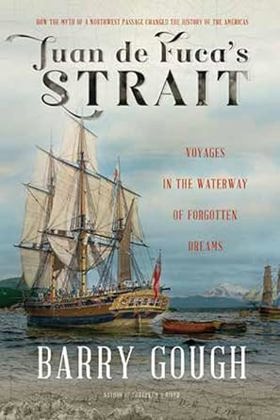
The tale begins in sixteenth-century Venice, when explorer Juan de Fuca encountered English merchant Michael Lok and relayed a fantastic story of a marine passageway that connected the Pacific and Atlantic Oceans. This tale would be the catalyst for centuries of dreaming, and exacerbate English and Spanish rivalry. The search for the fabled Northwest Passage inspired explorers to seek out fame, adventure, knowledge and riches. Likewise, the empires of Spain and Great Britain were impelled by the hopes of finding a naval trade route that would connect Europe to Asia, thus securing their dominance over the other as an economic power. The story of the Northwest Passage is one of significant figures and great empires, jostling for a distant corner of North America. Gough provides meticulously researched insight, delving into diplomatic records, narratives of explorers and commercial aspirants, legal affidavits and court records to illuminate the journeys of Martin Frobisher, James Cook, Francis Drake, Manuel Quimper, José Mar�a Narv�ez, George Vancouver and Juan Francisco de la Bodega y Quadra, among others. 287 pages : illustrations, maps, portraits ; 24 cm CIRC [ 1 ]
|
2012 |
|
Bamberton from dust to bust and back by Maureen Alexander, Andrew S. Brown
|
2012 |
|
Be brave, Tah-hy! the journey of Chief Joseph's daughter by Jack R. Williams, Jo Proferes (Illustrator) 
On June 17, 1877, gunshots marked the start of war—one that swept twelve-year-old Tah-hy (Chief Joseph’s daughter) and her people into a harrowing journey across the American West. Relentlessly pursued, they endured multiple battles, cold, hunger, and death. Eventually, after months of exile and heartbreak, they began their path to a new way of life. Based on actual events and narrated by Tah-hy’s youthful voice, this biographical novel is intended for young adults, but will also interest older readers. The story presents many aspects of the Nez Perce Dreamer culture and reminds us of what was lost when they were overpowered and displaced. 134 pages : color illustrations ; 21 x 26 cm CIRC [ 0 ]
|
2012 |
|
North Idaho memories the early years : 1800s-1939 by Couer d'Alene Press, Museum of North Idaho 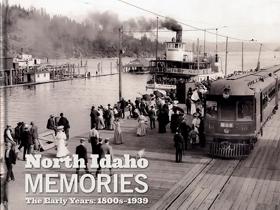
Welcome to North Idaho Memories: The Early Years, 1800s-1939. We hope you enjoy this pictorial expedition down memory lane published as a joint venture by the Coeur d’Alene Press and the Museum of North Idaho. While this book is not intended to be a comprehensive account of North Idaho’s history, it does offer many fascinating snapshots of the people and places that help define our rich heritage. The Museum of North Idaho graciously provided the vast majority of photos and caption information, and noted local historian Robert Singletary penned the chapter introductions after much diligent research. Since 1892, The Press has been an integral part of our region’s history. And for more than half a century, newspapers owned by The Hagadone Corp. throughout North Idaho have been faithfully recording not just the events around us, but insight into the people who shaped those events. This book is an extension of our mission. 128 pages : illustrations (black and white photographs) ; 23 cm CIRC [ 0 ]
|
2012 |
|
Trucking in British Columbia an illustrated history by Daniel Francis , Pam Robertson 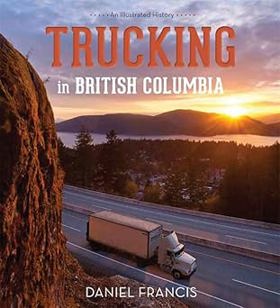
Trucks are everywhere--crowding the highways, lining up for the ferries, roaring down dusty logging roads--and yet trucking is often left off the list when talk turns to British Columbia's major industries. It shouldn't be, as this gorgeous new illustrated history celebrating the BC Trucking Association's 100th anniversary shows. With annual revenues of $1.88 billion and 60,000 employees, trucking is among BC's five largest industries. Accompanied by hundreds of previously unpublished archival and contemporary photographs, award-winning historian Daniel Francis delivers a fascinating account of the last hundred years of trucking in BC. Beginning in Vancouver with James Stark's first delivery van in 1907, motorized transport exploded in the province, soon traversing every dirt track, hauling logs on temporary plank roads and leading to a frenzy of experimentation and innovation-- from the failed Renard Road Train and early battery-operated vehicles to some truly impressive purpose-built trucks, many of them manufactured in BC. From hair-raising tales of the road by trucking legends like the scholarly Andy Craig and the bombastic Cog Harrington to important infrastructure projects and vital innovations for the future, here is a story never told before--a road less travelled, so to speak--but an important and an exciting chapter in British Columbia's history. 208 pages : illustrations (some colour), portraits (some colour) ; 29 cm. CIRC [ 0 ]
|
2012 |
|
Oregon's doctor to the world Esther Pohl Lovejoy and a life in activism by Kimberly Jensen 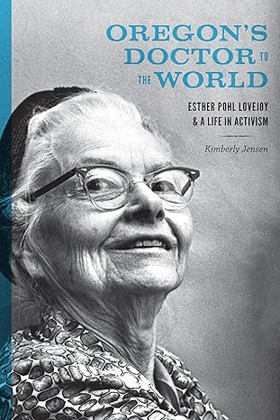
Esther Clayson Pohl Lovejoy, whose long life stretched from 1869 to 1967, challenged convention from the time she was a young girl. Her professional life began as one of Oregon's earliest women physicians, and her commitment to public health and medical relief took her into the international arena, where she was chair of the American Women's Hospitals after World War I and the first president of the Medical Women's International Association. Most disease, suffering, and death, she believed, were the result of wars and social and economic inequities, and she was determined to combat those conditions through organized action. Lovejoy's early life and career in the Pacific Northwest gave her key experiences and strategies to use for what she termed "constructive resistance," the ability to take effective action against unjust power. She took a political and pragmatic approach to what she called "woman's big job"-achieving a full female citizenship-and emphasized the importance of votes for women. In this engaging biography, Kimberly Jensen tells the story of this important western woman, exploring her approach to politics, health, and society and her civic, economic, and medical activism. xiii, 346 pages : illustrations, map ; 23 cm CIRC [ 0 ]
|
2012 |
|
Nisei soldiers break their silence coming home to Hood River by Linda Tamura 
Nisei Soldiers Break Their Silence is a compelling story of courage, community, endurance, and reparation. It shares the experiences of Japanese Americans (Nisei) who served in the U.S. Army during World War II, fighting on the front lines in Italy and France, serving as linguists in the South Pacific, and working as cooks and medics. The soldiers were from Hood River, Oregon, where their families were landowners and fruit growers. Town leaders, including veterans' groups, attempted to prevent their return after the war and stripped their names from the local war memorial. All of the soldiers were American citizens, but their parents were Japanese immigrants and had been imprisoned in camps as a consequence of Executive Order 9066. The racist homecoming that the Hood River Japanese American soldiers received was decried across the nation. Linda Tamura, who grew up in Hood River and whose father was a veteran of the war, conducted extensive oral histories with the veterans, their families, and members of the community. She had access to hundreds of recently uncovered letters and documents from private files of a local veterans' group that led the campaign against the Japanese American soldiers. This book also includes the little known story of local Nisei veterans who spent 40 years appealing their convictions for insubordination. xx, 346 pages : illustrations ; 23 cm. CIRC [ 0 ]
|
2012 |
|
Chinuk Wawa kakwa nsayka ulman-tilixam laska munk-kemteks nsayka = as our elders teach us to speak it by Chinuk Wawa Dictionary Project (Compiler), Confederated Tribes of the Grand Ronde Community of Oregon (Publisher) 
Chinuk Wawa (also known as Jargon and Chinook Jargon) is a hybrid lingua franca consisting of simplified Chinookan, combined with contributions from Nuuchahnulth (Nootkan), Canadian French, English, and other languages. It originated on the lower Columbia River, where it once was the predominant medium of intertribal and interethnic communication. Even after English came into general use on the lower Columbia, Chinuk Wawa survived for generations in families and communities shaped by the meeting of the region's historically diverse tribes and races. This Chinuk Wawa dictionary is based primarily on records from one such community, the Confederated Tribes of Grand Ronde, Oregon, where Chinuk Wawa is taught as a community heritage language. 494 pages : illustrations, maps ; 25 cm CIRC [ 0 ]
|
2012 |
|
The nature of borders salmon, boundaries, and bandits on the Salish Sea by Lissa K. Wadewitz, Center for the Study of the Pacific Northwest 
For centuries, borders have been central to salmon management customs on the Salish Sea, but how those borders were drawn has had very different effects on the Northwest salmon fishery. Native peoples who fished the Salish Sea--which includes Puget Sound in Washington State, the Strait of Georgia in British Columbia, and the Strait of Juan de Fuca--drew social and cultural borders around salmon fishing locations and found ways to administer the resource in a sustainable way. Nineteenth-century Euro-Americans, who drew the Anglo-American border along the forty-ninth parallel, took a very different approach and ignored the salmon's patterns and life cycle. As the canned salmon industry grew and more people moved into the region, class and ethnic relations changed. Soon illegal fishing, broken contracts, and fish piracy were endemic--conditions that contributed to rampant overfishing, social tensions, and international mistrust. The Nature of Borders is about the ecological effects of imposing cultural and political borders on this critical West Coast salmon fishery. This transnational history provides an understanding of the modern Pacific salmon crisis and is particularly instructive as salmon conservation practices increasingly approximate those of the pre-contact Native past. The Nature of Borders reorients borderlands studies toward the Canada-U.S. border and also provides a new view of how borders influenced fishing practices and related management efforts over time. xi, 271 pages, 27 unnumbered pages of plates : illustrations, maps ; 23 cm. CIRC [ 0 ]
|
2012 |
|
History of Weston, Idaho by Jay D. Schvaneveldt 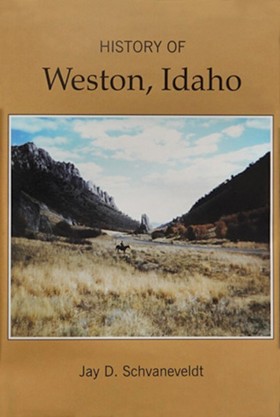
Published in 2010, Jay D. Schvaneveldt’s History of Weston, Idaho chronicles the founding and evolution of one of the Gem State’s oldest permanent European-American settlements, established by Mormon pioneers in the mid-1860s. The book meticulously documents the community's early trials—ranging from harsh frontier winters and tense resource management to its strategic growth as an agricultural and freighting hub along the route to northern mining camps. Drawing on rich local lore, diaries, and genealogical records, Schvaneveldt captures the grit and resilience required to transform a rugged southeastern Idaho wilderness into a tightly knit farming community. A keen insight drawn from the text is how it illuminates the profound, everyday impact of religious and familial cohesion on frontier survival, demonstrating that tight kinship networks and shared communal values were just as vital to subduing the rural West as physical labor and infrastructure. xvi, 702 pages : illustrations ; 24 cm CIRC [ 1 ]
|
2011 |
|
Win-Quatt a brief history of The Dalles, Oregon by Philip Klindt, Linda Klindt, Widge Johnson, Carolyn Wood 
About 80 miles east of Portland, Oregon, in the heart of the majestic Columbia River Gorge, lies a small community with great significance. Surrounded by rolling hills, scenic mountains, abundant orchards and fields, The Dalles is a treasure trove of beauty and home to many recreational activities. However, the less apparent gems are found in its lavish history. Authors Philip and Linda Klindt, teachers and owners of the oldest bookstore in Oregon, trace the fascinating 10,000 year story of this vital trade center. --Cover 128 pages : illustrations, maps ; 23 cm CIRC [ 1 ]
|
2011 |
|
An independent folk a history of early Wheeler County, Oregon by Mary Fitzgerald 
The settling of Wheeler County, Oregon, makes for rich storytelling combined with the historical facts. Excerpting from interviews with old timers, their stories are told in their own words. The story tells of the courageous and very independent people that still populate Wheeler County,. These folks are representative of the pioneer spirit that gives such backbone and character to rural life in America. 336 pages : illustrations, map ; 23 cm CIRC [ 1 ]
|
2011 |
|
Remembering the power of words the life of an Oregon activist, legislator, and community leader by Avel Louise Gordly, Patricia Ann Schechter 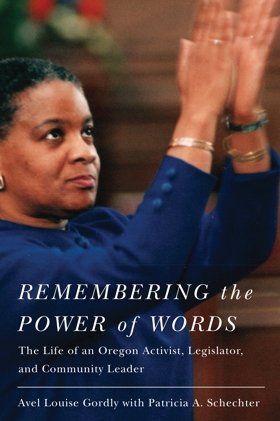
Remembering the Power of Words recounts the personal and professional journey of Avel Gordly, the first African-American woman elected to the Oregon State Senate. The book is a brave and honest telling of Gordly’s life. She shares the challenges and struggles she faced growing up black in Portland in the 1950s and 1960s, as well as her determination to attend college, the dedication to activism that took her from Portland to Africa, and her eventual decision to run for a seat in the state legislature. That words have power is a constant undercurrent in Gordly’s account and a truth she learned early in life. “Growing up, finding my own voice,” she writes, “was tied up with denying my voice or having it forcefully rejected and in all of that the memory of my father is very strong. To this day—and I am today a very experienced public speaker—preparation to speak takes a great deal of energy.” That this memoir has its origins as an oral history is fitting since Gordly has used her voice, out loud, to teach and inspire others for so many years. Important as a biographical account of one significant Oregonian’s story, the book also contributes “broader narratives touching on Black history (and Oregon’s place within it), and most particularly the politics associated with being an African American woman,” according to series editor Melody Rose. 176 pages : illustrations ; 23 cm. CIRC [ 0 ]
|
2011 |
|
Potluck community on the edge of wilderness by Ana Maria Spagna 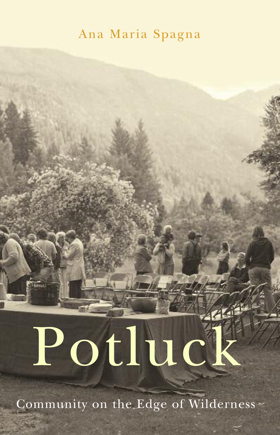
In Potluck, Ana Maria Spagna explores the enduring human connection to place, journeying from Tijuana to a California beach to Utah’s canyon country—and, always, back to the sparsely populated valley in the North Cascades that she calls home. Potluck homes in on the everyday gatherings that, over time, define a community: a makeshift wedding, an art gallery opening, a farewell potluck, a work party, a work party, a campfire, a political caucus, a funeral. “What connects us?” Spagna asks, and she reveals, again and again, the gift of community—easy and uneasy, deep and enduring and essential. 175 pages ; 22 cm CIRC [ 0 ]
|
2011 |
|
Dragonflies and damselflies of Oregon a field guide by Cary Kerst, Steve Gordon 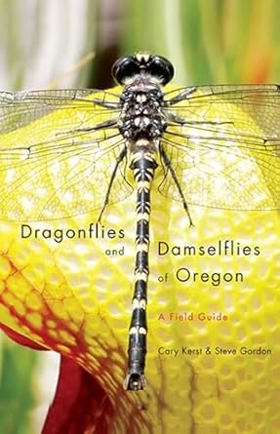
Growing interest in watching and identifying dragonflies and damselflies has sharpened the need for an authoritative resource like Dragonflies and Damselflies of Oregon, a definitive field guide devoted solely to dragonflies and damselflies found in the state. Cary Kerst and Steve Gordon include information on identification, as well as biology and behavior, using common terms useful to the novice and experienced enthusiast alike. The book features stunning color photographs of male and female of all species currently known in Oregon, along with helpful illustrations and charts with important identification characteristics. Dragonflies and Damselflies of Oregon presents the life cycle and larval habits of dragonflies and damselflies, along with photographs of the larvae of families. The Oregon range for each species is mapped, and the size range of adults is provided in text and illustration. The book also includes a description of the best sites in Oregon to observe these amazing insects, a useful tool for viewing uncommon species in spectacular settings. Dragonflies and Damselflies of Oregon is an essential reference for Odonatists, entomologists, birders, butterfly watchers, fishermen, wetland experts, naturalists, gardeners, artists, photographers, and all outdoor enthusiasts. xi, 304 pages : color illustrations, maps ; 22 cm. CIRC [ 0 ]
|
2011 |
|
Voodoo vintners Oregon's astonishing biodynamic winegrowers by Katherine Cole 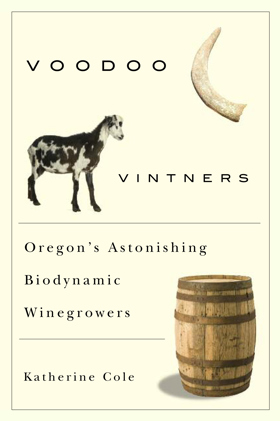
Could cow horns, vortexes, and the words of a prophet named Rudolf Steiner hold the key to producing the most alluring wines in the world—and to saving the planet? In Voodoo Vintners, wine writer Katherine Cole reveals the mysteries of biodynamic winegrowing, tracing its practice from Paleolithic times to the finest domaines in Burgundy today. At the epicenter of the American biodynamic revolution are the Oregon winemakers who believe that this spiritual style of farming results in the truest translations of terroir and the purest pinot noirs possible. Cole introduces these “voodoo vintners,” examining their motivations and rationalizations and explaining why the need to farm biodynamically courses through their blood. Her engaging narrative answers the call of oenophiles everywhere for more information about this “beyond organic” style of winemaking. x, 182 pages ; 23 cm CIRC [ 0 ]
|
2011 |
|
Toward one Oregon rural-urban interdependence and the evolution of a state by Michael Hibbard 
Every state in the nation has geographic divisions—upstate/downstate, urban/rural, major city/rest of the state—that loom large as barriers to common cause. Toward One Oregon examines the prospects for uniting one geographically diverse state in the years ahead. When Oregon became a state in 1859, its role in the nation and the global economy was quite different than it is today. Boundaries that made sense in the nineteenth century don’t always serve twenty-first century needs productively. Current times demand a new, strategic understanding of the state and its role in the nation and the world if its people—all of its people—are to thrive. Oregon, like many states, is faced with recovering and rediscovering a sense of shared purpose as it attempts to meet the needs of its diverse communities, peoples, and landscapes. Toward One Oregon explores Oregon’s urban and rural history and assesses the current situation through political, economic, and demographic lenses. The book’s contributors include historians, urban planners, journalists, economists, sociologists, and political scientists. They explore the links and splits between urban and rural Oregon and together offer a collaborative path forward—for Oregon and for any state faced with similar, seemingly insurmountable, geographic divisions—using the best of urban and rural policies in strategic and complementary ways. 183 pages : illustrations, charts, maps ; 23 cm CIRC [ 0 ]
|
2011 |
|
Up the Capitol steps a woman's march to the governorship by Barbara Roberts 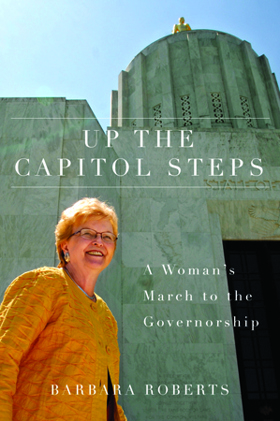
Up the Capitol Steps is a personal and political memoir by Oregon’s first (and only) woman governor, one of only thirty-four women who have served as state chief executives in the history of the United States. Barbara Roberts offers a behind-the-scenes glimpse of a woman’s life in politics and aims to “demystify” leadership by telling the story of her own unlikely rise to power. The mother of an autistic child before the advent of special education, Roberts began her life in public service as an advocate for the rights of children with disabilities. She documents her expanding political career from school board member to legislator to Secretary of State and finally, Governor. In this gripping and poignant memoir, hotly contested elections and tough policy decisions are interspersed with intimate details of personal ups and downs. Throughout, Roberts reveals the warmth and humor that show the “real” person behind the politician. Only the third published autobiography by an American woman head of state, Up the Capitol Steps is “a very significant contribution to Oregon history, the history of women in politics, and especially the history of women governors,” according to series editor Melody Rose. The book captures a period of our nation’s political history and a view of women’s expanding role in government that brings new understanding to the term, “social revolution.” x, 438 pages : illustrations ; 23 cm. CIRC [ 0 ]
|
2011 |
|
Wild in the city exploring the intertwine, the Portland-Vancouver region's network of parks, trails, and natural areas by Michael C. Houck, M. J. Cody, Audubon Society of Portland 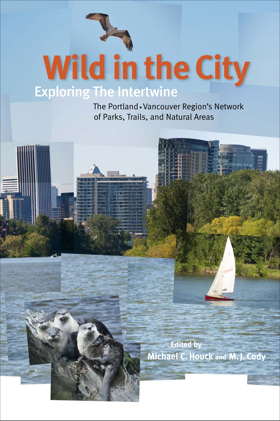
The second edition of the highly acclaimed Wild in the City brings more than one hundred of the best parks, trails and natural areas to your fingertips. This comprehensive “must-have” reference will be the go-to field guide for hikers, cyclists, paddlers, bird watchers, and nature enthusiasts. This revised and updated edition contains new maps organized according to watershed and includes twenty-eight unique “rambles” that explore multiple sites for recreation, wildlife viewing, or simply contemplating the joys of nature. New natural history essays by Ursula K. Le Guin, Kim Stafford, Robin Cody, Judy BlueHorse Skelton, Robert Michael Pyle, Jonathan Nicholas, and Richard Louv, author of Last Child in the Woods, offer fresh perspectives on the little pockets and expansive corridors of Portland’s wild environs. The book also examines the innovative strategies that cities, agencies, and nonprofits are using to create an ecologically sustainable metropolitan region. This invaluable resource will be an essential guide for educators and parents who want to explore the region’s natural wonders with their students and children. Included are tips on living with wildlife, as well as a new section that provides essential information on how urban living and green spaces intersect. xx, 427 pages : illustrations, maps ; 23 cm CIRC [ 0 ]
|
2011 |
|
Oregon archaeology by C. Melvin Aikens, Thomas J. Connolly, Dennis L. Jenkins 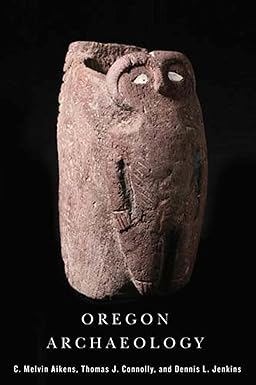
Oregon Archaeology tells the story of Oregon’s human history beginning more than 14,000 years ago with the earliest evidence of human occupation and continuing into the twentieth century. An historical narrative informed by evidence from critical sites, Oregon Archaeology carries the story forward, describing aspects of first encounters between Native Americans and newcomers of European and Asian heritage, as well as important trends in the development of modern Oregon. Oregon’s early human history is linked to four of the five major cultural regions of western North America: the Great Basin, the Columbia Plateau, the Northwest Coast, and the western valleys that share features with California’s Central Valley. Oregon Archaeology offers a coherent and unified history of an area that is highly differentiated geographically and culturally. Enriched with maps, photographs, line drawings, and an extensive bibliography, Oregon Archaeology is an essential reference for archaeology professionals and students and for general readers interested in Oregon’s Native American culture and history. Oregon Archaeology offers a coherent and unified history of an area that is highly differentiated geographically and culturally. A historical narrative informed by evidence from critical sites, Oregon Archaeology is enriched with maps, photographs, line drawings, and an extensive bibliography. Oregon Archaeology is an essential reference for archaeology professionals and students, and also for general readers interested in Oregon’s Native American culture and history. 496 pages : illustrations, maps ; 23 cm CIRC [ 0 ]
|
2011 |
|
Life histories of Cascadia butterflies by David G. James, D. Nunnallee, Robert Michael Pyle 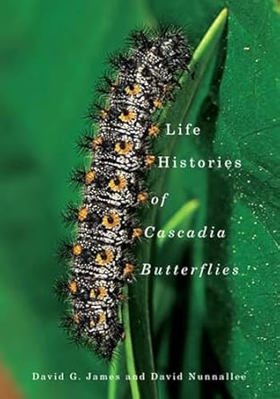
David G. James and David Nunnallee present the life histories of the entire butterfly fauna of a North American geographic region in exceptional and riveting detail for the first time in Life Histories of Cascadia Butterflies. Virtually all of the 158 butterfly species occurring in southern British Columbia, Washington, northern Idaho, and northern Oregon are included in the book. Color photographs of each stage of life—egg, every larval instar, pupa, adult—accompany information on the biology, ecology, and rearing of each species. Life Histories of Cascadia Butterflies will appeal to naturalists, hikers, amateur entomologists, butterfly gardeners, conservationists, students, and general readers of natural history. For scientists and dedicated lepidopterists, the book provides an unparalleled resource on the natural history of immature stages of butterflies in the Pacific Northwest—and beyond, as many of Cascadia’s butterflies occur in other parts of North America as well as Europe and Asia. 447 pages : illustrations (some color) ; 26 cm CIRC [ 0 ]
|
2011 |
|
Finding the river an environmental history of the Elwha by Jeff Crane 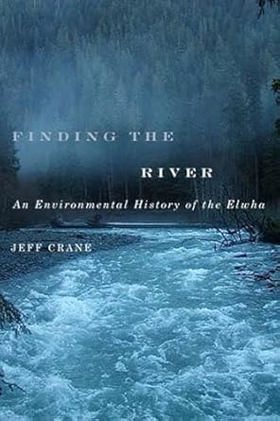
In 1992 landmark federal legislation called for the removal of two dams from the Elwha River to restore salmon runs. Jeff Crane dives into the debate over development and ecological preservation in Finding the River, presenting a long-term environmental and human history of the river as well as a unique look at river reconstruction. Finding the River examines the ways that different communities—from the Lower Elwha Klallam Indians to current-day residents—have used the river and its resources, giving close attention to the harnessing of the Elwha for hydroelectric production and the resulting decline of its fisheries. Crane describes efforts begun in the 1980s to remove the dams and restore the salmon. He explores the rise of a river restoration movement in the late twentieth century and the roles that free-flowing rivers could play in preserving salmon as climate change presents another set of threats to these endangered fish. A significant and timely contribution to American Western and environmental history—removal of the two Elwha River dams began in September 2011—Finding the River will be of interest to historians, environmentalists, and fisheries biologists, as well as to general readers interested in the Puget Sound, the Olympic Peninsula, and environmental issues. 250 pages : illustrations, map ; 23 cm CIRC [ 0 ]
|
2011 |