Catalog of British Columbiana and Pacific Northwest Americana
Encyclopedia Cascadia Catalog contains book titles of mostly non-fiction Pacific Northwest Coast of North America Titles (primarially British Columbia, Idaho, Oregon and Washington State) in an easy-to-understand title catalog. If you see a link with this badge ONLINE CIRC it means that there is an online institution that provides free access to that title. In some cases there may be more than one institution hosting the title digitally.
| Catalog Title | Published |
|---|---|
|
Sonny Montes and Mexican American activism in Oregon by Glenn Anthony May 
This textn tells the story of Oregon's most prominent Chicano activist, which also illustrates the formation of a significant Mexican-American community in the state between the 1960s and 1980's, and the ensuing rise of Oregon's Chicano movement x, 326 pages : illustrations ; 23 cm CIRC [ 0 ]
|
2011 |
|
Songs of power and prayer in the Columbia Plateau the Jesuit, the medicine man, and the Indian hymn singer by Chad Hamill 
Songs of Power and Prayer explores the role of song as a transformative force in the twentieth century. It traces a cultural, spiritual, and musical encounter that upended notions of indigeneity and the rules of engagement for Indians and priests in the Columbia Plateau. Chad Hamill’s narrative focuses on a Jesuit and his two Indian “grandfathers”—one a medicine man, the other a hymn singer—who together engaged in a collective search for the sacred. The priest became a student of the medicine man. The medicine man became a Catholic. The Indian hymn singer brought indigenous songs to the Catholic mass. Using song as a thread, these men weaved together two worlds previously at odds, realizing a promise born within prophecies two centuries earlier. Long before Jesuits appeared in Coeur d’Alene and Salish country, Indian prophets foretold their arrival. In their respective visions, Circling Raven and Shining Shirt were the first to behold the odd-looking men wearing long black robes, carrying with them little more than “crossed sticks” and words of a foreign prophet who lived and died a world away. Roughly a century later, the “Blackrobes” arrived, immediately translating liturgical texts and hymns into the Salish language. Calling on centuries of indigenous praxis in which song was prayer, the hymns were very quickly and consciously embodied by the Salish and Coeur d’Alene people, reinterpreted and re-sung as expressions of indigenous identity and spiritual power. Songs of Power and Prayer in the Columbia Plateau reveals how song can bridge worlds, both between the individual and Spirit and the Jesuits and the Indians. Whether sung in an indigenous ceremony or adapted for Catholic Indian services, song abides as a force that strengthens Native identity and acts as a conduit for power and prayer. xiii, 169 pages, 4 pages of plates : illustrations ; 23 cm. CIRC [ 0 ]
|
2012 |
|
Some reminiscences of old Victoria by Edgar Fawcett 
Authored by early pioneer Edgar Fawcett, Some Reminiscences of Old Victoria offers a deeply personal, nostalgic chronicle of British Columbia's capital city during its chaotic transition from a quiet Hudson's Bay Company outpost to a booming gold rush epicenter. Drawing upon his own arrival in 1859 and decades of civic observation, Fawcett meticulously reconstructs the social fabric of the 19th-century port, detailing early dirt streetscapes, the sudden influx of transient miners, local eccentricities, and the establishment of colonial institutions. Through conversational anecdotes and vivid recollections, the text serves as a vibrant, street-level time capsule of a frontier society rapidly attempting to replicate British gentility on the edge of the Pacific wilderness. A keen insight drawn from the work is how pioneer nostalgia inherently sanitizes the disruption of colonial expansion; by fondly mythologizing the eccentricities and genteel aspirations of Victoria's early British settlers, Fawcett’s memoir illustrates how the pioneer elite actively constructed an insulated, aristocratic social hierarchy to maintain cultural dominance amidst the overwhelming demographic shifts of the gold rush era. 4 unnumbered pages, [5]-294 pages : plates, portraits ; 20 cm ONLINE CIRC [ 1 ]
|
1912 |
|
Some history of early steamboating on Yaquina Bay by Jack Fogarty 
Lincoln County Historical Society, Publication No. 5, Newport, Oregon 1956 19 pages illustrations 21 cm CIRC [ 1 ]
|
1956 |
|
Solidarity stories an oral history of the ILWU by Harvey Schwartz 
The International Longshore and Warehouse Union, born out of the 1934 West Coast maritime and San Francisco general strikes under the charismatic leadership of Harry Bridges, has been known from the start for its strong commitment to democracy, solidarity, and social justice. In this collection of firsthand narratives, union leaders and rank-and-file workers - from the docks of Pacific Coast ports to the fields of Hawaii to bookstores in Portland, Oregon - talk about their lives at work, on the picket line, and in the union. Workers recall the back-breaking, humiliating conditions on the waterfront before they organized, the tense days of the 1934 strike, the challenges posed by mechanization, the struggle against racism and sexism on the job, and their activism in other social and political causes. Their stories testify to the union's impact on the lives of its members and also to its role in larger events, ranging from civil rights battles at home to the fights against fascism and apartheid abroad. Solidarity Stories is a unique contribution to the literature on unions. There is a power and immediacy in the voices of workers that is brilliantly expressed here. Taken together, these voices provide a portrait of a militant, corruption-free, democratic union that can be a model and an inspiration for what a resurgent American labor movement might look like. The book will appeal to students and scholars of labor history, social and economic history, and social change, as well as trade unionists and anyone interested in labor politics and history. xi, 347 pages : illustrations ; 24 cm CIRC [ 0 ]
|
2009 |
|
Solidarity Canada's unknown revolution of 1983 by David Spaner 
"The year 1983 began like any other year in Canada's leftmost--er, West Coast province. Then Bill's bills unleashed four months of public unrest. The newly elected Social Credit government announced an avalanche of far-right legislation that shocked the country. By dropping viciously anti-union legislation that slashed protection for hard-won human rights, Premier Bill Bennett attacked nearly everyone in his contingency. A resistance movement called Solidarity sprung up across the province. Massive street protests, occupations and plans for an all-out general strike had all eyes on B.C.. Like other uprisings--from France in 1968 to the anti-racism protests of 2020--Solidarity arrived unexpectedly and rocked social foundations. Revolution, in one province? Filled with revealing interviews and lively, insightful prose, David Spaner's Solidarity goes behind the scenes of one of the greatest social uprisings in North American history. Spaner delves into the Solidarity months of 1983 through his own experience and that of the activists, both iconic and unsung, that organized B.C.'s masses. Solidarity's intimate storytelling mixes popular culture and rebel politics, finding political answers in the personal lives of those touched by the movement. In recreating this one singularly dramatic event, Spaner's Solidarity becomes the ongoing history of 20th century B.C.--exploring its great divides and unions, cultures and subcultures, and conflicts that continue into the 21st century."-- Provided by publisher xii, 240 pages, 14 unnumbered pages of plates : illustrations ; 23 cm CIRC [ 0 ]
|
2021 |
|
Soft gold the fur trade & cultural exchange on the northwest coast of America by Thomas Vaughan (Writer of introduction), Bill Holm, C. C. Lamberg-Karlovsky, Oregon Historical Society, Peabody Museum of Archaeology and Ethnology 
Annotated catalogue to accompany an exhibition of early northwest coast Indian artifacts from the collections of the Peabody Museum of Archaeology and Ethnology at Harvard University and art and maps from various museums and private collections depicting the fur trade, along the northwest coast of America xi, 301 pages : illustrations (some color) ; 24 cm CIRC [ 0 ]
|
1982 |
|
So this is Klickitat by Selma M. Neils, Klickitat Woman's Club
|
1967 |
|
So they called the town "Concrete" a story of life and times in unique Concrete, Washington by Charles M. Dwelley 
Concrete, as a town, had a colorful and interesting history and those who took part even briefly never forgot "those old days in Concrete." Some of the itinerant workers who arrived with the building of the railroad in 1900 - Italians, Swedes, Norwegians, Greeks from the old country; plus Northerners, Southerners, Easterners of all nationalities remained to become accorded an unusual acceptance and welcome that made them feel at home. Many who came for a short employment stayed on to marry and settle in, and lived to be buried here as old-timers. It was that kind of town. If you want to know the rest of the story, read on. 134 pages : illustrations ; 21 cm CIRC [ 1 ]
|
1980 |
|
So the future will have a place the first century of Oregon state parks by Marin Elizabeth Aurand , Marc Carpenter , Jean Thompson , Christy Sweet , Oregon State Parks and Recreation Department (Issuing body) 
"This book tells the story of Oregon's State Parks from the vantage point of 2021, chronicling the challenges that have faced the Parks system over the past 100 years and celebrating the individuals - leaders, staff, volunteers, and members of the public - who have stepped up along the way to support, protect, and defend what is now the nation's premier State Parks system. The narrative also acknowledges where Oregon State Parks have fallen short, where we have perpetuated inequity and injustice by excluding - or simply noy fully welcoming - staff and visitors on the basis of race, gender, ability, and other 'differences'"--Page vii vii, 228 pages : illustrations (chiefly color), color map ; 23 cm CIRC [ 0 ]
|
2022 |
|
So Incredibly Idaho! seven landscapes that define the gem state by Carlos A. Schwantes 
Using colorful images from his photographic collection, Carlos Schwantes describes the hidden forces and historical events that have impacted the landscape of Idaho. xxi, 146 pages : color illustrations, color maps ; 24 cm CIRC [ 0 ]
|
1996 |
|
Snuneymuxw mulstimuxw sacred place names, their travels, and stories by Geraldine Manson 
"Throughout Snuneymuxw lands, there are sites recognized by place names given by their Ancestors; several are considered sacred grounds. There are well over 75 given place names that mark or tell a story of the land. Many of these place names’ meanings shared that over time oral history goes with the Elder who holds it, as Elders did before their time. Several areas are also recorded as archeological or sites of significance and are being guarded by Snuneymuxw."-- Provided by publisher pages cm CIRC [ 1 ]
|
2023 |
|
Snowbound by Ladd Hamilton 
Into the untamed vastness of the Bitterroot mountains go three young New York men, their guide, and a camp cook. This is to be the adventure of a lifetime, but it is already September. Ahead of the hunters, as they make their way up the Lolo Trail, are the record snows of 1893 and a cruel, controversial decision. Snowbound is the true story of the Carlin party, whose ill luck and bad judgement drove decent men to an ethical dilemma that intrigued the nation and still can raise an argument wherever people rub shoulders with wilderness. Ladd Hamilton’s previous book for WSU Press, This Bloody Deed, detailed the story of the Magruder massacre of the 1860s in that same Idaho wilderness. The New York Times Book Review noted that “This Bloody Deed is marked by the author’s…familiarity with that rough Western terrain and his clear affection for the complex people who…roamed and tamed it.” Once again, Hamilton has brought rich narrative detail and crackling tension to an intriguing episode of Northwest history. Ladd Hamilton retired in 1987 as senior editor and columnist of the Lewiston Morning Tribune, and since then has been writing and teaching journalism at Lewis-Clark State College in Lewiston, Idaho. He and his wife Pauletta live in the Lewiston Orchards. xii, 228 pages, 8 unnumbered pages of plates : illustrations, map, portraits ; 24 cm CIRC [ 0 ]
|
1997 |
|
Snoqualmie Pass from Indian trail to interstate by Yvonne Prater 
Colorful history of the Washington Cascades pass. Published in conjunction with the Mountains to Sound Greenway Trust. [8], 167, [1] pages : illustrations, maps, portraits ; 22 cm CIRC [ 1 ]
|
1981 |
|
Snake River of Hells Canyon by John Carrey, Cort Conley , Ace Barton
|
1979 |
|
Snake River country by Bill Gulick, Earl Roberge (Photographer) 
Born in incredible beauty, flowing through incredible desolation, nourishing incredible fertility, the Snake River is unlike any other in the lower 48 states. A winner of numerous awards for lithography and photography, this "coffee table" book is a classic xvi, 195 pages : color illustrations, map (on lining papers) ; 38 cm CIRC [ 1 ]
|
1971 |
|
Sm'algyax a reference dictionary and grammar for the Coast Tsimshian language by John Asher Dunn 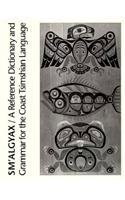
In the mid-1970s, Sm’algyax, the language of the Coast Tsimshian people, came under the protection of Canada’s Urgent Ethnology Programme, which commissioned a dictionary by linguist John Dunn. With the help of many Tsimshian consultants, Dunn completed the dictionary in 1978 and the first written grammar of the language in 1979. The dictionary quickly became the spelling authority for teachers, and together with the grammar has established a standard writing system for Sm’algyax that is in use throughout Alaska and British Columbia. This 1995 publication, with a new preface and revisions by John Dunn, brings these two classic works back into print in a single volume. part I-- “A Practical Dictionary of the Coast Tsimshian Language”--includes for each word a transcription, morphological information, English glosses, and phonetic transcriptions showing local variants of the entry. Part II-- “A Reverence Grammar for the Coast Tsimshian Language”-- is a nontechnical introduction to phonology, morphology, and syntax. It includes summaries showing the basic sentence types and their grammatical relationships. The new one-volume format of the dictionary and grammar will facilitate their use by teachers, students, and the Tsimshian community for years to come. xii, x, 145, xiii, 79 pages ; 28 cm CIRC [ 0 ]
|
1995 |
|
Slough of memories recollections of life in Bothell, Kenmore, North Creek, Woodinville, 1920-1990 by Fred Klein, Northshore History Boosters 
Slough of Memories: Recollections of Life in Bothell, Kenmore, North Creek, Woodinville, 1920-1990, compiled by Fred Klein and the Northshore History Boosters, is a detailed historical account of Washington State's Northshore communities. Published in 1992, the book relies on firsthand personal accounts, historical records, and photographs to trace the area's development along the Sammamish River, which was historically referred to locally as a slough. The narrative captures the everyday lives, cultural shifts, and economic growth of the region over a seventy-year span, documenting its gradual transformation from quiet rural agricultural outposts into bustling Seattle suburbs. ix, 211 pages : illustrations, maps ; 28 cm CIRC [ 1 ]
|
1992 |
|
Slashburner hot times in the British Columbia woods by Nick Raeside 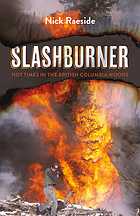
"Nick Raeside worked at many jobs in the logging business but the one that he specialized in was starting forest fires--small, (hopefully) controlled forest fires that were approved by the Forest Service--indeed, required by them--as a means of cleaning up logging slash or debris-laden sites left after the merchantable timber had been removed. It was a crude way of reducing fire hazard and clearing the ground for replanting, and there was a constant danger that the controlled burns would get away and become real wildfires, destroying millions of dollars' worth of standing timber. Raeside found this challenge irresistible. In Slashburner, Raeside recounts many hilarious anecdotes from his career in the BC woods during the 1970s, '80s and '90s. He worked as a forest firefighter for a time, but discovered he was more interested in starting fires than putting them out, and found his calling in slashburning. In between pissing on rain gauges to fake wetter weather and lighting each other's pants on fire, Raeside and his slashburning crews rampaged throughout southern BC armed with drip torches, chainsaws and homemade explosives. They lit fires. They put some of them out. They survived rockslides, animal encounters and flare fights. Slashburner is a rollicking tale of the good old times in the logging business when danger and excitement were the order of the day and almost everyone you met was a memorable character. Raeside captures the flavour of that era as few have done before. Including thirty colour photos that prove it actually did all happen, Slashburner is the first book to take readers beneath the smoke cloud to find out what really takes place on a slashburn."-- Provided by publisher xii, 228 pages, 16 unnumbered pages of plates : color illustrations, map ; 22 cm CIRC [ 0 ]
|
2020 |
|
Skookum an Oregon pioneer family's history and lore by Shannon Applegate 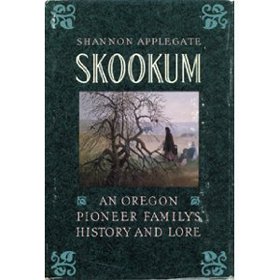
"'Skookum' is the startlingly original narrative rendering of the experiences of a prominent westering family from 1843 to the present. The remarkable story of the Applegate family encompasses many of the predominant themes of the early American West: the overland crossing via the old Oregon Tail in 1843, the quirky restlessness of Applegate men who, after reaching the 'promised land, ' permitted their travel- worn families to rest only for a while, the effects of the intermit- tent gold rushes that continued to upset family lifre long after 1849, the troubled relations between the settler and the Indian ... Shannon Applegate is interested not only in what happemned to her family, but in what it meant to them. How did it feel to be a mother witnessing the death of her child on the way to Oregon, or to be a settler's son watching his Indian friends and old playmates rounded up in the dead of winter and marched off to the reserves? What did it do to the course of a young woman's life when she learned that her father has scratched her name from the family Bible? What sort of world was it where an old blue sugar bowl filled with gold dust could be unconcernedly set out in plain sight?"--Paper dustcover 460 pages : illustrations, maps ; 24 cm CIRC [ 0 ]
|
1990 |
|
Skidegate house models from Haida Gwaii to the Chicago World's Fair and beyond = Hlg̲aagilda naa gii niijing.a k'ad.dala k̲wan : X̲aayda Gwaay.yaay sdaa uu Chicago Tllgaay K̲'aaysguux̲an gud ad is by Robin Kathleen Wright , Jisgang Nika Collison 
"Early in 1892, more than seventeen Haida artists were commissioned to carve a model of their village of Skidegate on Haida Gwaii. The model, displayed at the 1893 World's Columbian Exposition in Chicago, is the only North American example of an aboriginal village systematically documented by its own nineteenth-century residents. It originally featured twenty-nine house and forty-three totem pole models; after the exposition, the model was dispersed and many pieces were lost over time. However, ten house and twenty-two totem pole models remain in Chicago in the collection of the Field Museum of Natural History, and two additional model houses with seven totem poles have been located in other collections. In this highly collaborative research project, Wright combines interviews with members of the Skidegate community today with close study of the extant parts of the model along with a review of the documentation collected in 1892 to bring both the model and the village and community it documents into full view. The community engaged research and resulting book offers valuable insights into Northwest Coast art history and will be a significant cultural resource for the Haida Nation"-- Provided by publisher xvii, 201 pages : illustrations (chiefly color), color map ; 27 x 27 cm. CIRC [ 0 ]
|
2024 |
|
Skid Road on the frontier of health and homelessness in Seattle by Josephine Ensign 
Affluent Seattle has one of the highest numbers of unhoused people in the United States. In 2021 an estimated 40,800 people experienced homelessness in Seattle and King County during the year, not counting the significant number of "hidden" homeless people doubled up with friends or living in and out of cheap hotels. In Skid Road Josephine Ensign uncovers the stories of overlooked and long-silenced people who have lived on the margins of society throughout Seattle's history. How, Ensign asks, has a large, socially progressive city like Seattle responded to the health and social needs of people marginalized by poverty, mental illness, addiction, racial/ethnic/sexual identities, and homelessness? Through extensive historical research, Ensign pieces together the lives and deaths of those not included in official histories of the city. Drawing on interviews, she also shares a diversity of voices within contemporary health and social care and public policy debates. Ensign explores the tensions between caregiving and oppression, as well as charity and solidarity, that polarize perspectives on homelessness throughout the country 288 pages, 10 unnumbered pages of plates : illustrations (black and white) ; 23 cm CIRC [ 0 ]
|
2023 |
|
Sketching in the San Juans--and a bit beyond sketches, paintings, comments by Barbara M. Meyer 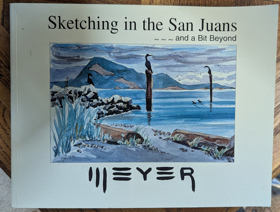
Hold on to your heart as you step into the world of Barbara Meyer's watercolor sketches. Immerse yourself in the tranquility and serenity of every brush stroke as she shares her keenness for empty, wind-swept beaches, new-mown hay and rough -wooded barns. Smile out loud at her humorous and ironic observations of those pesky island birds who insist on occupying every post and piling, especially if it says "No Trespassing". This collection, gently lifted from her sketchbooks, represents the unique observations of one woman's 25-year journey through the timeless space that is the San Juan Islands. Pick up this book as often as you wish, to find a new corner in which to visit and escape. Take a deep breath and inhale the atmosphere. By Barbara Meyer. 1996. Paper Jam Publishing 94 pages : illustrations (some color) ; 22 cm CIRC [ 0 ]
|
1996 |
|
Sketches of Indian life in the Pacific northwest by Alexander Diomedi, Edward J. Kowrach
|
1978 |
|
Sketches of early High Prairie by Nelia Binford Fleming
|
1949 |