Pierce County County
Formed out of Thurston County on December 22, 1852, by the legislature of Oregon Territory, it was named for U.S. President Franklin Pierce.
Mapped Location
Pierce County: The mapped location is an approximation and should not be used for navigation or wayfinding.
Information
General information on Pierce County
- Feature Type: County
- County Seat: City of Tacoma
- Established: Wednesday, December 22, 1852
Official, historical, colloquial and alternative toponyms for Pierce County
A brief list of names that this geographic feature has been named
| Name | Description |
|---|---|
| Pierce County | Official |
Origin Notes and History of Pierce County
References to Pierce County that document the origin of its place name

PIERCE COUNTY, created by the Oregon Territorial Legislature on December 22, 1852, before Congress had created Washington Territory. The name was an honor for Franklin Pierce, who was at that time President-elect of the United States.
Related Catalog Titles
A Bibliography for Pierce County, County
Maritime names of Washington by Richard W. Blumenthal
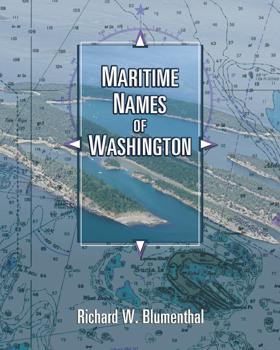
Maritime Names of Washington is a wonderful companion if you are a boating enthusiast or simply curious about Washington’s maritime history. This book is a scholarly study on the origins of place names for our coastal and inland waters. It covers every name that appears on current nautical charts, from the Pacific Coast to the Strait of Juan de Fuca, the San Juans, and Puget Sound from Port Townsend to Olympia. It includes every named island, bay, point, inlet, pass, harbor, rock, channel, strait, canal, peninsula, sound, and shoal. The book also features many local and historical names that are not shown on the charts. The manuscript generally identifies the individual who named the place, when, why, and for whom. It also identifies the chart where the name first appeared and the early settlement history of many places. The manuscript is richly annotated and uses many quotes from the observations of our earliest explorers to give readers a glimpse of what Puget Sound country looked like 200+ years ago. Each of our early explorations is discussed in detail as they relate to individual place names. The book contains 170 pictures and 44 historical nautical charts from 1790 to 1900 that show many of the names
ix, 501 pages : illustrations, maps, charts ; 26 cm
CIRC [ 1 ]
A sound defense military sites, lighthouses, and memorials of Puget Sound by Nancy L. McDaniel

"A Sound Defense" is a comprehensive description of military sites of Puget Sound. Military historical sites in the twelve counties (Whatcom, Skagit, Snohomish, San Juan, Island, King, Pierce, Thurston, Mason, Kitsap, Clallam and Jefferson) are described with an emphasis on the unique things which happened there. Over 150 pictures and maps are included. Nancy McDaniel, Colonel, USAF, MSC (Retired) is a Washington State native and brings a love of the area and combines that with a perspective on the contributions that the military has had on Western Washington. "A Sound Defense" describes blockhouses built during the Indian conflicts. It addresses "The Pig War" and the politics of the international relationships which helped establish the boundaries of the United States. Forts built to protect Puget Sound as a result of the decisions of the Endicott Board are described along with the personalities of the commanders and personnel who were assigned there. Long forgotten installations established to provide early warning of approaching enemy aircraft are prominent in this comprehensive book. Lighthouses throughout the area are highlighted with the inclusion of historical photos and stories of early lightkeepers. Most importantly, "A Sound Defense" recognizes the contributions of military personnel throughout the years by the inclusion of memorials and facilities dedicated to recognizing their service to the country.
xvi, 365 pages : illustrations, maps ; 23 cm
CIRC [ 1 ]
Levant F. Thompson hop king, banker, senator, Pierce County, Washington pioneer by Jack R. Evans
Authored by local historian Jack R. Evans, Levant F. Thompson: Hop King, Banker, Senator, Pierce County, Washington Pioneer chronicles the extraordinary life and rapid rise of a defining 19th-century Pacific Northwest entrepreneur. The book traces Thompson’s multifaceted career from an ambitious agrarian settler into a dominant agricultural baron controlling vast hop-growing empires, before pivoting into banking and state politics. Through extensive archival records and biographical details, the text illuminates the volatile economic forces and speculative fortunes that built the infrastructure of early Pierce County. A keen insight drawn from the work is how regional agricultural monopolies served as the foundational launchpad for political power; by converting massive windfalls from the speculative hop boom into banking capital and legislative influence, pioneers like Thompson demonstrated that early Washington state politics were directly engineered by those who could successfully weather the boom-and-bust cycles of single-crop commodity markets.
ii, i, 49 pages : illustrations ; 21 cm.
CIRC [ 1 ]
Island memoir a personal history of Anderson and McNeil Islands by Betsey Johnson Cammon
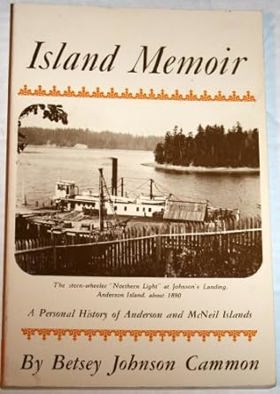
Bessie Cammon's who, what, when, where and why on Anderson Island demonstrates that the history of the West is the history of people... Her book is people, the Christensens, Ekenstams, Johnsons, and the other pioneer settlers of Anderson Island... These settlers typified the national groups who found homes in the western wilderness and who successfully adapted to the rigors of frontier life. --Bruce LeRoy, Director Washington State Historical Society
228 pages : illustrations ; 23 cm
CIRC [ 1 ]
South on the Sound an illustrated history of Tacoma and Pierce County by Murray Morgan, Rosa Morgan , Rita Happy
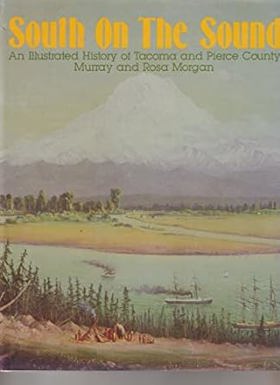
South on the Sound: An Illustrated History of Tacoma and Pierce County chronicles the evolution of Washington’s "City of Destiny" and its surrounding region from Indigenous roots and early European settlement through its late-twentieth-century industrial growth. Written by celebrated Pacific Northwest historian Murray Morgan alongside Rosa Morgan and Rita Happy, the book combines engaging narrative with a rich archive of historical photographs, maps, and archival imagery. It highlights major regional milestones, including Tacoma's pivotal selection as the Northern Pacific Railroad’s western terminus, the rise of timber and maritime shipping, and local community life. The volume stands as an accessible, visually driven portrait of the South Sound's cultural and economic heritage.
199 pages : illustrations (some color) ; 29 cm
CIRC [ 1 ]
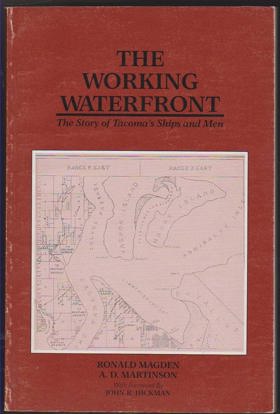
The working waterfront the story of Tacoma's ships and men by Ronald Magden, A. D. Martinson
Puget's sound a narrative of early Tacoma and the southern Sound by Murray Morgan
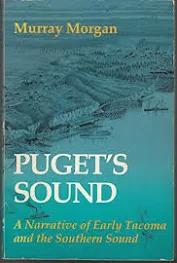
With the same ability to make personalities and events come alive that characterizes his classic "Skid Road", Murray Morgan here tells the colorful story of southern Puget Sound, where major events of Washington's history took place, and of Tacoma, the area's principal city. Drawing upon the original journals and reports, Morgan tells his story largely in terms of individuals, interweaving portraits of well-known historical figures with those who are more obscure but who have a special significance. Journalist and historian Murray Morgan (1916-2000) was the author of more than twenty books, including "Skid Road: An Informal Portrait of Seattle" and "The Last Wilderness". He worked for "Time" magazine, the "New York Herald Tribune", and CBS News before returning to Washington where he taught at Tacoma Community College and for fifteen years hosted the early morning radio show 'Our Town, Our World.'
360 s. : illustrations
CIRC [ 1 ]
Postmarked Washington Pierce County by Guy Reed Ramsey, Jeanne Engerman

From wilderness to suburbia an illustrated history of Parkland, Washington by Richard D. Osness
Along the waterfront a history of Gig Harbor and Key Peninsula areas by Goodman Middle School, Gig Harbor, Wash
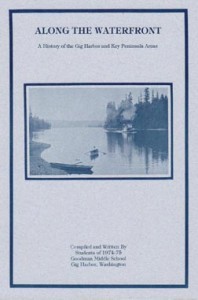
Compiled and written by students of 1974-1975 Goodman Middle School. Gig Harbor, Washington.
130 pages : illustrations ; 21 cm
CIRC [ 1 ]
Origin of geographic names of Tacoma/Pierce County, Washington by Gary Fuller Reese
Du Pont--the story of a company town by May G. Munyan
Island year by Hazel Heckman , Laurie Olin (Illustrator)
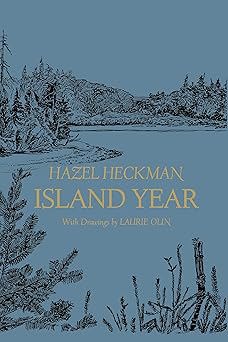
In her first book, Island in the Sound, Heckman brought to life Anderson Island in Puget Sound, its people, its history, and its sadly vanishing way of life. Now, in this book, she brings the same clarity of vision, warmth, and insight to the natural life of her island, recording the cycle of the seasons as an appreciative and articulate observer. This is a diary of the natural world where the same things happen again and again but are always new. Each month brings surprises, expected or not: the blossoming of the wild red flower currant in March, the appearance of a pod of killer whales in July. Mrs. Heckman’s gift to the reader, as in all of the best nature writing, is to let us see it through her eyes, as if never seen before. But the developers have arrived, and the natural world of the Island is as threatened as the way of life of its people. Mrs. Heckman knows that Anderson Island is not the Grand Canyon, that its destruction will never arouse great public indignation, but while it exists as one of the ‘little wild places’ she is able to share it and her love for it.
xi, 255 pages : illustrations ; 23 cm
CIRC [ 0 ]
Island in the sound by Hazel Heckman
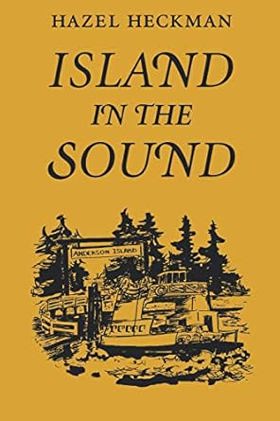
Anderson Island in Puget Sound exists as a kind of tiny, autonomous world. Sharply defined by bitterly cold water, deep enough to float a destroyer; by dense fog; and by dangerous tide rips caused by the narrow channels, it is a community without an officer of the law, a minister of the gospel, or a doctor of medicine. Nevertheless, it is a tightly knit and well-organized microcosm in its wilderness environment. Hailed as a ‘local classic’ by Murray Morgan and Wallace Stegner, Hazel Heckman’s story of this Northwest island will have strong appeal for devotees of island life anywhere. The Pacific Northwesterner will learn much about his native soil, but this book will find an audience far beyond the shadows of Mount Rainier and the wild Olympics. It will be especially treasured by those who feel deep nostalgia for the leisurely pace of life in a small community. Wit, depth of perception, engaging literary style -- all are warmly present in this saga of a Midwestern woman’s experience with a new homeland, an environment strange and very different from the dusty Oklahoma country where she had lived for the previous twenty years. Feeling at first that the perpetual rain and gray skies were a high price to pay for a relatively comfortable year-round climate, Mrs. Heckman came to like, and eventually to love, the Northwest only after she discovered Anderson Island. Located near McNeil Island in upper Puget Sound, Anderson has approximately ninety permanent residents. Most of them are descendants of the original Scandinavian settlers of the Island, and they seem to have inherited the individualism and self-reliance necessary to survive in a hostile environment. Thus, ‘modern’ innovations, such as regular ferry service and electricity, are comparatively recent developments. This book is the lively chronicle of Anderson Island -- its history, its residents, its idiosyncrasies, its commonplaces. Mrs. Heckman’s lyrical evocations of the natural life have captured the essence of Anderson Island.
xii, 284 pages illustrations, map 23 cm
CIRC [ 1 ]
Steamer to Tacoma by Wilbur Thompson, Allen Beach
History of Pierce County, Washington by W. P. Bonney
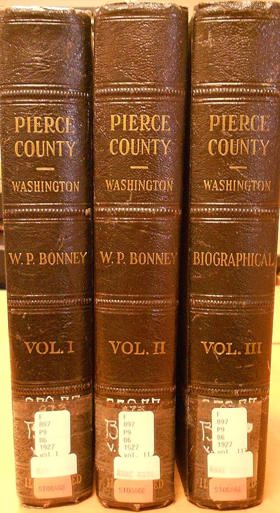
Published in 1927 by William P. Bonney, the long-serving secretary of the Washington State Historical Society, History of Pierce County, Washington is an exhaustive, multi-volume civic chronicle detailing the rapid industrial and demographic transformation of the southern Puget Sound. The text traces the region's development from the early commercial operations of the Hudson's Bay Company at Fort Nisqually and the contentious Medicine Creek Treaty, through the violent Puget Sound War of 1855–1856, culminating in the massive economic boom sparked by Tacoma securing the terminus of the Northern Pacific Railroad. Following the established model of commercial pioneer literature, the primary historical narrative is heavily subsidized by subsequent volumes of flattering biographical sketches of local merchants, politicians, and industrialists, effectively functioning as a sprawling monument to the capitalist triumph of the local elite.
A keen insight drawn from the work is how the institutionalization of local history was utilized to posthumously litigate and justify the most controversial acts of frontier violence; by framing the Puget Sound War and the deeply contested execution of Nisqually Chief Leschi as tragic but necessary assertions of territorial law, Bonney's narrative effectively absolves the pioneer government of its aggressive, fraudulent land seizures. By anchoring the legal origins of Pierce County in the triumph of martial and judicial order over Indigenous resistance, the text actively sanitizes the violent foundations of Tacoma's industrial prosperity, demanding that readers accept the systemic dispossession of the Nisqually and Puyallup peoples not as a localized atrocity, but as the unavoidable, legally sanctioned price of modern civic civilization.
3 volumes : illustrations, portraits ; 28 cm
CIRC [ 2 ]
Tacoma, its history and its builders a half century of activity by Herbert Hunt

Published in 1916 by journalist Herbert Hunt, Tacoma, Its History and Its Builders: A Half Century of Activity offers an exhaustive chronicle of the city’s aggressive rise from a rugged Puget Sound mill town to a major industrial railroad terminus. The multi-volume text details the ruthless corporate maneuvering of the Northern Pacific Railway, the fierce regional rivalry with Seattle, and the foundational lumber and maritime industries that fueled Tacoma's ambitions as the self-proclaimed "City of Destiny." A keen insight drawn from the work is how early civic boosterism actively sanitized the city's history of racial violence to protect its commercial reputation; by framing the brutal 1885 expulsion of Tacoma's entire Chinese community as a tragic but necessary measure for labor stability, Hunt's narrative demonstrates how pioneer-era historians deliberately rewrote organized xenophobia as an acceptable cost of maintaining civic order and industrial progress.
3 volumes frontispieces, plates, portraits, maps 27 cm
ONLINE CIRC [ 3 ]
Pierce County
- Alder
- Alderton
- Allison
- American Lake Garden Tract
- Arletta
- Artondale
- Ashford
- Bayview
- Bee
- Benroy
- Berkeley
- City of Bonney Lake
- Brookdale
- Browns Point
- City of Buckley
- Burnett
- Caledonia
- Canterwood
- Town of Carbonado
- Cascade Junction
- Castlenook (historical)
- Cebalop (historical)
- Cedar View
- Clay City
- Clinton Park
- Clover Park
- Croker
- Cromwell
- Custer
- Dash Point
- Dieringer
- City of DuPont
- East Cromwell
- Eastward
- Town of Eatonville
- Eatonville Junction
- City of Edgewood
- Elbe
- Electron
- Elk Plain
- Excelsior
- Fairfax
- City of Fife
- Fife Heights
- City of Fircrest
- Forest Beach
- Fort Nisqually
- Fox Island
- Fox Island
- Frederickson
- Gertrude
- City of Gig Harbor
- Glencove
- Graham
- Greenwater
- Herron
- Hillhurst
- Hillside
- Home
- Hope
- Interlaken
- Jims Corner
- Johnson Landing
- Johnsons Corner
- Kapowsin
- Ketron
- Key Center
- La Grande
- Lake Bay
- Lake City
- Lakebay
- Lakeview
- City of Lakewood
- Larchmont
- Leber
- Longbranch
- Longmire
- Loveland
- Magnolia Heights
- Maplewood
- McKenna
- McMillin
- Meridian
- Midland
- Midway
- City of Milton
- Minter
- Mock City
- Monta Vista
- National
- New Reliance
- Nisqually Vista
- North Puyallup
- Oakland
- Ohop
- Ohop Bob
- Old Tacoma
- City of Orting
- Paradise
- Park Junction
- Parkland
- Peach Acres
- Pioneer
- Ponderosa Estates
- Ponders Corner
- Prairie Ridge
- Purdy
- City of Puyallup
- Puyallup River Junction
- Reliance
- Rhododendron Park
- Rocky Ridge
- Rosedale
- City of Roy
- Town of Ruston
- Shore Acres
- Snoquera
- South Hill
- Town of South Prairie
- Spanaway
- Town of Steilacoom
- Summit
- City of Sumner
- Sunrise
- Sunrise Beach
- Sunset Beach
- Sunshine Beach
- Surprise Valley
- Swede Hill
- City of Tacoma
- Tanwax
- Thrift
- Tillicum
- City of University Place
- Upper Fairfax
- Vaughn
- Voss Resort
- Waller
- Warren
- Wauna
- Town of Wilkeson
- Wollochet
- Yoman
Political Boundaries
Last updated: 2025-09-23