Catalog of British Columbiana and Pacific Northwest Americana
Encyclopedia Cascadia Catalog contains book titles of mostly non-fiction Pacific Northwest Coast of North America Titles (primarially British Columbia, Idaho, Oregon and Washington State) in an easy-to-understand title catalog. If you see a link with this badge ONLINE CIRC it means that there is an online institution that provides free access to that title. In some cases there may be more than one institution hosting the title digitally.
| Catalog Title | Published |
|---|---|
|
The pioneering life of Peter Kirk from Derbyshire to the Pacific Northwest by Saundra Middleton 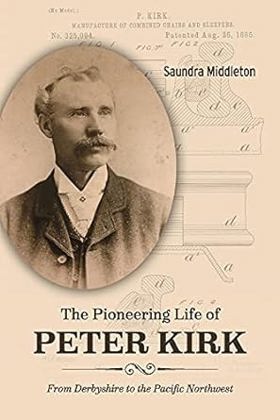
Peter Kirk, Esq. tracked the world iron markets diligently. He had to. Kirk employed 1000 men and boys in his integrated iron and steel works in Workington, England. Britain's market share was losing ground to America's burgeoning steel industry. In 1886, he sailed from Workington flush with decades of success in Britain's Victorian era rail expansion. - from the publisher ix, 293 pages : illustrations ; 23 cm CIRC [ 1 ]
|
2021 |
|
Anakú Iwachá Yakama legends and stories by Virginia Beavert , Michelle M. Jacob , Joana W. Jansen 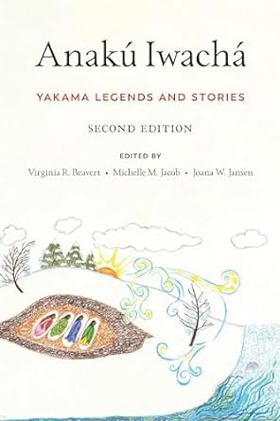
An expanded collection of foundational Yakama stories. Central to the Yakama oral tradition, storytelling enables Tribal Elders to share lessons, values, and customs with younger generations across the Columbia River plateau and the Pacific Northwest. Drawn from a time before the coming of human beings when animals were like people, the stories present characters and motifs that paint a bigger picture of the world as Yakama ancestors knew it. The original edition of Anakú Iwachá featured stories that Yakama Tribal Elders recorded in several dialects of the Ichishkíin language that were collected and translated into English by renowned linguist and scholar Virginia Beavert. This new edition adds a preface from the Yakama Nation and essays on the history of the project and on Ichishkíin-language education. It includes four additional legends in Ichishkíin and English, annotations, an updated glossary, and more artwork by Tribal artists, helping readers, teachers, and students engage with the legends as teaching and learning tools and as a precious gift to current and future Yakama generations. xxi, 372 pages : illustrations (some color), maps (some color) ; 23 cm CIRC [ 1 ]
|
2021 |
|
Resilience through writing a bibliographic guide to Indigenous-authored publications in the Pacific Northwest before 1960 by Robert E. Walls , Darby C. Stapp , Alexandra L.C. Martin (Book designer), Victoria M.R. Boozer (Book designer) 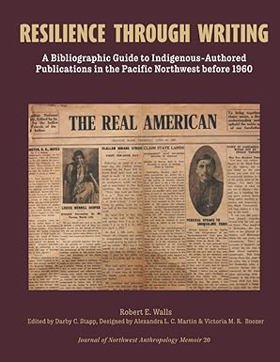
Resilience Through Writing: A Bibliographic Guide to Indigenous-Authored Publications in the Pacific Northwest before 1960 includes nearly 2,000 entries by over 700 individuals, 29% of them women, most of which were largely unknown. Coverage has been thorough, with writings from coastal and interior regions of Alaska, British Columbia, Washington, Idaho, Oregon, and northern California. Entries include newspaper letters to the editors, school compositions, speeches, legal statements, and articles in miscellaneous relatively obscure publications. These materials thus provide new perspectives on Native American/First Nations cultures in the Pacific Northwest. The potential value of this material to descendants; tribal members; tribal historians; and scholars of Indigenous literature, political science, and culture change is enormous. By producing this bibliography and allowing the Journal of Northwest Anthropology (JONA) to publish it in our Memoir series, Robert Walls has given those interested in Northwest Indigenous writings the roadmap to years of research. xiv, 481 pages : illustrations ; 28 cm CIRC [ 0 ]
|
2021 |
|
Always pack a candle a nurse in the Cariboo-Chilcotin by Marion Crook 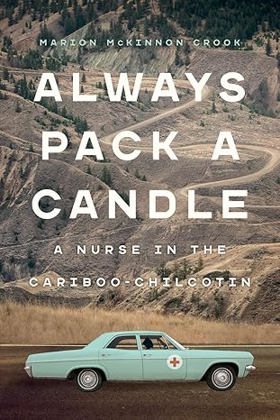
"The true story of an adventurous young nurse who provided much-needed health care to the rural communities of the Cariboo-Chilcotin in the 1960s. In 1962, newly minted public health nurse Marion McKinnon arrived in the small community of Williams Lake in BC's Cariboo region. Armed with more confidence than experience, she got into her government-issued Chevy--packed with immunization supplies, baby scales, and emergency drugs--and headed out into her 9,300-square-kilometre territory, inhabited by ranchers; mill workers; and many vulnerable men, women, and children who were at risk of falling through the cracks of Canada's social welfare system. At twenty-two, a naïve yet enthusiastic Marion relied entirely on her academic knowledge and her common sense. She doled out birth control and parenting advice to women who had far more life experience than she. She routinely dealt with condescending doctors and dismissive or openly belligerent patients. She immunized school children en masse and made home visits to impoverished communities. She drove out into the vast countryside in freezing temperatures, with only a candle, antifreeze, chains, and chocolate bars as emergency equipment. In one year, Marion received a more rigorous education in the field than she had at university. She helped countless people, made many mistakes, learned to recognize systemic injustice, and even managed to get into a couple of romantic entanglements. Pack a Candle is an unforgettable and eye-opening memoir of one frontline worker's courage, humility, and compassion."-- Provided by publisher 278 pages : maps, portrait ; 23 cm CIRC [ 0 ]
|
2021 |
|
The warden's son growing up at the Idaho State Penitentiary by Jerry Clapp 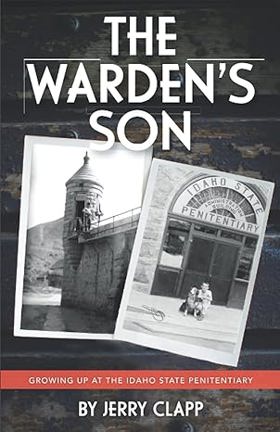
"When Jerry Clapp’s father became warden of the Idaho State Penitentiary in 1945, the young boy quickly learned the rules and boundaries of roaming one of the most dangerous grounds in the West. Through his school years, Jerry would become the confidante to many a wild tale from friendly inmates—an old man serving life for multiple assassinations, a beautiful teenager in the women’s prison, and an incarcerated war hero who became a lifelong role model. These are the stories Jerry would tell his grandchildren—from chilling recollections of riots, escapes, and hangings to the profound remembrances of inmates, guards, and the warden. This fascinating “family portrait” truly brings the Old Idaho Penitentiary roaring back to life" -- from publisher 151 pages : illustrations ; 22 cm CIRC [ 0 ]
|
2021 |
|
Coming home to Nez Perce country the Niimíipuu campaign to repatriate their exploited heritage by Trevor James Bond 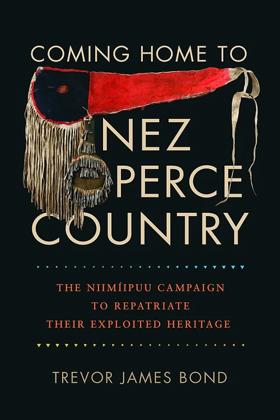
Missionary Henry Spalding shipped two barrels of "Indian curiosities" to Ohio in 1847. The author delves into the story of the exquisite Nez Perce shirts, dresses, baskets, and horse regalia, the tribe's grassroots campaign to restore their exploited cultural heritage, and the ethics of acquiring and selling Native cultural history- In 1847, two barrels of “Indian curiosities” were shipped by missionary Henry Spalding to Dr. Dudley Allen in Kinsman, Ohio. The items inside included exquisite Nez Perce shirts, dresses, baskets, and horse regalia—some decorated with porcupine quills and others with precious dentalium shells and rare elk teeth. Donated to Oberlin College in 1893 and transferred to the Ohio Historical Society (OHS) in 1942, the Spalding-Allen Collection languished in storage until Nez Perce National Historic Park curators rediscovered it in 1976. The OHS loaned most of the artifacts to the National Park Service, where they received conservation treatment and were displayed in climate-controlled cases. Josiah Pinkham, Nez Perce cultural specialist, notes that they embody “the earliest and greatest centralization of ethnographic objects for the Nez Perce people. You don’t have a collection of this size, this age, anywhere else in the world.” Twelve years later, the OHS abruptly recalled the collection, but after public pressure and extended negotiations, agreed to sell the articles to the Nez Perce at their full appraised value of $608,100 and a six-month deadline. The tribe formed the Nez Perce Heritage Quest Alliance and mounted a brilliant grassroots fundraising campaign. One day before the deadline, they met their goal. The author draws on interviews with Nez Perce experts and extensive archival research to tell the Spalding-Allen Collection story. He also examines the ethics of acquiring, bartering, owning, and selling Native cultural history, as Native American, First Nation, and Indigenous communities continue their efforts to restore their exploited cultural heritage from collectors and museums—pieces that are living, breathing, intimately connected to their home region, and inspirational for sustaining cultural traditions.- Provided by publisher 206 pages : illustrations (chiefly color) ; 23 cm CIRC [ 0 ]
|
2021 |
|
Manzanita, Nehalem, and Wheeler by Mark Beach , Nehalem Valley Historical Society 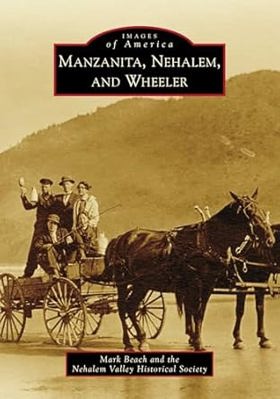
"Manzanita, Nehalem, and Wheeler are three villages in Oregon that function as one community. Located in the Nehalem Bay area of Oregon's Pacific coast, they share many essential services while maintaining different personalities as cities. The Nehalem Bay area includes Oswald West and Nehalem Bay State Parks, Neahkahnie Mountain, and a large bay where the Nehalem River enters the ocean. A few hardy souls made this area--the last part of the coast to be settled--in north Tillamook County their home starting in the 1870s. The new residents used industries such as dairy, logging, and tourism to harness the natural resources of their picturesque surroundings and develop their communities. Organizations such as the Pine Grove Community Club, the North County Recreation District, and the Hoffman Center for the Arts are just a few of the reasons these three villages attract thousands of tourists and visitors every year"-- Publisher's website 127 pages : illustrations, maps, portraits ; 24 cm. CIRC [ 0 ]
|
2021 |
|
Pushed out contested development and rural gentrification in the US West by Ryanne Pilgeram 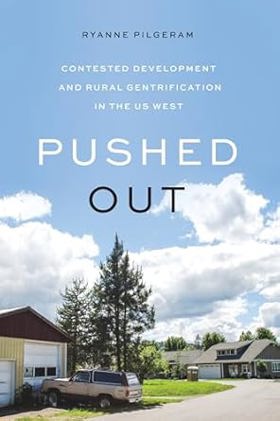
"What happens to rural communities when their traditional economic base collapses? When new money comes in, who gets left behind? Pushed Out offers a rich portrait of Dover, Idaho, whose transformation from "thriving timber mill town" to "economically depressed small town" to "trendy second-home location" over the past four decades embodies the story and challenges of many other rural communities. Sociologist Ryanne Pilgeram explores the structural forces driving rural gentrification and examines how social and environmental inequality are written onto these landscapes. Based on in-depth interviews and archival data, she grounds this highly readable ethnography in a long view of the region that takes account of geological history, settler colonialism, and histories of power and exploitation within capitalism. Pilgeram's analysis reveals the processes and mechanisms that make such communities vulnerable to gentrification and points the way to a radical justice that prioritizes the economic, social, and environmental sustainability necessary to restore these communities"-- Provided by publisher xv, 194 pages : illustrations (black and white), maps (black and white) ; 24 cm CIRC [ 0 ]
|
2021 |
|
Hiking Washington's history by Judith M Bentley , Craig Romano 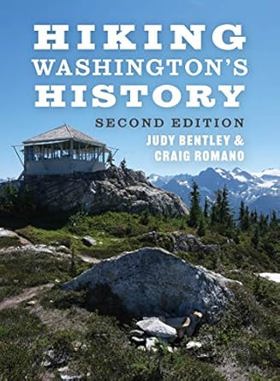
"For thousands of years people have traveled across Washington's spectacular terrain, establishing footpaths and roads to reach hunting grounds and coal mines high in the mountains, fishing sites and trade emporiums on the rivers, forests of old growth, and homesteads and towns on prairies. These traditional routes have been preserved in national parks, restored by cities and towns, salvaged from old railroad tracks, and opened to hikers by Indigenous communities. In this new, full-color edition of the first-ever hiking guide to650 the state's historic trails, historian and hiker Judy Bentley teams up with veteran guidebook author Craig Romano to lead adventurers of all abilities along trails on the coast, over mountains, through national forests, across plateaus, and on the banks of the Columbia River. Features include: 44 hikes, including 12 new additions Full-color trail maps A trails timeline that connects hikes to key events Updated trail descriptions Accounts from diaries, journals, and archives Historical overviews of 8 regions of the state Contemporary and historical photographs Bentley and Romano offer an essential boots-on-the ground history of some of the state's most fascinating places"-- Provided by publisher 336 pages : illustrations, maps ; 19 cm CIRC [ 0 ]
|
2021 |
|
The weather of the Pacific Northwest by Cliff Mass 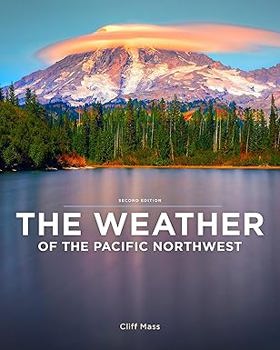
""Fridays at ten of four is when we listen to our favorite person ever, Cliff Mass. If you don't know who Cliff Mass is, well, he's this thing me and Mom have, this awesome weather geek who loves weather so much you have no choice but to love him in return." - from Maria Semple's novel, Where'd You Go, Bernadette? This is a lavishly illustrated guide to making sense of the region's unique atmospheric and geographic forces. For the new edition of this contemporary classic, Cliff Mass has extensively revised and updated, as well as expanding his coverage of British Columbia as well as considering the impact of wildfires on the region's meteorology. A fascinating read, the book is indispensable to anyone who seeks a deeper understanding of the region's is weather"-- Provided by publisher ix, 299 pages : illustrations (chiefly color), maps (chiefly color) ; 26 cm CIRC [ 0 ]
|
2021 |
|
Union Zindabad! South Asian Canadian labour history in British Columbia by Donna Sacuta , Bailey Garden , Anushay Malik , University of the Fraser Valley South Asian Studies Institute (Issuing body) 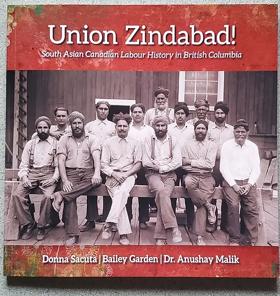
Union Zindabad focuses on the history of South Asian immigrants as workers, and their relationship to the labour movement in BC. It also explores the evolving attitudes of unions towards South Asian immigrant labour.--page xi xii, 118 pages : illustrations ; 21 x 21 cm CIRC [ 0 ]
|
2022 |
|
Beneath the coal dust historical journeys through the Elk Valley and Crowsnest Pass by Wayne R. Norton 
"In Beneath the Coal Dust, author Wayne Norton digs deep, exploring the fascinating and sometimes sobering stories of the mining communities in the Elk Valley and the Crowsnest Pass. In this new collection, Norton chooses mainly a micro view, focusing on the stories that are specific to this isolated and unique geographic region. These tales span from the notorious red-light district of Fernie to women's ice hockey in the 1920s, to the civic financial crisis caused by the Home Bank collapse, the regional history of breweries and prohibition, and the experiences and amazing fortitude of both Chinese and Syrian immigrants in what was a predominantly white settler town. This is a book about the local past, intended for those interested not necessarily in the broad sweep of national history, but rather in the smaller stories that are specific to this remote and historically rich area. And instead of dealing with the core regional narrative surrounding the coal industry, these explorations reveal some of what has been neglected and hidden "beneath the coal dust," as the title suggests."-- Provided by publisher 207 pages : illustrations (some colour), map ; 23 cm CIRC [ 0 ]
|
2022 |
|
The shuswap country by Erskine Burnett, Jim Cooperman 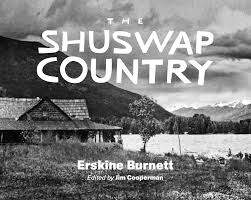
A transplanted Scotsman, Erskine was smitten by the Shuswap where he tended a fruit orchard and with his wife Alice, raised a family. Over the decades he explored every nook and cranny, with the keen eye of a newcomer. He motored, camped and trekked, following every conceivable route in the 1930s and 1940s. The Shuswap Country is his travelogue of observations, characters, anecdotes, puns, tall tales with a smattering of corny humour. It’s also bursting with crisp, clear photographs snapped by the author, making this a priceless document of pioneers, community halls, “auto camps,” train stations, sawmills, Main streets and pristine mountain meadows. Some of those meadows are now preserved inside provincial park boundaries like the Monashee. Erskine had the heart of a poet. He was captured by the shifting quality of light as it tracked across the landscape, or the “sombre green” of fir trees contrasted against the “bright green of birch.” A storm moving down Adams Lake, “has its own moods like temperamental humans.” He revels in flora and fauna – lupines, swallowtail butterflies, or a porcupine that made the mistake of munching into a packsack. His hand-drawn map at the beginning of the book is handy to help understand where we’re travelling next over these twelve journeys. Whether it’s high in the mountains to chat up sheep herders, or down into lush valleys with sweet alfalfa and Herefords dotting the countryside. A gregarious traveller, Erskine was usually certain to make a new friend, or break bread with an old one. He travelled on a road network that was still under development. “The best thing that can be said for the roads at present is there is room for improvement,” he sputters while motoring in the Eagle Valley near Malakwa. He loved to fish the region’s lakes and streams, with dreams of landing a trout for dinner. “A Sugar Lake trout cooked alfresco over a campfire is something to be remembered.” He seems to know every fishing lodge intimately, and where to buy worms at 10 cents a dozen. One is startled to read that canned “red” salmon was so plentiful that local people grew tired of it. Today, as we watch sockeye stocks crash it’s shocking to think that a bounty that has sustained Indigenous peoples for thousands of years can no longer be counted on. A devastation that has occurred within two or three lifetimes. The Shuswap Country might hook you into exploring this underappreciated region, it’s much more than a rest stop on the way to elsewhere. There is an honouring and celebration of the rural existence that is now mostly a memory. We should all visit and take Erskine’s scrapbook along to help see what’s been lost, and what may still be found. 114 pages : illustrations ; 21 x 26 cm CIRC [ 0 ]
|
2022 |
|
Hard is the journey stories of Chinese settlement in British Columbia's Kootenay by Lily Chow 
"In Hard is the Journey, award-winning historian and researcher Lily Chow shares the difficult history of Chinese Canadians in the Kootenay. She unearths the racism of early newspapers that portrayed Chinese immigrants as dirty, sinister, and lethargic people not fit to live in BC and uncovers the history of the Chinese labourers who completed the deadly work of blazing the Dewdney Trail from Hope to Kootenay only to be dismissed, without any compensation, as soon as the project was completed. She also offers an intimate and inspiring look into the many ways Chinese immigrants survived, finding community, building resilience, and preserving their culture. Piecing together interviews with Kootenay residents and descendents of Chinese immigrants, government records and documents, and early newspaper articles, Chow bravely exposes dark parts of BC's history while shedding light on the struggles but also resilience and untold accomplishments of the Chinese immigrants who risked everything and often lost their lives in building the Canada we know today. Hard is the Journey is Chow's fourth book on the history of Chinese Canadians."-- Provided by publisher 222 pages : illustrations ; 23 cm CIRC [ 0 ]
|
2022 |
|
A season on Vancouver Island by Bill Arnott (Author, Photographer) 
"Join intrepid travel writer Bill Arnott as he escapes the confines of life in Vancouver for an epic and quirky road trip around Vancouver Island and to some of the surrounding smaller islands. Hitting all of the high points and chatting with locals along the way, Bill discovers why Vancouver Island has become one of western North America's top tourist destinations. From great food to wonderful wine, stunning natural habitats and memorable encounters with wildlife, Bill paints a charming picture of life on Canada's West Coast."-- Front cover flap 197 pages : color illustrations, color map ; 18 cm CIRC [ 0 ]
|
2022 |
|
Connecting the Kootenays the Kootenay Lake ferries : a hundred years of service, 1921-2020 by Michael A. Cone 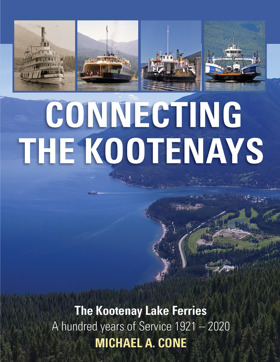
Connecting the Kootenays: The Kootenay Lake Ferries is the authoritative history of a century of ferry service across Kootenay Lake. Historian Michael A. Cone follows the service from its genesis in 1921, when it first linked the East and West Kootenays together as part of the visionary Southern Trans-Provincial highway, right up until its 100th anniversary in 2020, when the existing two-ferry operation is on the verge of turning another page with the introduction of a new ‘electric ready’ ferry with state-of-the-art technology. The story starts with coal-fired CPR sternwheelers – graceful and luxurious in their accommodations – carrying automobiles between Kuskanook and Nelson and then progresses to a ferry service owned and operated by the Provincial Government. From 1931 until 1947, the ferry ran between Fraser’s Landing and Gray Creek. In the post-War boom, the route was shortened to what it is today. For the next 73 years, Kootenay Lake ferries have crossed between Balfour and Kootenay Bay, always ready to provide a safe, convenient, sometimes vital year-round link to the communities they serve, regardless of how bad the weather is. Michael Cone’s book chronicles the changes that have taken place over the century, from transformations in ferry designs and docking facilities, improvements in navigation techniques, evolution in crew uniforms and safety, to privatization of operations, revised scheduling and, not to forget, the removal of the ferry tolls in 1963. Over the years the operation has altered to keep pace with the changes in public taste, ranging from demands for shorter routes and less congestion, and improved on board and terminal conveniences, to changes in automobile styling, including the advent of RVs and larger commercial trucks. Connecting the Kootenays: The Kootenay Lake Ferries is a local history book you’ll want to curl up and read. It is filled with colourful first-hand accounts from crew members who were there, with black and white and period colour photos, many of which will be new for even the most ardent Kootenay historians. xii, 354 pages : illustrations (some colour), maps ; 28 cm CIRC [ 0 ]
|
2022 |
|
Making a chaputs the teachings and responsibilities of a canoe maker by Joe Martin , Alan L. Hoover , Royal British Columbia Museum (Issuing body) 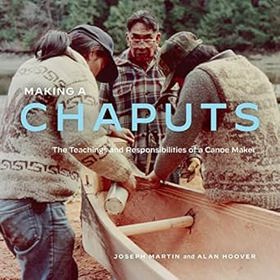
"Tla-o-qui-aht master canoe maker Joe Martin, in collaboration with former museum curator Alan Hoover, describes the meaning and method behind one of the most vivid and memorable symbols of the Northwest Coast: the dugout canoe. Both artform and technological marvel, the chaputs carries Indigenous cultural knowledge passed down through generations, not only of the practical forestry and woodworking that shape every canoe, but also of the role and responsibilities of the canoe maker. The text includes both a step-by-step explanation of the canoe-making process from tree selection onward (carefully described and dynamically illustrated) and the personal histories of a number of Joe's canoes, encompassing their planning, creation, cultural significance and role in the process of reconciliation. The teachings Joe received from his father and the expertise he has gained in a lifetime of canoe-making are recorded here in his own words for generations to come."-- Provided by publisher 86 pages : illustrations (chiefly color), map ; 23 cm CIRC [ 0 ]
|
2022 |
|
Mayne Queen the passing of a ferry by John Wiznuk 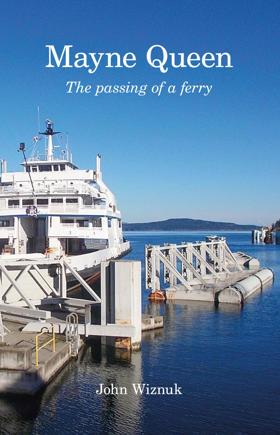
"A history of one of the first ships in the fleet of the British Columbia Ferries system. It is a memoir of the ship, her role in serving the Southern Gulf Islands (SGI) and other parts of coastal B.C., and a description of the her relationship with the people of the SGI and elsewhere who rode her over the decades. It celebrates her retirement from regular service, and the 60th anniversary of the B.C. Ferries service in 2022."-- Provided by publisher pages cm CIRC [ 0 ]
|
2022 |
|
Religion at the edge nature, spirituality, and secularity in the Pacific Northwest by Paul Bramadat , Patricia O'Connell Killen , Sarah Wilkins-Laflamme 
"The Cascadia bioregion-- British Columbia, Washington, and Oregon-- has long been at the forefront of cultural shifts occurring throughout North America, in particular regarding religious institutions, ideas, and practices. Religion at the Edge explores the rise of religious "nones," the decline of mainstream Christian denominations, spiritual and environmental innovation, increasing religious pluralism, and the growth of smaller, more traditional faith groups. The first research-driven book to address religion, spirituality, and irreligion in the Pacific Northwest, Religion at the Edge expands our understanding of the nature, scale, and implications of socioreligious changes in North America, and the relevance of regionalism to that discussion."-- Provided by publisher viii, 266 pages : illustrations, maps, charts ; 24 cm CIRC [ 0 ]
|
2022 |
|
The acid room the psychedelic trials and tribulations of Hollywood Hospital by Jesse Donaldson , Erika Dyck 
"From the street, New Westminster’s Hollywood Hospital didn’t look like much – just a rambling white mansion, mostly obscured behind the holly trees from which it took its name.But, between 1957 and 1968, it was the site of more than 6000 supervised acid trips, as part of the burgeoning (and controversial) field of psychedelic psychiatry. Under the care of Medical Director J Ross MacLean, and ex-spy/researcher Al “Captain Trips” Hubbard, it became a mecca for alcoholics, anxiety patients, and unhappy couples (as well as celebrities like Andy Williams), its unorthodox methods boasting a success rate of nearly 80%. But the same media attention that brought the hospital to prominence also assured its downfall, as prohibition forces drove their work underground for more than fifty years.Written by 49.2 regular Jesse Donaldson and academic historian Erika Dyck, The Acid Room takes readers into the hospital’s inner sanctum, charting its meteoric rise and fall as it opened up brave new worlds in medicine, and put Canada at the forefront of a movement that is only now being fully explored."-- Provided by publisher 155 pages : illustrations ; 17 cm. CIRC [ 0 ]
|
2022 |
|
Pioneer churches of the gold rush trail an explorer's guide by Liz Bryan 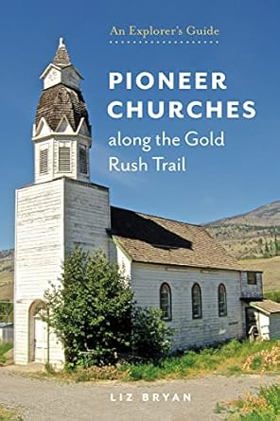
"A fascinating tour through BC's historical gold rush trails, focusing on the nineteenth-century churches that were pivotal to the establishment of early settler communities. Much has been written about the Cariboo gold rush--from the trails and wagon roads to the rowdy mining camps, from tales of great luck to those of disappointment and despair. This book paints a different picture of those pioneer days. It is a guide to the nineteenth-century churches that were built during the gold rush or in the settlement days that followed. Most of these historic structures were handmade of local wood, though they differed greatly in size and style. Some are now abandoned, untenanted but still worthy of inspection. All were built to fill the spiritual need of the European migrants who flooded to the area, to nurture a sense of community that survived even after the gold was gone. Filled with beautiful colour photography and detailed maps, Pioneer Churches along the Gold Rush Trail highlights the history, geography, architecture, craftsmanship, and social context of dozens of gold rush-era churches, preserving them, in their varying states of decay, for posterity. While acknowledging the destructive forces of colonialism, including Christianity, on Indigenous Peoples, this book also examines the historical role of churches in community building and invites the reader to consider this dichotomy with an open and curious mind."-- Provided by publisher 218 pages : color illustrations, color maps ; 23 cm CIRC [ 0 ]
|
2022 |
|
A peculiar paradise a history of blacks in Oregon, 1788-1940 by Elizabeth McLagan , Oregon Black Pioneers (Publisher) 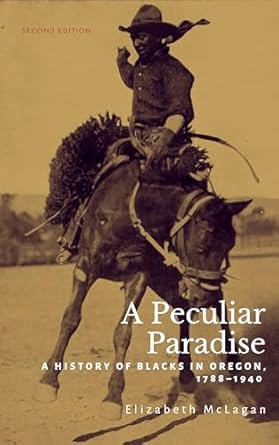
A Peculiar Paradise: A History of Blacks in Oregon, 1788–1940, remains the most comprehensive chronology of Black life in Oregon more than forty years after its original publication in 1980. Elizabeth McLagan’s work reveals how in spite of those barriers, Black individuals and families made Oregon their home and helped create the state’s modern Black communities. A longtime resource for those seeking information on the legal and social barriers faced by people of African descent in Oregon, the book is available again through this co-publication with Oregon Black Pioneers, Oregon’s statewide African American historical society. The revised second edition includes additional details for students and scholars, an expanded reading list, a new selection of historic images, and a new foreword by Gwen Carr and afterword by Elizabeth McLagan. Oregon Black Pioneers is Oregon’s only historical society dedicated to preserving and presenting the experiences of African Americans statewide. Since 1993, Oregon Black Pioneers has illuminated the seldom-told history of people of African descent in Oregon through exhibitions, public programs, publications, and historical research. Learn more at oregonblackpioneers.org. xiv, 193 pages : illustrations, portraits ; 23 cm CIRC [ 0 ]
|
2022 |
|
Where the language lives Vi Hilbert and the gift of Lushootseed by Janet Yoder 
In 1978, Seattle writer Janet Yoder took a Lushootseed class at the University of Washington. She was expecting to learn a little about this Salish language, and while Yoder did begin her Lushootseed lessons, what followed was lifelong learning and lots of adventures with Skagit tribal elder Vi Hilbert. Drawn from thirty years of friendship and interviews, Where the Language Lives is a tribute to Vi Hilbert's life, work, and her quest to preserve her native language. Vi carried her culture by the example of her life as she shared her beloved Lushootseed language through her teaching, speaking, storytelling, recording, and publishing. Without her diligent research and her transcription and translation of early recordings in Lushootseed, much of the language could have been lost to the world. Her historical preservation efforts were recognized with a National Heritage Fellowship from the National Endowment for the Arts, presented by First Lady Hillary Clinton. She was also named a Washington State Living Treasure in 1989 xvii, 216 pages : illustrations ; 22 cm CIRC [ 0 ]
|
2022 |
|
Seattle from the margins exclusion, erasure, and the making of a Pacific Coast city by Megan Asaka 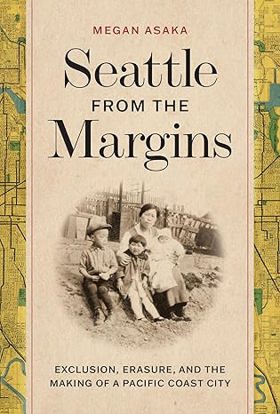
From the origins of the city in the mid-nineteenth century to the beginning of World War II, Seattle's urban workforce consisted overwhelmingly of migrant laborers who powered the seasonal, extractive economy of the Pacific Northwest. Though the city benefitted from this mobile labor force—consisting largely of Indigenous peoples and Asian migrants—municipal authorities, elites, and reformers continually depicted these workers and the spaces they inhabited as troublesome and as impediments to urban progress. Today the physical landscape bears little evidence of their historical presence in the city. Tracing histories from unheralded sites such as labor camps, lumber towns, lodging houses, and so-called slums, Seattle from the Margins shows how migrant laborers worked alongside each other, competed over jobs, and forged unexpected alliances within the marine and coastal spaces of the Puget Sound. By uncovering the historical presence of marginalized groups and asserting their significance in the development of the city, Megan Asaka offers a deeper understanding of Seattle's complex past. Seattle from the Margins was made possible in part by a grant from 4Culture’s Heritage Program. x, 258 pages : illustrations, maps 24 cm. CIRC [ 0 ]
|
2022 |
|
Trailblazing Black women of Washington State by Marilyn Morgan 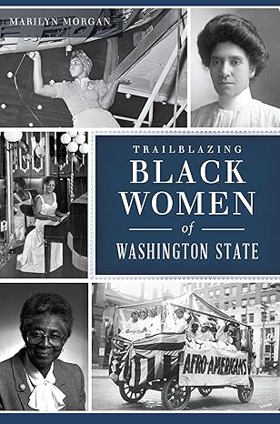
"Breaking glass ceilings, organizing clubs and making history as the first in their fields, these trailblazing Black women paved the way for new generations. From Nettie Craig Asberry, founder of the Tacoma NAACP, to Dr. Dolores Silas, now honored by a school bearing her name, these women forged a path amid adversity. Black women were crucial to the war effort, working as Rosies at Boeing during World War II, and in the postwar years, Seattle musicians like Edyth Turnham and Her Knights of Syncopation were in high demand. These teachers, scientists and politicians served on boards, led protests and fought for civil rights across the state. Join author and historian Marilyn Morgan as she chronicles the incredible lives and contributions of Washington's Black women." -- Back cover 159 pages : illustrations ; 23 cm CIRC [ 0 ]
|
2022 |