Shoshone County County
Established February 4, 1864 with its county seat at Pierce. In 1885 the county seat was moved to Murray, in 1890 to Osburn, and finally to Wallace in 1893. The first organized unit of government within Idaho boundaries, created and named for the Shoshoni Indians in 1858 by the Washington Territorial Legislature as part of Washington, effective in 1861.
Mapped Location
Shoshone County: The mapped location is an approximation and should not be used for navigation or wayfinding.
Information
General information on Shoshone County
- Feature Type: County
- County Seat: City of Wallace
- Established: Thursday, February 4, 1864
Official, historical, colloquial and alternative toponyms for Shoshone County
A brief list of names that this geographic feature has been named
| Name | Description |
|---|---|
| Shoshone County | Official |
Origin Notes and History of Shoshone County
References to Shoshone County that document the origin of its place name
SHOSHONE.—Named for the Shoshoni Indians (q.v.). The county seat is Wallace, named for Col. W. R. Wallace, the locator of the townsite.
Related Catalog Titles
A Bibliography for Shoshone County, County
Selling sex in the Silver Valley a business doing pleasure by Heather Branstetter
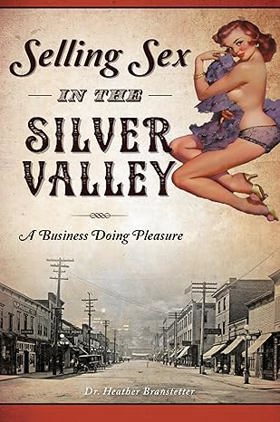
"Once the largest silver producer in the world, Wallace became notorious for labor uprisings, hard drinking, gambling and prostitution. As late as 1991, illegal brothels openly flourished because locals believed that sex work prevented rape and bolstered the economy, so long as it was regulated and confined to a particular area of town. The madams enjoyed unprecedented status as influential businesswomen, community leaders and philanthropists, while elsewhere a growing aversion to the sex trade drove red-light districts underground."--Page 4 of cover
222 pages : illustrations, maps ; 23 cm
CIRC [ 0 ]
Leaded the poisoning of Idaho's Silver Valley by Michael C. Mix
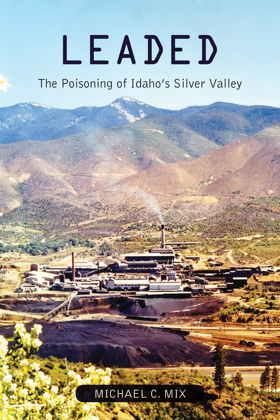
Leaded is a timely and deeply researched account of one of the largest environmental disasters in western US history. It examines the origin, evolution, and causes of the harmful environmental and human health effects caused by mining operations in Idaho’s Coeur d’Alene Mining District—the “Silver Valley”—from 1885 to 1981. During that period, district mines produced over $5 billion worth of lead, silver, and zinc. The Bunker Hill Company dominated business and community activities in the district as owners and operators of the largest mine, lead smelter, and zinc plant.During the first half of the twentieth century, industrial mining operations caused severe environmental damage to area waterways and lands from releases of sulfur gases, lead, and other toxic metals. Damaging human health effects were evident soon after the smelter opened in 1917, when Bunker Hill workers suffered from lead poisoning. Despite the obvious devastation, due to the influence of the mine and lead industry in state and federal politics, as well as scientific uncertainties about pollution effects, no effective federal laws regulating mining and smelting operations were passed until the 1970s.In 1974, uncontrolled Bunker Hill lead smelter emissions led to the worst community lead exposure problem in the United States and resulted in a widespread lead poisoning epidemic of Silver Valley children. In response, the Environmental Protection Agency ultimately mandated federal air lead standards. At the same time, the National Institute for Occupational Safety and Health passed national standards reducing allowable occupational lead exposures. Bunker Hill could not meet the new standards, which was a major factor in forcing the company to close, leaving behind a contaminated geographic area that was classified at the time as the largest Superfund site in the United States.Leaded will resonate with anyone who is concerned about the long-term effects of industrial pollution, as well as students of environmental history, western US history, mining history, environmental ethics, and environmental law
xvi, 260 pages : illustrations, map ; 23 cm
CIRC [ 0 ]
History of Kellogg, Idaho, 1885-2002 by Ray Chapman
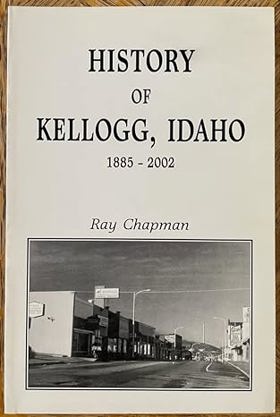
History of Kellogg, Idaho, 1885-2002 by Ray Chapman provides a localized account of a legendary Silver Valley mining town, drawing on the author's decades of firsthand experience working for the prominent Bunker Hill Company. The narrative traces the community's origins back to the famous 1885 "Jackass Legend," when prospector Noah Kellogg and his wandering burro purportedly discovered the ore deposits that sparked the region's massive boom. Chapman details the profound social and economic evolution of the Coeur d'Alene Mining District, exploring the growth of its prolific lead, zinc, and silver industries through the twentieth century. Ultimately, the book captures how this isolated Idaho enclave navigated over a century of economic triumphs, industry closures, and complex environmental legacies tied to one of the nation's largest mining operations.
59 pages : illustrations, map ; 28 cm
CIRC [ 1 ]
History of Idaho's Silver Valley 1878-2000 by Ray Chapman
Authored by Ray Chapman, History of Idaho's Silver Valley 1878-2000 chronicles the dramatic economic boom, labor struggles, and environmental transformations of northern Idaho's mineral-rich Coeur d'Alene mining district. The book traces the region's trajectory from the late 19th-century gold and silver rushes through the explosive rise of hard-rock industrial mining, bitter union-management conflicts, and the eventual twentieth-century transition toward environmental cleanup and post-industrial reinvention. Drawing on local archives, mining records, and community lore, the text captures how rugged mountain canyons shaped a fierce, insular culture forged by subterranean labor. A keen insight drawn from the work is how the boom-and-bust cycle of extraction creates a profound psychological duality in mining towns; while the constant threat of economic collapse fosters intense, radical solidarity among workers, it simultaneously leaves the community perpetually tethered to the physical and financial scars of an exhausted landscape.
116 pages : illustrations, map ; 22 cm
CIRC [ 1 ]
An illustrated history of north Idaho : embracing Nez Perces, Idaho, Latah, Kootenai and Shoshone counties, state of Idaho by Western Historical Publishing Company

Published in 1903, this extensive volume chronicles the pioneer settlement, Native American history, and rapid industrial development across the rugged panhandle region of northern Idaho. A keen insight drawn from the text is how the area's extreme geographic isolation from southern Idaho forced these northern counties to develop a distinct, fiercely independent culture driven by the volatile boom-and-bust cycles of the Coeur d'Alene mining districts and vast timber operations. The book details the civic and economic growth within Nez Perces, Idaho, Latah, Kootenai, and Shoshone counties, documenting their transition from frontier wilderness to established industrial hubs. Like similar regional histories of its era, the narrative ultimately serves as a vital genealogical resource by preserving hundreds of biographical sketches of the prospectors, farmers, and civic leaders who built the region.
xxviii, 1238 pages, [113] leaves of plates : illustrations, portraits ; 31 cm
ONLINE CIRC [ 1 ]
Shoshone County
- Adair
- Avery
- Black Bear
- Blackcloud
- Bogle
- Borax (historical)
- Bullion (historical)
- Bunn
- Burke
- Calder
- Carbon Center
- Carbonate (historical)
- Cataldo
- Clarkia
- Cornwall
- Delta
- Dorsey (historical)
- Eagle
- Elizabeth Park
- Elk Creek
- Emerald Creek
- Enaville
- Erlmo
- Ethelton
- Falcon
- Ferguson
- Frisco
- Gem
- Gentry
- Golconda
- Gold Creek
- Herrick
- Horsecamp
- Hoyt
- Keeler
- City of Kellogg
- Kingston
- Kyle (historical)
- Larson
- Linfor
- Mace
- Marble Creek
- Masonia (historical)
- McCarthy
- McDonalds
- City of Mullan
- Murray
- Nelson (historical)
- Nuckols
- Olsons
- City of Osburn
- Page
- Pearson
- Pine Creek
- City of Pinehurst
- Pocono
- Pottsville (historical)
- Prichard
- Roland
- Silverton
- City of Smelterville
- Steamboat (historical)
- Steamboat Rocks
- Stetson
- Stull
- Sunset (historical)
- Sweeney
- Tammany
- Thiard
- City of Wallace
- City of Wardner
- Webb
- Woodland Park
Political Boundaries
Last updated: 2016-12-01