Union County County
Union County was created in 1864 and named for the town of Union, which had been established two years before and named by its founders for patriotic reasons during the Civil War. The county comprised a part of the northern portion of Baker County and, in 1899, Union County gave up its eastern portion to Wallowa County.
Mapped Location
Union County: The mapped location is an approximation and should not be used for navigation or wayfinding.
Information
General information on Union County
- Feature Type: County
- County Seat: City of La Grande
- Established: Friday, October 14, 1864
Official, historical, colloquial and alternative toponyms for Union County
A brief list of names that this geographic feature has been named
| Name | Description |
|---|---|
| Union County | Official |
Related Catalog Titles
A Bibliography for Union County, County
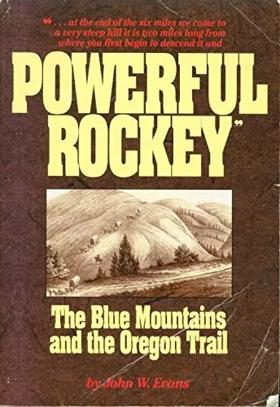
Powerful rockey the Blue Mountains and the Oregon Trail, 1811-1883 by John W. Evans, Eastern Oregon State College
Nature rambles in the Wallowas sketches of the natural history of northeastern Oregon by Elmo Nall Stevenson
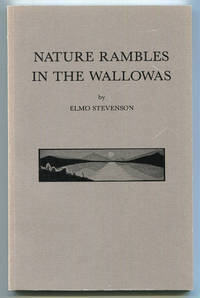
Sketches of the natural history of northeastern Oregon.
100 pages including plates : illustrations, map ; 23 cm
CIRC [ 1 ]
Echoes of the Grande Ronde by Bert Huffman, Eldridge Huffman (Compiler)

Published in 1934 in La Grande, Oregon, and compiled by Eldridge Huffman, Echoes of the Grande Ronde is a collection of regional poetry and prose by Bert Huffman, a prominent newspaperman widely celebrated by his contemporaries as the "Poet Laureate of Eastern Oregon". The volume operates as a literary tribute to the landscapes and pioneer heritage of the Grande Ronde Valley and the broader Inland Empire. Through highly romanticized verse, Huffman mythologizes the overland migrations, the rugged endurance of early homesteaders, and the region's sweeping transition from "untamed" wilderness to a productive agricultural basin. Frequently appropriating Indigenous mythology and historical figures—such as his framing of Sacagawea as a "patron saint" of American empire—the collection weaves the narrative of westward expansion into a grand, almost biblical epic of Manifest Destiny.
A keen insight drawn from the work is how regional poetry and romantic literature functioned as a profound emotional mechanism to naturalize colonial displacement. By heavily utilizing the "Vanishing Indian" trope—most notably in wistful verses lamenting the fading presence of the Umatilla, Cayuse, and Nez Perce peoples—Huffman's poetry effectively aestheticizes the violence of settler colonialism. This literary maneuver transforms active, systemic territorial dispossession into a tragic, natural, and inevitable melancholic fading, akin to the passing of the seasons. Consequently, the text allows the descendants of white settlers to indulge in a sentimental, guiltless nostalgia for the region's original inhabitants, all while morally validating the permanent agricultural enclosure of the Grande Ronde Valley as the glorious, divinely ordained triumph of American civilization.
87 pages illustrations (portrait) 24 cm
CIRC [ 1 ]
Union County
- Alicel
- Cabin Creek (historical)
- Camp Carson (historical)
- Camp Elkanah
- City of Cove
- City of Elgin
- Elk Flat (historical)
- Hilgard
- Hot Lake
- City of Imbler
- Indian Valley (historical)
- City of Island City
- City of La Grande
- Looking Glass (historical)
- Medical Springs
- City of North Powder
- Perry
- Pondosa
- Starkey
- Town of Summerville
- Telocaset
- City of Union
Political Boundaries
Last updated: 2025-09-23