Catalog of British Columbiana and Pacific Northwest Americana
The Encyclopedia Cascadia Catalog indexes mostly non-fiction literature covering the Pacific Northwest coast of North America, with an emphasis on British Columbia, Idaho, Oregon, and Washington State.
| Catalog Title | Published |
|---|---|
|
Haida myths illustrated in argillite carvings by Marius Barbeau 
"This volume is designed to illustrate Haida argillite carvings. The illustrations are mostly, but not exclusively, in argillite. A few wood carvings happened to bear so aptly on the same mythological themes that they could not fairly be left out."-- Preface, vii ix, 417 pages : illustrations, map on end sheets ; 26 cm Non-circulating [ 1 ]
|
1953 |
|
Nothing in life is free through Naches Pass to Puget Sound, a historical novel of the Pioneer West by Della Gould Emmons
Della Gould Emmons’s Nothing in Life is Free: Through Naches Pass to Puget Sound chronicles the desperate, brute-force overland subjugation of the Cascade Range, focusing on the grueling pioneer penetration of a violently fractured alpine transit corridor. The narrative maps how the severe environmental realities of this formidable mountain barricade—defined by towering, sheer granite drop-offs, impenetrable old-growth timber stands, and plunging riverine gorges—initially paralyzed direct wagon migration to the inland sea of Puget Sound, forcing early settlers into a highly precarious, near-fatal struggle against the untamed topography. By detailing the massive physical engineering required by the first overland emigrant train to manually hack a crude terrestrial route through colossal coastal forests and literally lower heavy, reinforced wagon chassis by rope down sheer basalt cliffs, the text illustrates how basic survival was strictly dictated by the urgent necessity to breach these continental extremes before the onset of crippling alpine winters. Ultimately, the account demonstrates that violently carving this precarious overland vector through an unforgiving wilderness and deploying raw human labor to conquer the profound geographical isolation of the mountains were the absolute prerequisites for establishing a direct, unbroken pioneer link between the arid inland plateau and the maritime anchor of the Pacific edge. 315 pages 23 cm Non-circulating [ 1 ]
|
1953 |
|
History of the state of Washington by Harold E. Barto , Catharine Bullard
Harold E. Barto and Catharine Bullard’s History of the State of Washington chronicles the comprehensive pioneer and industrial subjugation of a vast, aggressively bisected territorial expanse defined by the towering, impassable alpine barricade of the Cascade Range. The narrative maps how the severe environmental realities of this fractured topography—spanning the impenetrable, rain-gorged coastal timberlands of the Pacific edge, the volatile maritime labyrinth of Puget Sound, and the sprawling, arid high-desert plateaus of the inland empire—initially dictated all human migration and economic expansion. By detailing the grueling transition from precarious overland wagon migrations and isolated fur-trading outposts to the explosive deployment of transcontinental railways, heavy maritime mosquito fleets, and colossal hydroelectric dams, the text illustrates how the systematic extraction of the region's massive timber and agricultural wealth was strictly governed by the necessity of mastering these imposing geographic extremes. Ultimately, the account demonstrates that artificially harnessing the violent hydrology of the Columbia River basin and aggressively carving mechanized terrestrial transit corridors through sheer mountain passes were the absolute prerequisites for binding a profoundly segmented, untamed wilderness into a unified, highly industrialized powerhouse on the Pacific seaboard. 320 pages : illustrations ; 22 cm Non-circulating [ 1 ]
|
1953 |
|
Cowlitz corridor by John M. McClelland, Albert Gustav Kletsch 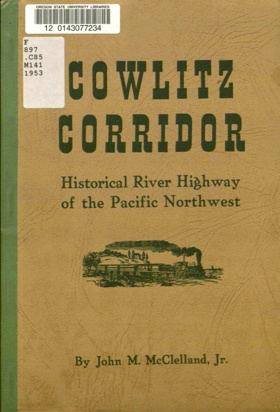
I. First came explorers -- II. Canoe and bateau -- III. Came religion and government -- IV. Terrible road but beautiful -- V. Commerce comes to Cowlitz -- VI. N.P. lays its first rails -- VII. Monticello steamboat enterprise -- VIII. Opening of Kellogg era -- IX. Steamboating in its heyday -- X. Close of steamboat era -- XI. Good roads at last 64 pages : illustrations, map ; 23 cm ONLINE Circulation [ 1 ]
|
1953 |
|
Our Washington by Priscilla Mary Kinsman, Emlyn D. Jones, Rolland H. Upton, Virginia Bruce Goldsmith, Bearnice Skeen, Alice Hazel Hayden
Priscilla Mary Kinsman and her co-authors’ Our Washington chronicles the comprehensive civic and industrial subjugation of a profoundly bisected territorial expanse, defined by the towering, impassable alpine barricade of the Cascade Range. The narrative maps how the severe environmental realities of this massively fractured topography—spanning the rain-choked, impenetrable coastal timberlands of the Olympic Peninsula, the volatile maritime labyrinth of Puget Sound, and the vast, arid sagebrush steppes of the Columbia Basin—initially dictated all pioneer migration and economic expansion. By detailing the grueling transition from isolated, vulnerable settlement outposts relying on precarious riverine navigation to the aggressive deployment of mechanized transcontinental railways and colossal hydroelectric infrastructure, the text illustrates how the massive extraction of the region's raw natural wealth was strictly governed by the necessity of conquering these formidable geographic extremes. Ultimately, the account demonstrates that artificially domesticating the violent hydrology of the inland empire and violently carving heavy terrestrial transit corridors through sheer granite mountain passes were the absolute prerequisites for binding a geographically segmented, untamed wilderness into a deeply integrated, modern industrial state on the Pacific edge. 248 pages illustrations (some color), maps Non-circulating [ 1 ]
|
1953 |
|
Arthur Denny's dream a story of pioneers who came over the old wagon trail and founded a city on Puget Sound by Marie Hatten 
Marie Hatten’s Arthur Denny's dream: a story of pioneers who came over the old wagon trail and founded a city on Puget Sound chronicles the grueling overland pioneer migration and the initial maritime subjugation of a densely forested, deep-water enclave carved directly into the volatile eastern shoreline of the inland sea. The narrative maps how the severe environmental realities of this untamed coastal topography—defined by towering, impenetrable stands of old-growth timber plunging directly into the treacherous tidal currents of Elliott Bay, and the sheer alpine barricades isolating the coast from the inland plateau—initially challenged early settlers who had just survived the agonizing terrestrial gauntlet of the transcontinental wagon trails. By detailing the precarious transition from an exhausted overland emigrant party to the aggressive founders of a deep-water port, the text illustrates how physical and economic survival was strictly dictated by the urgent necessity of abandoning terrestrial transit and pivoting entirely to the mastery of heavy maritime timber extraction. Ultimately, the account demonstrates that violently clearing this formidable coastal rainforest and artificially anchoring localized wharf infrastructure along its steep marine drop-offs were the absolute prerequisites for transforming a geographically isolated, rain-choked wilderness camp into the premier commercial and maritime anchor of the Pacific edge. 61 pages illustrations 28 cm Desiderata
|
1953 |
|
Idaho Place Name Records by Fritz L. Kramer
Fritz L. Kramer’s Idaho Place Name Records chronicles the systematic linguistic and cartographic subjugation of a violently fractured, immense inland wilderness spanning from the towering alpine barricades of the Bitterroot Range to the unforgiving, sun-baked expanse of the Snake River Plain. The narrative maps how the severe environmental realities of this untamed frontier—defined by impassable granite peaks, roaring, deeply entrenched river canyons, and vast, arid high-desert steppes—initially defied permanent settlement, forcing early prospectors, homesteaders, and surveyors to literally etch their brutal struggles for survival into the regional lexicon. By detailing the grueling, decentralized process of affixing bureaucratic and vernacular titles to previously unmapped hydrological arteries, remote mining camps, and treacherous overland passes, the text illustrates how the administrative classification of the landscape was strictly dictated by the necessity of asserting territorial control over a profoundly isolated and hostile topography. Ultimately, the account demonstrates that methodically cataloging and linguistically claiming these formidable geographic extremes was the absolute prerequisite for imposing civic order and paving the way for the heavy mechanized rail and agrarian infrastructure that would eventually shatter the territory's deep continental detachment. 4 pages in October 1953 Western Folkore Vol 12, no 4 ONLINE Circulation [ 1 ]
|
1953 |
|
Hail Columbia the thirty-year struggle for Grand Coulee Dam by George Sundborg
George Sundborg’s Hail Columbia: The thirty-year struggle for Grand Coulee Dam chronicles the monumental political crusade and unprecedented industrial subjugation of the Pacific Northwest's most powerful hydrological artery, situated within the massive, arid expanse of the Columbia Basin. The narrative maps how the severe environmental realities of this unforgiving inland topography—defined by the raw, untamed kinetic energy of the Columbia River trapped deep within a sheer basalt trench, juxtaposed against millions of acres of sun-baked, rain-starved sagebrush steppe—initially paralyzed large-scale agrarian settlement. By detailing the grueling, decades-long legislative warfare and the ultimate deployment of colossal, mechanized engineering required to pour the largest concrete gravity structure on Earth, the text illustrates how the economic salvation of the inland empire was strictly dictated by the necessity of artificially lifting this massive water volume out of its gorge. Ultimately, the account demonstrates that permanently domesticating the volatile hydrology of the Columbia and deploying this mammoth hydroelectric infrastructure to both artificially irrigate the desert and generate massive industrial wattage were the absolute prerequisites for transforming a barren, landlocked wasteland into the electrified powerhouse of the modern Pacific seaboard. 467 pages 22 cm Non-circulating [ 1 ]
|
1954 |
|
Home below Hell's Canyon by Grace Edgington Jordan 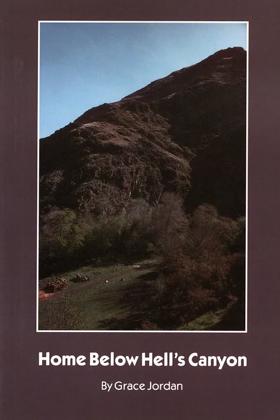
During the depression days of the early 1930s the Jordan family – Len Jordan (later governor of Idaho and a United States senator), his wife Grace, and their three small children – moved to an Idaho sheep ranch in the Snake River gorge just below Hell’s Canyon, deepest scratch on the face of North America. “Cut off from the world for months at a time, the Jordans became virtually self-sufficient. Short of cash but long on courage, they raised and preserved their food, made their own soap, and educated their children” (Sterling North, New York World-Telegram). 243 pages illustrations 21 cm Non-circulating [ 1 ]
|
1954 |
|
Orcas, gem of the San Juans by Fred John Splitstone 
Fred John Splitstone’s Orcas, Gem of the San Juans chronicles the arduous pioneer settlement and localized agrarian subjugation of a profoundly isolated, horseshoe-shaped marine enclave dominated by the towering, impassable mass of Mount Constitution. The narrative maps how the severe environmental realities of this rugged insular topography—characterized by plunging deep-water fjords, dense coastal rainforests, and the treacherous, tide-ripped aquatic labyrinth of the surrounding Salish Sea—initially completely severed early homesteaders from the continental mainland. By detailing the grueling transition from precarious subsistence logging and dangerous inter-island canoe transit to the aggressive cultivation of fertile inland valleys for large-scale fruit orchards and the vital deployment of robust steamboat mosquito fleets, the text illustrates how physical and economic survival was strictly dictated by the necessity of mastering these formidable maritime and topographical extremes. Ultimately, the account demonstrates that systematically clearing the heavy timber of the island's interior and engineering specialized marine transit networks to conquer the profound geographical detachment of the archipelago were the absolute prerequisites for transforming a forbidding, mountainous wilderness into a thriving, self-sustaining agrarian anchor of the San Juan Islands. xi, 96 pages : illustrations, maps ; 24 cm Non-circulating [ 1 ]
|
1954 |
|
British Columbia and Sir James Douglas, K.C.B. (1803-1877) by Charles A. Banks 
Charles A. Banks’s British Columbia and Sir James Douglas, K.C.B. (1803-1877) chronicles the urgent administrative and physical subjugation of a vast, aggressively fractured continental wilderness spanning from the remote maritime enclave of Vancouver Island to the towering alpine barricades of the mainland interior. The narrative maps how the severe environmental realities of this untamed expanse—defined by treacherous coastal fjords, impenetrable temperate rainforests, and the violent hydrology of the Fraser River canyon—initially threatened to plunge the region into lawless chaos during explosive inland gold rushes, forcing early colonial authorities to rapidly impose terrestrial and civic order. By detailing Douglas’s crucial transition from commanding isolated corporate fur-trading outposts to directing the monumental, explosive engineering of the Cariboo Wagon Road directly through sheer granite river gorges, the text illustrates how the projection of imperial sovereignty was strictly dictated by the necessity of physically breaching these massive topographical barricades. Ultimately, the account demonstrates that artificially carving mechanized transit corridors into this forbidding alpine landscape and deploying robust governmental infrastructure to conquer the profound geographical isolation of the interior were the absolute prerequisites for transforming a vulnerable, heavily contested frontier into the unified, governable colony of British Columbia. 27 pages illustrations. Non-circulating [ 1 ]
|
1954 |
|
Pacific Northwest letters of George Gibbs by George Gibbs, Vernon Carstensen
Vernon Carstensen’s edition of the Pacific Northwest Letters of George Gibbs chronicles the rigorous cartographic and scientific subjugation of an aggressively fractured, unmapped territorial expanse spanning from the towering alpine barricades of the northern Rockies to the remote, heavily timbered enclaves of Puget Sound. The narrative maps how the severe environmental realities of this untamed frontier—defined by impenetrable coastal rainforests, volatile riverine valleys, and formidable, snow-choked mountain passes—initially paralyzed large-scale overland migration, forcing early military surveyors and naturalists to endure grueling physical hardships merely to measure and document the sheer scale of the landscape. By detailing Gibbs's arduous deployment alongside the pioneering transcontinental railroad surveys of the 1850s, the text illustrates how the systematic intellectual and scientific cataloging of the region's immense physical obstacles was strictly dictated by the urgent imperial necessity to engineer viable terrestrial transit corridors. Ultimately, the account demonstrates that methodically mapping this forbidding wilderness and calculating the exact topographical vectors required to eventually force mechanized rail networks through sheer granite valleys were the absolute prerequisites for shattering the region's profound continental detachment and incorporating the raw Pacific edge into an expanding industrial state. 52 pages ; 24 cm Non-circulating [ 1 ]
|
1954 |
|
Adventures of Captain Bonneville by Washington Irving, Benjamin Louis Eulalie de Bonneville 
This is the deluxe Klickitat edition of this great classic a hundred and seventeen years after the first edition. It has come by its popularity, far beyond that of most books, even of most good books, by it having the frontier fur trade for a subject, by being a first hand record, by receiving a final enchantment from the one who could write Rip Van Winkle and the Legend of Sleepy Hollow. The "father of American literature" tells with gusto and charm the amazing travels of a picturesque soldier of fortune in the Far West during 1832-1835. Robert Reynolds, talented Northwest artist, did the original illustrations which make this book a collector's item. Adventures of Captain Bonneville is a companion volume to our Astoria 375pp. 357 pages illustrations Non-circulating [ 1 ]
|
1954 |
|
The untamed Olympics the story of a peninsula by Ruby El Hult 
The Untamed Olympics: The Story Of A Peninsula is a non-fiction book written by Ruby El Hult. The book provides a detailed account of the Olympic Peninsula in Washington State, USA, and its history, geography, and natural beauty. The author takes the reader on a journey through the history of the region, from the early Native American tribes that lived there, to the arrival of European explorers, and the logging and fishing industries that developed in the area.The book also focuses on the unique and diverse wildlife that inhabits the Olympic Peninsula, including elk, deer, black bears, and mountain lions. The author describes the breathtaking landscapes of the region, including the Olympic Mountains, the Hoh Rainforest, and the rugged coastline.In addition to its natural beauty, the Olympic Peninsula is also home to many fascinating cultural landmarks, such as the Makah Indian Reservation, the historic town of Port Townsend, and the Victorian-era Lake Quinault Lodge.Overall, The Untamed Olympics: The Story Of A Peninsula is a comprehensive and engaging exploration of one of America's most beautiful and fascinating regions. The author's vivid descriptions and personal anecdotes make the book a must-read for anyone interested in the history and natural wonders of the Olympic Peninsula.This scarce antiquarian book is a facsimile reprint of the old original and may contain some imperfections such as library marks and notations. Because we believe this work is culturally important, we have made it available as part of our commitment for protecting, preserving, and promoting the world's literature in affordable, high quality, modern editions, that are true to their original work. This description may be from another edition of this product. 267 pages : illustrations ; 22 cm Non-circulating [ 1 ]
|
1954 |
|
The Coast Salish of British Columbia by H. G. Barnett
H. G. Barnett’s The Coast Salish of British Columbia chronicles the intricate social engineering and rigid economic structuring necessitated by the punishing seasonal extremes of the Salish Sea, encompassing the rugged, tide-ripped straits of the San Juan archipelago and the insular geography surrounding Orcas Island. The narrative maps how the severe environmental realities of the Pacific Northwest winter—characterized by violent coastal storms, terrestrial resource scarcity, and profound maritime isolation—forced these populations to retreat into massive, highly engineered cedar-plank winter villages. By detailing the complex, heavily ritualized redistribution of wealth through the potlatch system and the strict territorial control of specific riverine and estuarine environments, the text illustrates how the survival of the societal hierarchy was strictly dictated by the necessity of managing the explosive, yet hyper-concentrated, caloric wealth of the seasonal salmon runs. Ultimately, the account demonstrates that artificially regulating this biological surplus and deploying rigid socio-economic systems to conquer the lean, dark months of coastal detachment were the absolute prerequisites for maintaining a deeply stratified, permanent civilization on this volatile aquatic frontier. xiii, 320 pages : illustrations, folded map ; 26 cm. Non-circulating [ 1 ]
|
1955 |
|
The Coast Salish of British Columbia by H. G. Barnett
|
1955 |
|
Peaceful conquest story of the Lewis and Clark Expedition by Kelsie Ramey Osborne, Colista Murray Dowling
Kelsie Ramey Osborne and Colista Murray Dowling’s Peaceful Conquest: Story of the Lewis and Clark Expedition chronicles the grueling initial overland and hydrological subjugation of an impossibly scaled transcontinental wilderness spanning from the Great Plains to the violent Pacific edge. The narrative maps how the severe environmental realities of this untamed western expanse—defined by the sheer, snow-choked alpine barricades of the Bitterroot Mountains and the treacherous, roaring rapids of the Columbia River gorge—initially dictated every agonizing mile of advance, forcing the early explorers to rely entirely on grueling physical endurance and critical indigenous navigational technologies. By detailing the monumental logistical effort required to muscle heavy riverine transport against relentless currents, portage across jagged continental divides, and endure the punishing, rain-battered winter encampment at the estuarine choke point of the coast, the text illustrates how basic human survival was strictly governed by the necessity of adapting to these profoundly hostile geographical extremes. Ultimately, the account demonstrates that methodically surviving this unforgiving topography and mapping its raw, unexploited aquatic corridors were the absolute prerequisites for initiating the mechanized imperial expansion that would eventually shatter the profound continental isolation of the Pacific Northwest. 123, iv pages : illustrations ; 22 cm Non-circulating [ 1 ]
|
1955 |
|
Canoe and saddle by Theodore Winthrop, Alfred Powers (Writer of introduction)
A narrative of travel in Washington Territory in 1853. This ed. does not include Isthmiana, a narrative of travel on the Isthmus of Panama in 1852 xiv, 194 pages, 11 unnumbered pages of plates : frontispiece (portrait), illustrations, portraits ; 23 cm Non-circulating [ 1 ]
|
1955 |
|
Sentinels of the North Pacific the story of Pacific coast lighthouses and lightships by Jim Gibbs, Binfords & Mort
Examines the history and purpose of lighthouses and describes notable examples around the world, including the building of St. George Reef in Tillamook, Lighthouses in San Diego, San Francisco, Puget Sound, Columbia Coast, and Alaska 232 pages illustrations 23 cm Non-circulating [ 1 ]
|
1955 |
|
This was seafaring a sea chest of salty memories by Ralph W. Andrews, Harry A. Kirwin 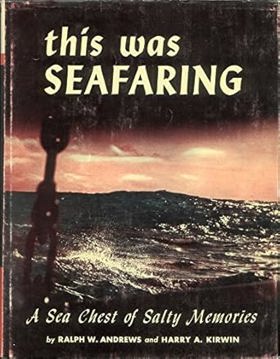
Ralph W. Andrews and Harry A. Kirwin’s This Was Seafaring: A Sea Chest of Salty Memories chronicles the grueling maritime subjugation and hazardous commercial exploitation of the Pacific Northwest’s volatile coastal frontier. The narrative maps how the severe environmental realities of this treacherous oceanographic zone—characterized by the ship-killing breakers of the Columbia River Bar, fog-choked labyrinthine fjords, and violent, storm-battered straits—strictly dictated the design and deployment of the region's heavily reinforced marine fleets. By detailing the precarious transition from vulnerable wind-driven tall ships to rugged, mechanized steam-tugs, alongside the catastrophic shipwrecks that inevitably littered the jagged shoreline, the text illustrates how the economic survival of isolated coastal settlements was entirely governed by the necessity of mastering these unforgiving aquatic highways. Ultimately, the account demonstrates that aggressively engineering robust nautical infrastructure and deploying highly specialized maritime labor to conquer the explosive kinetic energy of the Pacific edge were the absolute prerequisites for breaching the region's profound continental isolation and connecting its massive timber and marine harvests to the broader global economy. 168 pages illustrations 28 cm Non-circulating [ 1 ]
|
1955 |
|
Pageant of B.C. glimpses into the romantic development of Canada's far western province by B. A. McKelvie 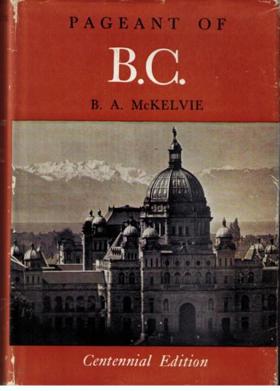
McKelvie's title is too modest: this is in essence a very well researched short history of British Columbia to the end of the nineteenth century, written for the general reader. Its more than 100 short chapters "first appeared in serial form in The Vancouver Daily Province, between February 1953 and March 1955". 263 pages plates (some color), portraits 23 cm Desiderata
|
1955 |
|
Native accounts of Nootka ethnography by Edward Sapir, Morris Swadesh 
This volume constitutes a continuation of Nootka Texts, Tales, and Ethnological Narratives, with Grammatical Notes and Lexical Materials, published in 1939. A third volume, Nootka Legends and Stories, is in preparation. Edward Sapir died while Nootka Texts was in press. The material for the subsequent volumes was already collected, the general plan laid out, the translation and editing begun by Sapir or by myself working under his guidance. However, a great deal remained to be carried out with- out his help. Editorial economy was a major problem. If the full body of Sapir's native Nootka collection were to be published in the manner followed in Nootka Texts, it would require eight or ten comparable volumes. Some simplification for the subsequent volumes, such as omissions of interlinear translation and linguistic commentary, were already envisaged by Sapir. However, it proved desirable to go much farther-- to adopt a terser style of translation, to limit materials given in notes, to use simple phonetic symbols which eliminate diacritics and allow more compact printing. For people familiar with Vancouver Island it has to be explained that the present materials do not come from the town of Nootka, but from the vicinity of Alberni. We say Nootka, because anthropologists are in the habit of using that term for all the west coast Indians from Alberni Canal to Kyuquot Sound. . Indiana University, 1, v. 21, no. 4, pt. 2 457 pages 26 cm Desiderata
|
1955 |
|
Eminent Men Of The Northwest, 1955 by C. W. Taylor
|
1955 |
|
Baker County sketch book by Gordon Stewart, Patricia Stewart
Gordon Stewart and Patricia Stewart’s Baker County Sketch Book chronicles the arduous pioneer colonization and explosive industrial extraction of a rugged inland expanse defined by the formidable alpine barricades of the Blue Mountains and the arid high-desert valleys of northeastern Oregon. The narrative maps how the severe environmental realities of this remote topography—characterized by steep, ore-choked canyons, vast sagebrush steppes, and plunging winter climates—initially challenged early overland migration, forcing prospectors and settlers to endure a punishing existence profoundly isolated from the fertile coastal plains. By detailing the frenetic regional transition from an unforgiving pioneer transit corridor to a booming epicenter of deep-vein gold mining, heavy timber harvesting, and expansive cattle ranching, the text illustrates how the aggressive exploitation of the county's immense natural wealth was strictly governed by the necessity of engineering robust localized rail networks to finally breach the mountain passes. Ultimately, the account demonstrates that violently extracting its subterranean riches and deploying heavy transit infrastructure to conquer the profound geographical detachment of the inland plateau were the absolute prerequisites for transforming a forbidding alpine frontier into a lucrative, permanent commercial anchor of the eastern Oregon empire. 40 pages : illustrations ; 28 cm Non-circulating [ 1 ]
|
1956 |
|
The Kaska Indians an ethnographic reconstruction by James Teit
James Teit’s The Kaska Indians: An Ethnographic Reconstruction provides a baseline anthropological and geographic study of the Dene-speaking Kaska communities inhabiting the upper Liard and Dease river drainages of the Stikine region. Teit documents traditional social structure, material technology, seasonal hunting territories, and overland trail corridors spanning Lower Post, McDame, Dease Lake, Good Hope Lake, Hyland Ranch, and Hyland Post. The volume records oral histories, language vocabularies, and spiritual traditions, analyzing the severe disruptions brought by nineteenth-century fur posts, placer gold migrations, and expanding trade routes across the Cassiar plateau. 65 pages : illustrations ; 25 cm Desiderata
|
1956 |