Catalog of British Columbiana and Pacific Northwest Americana
Encyclopedia Cascadia Catalog contains book titles of mostly non-fiction Pacific Northwest Coast of North America Titles (primarially British Columbia, Idaho, Oregon and Washington State) in an easy-to-understand title catalog. If you see a link with this badge ONLINE CIRC it means that there is an online institution that provides free access to that title. In some cases there may be more than one institution hosting the title digitally.
| Catalog Title | Published |
|---|---|
|
The land of heart's delight early maps and charts of Vancouver Island by Michael Layland 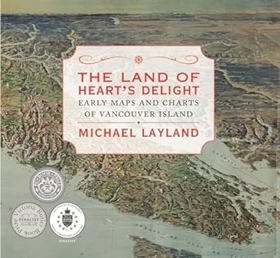
"Just how, and why, did Vancouver Island get onto the map? How was knowledge of our immediate geography acquired and recorded? With 130 maps, dating between 1593 and 1915, this cartographic history tells the story of how Vancouver Island and the surrounding area came to be mapped. The book shows local cartographic milestones, marking progress in our knowledge through the island's rich--although comparatively short--recorded history. However, the maps, by themselves and without context, cannot tell the whole story. The accompanying text reveals the motives, constraints, agendas, and intrigues that underpin their making."--Publisher's description 232 pages : maps (chiefly color) ; 25 cm CIRC [ 1 ]
|
2013 |
|
Stevens Pass the story of railroading and recreation in the North Cascades by JoAnn Roe 
A history of the massive undertaking required to build the railroads and roadways through the northern Cascades into the Seattle region. 191 pages : illustrations, maps ; 21 cm CIRC [ 1 ]
|
2013 |
|
Where the salmon run the life and legacy of Billy Frank Jr. by Trova Heffernan, Washington State Heritage Center, Washington State Legacy Project, University of Washington Press 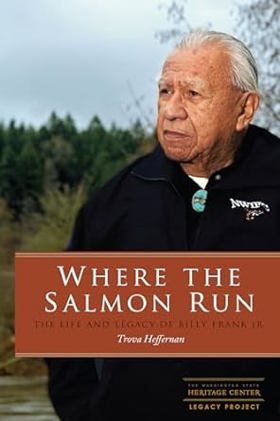
"Billy Frank Jr. was an early participant in the fight for tribal fishing rights during the 1960s. Roughed up, belittled, and arrested many times at Frank's Landing on the Nisqually River, he emerged as one of the most influential Northwest Indians in modern history. His efforts helped lead to U.S. v. Washington in 1974, in which U.S. District Judge George H. Boldt affirmed Northwest tribal fishing rights and allocated half the harvestable catch to the tribes."--Page 4 of cover ix, 322 pages : illustrations, genealogical table ; 23 cm CIRC [ 1 ]
|
2013 |
|
Voices of the elders Huu-ay-aht histories and legends by Kathryn Bridge , Kevin Neary 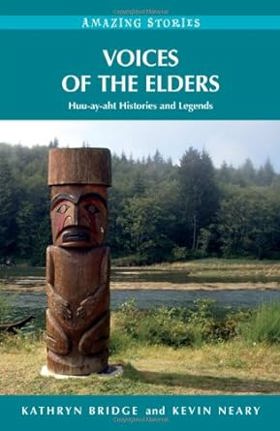
"There is a special place on the southeastern shores of Barkley Sound, on the west coast of Vancouver Island. It is a magnificent landscape of rocky cliffs fronting onto the wild Pacific Ocean, sheltered beaches, lakes, mountains and forests. Since the beginning of time, it has been the ancestral home of the Huu-ay-aht First Nation. Drawing directly from oral history passed down by generations of Huu-ay-aht chiefs and elders, Kathryn Bridge and Kevin Neary tell the compelling stories of the Huu-ay-aht people from their perspective. This is a fascinating glimpse into the complex and rich history of a West Coast First Nation, from creation tales and accounts of their traditional ways to the recent Maanulth treaty." -- from Amazon.com 143 pages : illustrations, 1 map, portraits ; 22 cm. CIRC [ 1 ]
|
2013 |
|
Those island people by Lynne Bowen 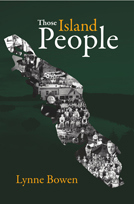
Those Island People,began with a series of articles in the Times-Colonist about interesting and often unknown Islanders: gold seekers and gamblers, former slaves and veteran soldiers, missionaries and rabble rousers. Some of their forebears had been on the Island for thousands of years, but most of them came from somewhere else to make their lives on Vancouver Island. Those Island People involved more than the usual amount of detective work. I was determined to have a photograph for every chapter, but photographs of some subjects had eluded me for years. x, 118 pages : illustrations, map, portraits ; 23 cm. CIRC [ 1 ]
|
2013 |
|
A sound defense military sites, lighthouses, and memorials of Puget Sound by Nancy L. McDaniel 
"A Sound Defense" is a comprehensive description of military sites of Puget Sound. Military historical sites in the twelve counties (Whatcom, Skagit, Snohomish, San Juan, Island, King, Pierce, Thurston, Mason, Kitsap, Clallam and Jefferson) are described with an emphasis on the unique things which happened there. Over 150 pictures and maps are included. Nancy McDaniel, Colonel, USAF, MSC (Retired) is a Washington State native and brings a love of the area and combines that with a perspective on the contributions that the military has had on Western Washington. "A Sound Defense" describes blockhouses built during the Indian conflicts. It addresses "The Pig War" and the politics of the international relationships which helped establish the boundaries of the United States. Forts built to protect Puget Sound as a result of the decisions of the Endicott Board are described along with the personalities of the commanders and personnel who were assigned there. Long forgotten installations established to provide early warning of approaching enemy aircraft are prominent in this comprehensive book. Lighthouses throughout the area are highlighted with the inclusion of historical photos and stories of early lightkeepers. Most importantly, "A Sound Defense" recognizes the contributions of military personnel throughout the years by the inclusion of memorials and facilities dedicated to recognizing their service to the country. xvi, 365 pages : illustrations, maps ; 23 cm CIRC [ 1 ]
|
2013 |
|
Too cold to snow a memoir by Sue A. Fountain 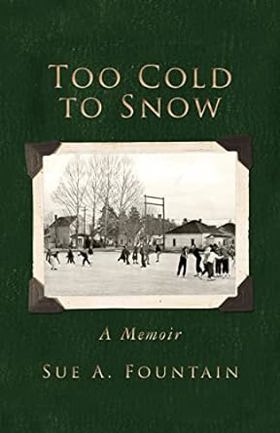
"A personal memoir about growing up in a small town during the time period of 1945-1965. This was a pivotal time in our recent history, and the pieces I have written reflect the growing up and loss of innocence of not only me, but the town of Bend, Oregon"--Publisher description 101 pages : black and white illustrations ; 22 cm CIRC [ 1 ]
|
2013 |
|
The Chinese in Washington State by Art Chin, Doug Chin 
Published in 2013 by Art Chin and Doug Chin, The Chinese in Washington State chronicles over a century of Chinese American history, detailing the trials, contributions, and enduring resilience of pioneers who helped shape the Pacific Northwest. Drawing on rich archival photographs and community narratives, the book documents early immigration waves, the harsh realities of labor discrimination and anti-Chinese expulsion movements, and the eventual establishment of vibrant cultural enclaves like Seattle's Chinatown-International District. A keen insight drawn from the text is how it deliberately shifts the historical lens away from passive victimhood, emphasizing instead how early Chinese communities actively built robust mutual-aid networks, economic institutions, and political coalitions that transformed them into foundational architects of modern Washington society. 144 pages : illustrations ; 23 cm CIRC [ 1 ]
|
2013 |
|
A Yankee on Puget Sound pioneer dispatches of Edward Jay Allen, 1852-1855 by Karen L. Johnson, Dennis M. Larsen 
In 1852 twenty-two-year-old Edward Jay Allen completed a difficult overland trek to Oregon. His exploits during a three-year stay in Washington Territory featured unique twists and left a distinct, indelible mark. The young Yankee traveled north from the Columbia River to Cowlitz Landing and was promptly drafted as a delegate to the Monticello Convention. After claiming donation land north of Olympia, he led survey and construction teams laying out the Naches Pass wagon road, initiated relief efforts for Longmire wagon train families, explored Puget Sound on a whaleboat, ran for the Territorial Council, and with two others, made the first documented ascent of Mount Adams. Allen recorded his adventures in letters and a diary, deftly weaving in descriptive passages, humor, and poetry while eloquently reflecting social, political, racial, and religious views of his time. His hometown newspaper, the Pittsburgh Daily Dispatch, published his correspondence. Pasted into a recently-discovered scrapbook, his observations deliver new insight into Pacific Northwest history. xviii, 188 pages : illustrations ; 28 cm CIRC [ 1 ]
|
2013 |
|
Inside Oregon State Hospital a history of tragedy and triumph by Diane L. Goeres-Gardner 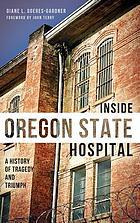
"A history of the Oregon State Hospital in Salem, Oregon, spanning from 1883 to 2012"--Provided by publisher 334 pages : illustrations ; 23 cm CIRC [ 0 ]
|
2013 |
|
Harvest heritage agricultural origins and heirloom crops of the Pacific Northwest by Richard D. Scheuerman , Alexander C. McGregor , John Clement (Photographer) 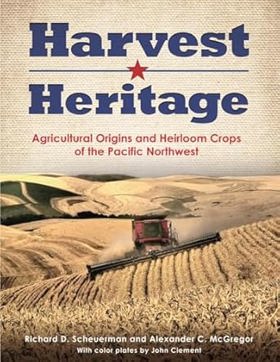
"Using imported heirloom grains and fruits, Spanish explorers, fur traders, missionaries, and some Native Americans planted subsistence gardens in the Pacific Northwest. After immigration surged in 1843, it took a surprisingly short time for the region's fertile lands to become a commercial agricultural powerhouse. Demand for food exploded with the industrial revolution as well as the urbanization of Europe and eastern America, and the doors of international export opened wide. Agribusiness expanded to meet the need. By 1890, advancements in mechanization, seed quality, irrigation and sustainable practices had spurred a farming boom. Columbia Basin irrigation and the development of synthetic fertilizers, as well as Cooperative Extension efforts and impressive work by agricultural researchers, greatly boosted regional production. This text explores the people, history, and major influences that shaped and transformed the Pacific Northwest's flourishing agrarian economy." Provided by publisher xiii, 186 pages : illustrations (some color) ; 28 cm CIRC [ 0 ]
|
2013 |
|
Selected Letters of A.M.A. Blanchet, Bishop of Walla Walla and Nesqualy (1846-1879) by Augustine Magloire Alexander Blanchet, Roberta Stringham Brown, Patricia O'Connell Killen 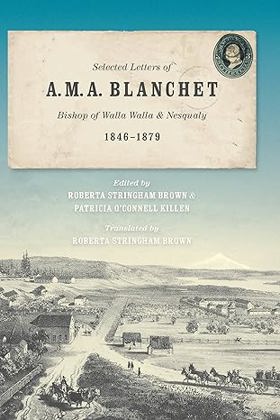
"In 1846, French Canadian-born A.M.A. Blanchet was named the first Catholic bishop of Walla Walla in the area soon to become Washington Territory. He arrived at Fort Walla Walla in late September 1847, part of the largest movement over the Oregon Trail to date. During the thirty-two years of Blanchet's tenure in the Northwest, the region underwent profound social and political change as the Hudson's Bay Company moved headquarters and many operations north following the Oregon Treaty, U.S. government and institutions were established, and Native American inhabitants dealt with displacement and discrimination. Blanchet chronicled both his own pastoral and administrative life and his observations on the world around him in a voluminous correspondence-almost nine hundred letters-to religious superiors and colleagues in Montreal, Paris, and Rome; funding organizations; other missionaries; and U.S. officials. This selection of Blanchet's letters provides a fascinating view of Washington Territory as seen through the eyes of an intelligent, devout, energetic, perceptive, and occasionally irascible cleric and administrator. Almost all of Blanchet's correspondence was in French. Roberta Stringham Brown and Patricia O'Connell Killen have chosen forty-five of those letters to translate and annotate, creating a history of early Washington that provides new insights into relationships, events, and personalities. A number of the letters provide first-hand glimpses of familiar events, such as the Whitman tragedy, the California gold rush, Indian wars and land displacement, transportation advances, and the domestic material culture of a frontier borderland. Others voice the hardships of historically underrepresented groups, including Native Americans, Metis, and French Canadians, and the experiences of ordinary people in growing population centers such as Seattle, Walla Walla, and Vancouver, Wash-ington. Still others describe the struggle to bring social, medical, and educational institutions to the region, a struggle in which women religious workers played a key role. The letters-and the editors' fascinating annotations-provide an engaging and insightful look at an important period in the history of the Pacific Northwest and southwest Canada. Roberta Stringham Brown is professor of French at Pacific Lutheran University. Patricia O'Connell Killen is professor of religious studies and academic vice president at Gonzaga University"-- Provided by publisher xviii, 272 pages : illustrations, maps ; 24 cm CIRC [ 0 ]
|
2013 |
|
Oregon & Northwestern Railroad by Jeff Moore 
"In 1922, the US Forest Service offered one of the largest timber sales in the agency's history, encompassing 890 million board feet of mostly Ponderosa pine timber in the mountains north of Burns, Oregon. Among other requirements, the sale terms required the successful bidder to build and operate 80 miles of common carrier railroad through some of the most remote and undeveloped country in the state. The Fred Herrick Lumber Company and its Malheur Railroad initially won the bidding, only to lose it when a crash in the lumber market forced the company into insolvency. The Edward Hines Lumber Company of Chicago picked up the pieces, and fro m1929 until 1984, its subsidiary Oregon & Northwestern Railroad made a living hauling logs, lumber, and occasional livestock between Burns and Seneca, Oregon."--Provided by publisher 127 pages : illustrations ; 24 cm CIRC [ 0 ]
|
2013 |
|
Salmon, people, and place a biologist's search for salmon recovery by Jim Lichatowich 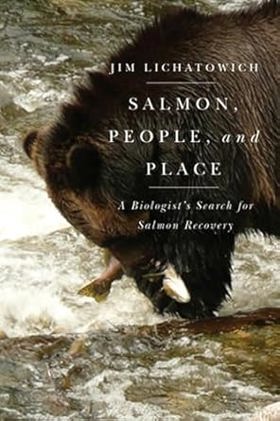
Each year wild Pacific salmon leave their oceanic feeding grounds and swim hundreds of miles back to their home rivers. The salmon’s annual return is a place-defining event in the Pacific Northwest, with immense ecological, economic, and social significance. However, despite massive spending, efforts to significantly alter the endangered status of salmon have failed. In Salmon, People, and Place, acclaimed fisheries biologist Jim Lichatowich eloquently exposes the misconceptions underlying salmon management and recovery programs that have fueled the catastrophic decline in Northwest salmon populations for more than a century. These programs will continue to fail, he suggests, so long as they regard salmon as products and ignore their essential relationship with their habitat. But Lichatowich offers hope. In Salmon, People, and Place he presents a concrete plan for salmon recovery, one based on the myriad lessons learned from past mistakes. What is needed to successfully restore salmon, Lichatowich states, is an acute commitment to healing the relationships among salmon, people, and place. A significant contribution to the literature on Pacific salmon, Salmon, People, and Place: A Biologist’s Search for Salmon Recovery is an essential read for anyone concerned about the fate of this Pacific Northwest icon. xi, 242 pages ; 23 cm CIRC [ 0 ]
|
2013 |
|
Collared politics and personalities in Oregon's wolf country by Aimee Lyn Eaton 
“Just as the humans involved in the wolf debate deserve to be seen as individuals, not stereotypes, so do the wolves. They are not the boogeyman, or storybook monsters aiming to prey upon the young and old. They aren’t cuddly pets or religious icons. They are Canis lupus. Wolves.” —from the Introduction. Teeming with the tension and passion that accompany one of North America’s most controversial apex predators, Collared tracks the events that unfolded when wolves from the reintroduced population of the northern Rocky Mountains dispersed west across state lines into Oregon. In a forthright and personal style, Aimee Lyn Eaton takes readers from meeting rooms in the state capitol to ranching communities in the rural northeast corner of the state. Using on-the-ground inquiry, field interviews, and in-depth research, she shares the story of how wolves returned to Oregon and the repercussions of their presence in the state. Collared: Politics and Personalities in Oregon’s Wolf Country introduces readers to the biologists, ranchers, conservationists, state employees, and lawyers on the front lines, encouraging a deeper, multifaceted understanding of the controversial and storied presence of wolves in Oregon. 135 pages : map ; 23 cm CIRC [ 0 ]
|
2013 |
|
Here on the edge how a small group of World War II conscientious objectors took art and peace from the margins to the mainstream by Steve McQuiddy 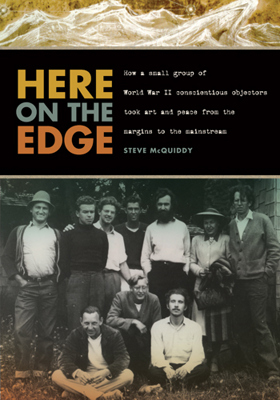
The fascinating story of one conscientious objector camp located on the rain-soaked Oregon Coast, Civilian Public Service (CPS) Camp #56. As home to the Fine Arts Group at Waldport, the camp became a center of activity where artists and writers from across the country focused their work not so much on the current war, but on what kind of society might be possible when the shooting finally stopped. They worked six days a week planting trees, crushing rock, building roads, and fighting forest fires in exchange for only room and board. At night, they published books under the imprint of the Untide Press. They produced plays, art, and music all during their limited non-work hours, with little money and few resources. After the war, camp members went on to participate in the San Francisco Poetry Renaissance of the 1950s, which heavily influenced the Beat Generation of Jack Kerouac, Allen Ginsberg, and Gary Snyder who in turn inspired Ken Kesey and his Merry Pranksters, leading the way to the 1960s upheavals epitomized by San Francisco s Summer of Love. As camp members engaged in creative acts, they were plowing ground for the next generation, when a new set of young people, facing a war of their own in Vietnam, would populate the massive peace movements of the 1960s viii, 326 pages : illustrations ; 26 cm CIRC [ 0 ]
|
2013 |
|
Bridging a great divide the battle for the Columbia River Gorge by Kathie Durbin 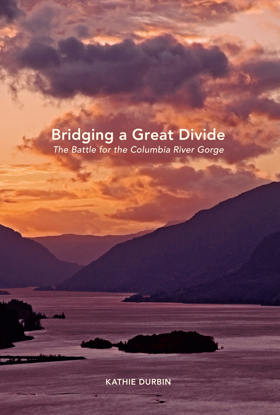
In 1986, the Columbia River Gorge National Scenic Area Act set into motion one of the great land-use experiments of modern times. The act struck a compromise between protection of a singular Western landscape-the majestic Gorge carved by Ice Age floods, which today divides Washington and Oregon-and encouragement of compatible economic development in communities on both sides of the river. In Bridging a Great Divide, environmental journalist Kathie Durbin draws on interviews, correspondence, and extensive research to detail what's happened in the Gorge since the act's passage. Sweeping change has altered the Gorge's landscape: upscale tourism and outdoor recreation, gentrification, the end of logging in national forests, the closing of aluminum plants, wind farms, and a population explosion in the metropolitan area to its west. In this insightful and revealing history, Durbin suggests that the story of the Columbia River Gorge National Scenic Area is the story of the Pacific Northwest in microcosm, as the region shifts from a natural resource-based economy to one based on recreation, technology, and quality of life. Book jacket xiii, 312 pages : illustrations ; 23 cm CIRC [ 0 ]
|
2013 |
|
The boy who shot the sheriff the redemption of Herbert Niccolls Jr. by Nancy Bartley 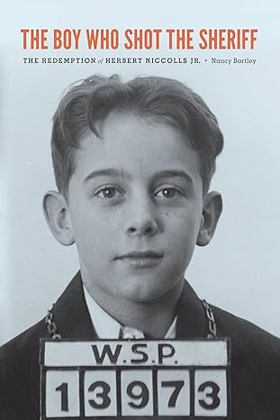
In 1931, a 12-year-old boy shot and killed the sheriff of Asotin, Washington. The incident stunned the small town and a mob threatened to hang him. Both the crime and Herbert Niccolls's eventual sentence of life imprisonment at the Washington State Penitentiary in Walla Walla drew national attention, only to be buried later in local archives. Journalist Nancy Bartley has conducted extensive research to construct a compelling narrative of the events and characters that make this a unique episode in the history of criminal justice in the United States. Niccolls became a cause for Father Flanagan of Boys Town,who took to the airwaves, imploring listeners to write Governor Hartley on the boy's behalf. The bitter campaign put Hartley in such a negative light that he lost his bid for reelection. Under a new and progressive warden, Niccolls thrived in prison. Inmates like physician Peter Miller and literary agent James Ashe became his tutors, finding that Niccolls had an insatiable appetite for knowledge. During the deadly 1934 prison riot at Walla Walla, several prisoners kept him from harm. Niccolls was finally released from prison in his early twenties. He went to work at 20th Century Fox in Hollywood, where he kept his secret for the rest of his long life. The Boy Who Shot the Sheriff explores this little-known story of a young boy's fate in the juvenile justice system during the bloodiest years in the nation's penitentiaries. xii, 284 pages : illustrations ; 23 cm CIRC [ 0 ]
|
2013 |
|
North Pacific temperate rainforests ecology & conservation by Gordon H. Orians , John W. Schoen 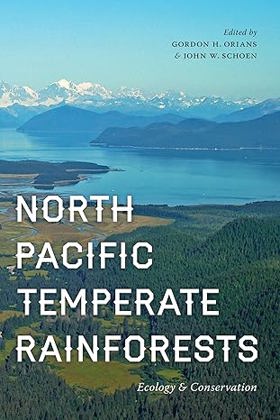
The North Pacific temperate rainforest, stretching from southern Alaska to northern California, is the largest temperate rainforest on earth. This book provides a multidisciplinary overview of key issues important for the management and conservation of the northern portion of this rainforest, located in northern British Columbia and southeastern Alaska. This region encompasses thousands of islands and millions of acres of relatively pristine rainforest, providing an opportunity to compare the ecological functioning of a largely intact forest ecosystem with the highly modified ecosystems that typify most of the world's temperate zone. The book examines the basic processes that drive the dynamic behavior of such ecosystems and considers how managers can use that knowledge to sustainably manage the rainforest and balance ecosystem integrity with human use. Together, the contributors offer a broad understanding of the challenges and opportunities faced by scientists, managers, and conservationists in the northern portion of the North Pacific rainforest that will be of interest to conservation practitioners seeking to balance economic sustainability and biodiversity conservation across the globe. xi, 383 pages : illustrations, maps ; 24 cm CIRC [ 0 ]
|
2013 |
|
The North Cascades Highway a roadside guide to America's Alps by Jack McLeod 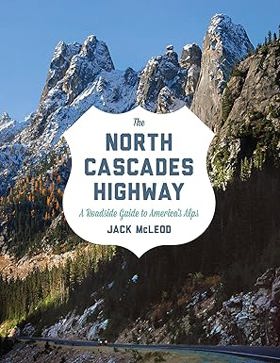
Each year thousands of drivers travel Washington State’s breathtakingly beautiful North Cascades Highway (State Route 20), observing the region’s alpine flora and fauna and its dramatic geologic features. The North Cascades Highway, an illustrated natural history guide, helps travelers and readers to appreciate the deeper beauty behind the landscape. Organized as a series of stops at eye-catching sites along eighty miles of the highway, The North Cascades Highway reveals the geological story of each location. Plate tectonics, rock formation, erosion, and glaciation are explored to show how the features of the North Cascades landscape came into being as they exist today. Human history is also included, as the book describes how miners, climbers, and poets have been inspired by the geology and terrain of the North Cascades. For travelers on the road, the easy-to-use guidebook format includes mileage, parking information, and detailed maps. Stunning color photographs allow armchair travelers to enjoy the journey as well. Appendices provide detailed information on geologic time, rock types, glaciers, and the geologists who have decoded stories hidden in rock and ice. The North Cascades Highway provides a unique experience of a striking landscape that is also a rich, interwoven system of living things, climate, and geology. xv, 104 pages : color illustrations color maps ; 29 cm CIRC [ 0 ]
|
2013 |
|
Becoming big league Seattle, the Pilots, and stadium politics by William H. Mullins 
Becoming Big League is the story of Seattle's relationship with major league baseball from the 1962 World's Fair to the completion of the Kingdome in 1976 and beyond. Bill Mullins focuses on the acquisition and loss, after only one year, of the Seattle Pilots and documents their on-the-field exploits in lively play-by-play sections. The Pilots' underfunded ownership, led by Seattle's Dewey and Max Soriano and William Daley of Cleveland, struggled to make the team a success. They were savvy baseball men, but they made mistakes and wrangled with the city. By the end of the first season, the team was in bankruptcy. The Pilots were sold to a contingent from Milwaukee led by Bud Selig, who moved the franchise to Wisconsin and rechristened the team the Brewers. Becoming Big League describes the character of Seattle in the 1960s and 1970s, explains how the operation of a major league baseball franchise fits into the life of a city, charts Seattle's long history of fraught stadium politics, and examines the business of baseball. xii, 348 pages : illustrations, map ; 24 cm CIRC [ 0 ]
|
2013 |
|
Gay Seattle stories of exile and belonging by Gary Atkins 
In 1893, the Washington State legislature quietly began passing a set of laws that essentially made homosexuality, and eventually even the discussion of homosexuality, a crime. A century later Mike Lowry became the first governor of the state to address the annual lesbian and gay pride rally in Seattle. Gay Seattle traces the evolution of Seattle’s gay community in those 100 turbulent years, telling through a century of stories how gays and lesbians have sought to achieve a sense of belonging in Seattle. Gary Atkins recounts the demonization of gays by social crusaders around the turn of the century, the earliest prosecutions for sodomy, the official harassment and discrimination through most of the twentieth century, and the medical discrimination and commitment to mental hospitals that continued into the 1970s as homosexuality was diagnosed as a disease that could be "cured." Places of refuge from this imposed social exile were created in underground theater and dance clubs: the Gold Rush-era burlesque shows, modern drag theater, and in mid-century the emergence of openly gay bars, from the Casino to Shelley’s Leg. Many of these were subjected to steady exploitation by corrupt police - until bar owner MacIver Wells and two Seattle Times reporters exposed the racket. The increasingly public presence of gays in Seattle was accompanied by the gradual coalescence of social services and self-help organizations such as the Dorian Society, gay businesses and advocacy groups including the Greater Seattle Business Association, and the stormy relationship between the Vatican, Seattle's Catholic hierarchy, and gay worshippers. Atkins’ narrative reveals the complex and often frustrating process of claiming a civic life, showing how gays and lesbians have engaged in a multilayered struggle for social acceptance against the forces of state and city politics, the police, the media, and public opinion. The emergence of mainstream political activism in the 1970s, and ultimately the election of Cal Anderson and other openly gay officials to the state legislature and city council, were momentous events, yet shadowed by the devastating rise of AIDS and its effect on the homosexual community as a whole. These stories of exile and belonging draw on numerous original interviews as well as case studies of individuals and organizations that played important roles in the history of Seattle’s gay and lesbian community. Collectively, they are a powerful testament to the endurance and fortitude of this minority community, revealing the ways a previously hidden sexual minority "comes out" as a people and establishes a public presence in the face of challenges from within and without. xl, 451 pages : illustrations ; 23 cm CIRC [ 0 ]
|
2013 |
|
The Meek Cutoff tracing the Oregon trail's lost wagon train of 1845 by Brooks Geer Ragen 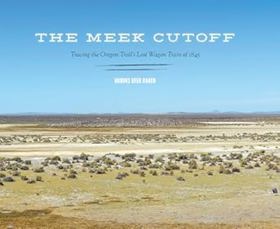
In 1845, an estimated 2,500 emigrants left Independence and St. Joseph, Missouri, for the Willamette Valley in what was soon to become the Oregon Territory. It was general knowledge that the route of the Oregon Trail through the Blue Mountains and down the Columbia River to The Dalles was grueling and dangerous. About 1,200 men, women, and children in over two hundred wagons accepted fur trapper and guide Stephen Meek's offer to lead them on a shortcut across the trackless high desert of eastern Oregon. Those who followed Meek experienced a terrible ordeal when his memory of the terrain apparently failed. Lost for weeks with little or no water and a shortage of food, the Overlanders encountered deep dust, alkali lakes, and steep, rocky terrain. Many became ill and some died in the forty days it took to travel from the Snake River in present-day Idaho to the Deschutes River near Bend, Oregon. Stories persist that children in the group found gold nuggets in a small, dry creek bed along the way. Fom 2006 to 2011, Brooks Ragan and a team of specialists in history, geology, global positioning, metal detecting, and aerial photography spent weeks every spring and summer tracing the Meek Cutoff. They located wagon ruts, gravesites, and other physical evidence from the most difficult part of the trail, from Vale, Oregon, to the upper reaches of the Crooked River and to a location near Redmond where a section of the train reached the Deschutes. The Meek Cutoff moves readers back and forth in time, using surviving journals from members of the 1845 party, detailed day-to-day maps, aerial photographs, and descriptions of the modern-day exploration to document an extraordinary story of the Oregon Trail. xi, 156 pages : illustrations (chiefly color), color maps ; 24 x 29 cm CIRC [ 0 ]
|
2013 |
|
White Grizzly Bear's legacy learning to be Indian by Lawney L. Reyes 
"I walked across the highway and stood on the bank overlooking Lake Roosevelt. My attention was directed to the area where Kettle Falls once flowed. As I stood there the wind came. As I listened I imagined that it talked to me. It seemed that it was telling me of how things once were. I began to think of friends and relatives who were no longer living. They began to appear before me, perched on the large rocks, fishing for the great salmon." In his distinctive voice, Lawney Reyes, grandson of Pic Ah Kelowna or White Grizzly Bear of the Sin Aikst, relates the history of his family and his people. The Sin Aikst are now known as the Lakes tribe, absorbed into the Colville Confederated Tribes of eastern Washington. And where Kettle Falls once flowed and the Sin Aikst once fished are places that exist now only in memory, flooded when the Grand Coulee Dam was completed in 1942. Reyes uses personal and family history to explore the larger forces that have confronted all Native Americans: displacement, acculturation, and the potent force of self-renewal. The son of a Filipino immigrant and a mother who traced her ancestry to the earliest known leaders of the Sin Aikst, Reyes paints a vivid picture of his early life in the Indian village of Inchelium, destroyed by the building of the dam. Reyes describes the loss of homeland and traditional ways of life, the scarcities that followed, and the experiences of a court-ordered Indian boarding school in Oregon. These well-known facts of loss and injustice take on a compelling dimension in Reyes’s blend of history and autobiography, brought to life by the vivid images and personalities he describes. Despite the loss of heritage beneath the waters of the Columbia River and the flood of white acculturation, Reyes and his younger brother, the late Native American leader Bernie Whitebear, were able to fashion rich lives in a changed world, lives that honor the past while engaging with the present. xviii, 197 pages : illustrations, maps ; 23 cm CIRC [ 0 ]
|
2013 |
|
The master love, latitude, longitude & laughter by Jan Ferris Koltun, Ferris family 
This is about my father's mastery of everything that makes life worthwhile: ships, boats, airplanes, families, oceans, pets, and alcohol. Some of these he managed better than others. A master mariner whose unlimited licenses covered all oceans and any ship's tonnage, he learned to fly airplanes in order to land on docks next to his ship, tamed a kangaroo by playing the organ aboard his vessels, threw good parties and disastrous ones, sailed a 50-foot ketch from Fiji to Juneau, and made "good times" during most of his life, along with a notable failure. He was a Sunset Magazine Chef of the West. He also was a water witch, discovering that he could use dowsing sticks to discover water resources for his community on tiny Orcas Island, off the West Coast, where he treated his friends to cases of Scotch that he dumped overboard in the Strait of Georgia. vi, 131 pages : illustrations, maps ; 23 cm CIRC [ 0 ]
|
2013 |