Catalog of British Columbiana and Pacific Northwest Americana
Encyclopedia Cascadia Catalog contains book titles of mostly non-fiction Pacific Northwest Coast of North America Titles (primarially British Columbia, Idaho, Oregon and Washington State) in an easy-to-understand title catalog. If you see a link with this badge ONLINE CIRC it means that there is an online institution that provides free access to that title. In some cases there may be more than one institution hosting the title digitally.
| Catalog Title | Published |
|---|---|
|
Five corners the story of Chilliwhack by Bruce Ramsey
|
1975 |
|
Fishwheels of the Columbia by Ivan J. Donaldson, Frederick K. Cramer
|
1971 |
|
Fishing the Northwest an angler's reader by Glen A. Love 
The Pacific Northwest is water country. This far corner of the world is distinguished and defined by rivers, streams, lakes, reservoirs, estuaries, and an ocean. Where there is so much water, there's fishing. And where there's fishing, there is bound to be writing about fishing because, as Thomas McGuane observed, "you can't say enough about it." Now there's a book for people who can't read enough about it either. Fishing the Northwest collects stories and essays by twenty-two of the best angling writers in the region. Veteran flyfisher Love has combed the vast literature on angling to create an exciting blend of subjects and styles that puts readers in the water next to fishing authors of great renown as well as noteworthy newer voices. Included are famous early writers like Zane Grey, who frequented Northwest rivers, and Roderick Haig-Brown, who defined angling literature for the region. Also spotlighted is a new wave of excellent writing that has exploded in the Northwest over the past two decades, calling on a host of gifted authors like Ted Leeson and Jessica Maxwell--one of several women who prove that it's no longer just a man's preserve. The book ranges from Alaska to the Rogue River in southern Oregon, the Olympic Mountains and Vancouver Island to the Continental Divide in Montana. From the advice of angling eminence Enos Bradner to the spirited fiction of Ken Kesey, from Robin Carey's account of getting acquainted with a new river to Lorian Hemingway's first flyfishing adventure, Fishing the Northwest is the ultimate reader for anyone who, in Norman Maclean's famous words, is "haunted by waters." Even if you've never felt a tug on a line, you'll discover in this book that some of the Northwest's best writing flows straight from its rivers. All royalties from Fishing the Northwest will be donated to the Pacific Rivers Council, a non-profit conservation organization dedicated to restoring, protecting, and enhancing American rivers. 232 pages ; 24 cm. CIRC [ 0 ]
|
2000 |
|
Fishes of the Salish Sea Puget Sound and the Straits of Georgia and Juan de Fuca by Theodore W. Pietsch , James Wilder Orr , Joseph R. Tomelleri (Illustrator) 
"Fishes of the Salish Sea is the definitive guide to the identification and history of the marine and anadromous fishes of Puget Sound and the Straits of Georgia and Juan de Fuca. Featuring striking illustrations of the Salish Sea's 260 fish species by noted illustrator Joseph R. Tomelleri, this comprehensive three-volume set details the ecology and life history of each species, as well as recounts the region's rich heritage of marine research and exploration. Beginning with jawless hagfishes and lampreys and ending with the distinctive Ocean Sunfish, leading scientists Theodore W. Pietsch and James W. Orr present the taxa in phylogenetic order, based on classifications that reflect the most current scientific knowledge. Illustrated taxonomic keys facilitate fast and accurate species identification. These in-depth, thoroughly documented, and yet accessible volumes will prove invaluable to marine biologists and ecologists, natural resource managers, anglers, divers, students, and all who want to learn about, marvel over, and preserve the vibrant diversity of Salish Sea marine life." 3 volumes (xiii, 1048 pages) : illustrations (some color), color maps, portraits ; 24 x 27 cm CIRC [ 0 ]
|
2019 |
|
Fishes of Idaho a natural history survey by John W. Sigler 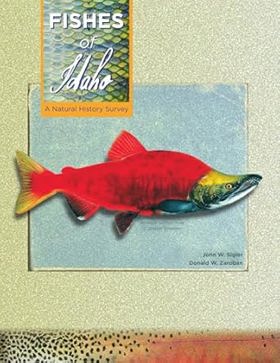
An exhaustive natural survey of all species known to exist in the Gem State, this encyclopedic book provides biologists, naturalists, students and anglers with the most complete reference of its kind. xviii, 794 pages : color illustrations, color maps ; 29 cm CIRC [ 0 ]
|
2018 |
|
Fisheries of British Columbia by British Columbia 
Published by the provincial government in 1910, Fisheries of British Columbia serves as an official, promotional survey of the region's rapidly expanding commercial fishing, canning, and whaling industries. The brief, illustrated report catalogs the marine biology of the Pacific coast—most notably the lucrative Pacific salmon runs—while detailing the economic infrastructure, processing yields, and emerging regulations of the early 20th-century maritime economy. Through statistical data and glowing assessments of the province's aquatic resources, the text functioned to attract foreign capital and project an image of boundless natural wealth. A keen insight drawn from the work is how early state-sponsored industrial reports actively commodified ecological abundance; by systematically reducing complex marine ecosystems into mere statistical yields and investment opportunities, the government officially codified a paradigm of relentless commercial extraction that simultaneously ignored indigenous fishing rights and laid the groundwork for severe future ecological depletion. 64 pages illustrations 25 cm ONLINE CIRC [ 1 ]
|
1910 |
|
Fish Lake in the high Cascades a historic legacy by David G. Turner , Rolf Anderson , Jim, ‡e contributor Denney, Cheryl, ‡e contributor Friesen, Steve, ‡e contributor Mealey, Don, ‡e contributor Allen, Friends of Fish Lake (Publisher) 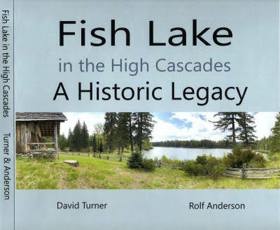
"Early lava flows near the headwaters of the McKenzie River dammed Hackleman Creek, creating a body of water eventually named Fish Lake. The seasonal lake has since attracted people and animals, seeking a resting place in the dense forest. The authors describe the ecological setting of Fish Lake and its evolution of human use, from Native Americans, to a popular waystation for travelers along the Santiam Wagon Road, to a U.S. Forest Service base of oeprations for fire management, including a Remount Depot to pack crews into the back country. Their narration is interspersed with contemporary and historic stories and photos"-- back cover xvi, 198 pages : color illustrations, maps ; 23 cm CIRC [ 0 ]
|
2022 |
|
Fish and ships by Ralph W. Andrews, A. K. Larssen
|
1959 |
|
First Fruits The Lewellings and the Birth of the Pacific Coast Fruit Industry by Linda Ziedrich 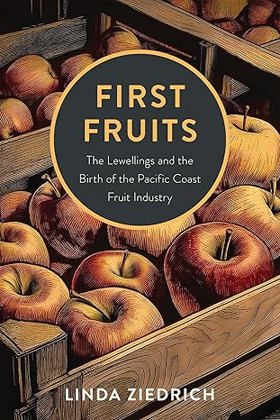
First Fruits offers a fascinating look at the lives of Pacific Coast horticulturists Henderson, Jonathan, and Seth Lewelling. Traveling across the Overland Trail—Henderson to Oregon in 1847, with a wagonload of fruit trees, and Seth and John to California three years later—the brothers would establish themselves as pioneers in the West’s growing fruit industry. By recounting how Henderson planted the first orchard of grafted fruit trees in Oregon, how Seth originated the Black Republican and Bing cherries, and how John led the development of the Napa Valley wine industry, First Fruits preserves the Lewellings’ place in history. However, the Lewellings were not simply planters, grafters, and breeders. They were also adventurers, colonists, gold seekers, reformists, and explorers—experiencing firsthand the westward expansion of the nation. Their stories provide a unique glimpse into the social, economic, and political history of the day. From their Quaker upbringing in North Carolina and Indiana to Henderson’s attempt to start a utopian colony in Honduras, John’s efforts to grow the Grange in California, and Seth’s contribution to democratic reforms in Oregon, the Lewellings’ legacy extends far beyond their agricultural endeavors. In the first biography to reclaim the brothers’ histories, Linda Ziedrich splendidly captures their dedicated support of one another and their communities, their contributions to the development of the modern fruit industry, and their lasting influence on the cultivation of fruits synonymous with the Pacific Coast region. 304 pages : b&w photos, 6 maps, 4 family trees CIRC [ 0 ]
|
2025 |
|
First approaches to the Northwest coast by Derek Pethick
History, to 1790, of the early expeditions to the northwest coast of North America and the first fur traders xix, 232 pages : illustrations ; 24 cm CIRC [ 1 ]
|
1976 |
|
First approaches to the Northwest coast by Derek Pethick
|
1979 |
|
First across the continent Sir Alexander Mackenzie by Barry M. Gough 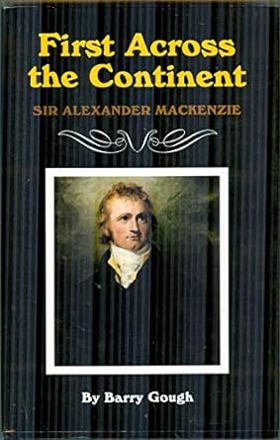
Seeking the Northwest Passage and the fabled link to Russia, Japan, and Cathay, Alexander Mackenzie drove himself and his men relentlessly, by canoe and portage, across the uncharted rivers, valleys, and mountains of North America. Mackenzie's 1789 journey to the Arctic Ocean and his arduous journey to the Pacific in 1793 predate the Lewis and Clark expedition. By the age of thirty-one, Alexander Mackenzie had become the first man to cross North America from the northwestern hub of the interior trade, Lake Athabasca, to the Pacific Ocean. He had opened the continent to trade and exploration. In his research, Barry Gough traveled from Mackenzie's birthplace to his tomb and from Montreal to both the Arctic Ocean and the Pacific. He takes the reader along with Mackenzie on his hazardous travels and voyages, using contemporary accounts to bring to life the perils faced by the young explorer. First Across the Continent reveals the international impact of Sir Alexander Mackenzie's expeditions and places him among the elite of New World Explorers, illuminating his vital role in the history of the fur trade and the American West xxi, 232 pages : illustrations ; 23 cm CIRC [ 1 ]
|
1997 |
|
Fire, faults & floods a road & trail guide exploring the origins of the Columbia River basin by Marge Mueller, Ted Mueller 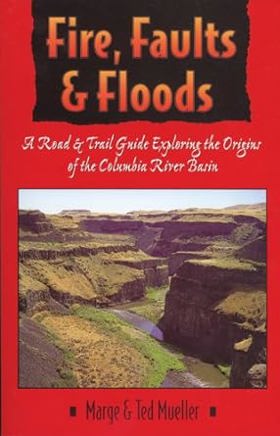
Fifty-three trips are targeted to assist readers in finding and understanding the area's major geologic features. Among the regions covered are: Missoula, Montana and the lower Clark Fork drainage; Grande Ronde and Joseph Creek Canyons on the borders of Washington, Oregon, and Idaho; the Columbia River Gorge; and the northern Oregon Coast. Includes b&w photos and maps. c. Book News Inc 288 pages : illustrations, maps ; 22 cm CIRC [ 1 ]
|
1997 |
|
Fire at Eden's gate Tom McCall & the Oregon story by Brent Walth
|
1994 |
|
Finding the river an environmental history of the Elwha by Jeff Crane 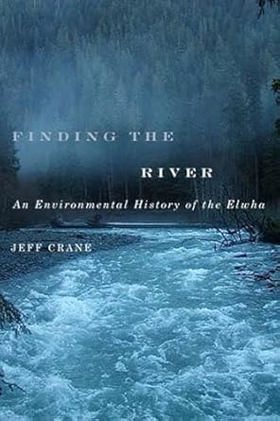
In 1992 landmark federal legislation called for the removal of two dams from the Elwha River to restore salmon runs. Jeff Crane dives into the debate over development and ecological preservation in Finding the River, presenting a long-term environmental and human history of the river as well as a unique look at river reconstruction. Finding the River examines the ways that different communities—from the Lower Elwha Klallam Indians to current-day residents—have used the river and its resources, giving close attention to the harnessing of the Elwha for hydroelectric production and the resulting decline of its fisheries. Crane describes efforts begun in the 1980s to remove the dams and restore the salmon. He explores the rise of a river restoration movement in the late twentieth century and the roles that free-flowing rivers could play in preserving salmon as climate change presents another set of threats to these endangered fish. A significant and timely contribution to American Western and environmental history—removal of the two Elwha River dams began in September 2011—Finding the River will be of interest to historians, environmentalists, and fisheries biologists, as well as to general readers interested in the Puget Sound, the Olympic Peninsula, and environmental issues. 250 pages : illustrations, map ; 23 cm CIRC [ 0 ]
|
2011 |
|
Fighting for the Puyallup Tribe a memoir by Ramona Bennett Bill 
A relentless advocate for Native rights, Ramona Bennett Bill has been involved in the battles waged by the Puyallup and other Northwest tribes around fishing rights, land rights, health, and education for over six decades. This invaluable firsthand account includes stories of the takeover of Fort Lawton as well as events from major Red Power struggles, including Alcatraz, Wounded Knee, and the Trail of Broken Treaties. She shares her experiences at the Puyallup fishing camp established during the Fish War of the 1960s and 1970s, which led to the federal intervention that eventually resulted in the Boldt Decision. She also covers the 1976 occupation of a state-run facility on reservation land and the lobbying that led to the property's return to the tribe. Bennett Bill served for nearly a dozen years as a Puyallup Tribal Council member and ten as chairwoman, organizing social welfare, education, and enrollment initiatives and championing Native religious freedom. Her advocacy for Native children, especially those who had been adopted out of their community, helped pave the way for the Indian Child Welfare Act. Now in her mid-eighties, she continues to organize for Native rights and environmental justice. The book is full of vivid stories of her fearless testimony in courtrooms and press conferences on issues affecting Indian Country, and of the many friends and comrades she made along the way. CIRC [ 0 ]
|
2025 |
|
Fields & pine trees by Opal Lambert Ross, Kenneth Platt 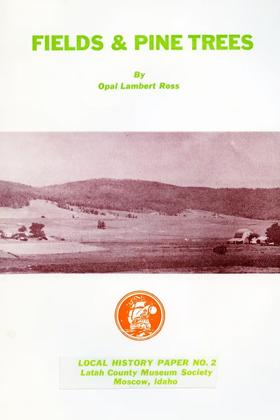
Published in 1977 as Local History Paper No. 2 by the Latah County Historical Society. The tide of pioneer settlers that swept into the Palouse Country a hundred years ago came from the west. [. . .] The first lappings of this tide reached Idaho in 1869-70, touching at Pine Creek in the north end of what is now Latah County, at Kennedy Ford and Moscow in the middle, and at Genesee at the south end. The account given by Opal Lambert Ross covers the Pine Creek community. There, on January 1, 1872, Lyman Davenport made the first homestead entry registered in Latah County. [. . .] Mrs. Ross ably tells the story in a microcosmic record of the Pioneer period. Her tracing of each homestead down to its present ownership is a further service to history, as well as a benchmark for possible future study. -The Editor 71 pages : illustrations, maps, portraits ; 29 cm CIRC [ 1 ]
|
1976 |
|
Field guide to the sedges of the Pacific Northwest by Barbara L. Wilson , Richard E. Brainerd , Danna Lytjen , Bruce Newhouse , Nick Otting , Carex Working Group 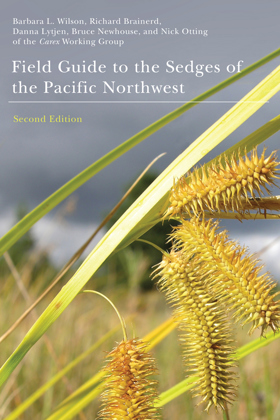
"Field Guide to the Sedges of the Pacific Northwest" is an illustrated guide to all 169 species, subspecies, and varieties in the genus "Carex" that grow in the wild in Oregon and Washington. Most of these species are found throughout the Pacific Northwest and California. This updated second edition includes eight additional species documented in the region since the guide was first published, along with an improved identification key, updated nomenclature and taxonomy, revised range maps, and improved illustrations. Sedges can be difficult to identify, with differences between species based on small, technical characters. This comprehensive guide contains identification keys, descriptions, more than 650 color photographs, and distribution maps for each species, providing users with helpful tools and tips for identifying the plants in this challenging group. Information about sedge ecology, habitat, management and restoration, ethnobotanical uses, and propagation enhances the guide's utility."Field Guide to the Sedges of the Pacific Northwest" provides an invaluable resource for botanists, land managers, restoration ecologists, and plant enthusiasts. And, as the genus "Carex" becomes increasingly important amongst landscapers, nurseries, and gardeners, the guide will serve as a handy tool for choosing Northwest natives for the garden 432 pages : color illustrations ; 23 cm CIRC [ 0 ]
|
2014 |
|
Field guide to the rare plants of Washington by Pamela Camp, John Gamon, Joseph Arnett 
Field Guide to the Rare Plants of Washington offers a window into the beauty and diversity of the rarest plants in the state. The field guide includes: 317 vascular plants, six mosses, and one lichen; Full-color photographs of the plants and their habitats, line drawings, and distribution maps; Detailed species descriptions, identification tips, and easiest times to identify the plants; Current conservation status and state rank; Complete reference list and glossary. Each rare plant is fully characterized according to its appearance, reproductive strategy, associated plants, habitat, current threats, and scarcity in areas outside the state. A trip across Washington presents an array of habitats, from dripping spruce and hemlock forests along the coast to arid grasslands, shrub-steppe, and sand dune systems east of the mountains, from low-elevation outwash prairies to alpine slopes, from basalt flows and rocky islands to salt marshes and riverbanks. This book brings attention to the rarest and least understood plant species that find niches in this complex landscape. xi, 392 pages : illustrations (some color), color maps ; 23 cm CIRC [ 0 ]
|
2011 |
|
Field guide to the grasses of Oregon and Washington by Cindy Talbott Roché , Richard E. Brainerd , Barbara L. Wilson , Nick Otting , Robert C. Korfhage 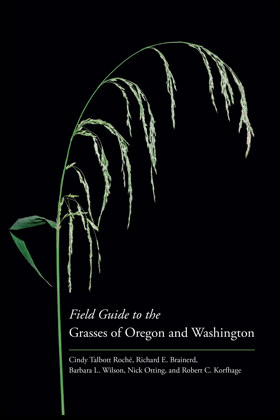
Field Guide to the Grasses of Oregon and Washington is an illustrated guide to all 365 species, subspecies, and varieties of grasses--both native and introduced--that grow wild in Oregon and Washington. It also has broad applicability in neighboring states and provinces. Grasses are important functional components in a variety of ecosystems and are highly valued for habitat restoration in ecosystems ranging from wetlands to deserts, and from sea level to alpine. They are important weeds and are also cultivated as ornamental plants. --Publisher ix, 460 pages : color illustrations, color maps ; 23 cm CIRC [ 0 ]
|
2019 |
|
Field guide to Oregon rivers by Tim Palmer (Author, Photographer), William E. Avery (Illustrator), Oregon State University Press (Publisher) 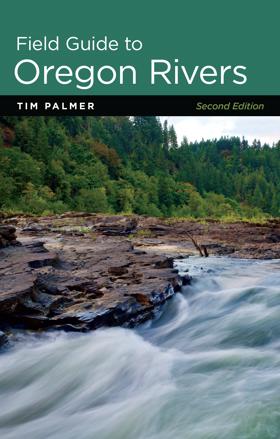
"In this updated edition of his classic Field Guide to Oregon Rivers, Tim Palmer gives us an unprecedented reference, introducing the state's waterways and offering outdoor enthusiasts and resource professionals an interpretive approach to an extraordinary network of streams. He begins with natural history-geology, climate, hydrology, plants, and wildlife-then profiles 111 rivers with notes about nature, fish, and conservation, followed by essential tips on where to see each river, to hike along the shores, to fish, and to explore by canoe, kayak, and raft. Illustrations identify riparian plants and animals while more than 150 photographs showcase a magnificent rivers estate. This volume is an essential outdoor companion for Oregonians and visitors alike."-- Provided by publisher 319 pages : color illustrations, color maps ; 21 cm CIRC [ 0 ]
|
2023 |
|
Ferryboats on the Columbia River, including the bridges and dams by Robert H. Ruby, John A. Brown
|
1974 |
|
Ferryboats a legend on Puget Sound by M. S. Kline, G. A. Bayless 
The intriguing story of Puget Sound's ferry boats and the men and women who operated them. xi, 401 pages, 1 folded leaf of plates : illustrations (some color) ; 27 cm CIRC [ 1 ]
|
1983 |
|
Ferries of Puget Sound by Steven J. Pickens 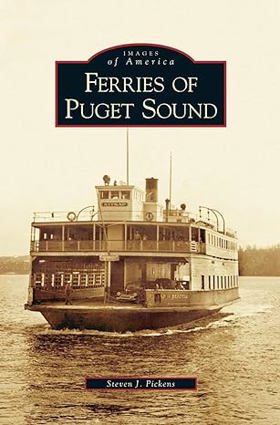
This pictorial retrospective presents more than 200 images from the author's personal collection of vintage photographs, postcards, and other visual memorabilia to trace the unique story of the floating highways and gentle maritime giants of Puget Sound 128 pages : chiefly illustrations, map ; 24 cm. CIRC [ 1 ]
|
2005 |
|
Fernie at war, 1914-1919 by Wayne R. Norton 
"Fernie, a small community located in BC's Kootenay region, entered the First World War in 1914 with optimism and a sense of national pride - it emerged five years later having experienced staggering losses and multiple controversies that threatened to tear their community apart. As a resource-based economy with unusually large and varied immigrant populations, and exceptionally high recruitment levels, Fernie was profoundly affected by conflicting impulses of labour, loyalty and ethnicity. Demands for internment of enemy aliens, resistance to prohibition and moral reform, the consequences of natural and man-made disasters, the unprecedented banning of recruitment, and the western labour revolt were all issues that contributed to a war-time experience for Fernie that was more dramatic and more revealing of underlying tensions than that of any other Canadian community. In his new book, Fernie at War, historian and author Wayne Norton explores what it meant to live in Fernie during those confusing and divisive years."--Provided by publisher 224 pages : illustrations, maps ; 23 cm CIRC [ 0 ]
|
2017 |