François Norbert Blanchet 1795-1883
He served as the first Catholic Archbishop of Oregon City, playing a crucial role in establishing the Catholic Church in the Pacific Northwest. He famously developed the "Catholic Ladder," a visual educational tool used to teach Christian history and theology to local Indigenous communities.
Biographical Overview
- Lived from 1795 to 1883
- Born: Jan 1, 1795, Saint-Pierre-de-la-Rivière-du-Sud, Lower Canada
- Died: Jan 1, 1883, Portland, Oregon
Historical Events
- No referenced events linked
Bibliography for François Norbert Blanchet
A listing of books related by subject
Selected Letters of A.M.A. Blanchet, Bishop of Walla Walla and Nesqualy (1846-1879) by Augustine Magloire Alexander Blanchet, Roberta Stringham Brown, Patricia O'Connell Killen
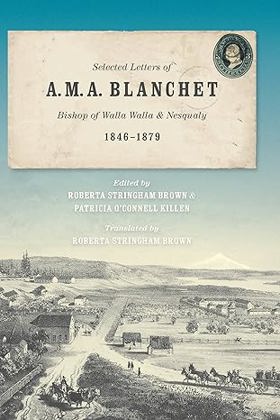
"In 1846, French Canadian-born A.M.A. Blanchet was named the first Catholic bishop of Walla Walla in the area soon to become Washington Territory. He arrived at Fort Walla Walla in late September 1847, part of the largest movement over the Oregon Trail to date. During the thirty-two years of Blanchet's tenure in the Northwest, the region underwent profound social and political change as the Hudson's Bay Company moved headquarters and many operations north following the Oregon Treaty, U.S. government and institutions were established, and Native American inhabitants dealt with displacement and discrimination. Blanchet chronicled both his own pastoral and administrative life and his observations on the world around him in a voluminous correspondence-almost nine hundred letters-to religious superiors and colleagues in Montreal, Paris, and Rome; funding organizations; other missionaries; and U.S. officials. This selection of Blanchet's letters provides a fascinating view of Washington Territory as seen through the eyes of an intelligent, devout, energetic, perceptive, and occasionally irascible cleric and administrator. Almost all of Blanchet's correspondence was in French. Roberta Stringham Brown and Patricia O'Connell Killen have chosen forty-five of those letters to translate and annotate, creating a history of early Washington that provides new insights into relationships, events, and personalities. A number of the letters provide first-hand glimpses of familiar events, such as the Whitman tragedy, the California gold rush, Indian wars and land displacement, transportation advances, and the domestic material culture of a frontier borderland. Others voice the hardships of historically underrepresented groups, including Native Americans, Metis, and French Canadians, and the experiences of ordinary people in growing population centers such as Seattle, Walla Walla, and Vancouver, Washington. Still others describe the struggle to bring social, medical, and educational institutions to the region, a struggle in which women religious workers played a key role. The letters-and the editors' fascinating annotations-provide an engaging and insightful look at an important period in the history of the Pacific Northwest and southwest Canada. Roberta Stringham Brown is professor of French at Pacific Lutheran University. Patricia O'Connell Killen is professor of religious studies and academic vice president at Gonzaga University"-- Provided by publisher
xviii, 272 pages : illustrations, maps ; 24 cm
Desiderata
Journal of a Catholic bishop on the Oregon trail the overland crossing of the Rt. Rev. A.M.A. Blanchet, Bishop of Walla Walla, from Montreal to Oregon Territory, March 23, 1847 to January 23, 1851. Blackrobe buries Whitmans by Augustine Magloire Alexander Blanchet, Edward J. Kowrach, J. B. A. Brouillet
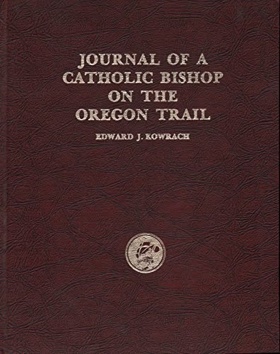
Journal of a Catholic Bishop on the Oregon Trail chronicles the grueling overland migration of early church officials into the remote, semi-arid expanses of the Columbia River Plateau in present-day southeastern Washington. The firsthand accounts vividly map the harsh geographic realities of the Walla Walla valley, a sprawling inland basin where extreme distances and rugged terrain severely hindered communication and isolated pioneer missionaries. By detailing the unforgiving landscape that formed the backdrop to the Whitman Massacre and the ensuing Cayuse War, the journal highlights how the profound physical barriers of the inland Northwest exacerbated the intense cultural conflicts of the era. Ultimately, this collection provides a localized spatial record of how the vast, unforgiving topography of the Oregon Territory's interior frontier fundamentally dictated the precarious survival of its earliest European outposts.
190 pages : illustrations ; 29 cm
Non-circulating [ 1 ]
Entry Details
Related Online Resources
- No external online resources or related links found
Last updated: 2026-09-30