City of Aberdeen Grays Harbor County, Washington
Mapped Location
City of Aberdeen: The mapped location is an approximation and should not be used for navigation or wayfinding.
Information
General information on City of Aberdeen
- Feature Type: Incorporated
Official, historical, colloquial and alternative toponyms for City of Aberdeen
A brief list of names that this geographic feature has been named
| Name | Description |
|---|---|
| City of Aberdeen | Official |
| Aberdeen | Official |
Origin Notes and History of City of Aberdeen
References to City of Aberdeen that document the origin of its place name
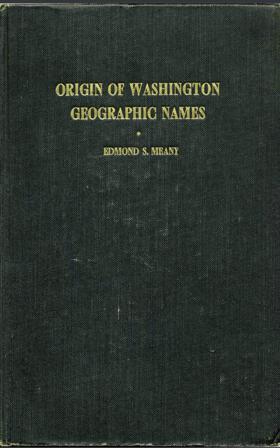
ABERDEEN, city in Grays Harbor (formerly called Chehalis) County. The town was platted by Samuel Benn in 1884 on his homestead. Benn was born in New York City and in 1856 he came to San Francisco. Three years later he moved to Washington Territory and settled on the Chehalis River. There are two sources claimed for the name of the city. John J. Carney (Names MSS., Letter 65) says it arose from the fact that, the Aberdeen Packing Company of liwaco established a cannery in early days on the Benn homestead. Hawthorne's History of Washington, Volume II., page 602, declares that the name was suggested by Mrs. James Stewart, who, before her marriage in 1868, was Miss Joan B. Kellan of Aberdeen, Scotland, who had come to America with her parents in 1849 and settled in Ohio. She and her husband moved to Washington Territory in 1874.
Related Catalog Titles
A Bibliography for City of Aberdeen, Grays Harbor County, Washington
Red Harbor Radical Workers and Community Struggle in the PacificNorthwest : Radical Workers and Community Struggle in the Pacific Northwest by Aaron Goings
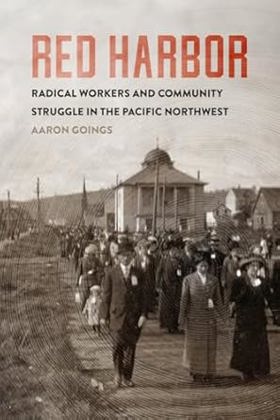
In the early decades of the twentieth century, Grays Harbor was the Lumber Capital of the World. While thousands of lumber and maritime workers fought for higher wages and decent conditions, employers unified to protect their interests, often through violent and corrupt means. They spied on unionists, expelled them from their own towns, vilified them in the press, and physically assaulted labor activists. But with deep roots in their communities, radical workers continued to meet in their halls and immigrant neighborhoods—and to influence the wider labor movement well into the 1930s. In Red Harbor, Aaron Goings resurrects the forgotten history of lumber workers in a bastion of labor radicalism, examining the conflict as workers faced down an alliance of employers, police, and violent anti-radicals, including the Ku Klux Klan. But he goes beyond these clashes to illuminate the vital roles of families, immigrants, and working-class women in the labor movement, revealing how people fought not only for labor rights but also for the good of their communities. The Industrial Workers of the World (or Wobblies) in particular adopted views and tactics from socialist Finnish immigrants while authoring programs responsive to local needs and supported by the people—radical and otherwise. Vivid and revealing, Red Harbor shines a light on lumber workers and the pursuit of justice in the Pacific Northwest.
360 Pages, 6 x 9 in, 19 b&w illus
CIRC [ 0 ]
Grays Harbor County
- City of Aberdeen
- Aberdeen Gardens
- Aberdeen Junction
- Alder Grove
- Aloha
- Amanda Park
- Artic
- Axford
- Balch
- Bay City
- Bel-Aire
- Brady
- Broadway Heights
- Burrows
- Carlisle
- Carlisle East
- Carlisle West
- Cedarville
- Central Park
- Chehalis Village
- Cohassett
- Cohassett Beach
- Copalis Beach
- Copalis Crossing
- City of Cosmopolis
- East Aberdeen
- East Hoquiam
- City of Elma
- Fuller
- Garden City
- Gray Gables
- Grayland
- Grays Harbor City
- Greenwood
- Grisdale
- Herbig Heights
- Highland Heights
- City of Hoquiam
- Humptulips
- Iron Springs
- Junction City
- Laidlow
- Lankner
- Malone
- Markham
- City of McCleary
- McCleary Junction
- Melbourne
- Moclips
- City of Montesano
- Neilton
- New London
- Newton
- Nisson
- North Aberdeen
- Norwood
- City of Oakville
- Ocean City
- Ocean Grove
- City of Ocean Shores
- Ocosta
- Onslow
- Oyehut
- Pacific Beach
- Pilgrim Heights
- Porter
- Quinault
- Rayville
- Rony
- Saginaw
- Sampson
- Satsop
- Sine
- South Arbor
- South Elma
- South Montesano
- Sunset Beach
- Taholah
- Township 21-9
- Tulips
- Vesta
- Weatherwax
- Weikswood
- Westhaven
- City of Westport
- Wishkah
- Woodlawn
Political Boundaries
Last updated: 2025-09-23