Catalog of British Columbiana and Pacific Northwest Americana
Encyclopedia Cascadia Catalog contains book titles of mostly non-fiction Pacific Northwest Coast of North America Titles (primarially British Columbia, Idaho, Oregon and Washington State) in an easy-to-understand title catalog. If you see a link with this badge ONLINE CIRC it means that there is an online institution that provides free access to that title. In some cases there may be more than one institution hosting the title digitally.
| Catalog Title | Published |
|---|---|
|
Coal wars unions, strikes, and violence in depression-era central Washington by David Bullock 
Strikes were a way of life for central Washington coal miners and their families, but Tuesday, April 3, 1934, was different. This time, people were afraid. Wives and mothers pelted cars with rocks, rotten eggs, and cow pies. They cursed and assaulted anyone who dared to cross their picket line. On a normal shift, the striking laborers spent ten or more hours at the workplace. Dressing, preparing lights and equipment, and traveling into the mine shaft--as much as an hour each way--were all done on their own time. The miners and their families wanted safer working conditions, fair wages, and a six-hour workday. So when leaders of their national union, the United Mine Workers of America, seemed indifferent to their concerns, some local members created a new organization, the Western Miners Union of America, and decided to strike. But this time, conflicting union alliances turned residents of Roslyn, Cle Elem, and Ronald against each other, and the heated, violent battle left deep and lasting scars. A refreshingly balanced account, Coal Wars captures the drama surrounding a dual union movement in the 1930s American West while portraying the region's melting pot of working families and the sociopolitical impacts of New Deal policies. Author David Bullock witnessed the bitter emotions first hand. His grandfather, a Roslyn miner, lived through the events depicted in Coal Wars. vii, 211 pages : illustrations, maps ; 23 cm CIRC [ 1 ]
|
2014 |
|
Camps and calluses the Civilian Conservation Corps in Southwestern Oregon by William A. Lansing 
For most of us, the Great Depression that gripped the nation for almost 10 years in the late 1920's and '30's is only something that we vaguely recall from reading history books. In 1933 Franklin Delano Roosevelt took the reins of the nation and created the NEW DEAL. One of the most successful programs of the NEW DEAL was the creation of the Civilian Conservation Corps. It focused on getting the unemployed young men off the streets of America's largest cities and transporting them by train to their new home in camps spread across the country. These camps would be their home for a minimum of six months. The book "Camps and Calluses" discusses what lead up to the Great Depression and where and how the CCC camps in southwestern Oregon played their part. This book follows my other ones in style and narrative. It highlights with photographs the camps and work projects in the region while being supported by a detailed narrative on each camp. Sadly, there is little evidence left to prove the CCC boys were here. The camp sites have all disappeared and only a few rock walls have stood the test of time to demonstrate their work. So, I decided to write a book about what they did. --author 224 pages : illustrations (some color) ; 29 cm + 1 map CIRC [ 0 ]
|
2014 |
|
John Mullan the tumultuous life of a western road builder by Keith C. Petersen 
John Mullan's celebrated road - a 625-mile link that connected the Missouri and Columbia Rivers - established the West Point graduate as an accomplished engineer. After completing the Northwest's first engineered highway at age thirty-two, he lived for nearly another half century, a period of dynamic change. When he died in 1909, automobiles were making their initial crossings along his route. The arterial eventually became a critical link in America's longest interstate freeway, I-90. Yet despite frequent mentions in books about the nineteenth century Northwest, the soldier/explorer has remained little more than a caricature: a dashing young Army officer who comes West, builds one of its most important thoroughfares, and then disappears from regional literature. Now, in lively prose, Idaho State Historian Keith Petersen takes a fresh look at Mullan, whose road significantly impacted the development of the Northwest. Mullan's story includes business partnerships and personal relationships with some of the West's most intriguing characters: Father Pierre-Jean DeSmet, General William T. Sherman, Chico founder John Bidwell, Idaho gold discoverer Elias Pierce, Yakama Indian chief Owhi, and others. The first comprehensive portrayal of John Mullan's life, this deeply researched biography probes the explorer's complex personality, his rise to fame, and his fall from grace. 336 pages : illustrations, maps ; 23 cm CIRC [ 0 ]
|
2014 |
|
Outlaw tales of Idaho true stories of the Gem State's most infamous crooks, culprits and cutthroats by Randy Stapilus 
In the frontier towns of Idaho, the combination of gold diggers, corrupt officials, and hot-headed vigilantes created an easily combustible mixture. Serial killer Lyda Lewis made a comfortable living for a while by poisoning her unsuspecting husbands and cashing in on their life insurance policies. When federal investigators were unable to uncover the Eddy and Splawn families’ gold coin counterfeiting scheme, a teenaged store clerk finally infiltrated the operation and gave the authorities enough evidence to send the ringleaders to prison. And “Diamondfield” Jack Davis, who nearly hung for his unfortunate combination of an itchy trigger finger and a big mouth, escaped the noose thanks to his association with the powerful cattlemen. xv, 175 pages : illustrations, map ; 23 cm CIRC [ 0 ]
|
2014 |
|
In the path of destruction eyewitness chronicles of Mount St. Helens by Richard B. Waitt , Washington State University Press (Publisher) 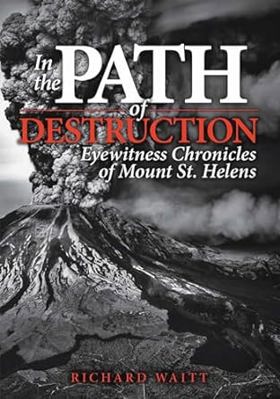
"The air had no oxygen, like being trapped underwater ... I was being cremated, the pain unbearable."--Jim Scymanky. "I was on my knees, my back to the hot wind. It blew me along, lifting my rear so I was up on my hands ... It was hot but I didn't feel burned--until I felt my ears curl."--Mike Hubbard. A napping volcano blinked awake in March 1980. Two months later, the mountain roared. Author Richard Waitt was one of the first to arrive following the mountain's early rumblings. A geologist with intimate knowledge of Mount St. Helens, Waitt delivers a detailed and accurate chronicle of events. His eruption story unfolds through unforgettable, riveting narratives--the heart of a masterful chronology that also delivers engrossing science, history, and journalism x, 413 pages : illustrations ; 26 cm CIRC [ 0 ]
|
2014 |
|
Yakama Rising Indigenous Cultural Revitalization, Activism, and Healing by Michelle M. Jacob 
"The Yakama Nation of present day Washington State has responded to more than a century of historical trauma with a resurgence of grass roots activism and cultural revitalization. This path-breaking ethnography shifts the conversation from one of victimhood to one of ongoing resistance and resilience as a means of healing the soul wounds of settler colonialism"--Page 4 of cover xii, 139 pages : illustrations ; 23 cm. CIRC [ 0 ]
|
2014 |
|
Roots & reflections South Asians in the Pacific Northwest by Amy Pradip Bhatt , Nalini Iyer , Deepa Banerjee, South Asian Oral History Project, University of Washington Libraries 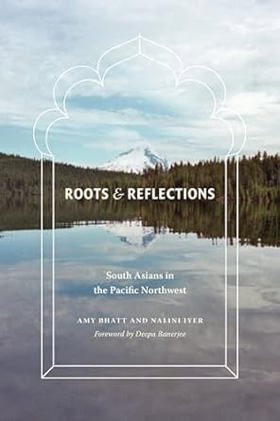
Immigrants from South Asia first began settling in Washington and Oregon in the nineteenth century, but because of restrictions placed on Asian immigration to the United States in the early twentieth century, the vast majority have come to the region since World War II. Roots and Reflections uses oral history to show how South Asian immigrant experiences were shaped by the region and how they differed over time and across generations. It includes the stories of immigrants from India, Pakistan, Bangladesh, and Sri Lanka who arrived from the end of World War II through the 1980s. xxvi, 273 pages : illustrations ; 23 cm CIRC [ 0 ]
|
2014 |
|
Vancouver Island scoundrels, eccentrics and originals tales from the library vault by Stephen Ruttan 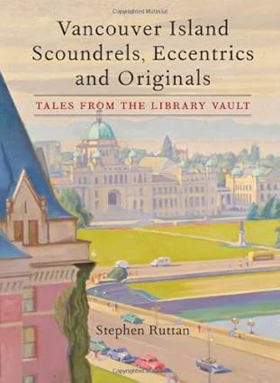
Found on the history shelves of the Greater Victoria Public Library, these twenty true stories are brought to life by Stephen Ruttan. They draw a picture of the life of a city with a recent past that's both unconventional and colourful. From Miss Wilson and her famous parrot, Louis, to Jimmy Chicken Island, named after a man who acquired his surname from his habit of stealing chickens, to the Pig War, when Britain and the United States nearly came to blows over the San Juan Islands, to the rise and fall of Francis Rattenbury, one of Victorias best-known architects, these stories reveal a lively history of a West Coast capital city. Archival illustrations, newspaper clippings, and modern photos help make Vancouver Island Scoundrels, Eccentrics and Originals a delightful and illluminating read. 184 pages : illustrations (some colour), maps, portraits ; 19 cm. CIRC [ 0 ]
|
2014 |
|
Stevens Pass the story of railroading and recreation in the North Cascades by JoAnn Roe 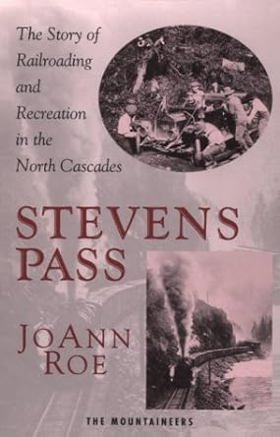
A history of the massive undertaking required to build the railroads and roadways through the northern Cascades into the Seattle region. 191 pages : illustrations, maps ; 21 cm CIRC [ 1 ]
|
2013 |
|
Obstinate hope the Western Expedition of Nathaniel J. Wyeth by Jim Hardee, Nathaniel J. Wyeth 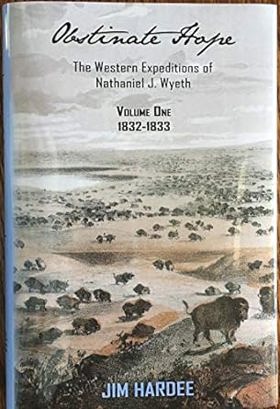
Obstinate Hope studies Nathaniel Jarvis Wyeth who is not numbered among America’s greatest heroes. The successful Boston ice merchant is considered a failure in the fur trade. Yet Wyeth was a practical businessman with an adventurous Yankee spirit that led him twice across the continent and back, in 1832 and again in 1834, prior to the development of reliable maps or emigrant trails. Wyeth’s contributions to westward expansion have been largely overlooked by historians. Obstinate Hope is part one of a two part examination of the life of Nathaniel J. Wyeth. The book begins with a look at Wyeth's pre-fur trade life including his heritage, operation of the family's Fresh Pond Hotel and his early career in the ice industry. The bulk of the book details his first expedition to the west (1832-1833) using his letters and journals as its base. The narrative follows Wyeth on his trip to the fur trade rendezvous in Pierre's Hole, on to the Pacific Northw...est and then back to the East coast. Each of Wyeth's journal entries are accompanied by the author's commentary, providing insight into Wyeth's experiences. The story is supplemented with information from the journals and letters of other people who were with him for all or part of the trip. The commentary also compares what Wyeth encountered in the west with events and occurrences from other trapper diaries. Ten maps and more than three dozen images illustrate the text. Jim Hardee is the editor of the Rocky Mountain Fur Trade Journal, published by the Sublette County Historical Society and the Museum of the Mountain Man in Pinedale, Wyoming. Jim is the author of Pierre’s The Fur Trade History of Teton Valley, Idaho. He is also the director of the Fur Trade Research Center and is a presenter for many conferences and symposiums. He has published numerous articles on various fur trade topics, and lives in Pierre's Hole, Idaho. v. : ill., maps ; 24 cm. CIRC [ 1 ]
|
2013 |
|
Too cold to snow a memoir by Sue A. Fountain 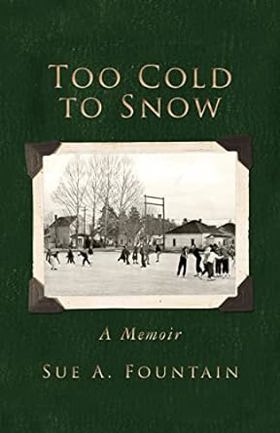
"A personal memoir about growing up in a small town during the time period of 1945-1965. This was a pivotal time in our recent history, and the pieces I have written reflect the growing up and loss of innocence of not only me, but the town of Bend, Oregon"--Publisher description 101 pages : black and white illustrations ; 22 cm CIRC [ 1 ]
|
2013 |
|
Breaking chains slavery on trial in the Oregon Territory by R. Gregory Nokes 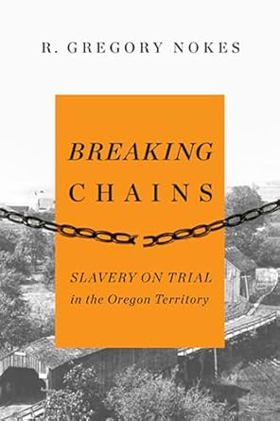
When they were brought to Oregon in 1844, Missouri slaves Robin and Polly Holmes and their children were promised freedom in exchange for helping develop their owner’s Willamette Valley farm. However, slaveholder Nathaniel Ford, an influential settler and legislator, kept them in bondage until 1850, even then refusing to free their children. Holmes took his former master to court and, in the face of enormous odds, won the case in 1853. In Breaking Chains, R. Gregory Nokes tells the story of the only slavery case ever adjudicated in Oregon courts—Holmes v. Ford. Drawing on the court record of this landmark case, Nokes offers an intimate account of the relationship between a slave and his master from the slave’s point of view. He also explores the experiences of other slaves in early Oregon, examining attitudes toward race and revealing contradictions in the state’s history. Oregon was the only free state admitted to the union with a voter-approved constitutional clause banning African Americans and, despite the prohibition against slavery, many in Oregon tolerated it, and supported politicians who were pro-slavery, including Oregon’s first territorial governor. Told against the background of the national controversy over slavery, Breaking Chains sheds light on a somber part of Pacific Northwest history, bringing the story of slavery in Oregon to a broader audience. xvi, 224 pages : illustrations ; 23 cm CIRC [ 0 ]
|
2013 |
|
Minidoka an American concentration camp by Teresa Tamura 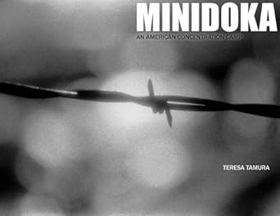
On February 19, 1942, President Franklin D. Roosevelt signed Executive Order 9066, authorizing U.S. Armed Forces to remove citizens and noncitizens from “military areas.” The result was the abrupt dislocation and imprisonment of 120,000 Japanese and Japanese American citizens in the western United States. In Minidoka: An American Concentration Camp, Teresa Tamura documents one of ten such camps, the Minidoka War Relocation Center in Jerome County, Idaho. Her documentation includes artifacts made in the camp as well as the story of its survivors, uprooted from their homes in Alaska, Washington, Oregon, and California. The essays are supplemented by 180 black-and-white photographs and interviews that fuse present and past. Tamura began her project after President Bill Clinton designated part of the Minidoka site as the 385th unit of the National Park Service. Her work furthers the tradition of socially inspired documentary photojournalism, illuminating the cultural, sociological, and political significance of Minidoka. Ultimately, her book reminds us of what happens when fear, hysteria, and racial prejudice subvert human rights and shatter human lives. vii, 305 pages : illustrations ; 23 x 28 cm CIRC [ 0 ]
|
2013 |
|
As rugged as the terrain CCC "boys," federal convicts, and World War II alien internees wrestle with a mountain wilderness by Priscilla Wegars , Dick Hendricks 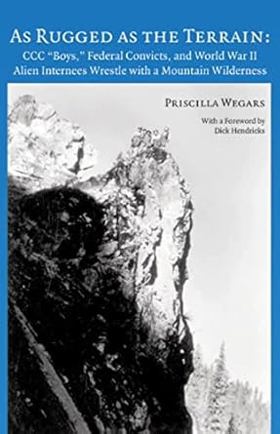
As Rugged as the Terrain: CCC Boys, Federal Convicts, and World War II Alien Internees Wrestle with a Mountain Wilderness explores some intriguing history of Idahos wild and scenic Lochsa River. In 1893 this site, at turbulent Canyon Creek, was a footnote in the saga of the ill-fated Carlin hunting party. Next, in 1933, it held nearly 200 tent-dwelling Civilian Conservation Corps recruits, most from New York State. The antics of these city slickers provide colorful insights into CCC camps housing young men far from home. xxxviii, 393 pages : illustrations, maps ; 23 cm. CIRC [ 0 ]
|
2013 |
|
The Columbia River a historical travel guide by JoAnn Roe 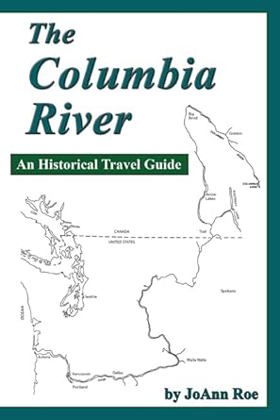
Throbbing with history of the Pacific Northwest of Canada and the United States, the mighty Columbia River is one of the longest rivers in North America. The Columbia has been an enemy at times. Before dams, vicious rapids claimed lives; and the river, swelled by ice melt from Canadas Columbia Ice Fields, flooded towns as distant as Portland, Oregon. Always it has been stunningly scenic. Read about the early river steamers on both sides of the border. Ponder the travels of salmon. Who built the Grand Coulee or Bonneville dams? What happened at the Hanford Project? Explore with David Thompson, who discovered the source of the river. Meet the real people who call the Columbia River shores their homes. xiii, 228 pages : illustrations ; 23 cm CIRC [ 1 ]
|
2013 |
|
Lincoln and Oregon country politics in the Civil War era by Richard W. Etulain 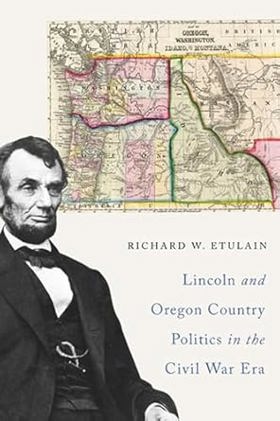
This cross-continental history demonstrates Abraham Lincoln’s strong connections with the Oregon Country on various political issues—Indian relations, military policies, civil and legal rights, and North-South ideological conflicts—before and during the Civil War years. Richard Etulain refutes the argument that Pacific Northwest residents were mere “spectators of disunion,” revealing instead that men and women of the Oregon Country were personally and emotionally involved in the controversial ideas and events that inflamed the United States during the fractious era. Etulain’s well-researched and clearly told story demonstrates how links between Washington, D.C., and the Oregon Country helped shape both Lincoln’s policies and Oregon politics. About the author: Richard W. Etulain is the author or editor of more than fifty books, including Conversations with Wallace Stegner on Western History and Literature, Beyond the Missouri: The Story of the American West, and Lincoln Looks West: From the Mississippi to the Pacific. A Professor Emeritus of History at the University of New Mexico, he lives in Clackamas, Oregon. xii, 210 pages : illustrations ; 23 cm CIRC [ 0 ]
|
2013 |
|
Land snails and slugs of the Pacific Northwest by Thomas E. Burke 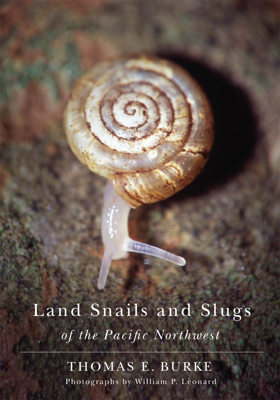
"Terrestrial mollusks, the second largest phylum in the animal kingdom, are vitally important to the earth's ecology. With the publication of Land Snails and Slugs of the Pacific Northwest, a definitive and comprehensive guide to snails and slugs of Oregon, Washington, Idaho, and western Montana is finally available. Primarily an identification guide, this richly illustrated volume offers complete information on the range of terrestrial mollusk shapes, sizes, and characteristics. It presents an overview of their habitat requirements as well as details of land snail and slug ecology, collection and preservation methods, and biogeography. Land Snails and Slugs of the Pacific Northwest is an essential reference for biologists, horticulturalists, gardeners, and naturalists, and anyone wishing to identify species in the field."--Publisher's website 344 pages : color illustrations, maps ; 25 cm CIRC [ 0 ]
|
2013 |
|
California condors in the Pacific Northwest by Jesse D'Elia, Susan M. Haig 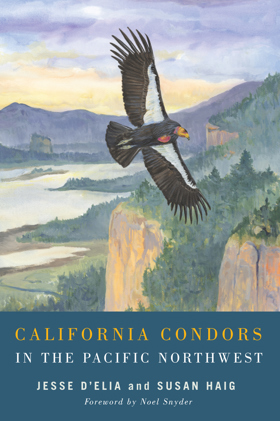
Despite frequent depiction as a bird of California and the desert southwest, North America’s largest avian scavenger once graced the skies of the Pacific Northwest, from northern California to British Columbia. This important volume documents the condor’s history in the region, from prehistoric times to the early twentieth century, and explores the challenges of reintroduction. Jesse D’Elia and Susan Haig investigate the paleontological and observational record as well as the cultural relationships between Native American tribes and condors, providing the most complete assessment to date of the condor’s occurrence in the Pacific Northwest. They evaluate the probable causes of regional extinction and the likelihood that condors once bred in the region, and they assess factors that must be considered in determining whether they could once again thrive in Northwest skies. Incorporating the newest research and findings and more than eighty detailed historical accounts of human encounters with these birds of prey, California Condors in the Pacific Northwest sets a new standard for examining the historical record of a species prior to undertaking a reintroduction effort. It is a vital reference for academics, agency decision makers, conservation biologists, and readers interested in Northwest natural history. The volume is beautifully illustrated by Ram Papish and includes a number of previously unpublished photographs. xvi, 208 pages : illustrations, maps ; 24 cm CIRC [ 0 ]
|
2013 |
|
Pacific Northwest cheese a history by Tami J. Parr 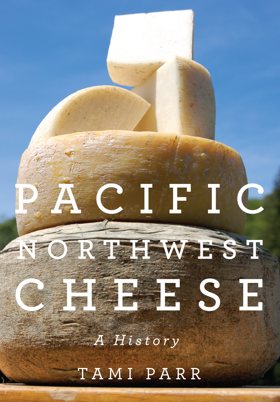
In this rich and engaging history, Tami Parr shows how regional cheesemaking found its way back to the farm. It?s a lively story that begins with the first fur traders in the Pacific Northwest and ends with modern-day small farmers in Oregon, Washington, and Idaho. For years, farmers in the Pacific Northwest made and sold cheese to support themselves, but over time the craft of cheesemaking became a profitable industry and production was consolidated into larger companies and cooperatives. Eventually, few individual cheesemakers were left in the region. In the late sixties and early seventies, influenced by the counterculture and back-to-the-land movements, the number of small farms and cheesemakers began to grow, initiating an artisan cheese renaissance that continues today 208 pages : illustrations ; 26 cm CIRC [ 0 ]
|
2013 |
|
Meander scars reflections on healing the Willamette River by Abby P. Metzger 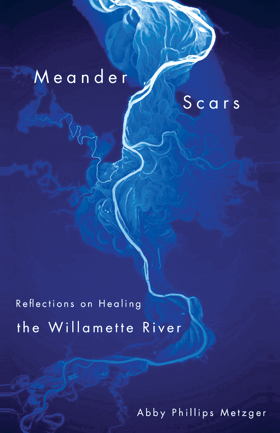
“Metzger’s keen insights spring from a lifetime of direct observation while growing up along the river and recording its most subtle changes and the impact of the scarring in the eco-region it passes through. Written with passion and grace, the book is, in a sense, a love story for a once-wild river now tamed. Metzger asks, ‘Who gives us permission to intervene?’ She concludes that in the great web of history, nature will ultimately decide, and that we humans are left only to imagine.” —Carol Ann Bassett, author of Galápagos at the Crossroads: Pirates, Biologists, Tourists, and Creationists Battle for Darwin’s Cradle of Evolution. Abby Phillips Metzger’s book of personal stories recounts a forgotten Oregon river, the Willamette, as it was before white settlement. Once a rich network of channels and sloughs, the Willamette today bears the scars of development and degradation. Yet, through canoe trips and intimate explorations of the river, Metzger discovers glints of resiliency: a beaver trolling through a slough, native fish in quiet backwaters, and strong currents that carry undertones of the wild Willamette. Together with tales from farmers and scientists alike, these experiences lead Metzger to ask whether something scarred can fully heal, and whether a disjointed river can be whole again. A story of re-discovery as told by a learner, Meander Scars will appeal to readers of literary nonfiction, river advocates, naturalists, and outdoor enthusiasts interested in sustaining healthy river systems for themselves, their children, and beyond. 142 pages ; 22 cm CIRC [ 0 ]
|
2013 |
|
Salmon, people, and place a biologist's search for salmon recovery by Jim Lichatowich 
Each year wild Pacific salmon leave their oceanic feeding grounds and swim hundreds of miles back to their home rivers. The salmon’s annual return is a place-defining event in the Pacific Northwest, with immense ecological, economic, and social significance. However, despite massive spending, efforts to significantly alter the endangered status of salmon have failed. In Salmon, People, and Place, acclaimed fisheries biologist Jim Lichatowich eloquently exposes the misconceptions underlying salmon management and recovery programs that have fueled the catastrophic decline in Northwest salmon populations for more than a century. These programs will continue to fail, he suggests, so long as they regard salmon as products and ignore their essential relationship with their habitat. But Lichatowich offers hope. In Salmon, People, and Place he presents a concrete plan for salmon recovery, one based on the myriad lessons learned from past mistakes. What is needed to successfully restore salmon, Lichatowich states, is an acute commitment to healing the relationships among salmon, people, and place. A significant contribution to the literature on Pacific salmon, Salmon, People, and Place: A Biologist’s Search for Salmon Recovery is an essential read for anyone concerned about the fate of this Pacific Northwest icon. xi, 242 pages ; 23 cm CIRC [ 0 ]
|
2013 |
|
Collared politics and personalities in Oregon's wolf country by Aimee Lyn Eaton 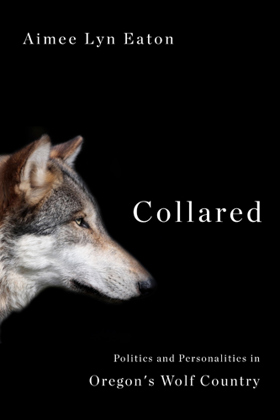
“Just as the humans involved in the wolf debate deserve to be seen as individuals, not stereotypes, so do the wolves. They are not the boogeyman, or storybook monsters aiming to prey upon the young and old. They aren’t cuddly pets or religious icons. They are Canis lupus. Wolves.” —from the Introduction. Teeming with the tension and passion that accompany one of North America’s most controversial apex predators, Collared tracks the events that unfolded when wolves from the reintroduced population of the northern Rocky Mountains dispersed west across state lines into Oregon. In a forthright and personal style, Aimee Lyn Eaton takes readers from meeting rooms in the state capitol to ranching communities in the rural northeast corner of the state. Using on-the-ground inquiry, field interviews, and in-depth research, she shares the story of how wolves returned to Oregon and the repercussions of their presence in the state. Collared: Politics and Personalities in Oregon’s Wolf Country introduces readers to the biologists, ranchers, conservationists, state employees, and lawyers on the front lines, encouraging a deeper, multifaceted understanding of the controversial and storied presence of wolves in Oregon. 135 pages : map ; 23 cm CIRC [ 0 ]
|
2013 |
|
Here on the edge how a small group of World War II conscientious objectors took art and peace from the margins to the mainstream by Steve McQuiddy 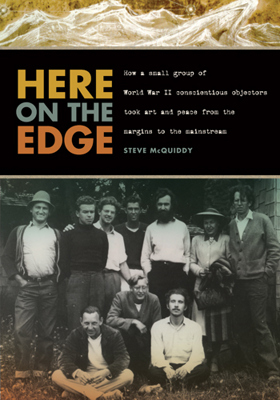
The fascinating story of one conscientious objector camp located on the rain-soaked Oregon Coast, Civilian Public Service (CPS) Camp #56. As home to the Fine Arts Group at Waldport, the camp became a center of activity where artists and writers from across the country focused their work not so much on the current war, but on what kind of society might be possible when the shooting finally stopped. They worked six days a week planting trees, crushing rock, building roads, and fighting forest fires in exchange for only room and board. At night, they published books under the imprint of the Untide Press. They produced plays, art, and music all during their limited non-work hours, with little money and few resources. After the war, camp members went on to participate in the San Francisco Poetry Renaissance of the 1950s, which heavily influenced the Beat Generation of Jack Kerouac, Allen Ginsberg, and Gary Snyder who in turn inspired Ken Kesey and his Merry Pranksters, leading the way to the 1960s upheavals epitomized by San Francisco s Summer of Love. As camp members engaged in creative acts, they were plowing ground for the next generation, when a new set of young people, facing a war of their own in Vietnam, would populate the massive peace movements of the 1960s viii, 326 pages : illustrations ; 26 cm CIRC [ 0 ]
|
2013 |
|
Bridging a great divide the battle for the Columbia River Gorge by Kathie Durbin 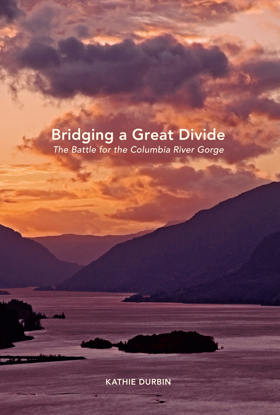
In 1986, the Columbia River Gorge National Scenic Area Act set into motion one of the great land-use experiments of modern times. The act struck a compromise between protection of a singular Western landscape-the majestic Gorge carved by Ice Age floods, which today divides Washington and Oregon-and encouragement of compatible economic development in communities on both sides of the river. In Bridging a Great Divide, environmental journalist Kathie Durbin draws on interviews, correspondence, and extensive research to detail what's happened in the Gorge since the act's passage. Sweeping change has altered the Gorge's landscape: upscale tourism and outdoor recreation, gentrification, the end of logging in national forests, the closing of aluminum plants, wind farms, and a population explosion in the metropolitan area to its west. In this insightful and revealing history, Durbin suggests that the story of the Columbia River Gorge National Scenic Area is the story of the Pacific Northwest in microcosm, as the region shifts from a natural resource-based economy to one based on recreation, technology, and quality of life. Book jacket xiii, 312 pages : illustrations ; 23 cm CIRC [ 0 ]
|
2013 |
|
Rum-runners and renegades whisky wars of the Pacific Northwest, 1917-2012 by Rich Mole 
On October 1, 1917, prohibition came into effect in the province of British Columbia. Washington and Oregon had gone dry the previous year. The ban on liquor sales led to deadly conflict and legal chaos in the Pacific Northwest, and the legacy of those booze battles continues into the 21st century. Rich Mole introduced readers to West Coast prohibitions pioneer years in Scoundrels and Saloons: Whisky Wars of the Pacific Northwest, 18401917. In Rum-runners and Renegades, he recounts the wild and wacky—and sometimes tragic—results of later prohibition laws through the exploits of both prohibitionists and prohibition-busters, among them Jonathan Rogers, a wealthy Vancouver builder and prohibition leader; the Billingsley brothers, a quartet of handsome bootleggers from Seattle; and enterprising Johnny Schnarr, Victorias number-one rum-runner. From vicious marine hijackers and bedeviled police to corrupt politicians and frustrated drinkers on both sides of the border, this is an action-filled account of liquor and lawlessness on the West Coast. 142 pages : illustrations, portraits ; 22 cm. CIRC [ 0 ]
|
2013 |