City of Victoria Capital Regional District, British Columbia
City - A populated place with legally defined boundaries, incorporated as a city municipality under the provincial Municipal Act. SE end of Vancouver Island, Victoria Land District
Mapped Location
City of Victoria: The mapped location is an approximation and should not be used for navigation or wayfinding.
Information
General information on City of Victoria
- Feature Type: Incorporated
Official, historical, colloquial and alternative toponyms for City of Victoria
A brief list of names that this geographic feature has been named
| Name | Description |
|---|---|
| City of Victoria | Official |
| Fort Victoria | Historical |
| Fort Albert | Historical |
| Camosun, Camosack | Historical · Songhees place name |
Origin Notes and History of City of Victoria
References to City of Victoria that document the origin of its place name
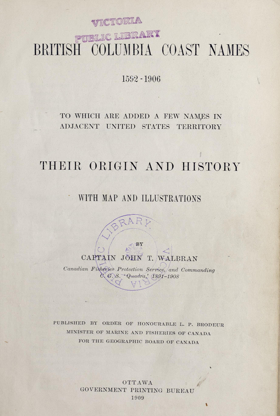
Victoria, Vancouver island. Formerly the capital of Vancouver Island and later of the united colonies of Vancouver Island and British Columbia, and since the union with Canada in 1871, the capital of the province of British Columbia. Named by the officers of the Hudson's Bay Company after Her late revered Majesty Queen Victoria, who in 1837 had succeeded to the British crown; born 24 May, 1819, at Kensington Palace, and died 22 January, 1901, at Osborne, Isle of Wight.
The fort, the foundation of the future city, was established in 1843, the site having been selected in 1841 by Mr. James (afterwards Sir James, K.C.B.) Douglas, and other officers of the Hudson's Bay Company, by order of the governor and council in London. On the 4 June, 1843, the building of the fort commenced with the company's forces from the recently abandoned northern posts of Fort Durham (Taku) and Fort McLoughlin (Bella Bella), consisting of about fifty men and three officers brought down by the Beaver and the Cadboro, assisted by some 300 or 400 Songhies Indians. Thomas Lowe was brought from Fort Durham, Roderick Finlayson from Fort Simpson, Dr. Kennedy being left in his place, and Chief Trader Charles Ross from Fort McLoughlin. The place selected was known to the Indians as Camosun or Camosack, and the post was first given the name of Fort Albert, which shortly afterwards was changed to Fort Victoria, the name Victoria only being adopted in 1852 when the townsite was laid out in streets. The first officer in charge of the fort was Mr. Charles Ross. The natives of the surrounding country, known as the Songhies tribe, then resided at what is now known as Cadboro bay, but seeing the advantage of being near the white men they removed from their old home to the vicinity of the fort. For many years Victoria was the only place of any importance in what is now known as British Columbia; and it is most beautifully situated on the shore of the strait of Juan de Fuca, and the climate and scenery are unsurpassed. The city was incorporated in 1862. The old fort was finally demolished on 24 November, 1864, the lots having been advertised for sale on the 30th. At the sale by auction on that date (P. M. Backus, auctioneer), the highest price given was for the lot at the southwest corner of Government and Fort streets, where the old Fort House originally stood; this was purchased by J. J. Southgate for $12,250. The lots, &c., sold not realizing on the whole the value placed on them by the Hudson's Bay Company's officers, the average price being about $3,500, the remainder were withdrawn from sale, much to the annoyance of the intending purchasers. (Colonist, 25 November, and 1 December, 1864.) At the great sale of the Hudson's Bay fort property which had taken place upwards of three years before, 23 January, 1861, the handsome sum of $121,223 was realized. Mr. James Lowe was the accredited chaser of the two corner lots, Wharf and Fort streets, the northeast lot for $8,525, and the southeast lot for $10,150. (Colonist, 24 January, 1861.) This last lot was built on at the close of 1906, having been vacant upwards of forty-five years.
The three islets in Victoria harbour were named by the officers of the Hudson's Bay Company after three officials of the company in England, Pelly, Colville and Berens, and the four points outside the harbour after four officers on this coast, McLoughlin, Ogden, Wark and Finlayson. (q.v.) The harbour was surveyed, July, 1846, by Captain Kellett, H.M.S. Herald, when the above names were adopted. Resurveyed by Captain Richards, H.M.S. Plumper, 1858. (Principally communicated to the writer by Mr. Thomas Lowe, now residing at Coupar Angus, Perthshire, Scotland.)
City of Victoria incorporated 2 August 1862. Victoria (City) confirmed in the 17th Report of the Geographic Board of Canada, 31 March 1922, and 1 May 1934 on National Defence sheet, Victoria. See also the municipality's own internet site.
Named after Her Majesty Queen Victoria (1819-1901), who ascended to the throne in 1837 at age 18, and reigned until her death.
Formerly the capital of Vancouver Island and later of the united colonies of Vancouver Island and British Columbia, and since the union with Canada in 1871, the capital of the province of British Columbia. Named by the officers of the Hudson's Bay Company after Her Majesty, Queen Victoria, who in 1837 had succeeded to the British crown; born 24 May 1819 at Kensington Palace, and died 22 January 1901 at Osborne, Isle of Wight . . .
The Hudson's Bay Company sought to establish a presence at the southern end of Vancouver Island; in 1837 the HBC's Captain MacNeill had reported a safe harbour with adjacent arable land here, and in 1841 James Douglas, Chief Factor of the HBC, chose this area as an ideal location for a new HBC post. Douglas spent the summer of 1842 mapping the area between today's Oak Bay and Esquimalt, and on 15 March 1843 selected the site for the new fort. Building commenced 4 June 1843, utilizing cedar palisades cut from nearby Cedar Hill (now Mount Douglas). Chief Trader Charles Ross, in charge of construction, was under the impression that the new fort was to be named in memory of the queen's consort, hence named the new post Fort Albert. Supply ships put in here during the summer of 1843, and their logs variously refer to Fort Albert, Fort Victoria and Fort Camosun. Clarification from London finally arrived, and in December 1843, with ceremony and the firing of salutes, the post was (re)named Fort Victoria. The first settlers arrived from Britain in the late 1840's, and in 1849, when Fort Victoria became the new headquarters of the Columbia Department of the Hudson's Bay Company, James Douglas moved here to manage the growth and development of the area. In 1852 a townsite and streets were laid out next to the fort and given the name Victoria. Fort Victoria itself was finally demolished 24 November 1864. See a detailed plan of Fort Victoria in the Hudson's Bay Company Journal, The Beaver, March 1943. See also "The Founding of Fort Victoria" by W. Kaye Lamb, BC Historical Quarterly, Vol II No 2, file V.1.38.
"Capital of the united provinces of Vancouver Island and British Columbia since 1868. The Hudson's Bay Company trading post at this point, the foundation of the future city, was established in 1843 by a minute of council of the Northern Department of Ruperts land on a site selected in 1841, and was ordered to be named Fort Victoria. The place was known to the Indians as Camosum or Camosack..... No record of opening of post office. There was a mail service arranged for Victoria in 1858 from San Fransisco." (17th Report of the Geographic Board of Canada, 1922). "....there is no doubt that it was always the intention at headquarters for the new establishment in the Straits of De Fuca to be named Fort Victoria. A resolution to this effect was included in the Minutes of Council for the Northern Department of Ruperts Land, which were held at the Red River Settlement in June 1843..... On examination, however, of a Log Book of the schooner Cadborough, it would appear that when the fort was first established in 1843, it was called first Fort Camosun and then Fort Albert pending definite instructions from headquarters." (7 April 1927 letter from Charles V. Sale, Governor of Hudson's Bay Company, to Provincial Archives, file S.2.33). See also the municipality's own website.
Fort Victoria was named after Queen Victoria by Minute No. 63 passed at a council of the Hudson's Bay Company held at Red River Settlement 10 June 1843.
The harbour was known to the local Indigenous peoples by a name variously transcribed as Camosun, Cammusan or Camosack. This name, according to Roderick Finlayson who assumed command of Fort Victoria in 1844, meant "the rush of water" and presumably referred to the race of the tide moving in and out of The Gorge. Recently it has been suggested on linguistic grounds that Camosun was the name of the gorge itself and meant "cut mouth."....... In 1866 the two colonies of Vancouver Island and British Columbia were united in a single new Crown Colony of British Columbia, and in 1868 the capital of British Columbia was transferred from New Westminster to Victoria. For the next few decades, first New Westminster and much later Vancouver agitated to have the capital brought back to the mainland. To settle the matter once and for all, in 1893 the government of Premier Theodore Davie began building palatial Parliament Buildings to replace the earlier 'birdcages.' After that monumental project was completed in 1897, there could be no more talk of moving the capital to the mainland. The investment was too great and immovable......
FROM FORT TO CAPITAL (Interpretive plaque, located at the summit of Mt. Douglas overlooking Victoria, by [BC] Department of Recreation and Conservation.) "By 1840 the influx of American settlers into what is now Oregon State had forced the Hudson's Bay Company to think of moving its headquarters north from Fort Vancouver on the Columbia River into territory still controlled by Britain. It was a necessary move as was demonstrated by the 1846 negotiations that set the northern border of the United States at the 49th parallel. Camosack harbour on the southern tip of Vancouver Island was chosen as the best available site for the new fort which was built in 1843. The Songhee Indians who had a settlement there helped build the fort but an altercation over the killing of some company oxen provided a pretext for forcing them to resettle across the harbour and a few years later they were prohibited from living within the limits of the new town that was growing up around the fort. Until the first settlers arrived in 1849 the inhabitants of the fort were all Hudson's Bay Company employees engaged in the fur trade. In that year Vancouver Island became a colony and its first governor, Richard Blanchard, was appointed but it became apparent that the real head of the settlement was the Hudson's Bay Company chief factor, James Douglas. Within two years the original governor resigned and Douglas, later to become known as the father of British Columbia, was appointed in his place. During his tenure of office the Fraser River gold rush occurred in consequence of which the mainland was created a colony in 1858 and Douglas named as governor. Already the clearing house for coal and lumber produced on Vancouver Island, the town became a city overnight when some twenty thousand people passed through it on their way to the Fraser River gold fields and Victoria was incorporated in 1862. Representative government was initiated in 1856 and three years later work began on the original parliament buildings. As the colony grew, the influence of the Hudson's Bay Company diminished. By 1864 the old fur trade fort had been completely dismantled and Douglas had retired from the governorship. Following the union of the island and mainland colonies in 1866 for a period of time, New Westminster became the capital. However, in 1868 the seat of government was returned to Victoria. Three years later British Columbia became a province of Canada with Victoria as its capital." (125 Stops of Interest in Beautiful British Columbia, by David E. Gill; an interpretive guide to the "Stop of Interest" plaques installed by the Historic Parks and Sites Division of the Provincial Parks Branch; Frontier Publishing Company, Aldergrove, 1979.)
Related Catalog Titles
A Bibliography for City of Victoria, Capital Regional District, British Columbia
Hand drawn Victoria an illustrated tour in and around BC's capital city by Emma FitzGerald (Author, Illustrator)
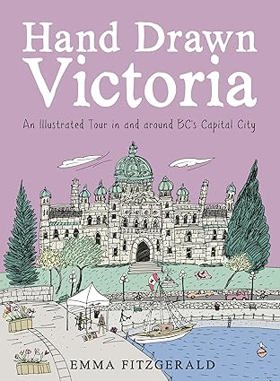
"For locals and visitors alike, these sketches and stories highlight both the historic monuments and everyday moments that make Victoria shine. You never know quite what you'll come across in British Columbia's capital city. With its unmissable landmarks that attract people from around the world, Victoria is also rich in forested beauty, charming houses, and curious people, and is steeped in local history. Following the charm of her previous book, Hand Drawn Vancouver, in this memorable book, Emma FitzGerald captures the coastal city of Victoria and its surrounding communities in over 100 sketches of: iconic landmarks: It wouldn't be a visit to Victoria without stopping by the Empress, Munro's, or Butchart Gardens ; local favourites: the longstanding Beacon Drive In and James Bay's Birdcage Confectionary are some beloved spots honoured within these pages ; beautiful architecture: journey back in time by admiring historic buildings, like Queen Anne-style homes and the spiraling Belfry Theatre ; stunning west coast landscape: explore natural wonders, from culturally significant fields of camas flowers to Mystic Beach's stunning shoreline ; overheard conversations: what really makes a city are the people who live there--Emma documents snippets of passersby's conversations as she sketches. Structured by neighbourhood, Hand Drawn Victoria is a beautiful keepsake for both locals and visitors, and a lovely way to celebrate the city--its buildings, its people, and its essence"--Amazon.com
151 pages : color illustrations ; 21 cm
CIRC [ 0 ]
The curious passage of Richard Blanshard first governor of Vancouver Island by Barry M. Gough
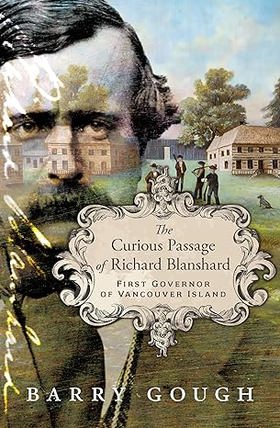
"Celebrated historian Barry Gough brings a defining era of Pacific Northwest history into focus in this biography of Richard Blanshard, the first governor of Vancouver Island--illuminating with intriguing detail the genesis and early days of Canada’s westernmost province. Early one wintry day in March 1850, after seven weary weeks out of sight of land, a well-dressed Londoner, a bachelor aged thirty-two, stood at the ship’s rail taking in the immensity of the unfolding scene. From Her Britannic Majesty’s paddlewheel sloop-of-war Driver, steadily thumping forth on Imperial purpose, all that Richard Blanshard could make out to port, in reflected purple light upon the northern side, was a forested, rock-clad island rising to considerable height. Vancouver’s Island they called it in those far-off days. This was his destination. Richard Blanshard was governor of the young colony for three short, unhappy years--only one and a half of which were spent in the colony itself. From the very beginning he was at odds with the vastly influential Hudson’s Bay Company, run by its Chief Factor James Douglas, who succeeded Blanshard as governor of the colony of Vancouver Island and later became the first governor of the colony of British Columbia. While James Douglas is remembered, for better or worse, as a founding father of British Columbia, Richard Blanshard’s name is now largely forgotten, despite his vitally important role in warning London of American cross-border aggressions, including a planned takeover of Haida Gwaii. However, his failures highlight the fascinating struggles of the time--the supreme influence of commerce, the disparity between expectations and reality, and the bewildering collision of European and Pacific Northwest culture."-- Provided by publisher
368 p.
CIRC [ 0 ]
Capitals, Aristocrats and Cougars Victoria's hockey professionals, 1911-26 by Alan Livingstone MacLeod
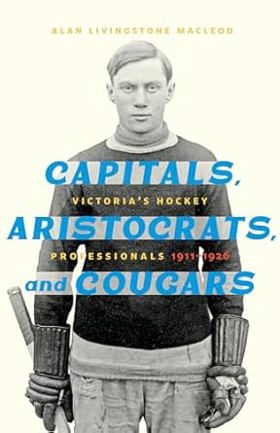
"A fascinating and in-depth look at Victoria's largely unknown professional hockey players in the early twentieth century, and the historical context in which they played. For most hockey fans hailing from Canada's westernmost province, the sport's most coveted prize, the Stanley Cup, has remained frustratingly elusive for nearly a century. But what many people do not know is that the west coast, and in particular the city of Victoria, was once a hockey mecca, where superstars flourished, Hall of Famers were made, and big victories--yes, even the Stanley Cup of 1925--were won. Capitals, Aristocrats, and Cougars is a deep dive into the world of professional hockey in Victoria from 1911 to 1925, an era that saw forty-nine men take their turns in one of the city's newly minted teams. It was also an era of unprecedented social, economic, and political change, a period that spanned the First World War and redefined Canada's national identity. With meticulous research and encyclopedic knowledge,author, historian, and consummate hockey fan Alan Livingstone MacLeod chronicles the key players, coaches, arena builders, and team visionaries who contributed to this long-forgotten chapter of hockey history, and puts them all in the context of what was going on in the world at the time. This in-depth account is sure to delight history buffs and hockey fans alike."-- Provided by publisher
279 pages : (some) black and white illustrations; 23 cm.
CIRC [ 0 ]
Victoria unbuttoned a red-light history of BC's capital city by Linda J. Eversole
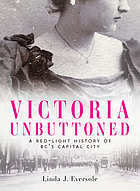
"From the establishment of Fort Victoria, BC's capital city has had a long history of prostitution. But little has been written on the lives of the women themselves--some of the most enterprising women in Victoria's past. Instead, these women's stories have been relegated to judgmental newspaper headlines. Now historian Linda J. Eversole takes a deeper look at their lives, from the mid-nineteenth century to the First World War and the Moral Reform movement. Story by story, from the fur trade, through confederation, waves of immigration, and attempts at reform and legislation, Eversole uncovers the histories of the women who made a living, and in some cases a fortune, from the world's oldest profession. With accompanying maps and historical photos, new research, and the support of the descendants of some of her subjects, Eversole presents a nuanced, human series of portraits that enhances our understanding of this important strand of the city's history."-- Provided by publisher
210 pages : illustrations ; 20 cm
CIRC [ 0 ]
The Birdcages British Columbia's First Legislative Buildings, 1859-1957 by Robert Ratcliffe Taylor
Revealing a little-known chapter in the history of Victoria, British Columbia, The Birdcages, the province's first legislative buildings, were built 1859-1864, the formative, tumultuous time of the Gold Rushes. Constructed on the site of the present Legislature, they were built amid controversy and derided for their style. The brainchild of Governor James Douglas, they resembled, according to journalist/politician Amor de Cosmos, "something between a Dutch toy and a Chinese pagoda." Readers will discover how civil servants and politicians felt about them as a workplace and what the general public thought about them as civic architecture. The career of their designer, the mysterious Hermann Otto Tiedemann, one of Victoria's vivid early "characters," is recounted as are the contributions of local contractors and tradesmen. The site of events of national importance until their demise in 1898, the Birdcages reflected the history, character, and heritage of Victoria and played an important role in the developing political traditions of the province and the young Dominion of Canada. A place for political demonstrations and community celebrations, the House of Assembly was where the MLAs debated joining Confederation, granting the vote to women, and excluding Asian immigrants. Based on personal memoirs and letters, government documents, photographs and plans, this book will interest both students and adults, history buffs and professional historians
CIRC [ 0 ]
Victoria a HarbourTown history by Gayle Baker
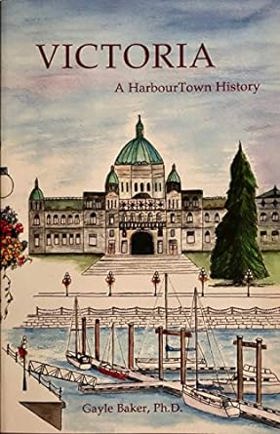
Lauded as a most interesting story of Victoria, this popular history introduces you to the intriguing tales of an amazing city nestled in the splendor of the Pacific Northwest. Victoria, A HarbourTown History will introduce you to the Lukwungen who were there before Victoria was Victoria and the powerful Hudson's Bay Company who came to dominate their area. You will also get to know the settlers, gold seekers, merchants, and visionaries who followed. Together, they created today's Victoria, one of the world's favorite destinations as well as a wonderful place to live.From bustling boom town to an almost abandoned settlement, Victoria's early years were marked by trial and triumph. Emerging as the centre of power and wealth in British Columbia, Victoria's leaders battled unsuccessfully retain its dominance over Vancouver. Eventually becoming a delightful English-like city surrounded by stunning scenery, this story will show you the Victoria hidden beneath its glamourous image. Enriched by the tales of the leaders who loved and transformed it and the stories of most memorable buildings, this concise, comprehensive history will introduce you to one of the world's favorite destinations.Designed for those who love Victoria, those who enjoy history, and those who simply enjoy a good read, this new popular history is sure to please.
141 pages : illustrations, map ; 22 cm
CIRC [ 1 ]
Victoria then & now postcards from the past by Nick Russell
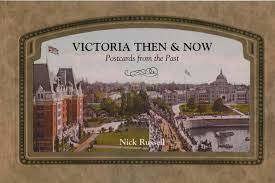
Published in 2014 by heritage researcher and photographer Nick Russell, Victoria Then & Now: Postcards from the Past pairs vintage turn-of-the-century postcards with contemporary photographs to document the physical transformation of British Columbia’s capital city. The volume features side-by-side visual comparisons of prominent local landmarks alongside meticulous historical research detailing the changing streetscapes, businesses, and architecture of early Victoria. Beyond architectural changes, Russell digs into the personal micro-histories of the original senders and recipients inscribed on the cards, transforming a standard visual history into an intimate narrative of everyday human connection. A keen insight drawn from the text is how early postcards functioned as the social media and tourism marketing engines of their day; by intentionally packaging sanitized, picturesque views of colonial progress for cheap postal circulation, these historical artifacts actively manufactured a romanticized civic identity for an expanding Pacific Northwest
80 pages : colour illustrations, 1 colour map ; 14 x 22 cm
CIRC [ 0 ]
A most unusual colony Vancouver Island 1849-1860 by Maureen Duffus
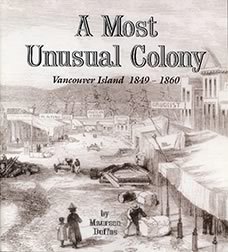
To travel back in time to the Colony of Vancouver Island, read the story of the Hudson's Bay years as told through recollections of a colonial childhood by the fictional Kate Murray and the letters of the real Mary Yates. The letters are inventions, but the real Mary lived through the events of the early years. Their stories combine to give an authentic glimpse of the extraordinary life inside the palisades of Fort Victoria, the world of children at Chaplain Staines's school, the settlers who rebelled against the HBC's autocratic rule, and the growing sophistication of colonial social life before and after BC's gold rush of 1858.
viii, 156 pages : illustrations, maps, portraits ; 24 cm
CIRC [ 1 ]
The Victoria and Sidney railway, 1892-1919 by Darryl E. Muralt, British Columbia Railway Historical Association, British Columbia Heritage Trust
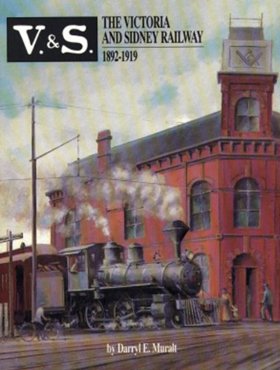
Wonderfully written history of the ever-troubled Victoria and Sidney Railway in British Columbia. Packed with black and white photos, the book brings the railway and the people who ran it (and the long-suffering passegers) to life while providing a fascinating look at life in rural Canada at the turn of the century. With maps, equipment rosters, chronology and numerous appendices that flesh out the history of the Saanich Peninsula. 236 pages.
236 pages : illustrations, maps, portraits ; 28 cm
CIRC [ 1 ]
French presence in Victoria, B.C., 1843-1991 by John Greene, Association historique francophone de Victoria
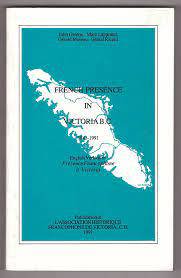
Published by the Association historique francophone de Victoria and authored by John Greene, French Presence in Victoria, B.C., 1843–1991 chronicles nearly a century and a half of Francophone contributions to the cultural, economic, and religious fabric of Vancouver Island. The book traces the arrival of French-Canadian fur traders, Catholic missionaries, and European immigrants who helped establish and shape the early colonial capital long before Confederation. Through archival records, church registers, and personal accounts, the text illuminates how a distinct Francophone community maintained its linguistic and cultural identity despite the overwhelming dominance of British institutions. A keen insight drawn from the work is how multiculturalism in early Western Canadian cities existed beneath a veneer of British imperial hegemony; by uncovering the vital, behind-the-scenes roles played by French speakers in commerce and governance, the study reveals that the foundational history of British Columbia was far more pluralistic than its overtly Anglo-Saxon administrative facade suggested.
v, 200 pages, [17] pages of plates (1 folded) : illustrations, maps ; 22 cm
CIRC [ 1 ]
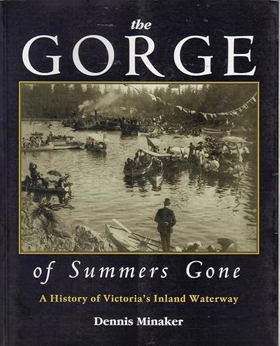
The Gorge of summers gone a history of Victoria's inland waterway by Dennis Minaker
Victoria, the way it was by Michael Kluckner
This old town city of Victoria central area heritage conservation report by Victoria (B.C.)., Les D. Mazer, Martin Segger, Brian Murray Sikstrom
Summer of promise Victoria 1864-1914 by Derek Pethick
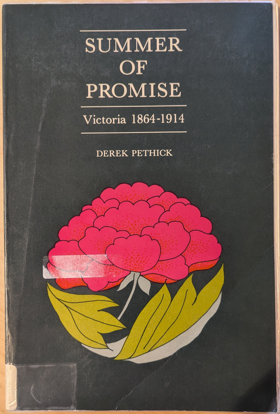
In 1864 Governor James Douglas handed over his office to Arthur Edward Kennedy, closing an era in Vancouver Island's history and ushering in a period of growth and development. The optimism felt by its people was to a large extent justified; the ensuing years were to bring stability, prosperity and many changes. In Summer of Promise, a sequel to Victoria: The Fort, the author chronicles the years from 1864 to the outbreak of World War One in 1914, seeing them through the eyes of the inhabitants of the city which was the capital of the colony and later of the province. Despite its geographical isolation, its population remained well aware of world events: the Boer War, the death of Queen Victoria, the ascension of Edward VII to the throne and the rising threat of the German navy were as much talked about as the waning of many traditional religious beliefs and the enfranchisement of women. Nearer home, these were important years for Victoria as the colony voted to join the Dominion of Canada, the railroad connected the new province with the rest of the country, and the "All Red Route" linked it by steamship to Australia and the Orient. Motorcars, aeroplanes, telephones, the telegraph and electricity brought British Columbia into the twentieth century. From the momentous to the mundane, and sometimes even to the ridiculous, Derek Pethick documents an era in Victoria's history. Summer of Promise is enlightening, fascinating and enjoyable reading.
191 pages, 8 unnumbered leaves of plates : illustrations ; 23 cm
CIRC [ 1 ]
Fort Victoria letters 1846-1851 by Hartwell Bowsfield, Hudson's Bay Company
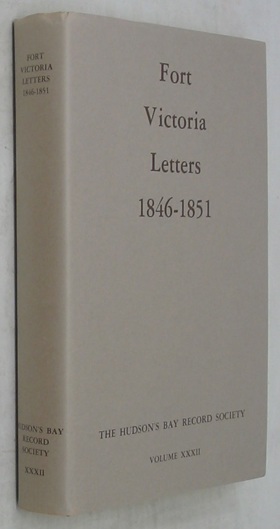
Letters of James Douglas, Chief Factor of the Hudson's Bay Company Pacific headquarters at Fort Victoria, Vancouver Island, British Columbia
xcix, 277, xvii pages, 3 unnumbered leaves of plates (2 folded) : maps ; 24 cm.
CIRC [ 0 ]
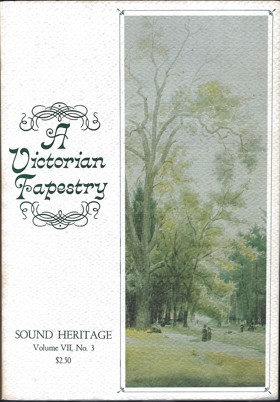
A Victorian tapestry impressions of life in Victoria, B.C., 1880-1914 by Janet Cauthers, Provincial Archives of British Columbia Aural History
A history of Victoria, 1842-1970 by Harry Gregson
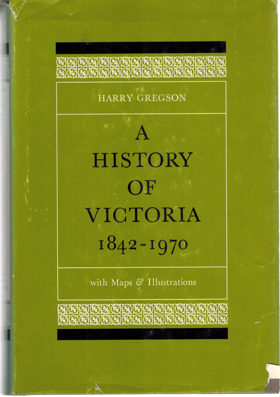
"Victoria as a trading post, gold rush town, despondent backwater, thriving industrial center, pleasant residential resort and busy university city... these are some of the developments entertainingly described..." Dust jacket
ix, 246 pages illustrations, maps 24 cm
CIRC [ 1 ]
Victoria the fort by Derek Pethick
Romantic Vancouver Island Victoria yesterday and today by Dorothy Abraham
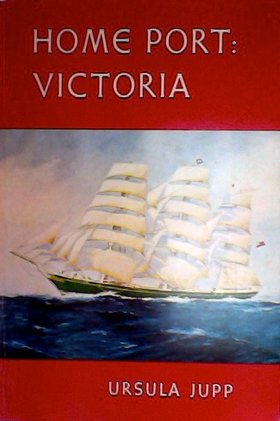
Home port Victoria a collection of true stories of men and ships that sailed from this port, told by seamen at meetings of the Thermopylae Club, Victoria, B.C., including short sketches of their narrators, articles on relevant history of the Port of Victoria, and two maps by Ursula Jupp, Thermopylae Club
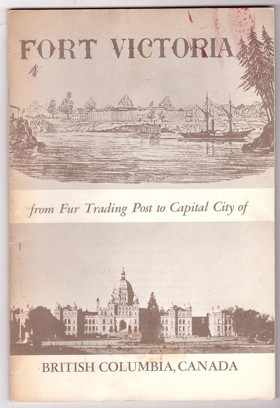
Fort Victoria from fur trading post to capital city of British Columbia, Canada by Herbert P. Plasterer
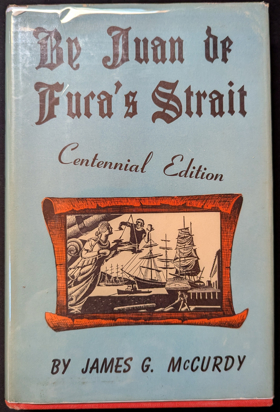
By Juan de Fuca's strait pioneering along the northwestern edge of the continent by James G. McCurdy
In this provocative and illuminating book, Marianna Torgovnick explores the psychology of our profound attraction to cultures we call "primitive." Whether located in Africa, the South Pacific, or the American Southwest, the primitive has become synonymous in the Western imagination with a range of emotions and experiences thought to be lost in modern life: reverence for the land and for nature; strong communal bonds; sexual plentitude; and, perhaps most intriguing, and ecstatic sense of connection to the universe and the life force. Torgovnick investigates the numerous ways we have turned toward the primitive out of spiritual hunger for such deeply human experiences - a hunger that could once be satisfied within the West's own mystical traditions but that often no longer can be. Brilliantly encompassing religion, art, psychology, literature, and other aspects of our culture, Primitive Passions offers new insight into our ideas of spirituality and gender, and, ultimately, into the hidden but vital parts of ourselves
312 pages frontispiece (map), illustrations (including portraits, facsimiles) 22 cm
CIRC [ 1 ]
All about Victoria, British Columbia by Alfred Emberson
Originally published in the late nineteenth and early twentieth centuries, Alfred Emberson’s All About Victoria, British Columbia serves as a comprehensive travel guide and promotional handbook for the rapidly modernizing provincial capital. The book meticulously catalogs the city’s geography, local customs, transportation networks, and burgeoning hospitality industry, effectively marketing Victoria to tourists and potential investors as a sophisticated enclave of British gentility on the edge of the Pacific wilderness. A keen insight drawn from the work is how the early travel guide actively commodified a highly sanitized version of colonial settlement; by charting hotels and scenic attractions while completely omitting the ongoing displacement of the region's Coast Salish peoples, the guidebook sold Victoria not as a contested frontier, but as an exclusive, fully conquered playground designed solely for Anglo-American leisure.
104 pages illustrations 16 cm
ONLINE CIRC [ 1 ]
Some reminiscences of old Victoria by Edgar Fawcett
Authored by early pioneer Edgar Fawcett, Some Reminiscences of Old Victoria offers a deeply personal, nostalgic chronicle of British Columbia's capital city during its chaotic transition from a quiet Hudson's Bay Company outpost to a booming gold rush epicenter. Drawing upon his own arrival in 1859 and decades of civic observation, Fawcett meticulously reconstructs the social fabric of the 19th-century port, detailing early dirt streetscapes, the sudden influx of transient miners, local eccentricities, and the establishment of colonial institutions. Through conversational anecdotes and vivid recollections, the text serves as a vibrant, street-level time capsule of a frontier society rapidly attempting to replicate British gentility on the edge of the Pacific wilderness. A keen insight drawn from the work is how pioneer nostalgia inherently sanitizes the disruption of colonial expansion; by fondly mythologizing the eccentricities and genteel aspirations of Victoria's early British settlers, Fawcett’s memoir illustrates how the pioneer elite actively constructed an insulated, aristocratic social hierarchy to maintain cultural dominance amidst the overwhelming demographic shifts of the gold rush era.
4 unnumbered pages, [5]-294 pages : plates, portraits ; 20 cm
ONLINE CIRC [ 1 ]
History of British Columbia from its earliest discovery to the present time by Alexander Begg
Published in 1894, Alexander Begg's comprehensive volume chronicles the political and economic evolution of British Columbia, tracing its trajectory from early maritime exploration and the fur trade era to its eventual confederation with Canada. A keen insight drawn from the text is how Begg’s narrative functions simultaneously as a historical record and a piece of deliberate economic boosterism, actively framing the region's transition from a guarded Hudson's Bay Company monopoly into a civilized province as a triumph of British imperial progress designed to attract settlers and investment. The author meticulously details the transformative impacts of the Fraser River and Cariboo gold rushes, the administrative leadership of James Douglas, and the critical unifying role of the Canadian Pacific Railway. Ultimately, the book stands as an exhaustive, albeit heavily pro-colonial, late 19th-century archive documenting the foundational events that integrated a rugged frontier into the Canadian dominion.
xvii, [7]-568 pages : illustrations, folded map, portraits ; 23 cm
ONLINE CIRC [ 1 ]
History of British Columbia Bancroft's works, vol. xxxii by Hubert H. Bancroft
Published in 1887 as the thirty-second volume of his colossal western history series, Hubert Howe Bancroft’s History of British Columbia meticulously traces the region's development from late 18th-century maritime explorations through its 1871 integration into the Canadian Confederation. The narrative provides an exhaustive account of the Hudson's Bay Company's autocratic rule under Chief Factor James Douglas, the disruptive influx of American prospectors during the Fraser River Gold Rush, and the subsequent political unification of the mainland and Vancouver Island. A keen insight drawn from the volume is how Bancroft—an American historian steeped in the ideology of Manifest Destiny—inherently filters the Canadian colonial experience through a distinctly U.S. nationalist lens. By frequently contrasting the paternalistic, corporate monopoly of the British administration with the chaotic, democratic individualism of American miners, the text inadvertently functions as a fascinating comparative study of two competing imperial philosophies vying for economic and cultural dominance across the 19th-century Pacific Northwest.
xxxi, 792 pages : maps
ONLINE CIRC [ 1 ] CIRC [ 1 ]
Related Online Resources
Vancouver Island Local History Society
Vancouver Island Local History Society’s Mission: a) To promote, encourage, and engage the study of local and regional history within the communities of Vancouver Island and the Gulf Islands. b) To develop and support local history initiatives that take a critical and exploratory approach to Indigenous and non-Indigenous relations. c) To develop and support projects that are inclusive, diverse, and representative of communities in the past and present. d) To act as a facilitator of local efforts that build relationships between organizations and communities and situate history as a foundational or key element. Includes a wiki type resource of transcribed documents from the Point Ellice House & Museum collection.
WEB LINK
Capital Regional District
- Albert Head
- Ardmore
- Bear Mountain
- Beaver Lake
- Beaver Point
- Bedwell Harbour
- Belmont Park
- Braemar Heights
- Brentwood Bay
- Cadboro Bay
- District of Central Saanich
- Colquitz
- City of Colwood
- Cordova Bay
- Deep Cove
- East Sooke
- Township of Esquimalt
- Fairfield
- Fernwood
- Fulford Harbour
- Galiano
- Ganges
- Glen Lake
- Goldstream
- Gordon Head
- Happy Valley
- District of Highlands
- Hope Bay
- James Bay
- Keating
- Lake Hill
- City of Langford
- Leechtown
- Lighthouse Point
- Long Harbour
- Luxton
- Marigold
- Mayne Island
- District of Metchosin
- Millstream
- Milnes Landing
- Montague Harbour
- Musgrave Landing
- North Galiano
- District of North Saanich
- District of Oak Bay
- Otter Bay
- Pender Island
- Port Renfrew
- Port Washington
- Prospect Lake
- River Jordan
- Royal Oak
- District of Saanich
- Saanichton
- Saseenos
- Saturna
- Sevenoaks
- Shirley
- Town of Sidney
- District of Sooke
- Strawberry Vale
- Sturdies Bay
- Swartz Bay
- Tillicum
- Vesuvius
- City of Victoria
- Town of View Royal
- Village Bay
Political Boundaries
Last updated: 2025-09-23