Catalog of British Columbiana and Pacific Northwest Americana
Encyclopedia Cascadia Catalog contains book titles of mostly non-fiction Pacific Northwest Coast of North America Titles (primarially British Columbia, Idaho, Oregon and Washington State) in an easy-to-understand title catalog. If you see a link with this badge ONLINE CIRC it means that there is an online institution that provides free access to that title. In some cases there may be more than one institution hosting the title digitally.
| Catalog Title | Published |
|---|---|
|
Umatilla dictionary a project of the Confederated Tribes of the Umatilla Indian Reservation and Noel Rude by Noel Rude (Compiler), Confederated Tribes of the Umatilla Indian Reservation 
Umatilla Dictionary documents the language of the Umatilla people east of the Cascade Mountains in Oregon and Washington. Working for many years with the accumulated scholarship of linguists and anthropologists as well as with elders on the Umatilla Reservation, tribal linguist Noel Rude has painstakingly recorded and rationalized words, pronunciations, phrases, and other elements of the Umatilla language. The dictionary includes a grammar and comparative information that places the Umatilla language in its linguistic and historical context and compiles all of its known words, phrases, and constructions. Umatilla Dictionary is an important work for people of the Confederated Tribes of the Umatilla Indian Reservation, the Yakama Nation, and the Confederated Tribes of Warm Springs and adds to the growing linguistic work being done by tribes and scholars on endangered languages. xi, 622 pages : illustrations ; 27 cm CIRC [ 1 ]
|
2014 |
|
Roadside guide to the Olympic Peninsula by Christopher Chapman 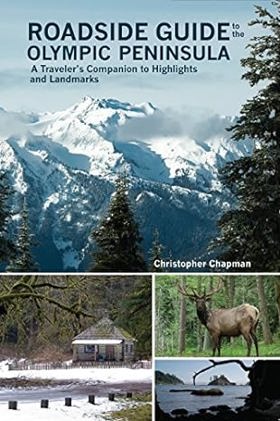
The Olympic Peninsula is more than just big trees and scenic coastlines. Layered on this rich landscape are unique animals and plants, extraordinary geology, histories of Native Americans that go back thousands of years, exploits of famed European explorers, and the hard work of the early pioneers. Roadside Guide to the Olympic Peninsula is your complete guidebook as it weaves all this together while escorting you around the Peninsula.“Indispensable in the car for your next Peninsula road trip. "I learned tons and couldn’t wait to get to the next stop in Chapman’s journey. Will make anyone’s travels on the Peninsula richer and more rewarding.” —Lynda V. Mapes, author of A River Reborn and Breaking The Lower Elwha Klallam Tribe and the Unearthing of Tse-whit-zen Village."This book, with its wealth of history, geology and nature, is the must have resource for the Olympic peninsula. Whether you spend a day, or a lifetime, this is the book you will refer to over and over again." —Rob Sandelin, Naturalist, teacher and author of Field Guide to the Cascades and Olympics."Christopher Chapman’s Roadside Guide to the Olympic Peninsula brings the geography, geology, and natural and human history -- as well as some of the mystery and magic -- of the Olympic Peninsula into clear and immediate focus. It is a “must-have” roadside reference for visitors to this lovely and dynamic landscape." —Tim McNulty, author of Olympic National A Natural History Book.The Book contains a complete listing of phone numbers and addresses of Ranger Stations, Government Information Centers, Visitor and Chambers of Commerce, Campground Managers, Museums and Tribes. Along with all the Audubon Society resources, the list of the most prevalent bird species and where to find them and the complete list of the National and State Registered Historic Landmarks for the Peninsula. xiii, 318 pages : illustrations, maps ; 23 cm CIRC [ 1 ]
|
2014 |
|
The elusive Mr. Pond the soldier, fur trader and explorer who opened the Northwest by Barry M. Gough 
Sir Alexander Mackenzie is known to schoolchildren as a great Canadian explorer who gave his name to the country’s longest river, but hardly anyone could name the man who mentored Mackenzie and mapped much of northwestern Canada before him. Soldier, fur trader and explorer Peter Pond, the subject of this long overdue book, is a man whose legend has been forgotten in favor of those who came after him. Much of Pond’s life is shadowed in mystery. Historian Barry Gough uses Pond’s surviving memoirs, explorers’ journals, letters written by acquaintances of Pond, publications in London magazines and many other sources to track and reconstruct the life of one of the last of the tough, old-style explorers who ventured into the wilderness with little more than a strong instinct for survival and helped shape the modern world. xxv, 230 pages : illustrations, maps, portraits ; 24 cm CIRC [ 1 ]
|
2014 |
|
Tofino and Clayoquot Sound a history by Margaret Horsfield , Ian Kennedy 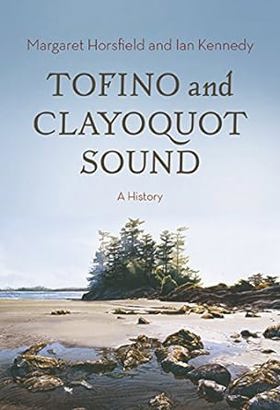
"Tofino and Clayoquot Sound delves into all facets of the region's history, bringing to life the chronicle that started with the dramatic upheavals of geological formation and continues to the present day. The book tours through the history of the Hesquiaht, Ahousaht and Tla-o-qui-aht as well as other nations that inhabited the area in earlier times. It documents the arrival of Spanish, British and American traders on the coast and their avid greed for sea otter pelts. It follows the development of the huge fur seal industry and its profound impact on the coast. It tracks the establishment of reserve lands and two residential schools. The coming of World War II is discussed, as is the installation of a large Air Force base near Tofino, which changed the town and area dramatically. From here the story spirals into the post-road period. With gravel and asphalt came tourism, newcomers, the counter-culture of the 1960s, the establishment of Pacific Rim National Park and, of course, surfing. The book also addresses logging—which became the main industry in the area—and its questionable practices, going into detail about the "War in the Woods"—the world-famous conflict and largest mass arrest in Canadian history." -- Amazon.com viewed August 3, 2020 xvi, 622 pages : illustrations, maps, portraits ; 24 cm. CIRC [ 1 ]
|
2014 |
|
Distant Dominion Britain and the Northwest Coast of North America, 1579-1809 by Barry M. Gough 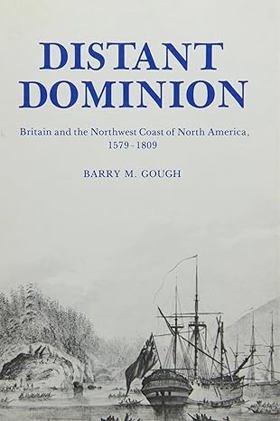
"The voyages of Cook and Vancouver heralded a vast influx of irrepressible white men.... They brought with them their morals, ideologies, knowledge, technology, plants and animals. They also brought diseases, rum and guns....powers to build and powers to destroy." Until the 1700's, the Northwest Coast of North America stood largely apart from the civilized world. Formidable mountain barriers and remoteness from Atlantic sea lanes kept the territory outside the orbit of emerging European empires. In the late 18th and early 19th centuries, however, Britain, Spain, France, Russsia, and the United States vied for control of this promising new frontier. Three of history's greatest mariners -- Sir Francis Drake, Captain James Cook, and Captain George Vancouver -- spearheaded British expeditions of discovery and trade to the Northwest coast. Despite competition from her European and American rivals, Britains ability to use and control the sea enabled her to establish by the late 1700's a "beachhead of empire" in the area now known as British Columbia.Gough shows how, by outmanoevring her Spanish rivals in a "skilful game of diplomatic chess," Britain concluded the Nootka Agreement. Thus she was able to exploit her trading partnership with the coast Indians and cement a lucrative sea-borne commerce with the Far East. The arrival overland of the Nor'westers and other fur-trading groups further strengthened Britain's financial and political interests in the area -- ending forever the isolation of Northwest America, and 'changing beyond measure the culture of its Indian peoples.' Distant Dominion is the first comprehensive survey to examine Britain's motives for expeditions to this most distant frontier of British maritime development. It is also the first to draw the history of the coast into the general realm of Pacific history, relating its development to events in Europe, the American eastern seaboard, Australia, the Falkland Islands, and China. This entertaining book offers fresh insight into an exciting chapter of North American history. 215 pages CIRC [ 1 ]
|
2014 |
|
It happened on the Oregon Trail by Tricia Martineau Wagner 
"It Happened on the Oregon Trail [Second edition] takes readers on a rollicking, behind-the-scenes look at some of the characters and episodes from the Oregon Trail's storied past. Including both famous tales, and famous names--and little-known heroes, heroines, and happenings"--Provided by publisher xiii, 205 pages : map ; 23 cm CIRC [ 1 ]
|
2014 |
|
The boys in the boat nine Americans and their epic quest for gold at the 1936 Berlin Olympics by Daniel James Brown 
"For readers of Unbroken, out of the depths of the Depression comes an irresistible story about beating the odds and finding hope in the most desperate of times--the improbable, intimate account of how nine working-class boys from the American West showed the world at the 1936 Olympics in Berlin what true grit really meant. It was an unlikely quest from the start. With a team composed of the sons of loggers, shipyard workers, and farmers, the University of Washington's eight-oar crew team was never expected to defeat the elite teams of the East Coast and Great Britain, yet they did, going on to shock the world by defeating the German team rowing for Adolf Hitler. The emotional heart of the tale lies with Joe Rantz, a teenager without family or prospects, who rows not only to regain his shattered self-regard but also to find a real place for himself in the world. Drawing on the boys' own journals and vivid memories of a once-in-a-lifetime shared dream, Brown has created an unforgettable portrait of an era, a celebration of a remarkable achievement, and a chronicle of one extraordinary young man's personal quest." -- Publisher's description 403, 13 pages : illustrations, portraits ; 22 cm CIRC [ 1 ]
|
2014 |
|
Turning down the sound travel escapes in Washington's small towns by Foster Church 
In his new travelogue, Foster Church guides adventurers--lifelong residents of the Northwest and visitors alike--to the small communities beyond the state's well-known urban center. Once inside these small towns, local flavors abound. Church reveals how each community's unique character informs its hospitality and culture: In Morton, the abandoned Roxy movie theater was re-opened to host lectures and live performances. In the town of Palouse, a once-lonesome farming community in the Washington wheat country is now home to antiques shops and art galleries, and in Pomeroy, a pioneering legacy is celebrated in a lively annual festival. With maps, photographs, and recommendations for more than thirty-five towns in all corners of the state, Turning Down the Sound vastly expands the resources available for readers and travelers keen on encountering what Church calls American tourism's last frontier: its small towns 190 pages : illustrations ; 22 cm CIRC [ 0 ]
|
2014 |
|
Let the mountains remember campaign against the Northern Paiute Eastern Oregon 1861-1869 by D. J. Lesniak 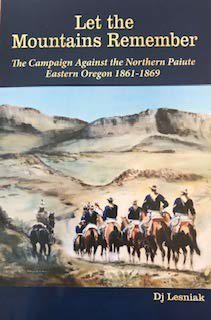
"The mountains and prairies remember Eastern Oregon's tumultuous beginnings, but history does not. Apart from the rush for gold, little has been written about the events leading to the settlement of Eastern Oregon between 1861 and 1869. Charged with protecting travel on the roads leading to the mines east of the Cascade Mountains, the military campaign which initially promised to be not much more than a policing operation against an unorganized tribe of hunters and gatherers turned into an eight-year struggle against a skillful and relentless foe"--Back cover 309 pages : illustrations ; 23 cm CIRC [ 1 ]
|
2014 |
|
Frontier history along Idaho's Clearwater River pioneers, miners & lumberjacks by John Bradbury 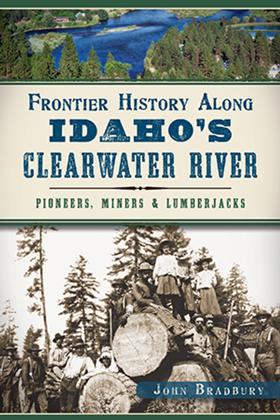
The Clearwater River runs deep through northern Idaho's history. The Nez Perce tribe made its home along the river. Lewis and Clark's journey west took them through the Clearwater. In fact, the Nez Perce made the expedition's voyage from the Clearwater River to the Pacific Ocean possible by teaching them how to make dugout canoes from ponderosa pine logs. Fur traders like John Jacob Astor and William Ashley financed the first American commercial activity on the river, bringing trappers to the area and paving the way for the Oregon Trail. Later came the first gold rush, the Nez Perce war, statehood, homesteaders and the beginning of the logging industry. Join author John Bradbury as he recounts a time when native tribes, explorers, trappers, preachers, miners and lumberjacks made a life along the Clearwater, establishing the area for future generations. 157 pages : illustrations, maps ; 24 cm CIRC [ 0 ]
|
2014 |
|
Idaho beer from grain to glass in the Gem State by Steven J. Koonce 
"A survey of commercial brewing in Idaho, from past to present"-- Provided by publisher 142 pages : illustrations (some color) ; 23 cm CIRC [ 0 ]
|
2014 |
|
Blood and sweat over the railway tracks Chinese labourers constructing the Canadian Pacific Railway (1880-1885) by Lily Chow , Chinese Canadian Historical Society of British Columbia (Issuing body) 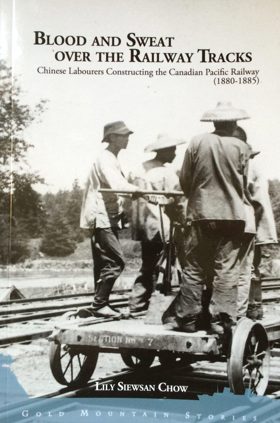
This is a recollection of an important historical event, the Canadian Pacific Railway construction which employed thousands of Chinese labourers to build the transcontinental railway linking this country from coast to coast. In her writing, Chow reveals the reasons for constructing the railway, why and how the Chinese labourers were recruited and transported from Guangdong to various construction sites in British Columbia. She illustrates the difficult and dangerous tasks that the Chinese labourers had to perform bearing testimonies to the challenges, hardships, struggles, and endurance of these workers. Despite the hard labour, these men displayed excellent work ethic, and were diligent and dependable people. Included are some poems and verses by a several Chinese labourers and their family members to show their anguish, anxiety, and longing - human feelings and emotions that had been repressed. This book is a testament to remarkable endeavour, generous spirit, sacrifices and contributions of the Chinese labourers that helped build the CPR. xvii, 116 pages : illustrations, maps, portraits, charts ; 23 cm. CIRC [ 0 ]
|
2014 |
|
Victoria then & now postcards from the past by Nick Russell 
Published in 2014 by heritage researcher and photographer Nick Russell, Victoria Then & Now: Postcards from the Past pairs vintage turn-of-the-century postcards with contemporary photographs to document the physical transformation of British Columbia’s capital city. The volume features side-by-side visual comparisons of prominent local landmarks alongside meticulous historical research detailing the changing streetscapes, businesses, and architecture of early Victoria. Beyond architectural changes, Russell digs into the personal micro-histories of the original senders and recipients inscribed on the cards, transforming a standard visual history into an intimate narrative of everyday human connection. A keen insight drawn from the text is how early postcards functioned as the social media and tourism marketing engines of their day; by intentionally packaging sanitized, picturesque views of colonial progress for cheap postal circulation, these historical artifacts actively manufactured a romanticized civic identity for an expanding Pacific Northwest 80 pages : colour illustrations, 1 colour map ; 14 x 22 cm CIRC [ 0 ]
|
2014 |
|
Being Cowlitz how one tribe renewed and sustained its identity by Christine Dupres , Carol Twombly (Type designer), Dustin Kilgore (Designer) 
Without a recognized reservation or homeland, what keeps an Indian tribe together? How can members of the tribe understand their heritage and pass it on to younger generations? For Christine Dupres, a member of the Cowlitz tribe of southwestern Washington State, these questions were personal as well as academic. In Being Cowlitz: How One Tribe Renewed and Sustained Its Identity, what began as the author's search for her own history opened a window into the practices and narratives that sustained her tribe's identity even as its people were scattered over several states. Dupres argues that the best way to understand a tribe is through its stories. From myths and spiritual traditions defining the people's relationship to the land to the more recent history of cultural survival and engagement with the U.S. government, Dupres shows how stories are central to the ongoing process of forming a Cowlitz identity. Through interviews and profiles of political leaders, Dupres reveals the narrative and rhetorical strategies that protect and preserve the memory and culture of the tribe. In the process, she creates a blueprint for cultural preservation that current and future Cowlitz tribal leaders--as well as other indigenous activists--can use to keep tribal memories alive 1 online resource (169 pages) CIRC [ 0 ]
|
2014 |
|
British Columbia waters the explorations of Vancouver and the Spanish by Richard W. Blumenthal 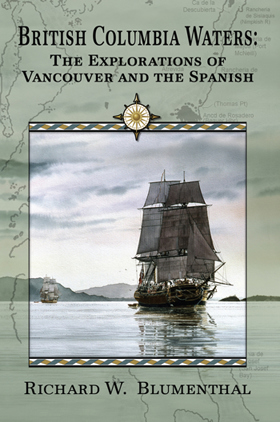
British Columbia Waters: The Explorations of Vancouver and the Spanish is a continuation of the author’s previous narratives which included the original source material from the earliest maritime exploration in the Pacific Northwest. The author’s first two books traced the visits by the Spanish and George Vancouver to inland Washington waters. These books included transcriptions of the actual journals of our earliest explorers. This follow-up book resumes the saga and follows Vancouver and the Spanish in 1792 through British Columbia waters while they complete their circumnavigation of Vancouver Island. It contains the journals of George Vancouver, Alcala Galiano and Cayetano Valdéz and four of Vancouver’s men. These journals provide the first European descriptions and observations of our inland waters as well as the First Nations encountered while they rowed their longboats through previously uncharted territory. Complete with all of their charts, this is a fascinating read directly from the men who made our early history. 288 pages : illustrations, maps ; 23 cm CIRC [ 0 ]
|
2014 |
|
The sea among us the amazing Strait of Georgia by R. J. Beamish (Author, Editor), G. A McFarlane (Author, Editor) 
The Strait of Georgia is a one of the world's great inland seas, a 6,900 sq km body of water lying between the British Columbia mainland and Vancouver Island. Rich in history, teeming with wildlife and marine traffic, it is essential to British Columbians for food, jobs, travel and recreation. The sheltered waters of the strait are home to Canada's largest seaport and over two-thirds of the province's population. The Sea Among Us is the first book to present a comprehensive study of the Strait of Georgia in all its aspects with chapters on geology, First Nations, history, oceanography, fish, birds, mammals,invertebrates and plants. Covering everything from tsunami modelling to First Nations history to barnacle reproduction, the book is a sweeping overview of the waterway. It describes how fjords formed, what the seafloor is made of, and why coastal BC is so prone to earthquakes; it advises on which jellyfish sting, how to tell the difference between Dall's and harbour porpoises, and where to find whales; and it addresses how climate change and human impacts could affect the strait, noting that though marine ecosystems are tough and adaptable, there are limits to this resiliency. As editor Dr. Richard Beamish says, "It is the function of this book to inform British Columbians about the Strait of Georgia. All authors hope that the readers will use the information to ask questions about how the Strait of Georgia is coping with change and how they can provide more of the information that is needed to maintain a healthy Strait of Georgia." Informative, descriptive, cautionary and entertaining, The Sea Among Us is illustrated with attractive colour photographs, figures and drawings. It fills a place on the shelf of essential BC reference books beside The Encyclopedia of British Columbia and Marine Life of the Pacific Northwest. xiv, 384 pages : illustrations (chiefly colour), maps, portraits ; 29 cm. CIRC [ 0 ]
|
2014 |
|
Exploring the Salish Sea an artist's view by Don Douglass, Reanne Hemingway-Douglass, Margy Gates 
Exploring The Salish Sea with the Pen & Ink drawings of Margy Gates. This work celebrates the unique and rich beauty of the Salish Sea and its environs. It depicts fauna and flora iconic to the area, as well as plants and animals seen only infrequently. The artist is not Coast Salish, but her depictions of native arts and crafts attempt to interpret the spirit of the tribal and First Nations artists’ and artisans’ creations. The Salish Sea (SAY-lish) is a designation for the inland sea of Washington State in the United States and its neighbor to the north, the Canadian province of British Columbia, on the Northwest Coast of North America. The term Salish honors the Coast Salish peoples who lived in the area long before the arrival of European and American explorers and settlers. To describe the beauties of this region, will, on some future occasion, be a very grateful task to the pen of a skillful panegyrist. The serenity of the climate, the innumerable pleasing landscapes, and the abundant fertility that unassisted nature puts forth, require only to be enriched by the industry of man with villages, mansions, cottages, and other buildings, to render it the most lovely country that can be imagined. vii, 96 pages : illustrations, maps ; 28 cm CIRC [ 0 ]
|
2014 |
|
Closing time prohibition, rum-runners, and border wars by Daniel Francis 
Canadians have long associated Prohibition with the colorful history of the Jazz Age in the United States. But even before the American ban that was in place from 1920 to 1933, Canada initiated its own Prohibition. The so-called Cold Water Army was led by zealots and prudes preaching hellfire and damnation, but also by committed social reformers who recognized the ill effects of excessive drinking. In March 1918, the federal government banned the manufacture and importation of liquor. For the next 21 months, Canada was as dry as any law could make it, which admittedly was not very dry. Closing Time tells the story of this fascinating attempt to control the social habits of Canadian citizens. It began as a popular crusade to cleanse society of a widespread evil, but instead became an opportunity for larceny, profit, and violence on a grand scale. 186 pages : illustrations (some colour), maps, portraits ; 24 cm. CIRC [ 0 ]
|
2014 |
|
The Oregonian railway by Ed Austin 
To those with an interest in railroad history in the United States, mention of the words "narrow gauge" may bring to mind the extensive three-foot-gauge railroads of Colorado and Utah or perhaps the famous two-foot-gauge lines in Maine. However, few would think first of Oregon and the Pacific Northwest. Nonetheless, between 1877 and 1893, an extensive narrow-gauge railroad developed in Oregon" one that had aspirations of crossing the Cascade Mountains and connecting with the Central Pacific Railroad, thus giving Oregon its first access to the transcontinental railroad system. It is this railroad system, from its inception in 1877 to the present day, that Ed Austin explores herein. 127 pages : illustrations, maps ; 24 cm. CIRC [ 0 ]
|
2014 |
|
Salmon is everything community-based theatre in the Klamath watershed by Theresa J. May 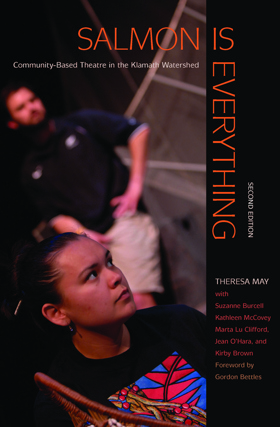
After a devastating fish kill on the Klamath River, tribal members and theatre artist Theresa May developed a play to give voice to the central spiritual and cultural role of salmon in tribal life. Salmon Is Everything presents the script of that play, along with essays by artists and collaborators that illuminate the process of creating and performing theatre on Native and environmental issues. This revised and expanded second edition includes a new introduction by the author, and new chapters by Kirby Brown and Marta Lu Clifford. xvi, 174 pages : illustrations, map ; 23 cm. CIRC [ 0 ]
|
2014 |
|
Living with thunder exploring the geologic past, present, and future of the Pacific Northwest by Ellen Morris Bishop 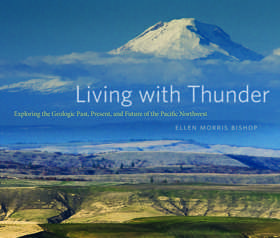
The Pacific Northwest is a region defined by its geology as much as its rugged coastline, drippy westside forests, fertile farms, and canyoned eastside grasslands. These landscapes have been forged by volcanoes, crumpled by faults, and sculpted by water and ice. But the Northwest’s geologic DNA is rooted in volcanic activity. From the ancient lavas of Washington’s Selkirks, to the world-class flood-basalts that dominate the Columbia Basin, to the restless peaks of the High Cascades, the thunder of volcanic eruptions echoes through the ages. In Living with Thunder, geologist and photographer Ellen Morris Bishop offers a fascinating and up-to-date geologic survey of the Northwest—Washington, Oregon, northern California, and western Idaho. New discoveries include Smith Rock as part of Oregon’s largest (and most extinct) volcano, portraits of Mount Hood’s 1793-1795 eruptions, and new ideas about the origin of the Columbia River basalts and the course of the ancestral Columbia River. Intended as an introduction for the general reader and geological non-specialist, Living with Thunder enlivens Northwest geological history by combining engaging science writing with the author’s stunning color photographs. In addition, color maps and time charts help guide the reader. The book presents evidence of changing ecosystems and ancient life, as well as the Northwest’s exceptional record of past climate changes and the implications for our future. Bishop also examines the confluence between scientific findings and Native American documentation of several major geologic events; the title of her book harks to the Klamath Indian recounting of Mount Mazama’s cataclysmic eruption. An important work by a gifted scientist and storyteller, Living with Thunder offers a key to understanding the Northwest’s unique, long-term volcanic heritage. 149 pages : color illustrations, color maps ; 22 x 26 cm CIRC [ 0 ]
|
2014 |
|
Confederacy of ambition William Winlock Miller and the making of Washington Territory by William L. Lang 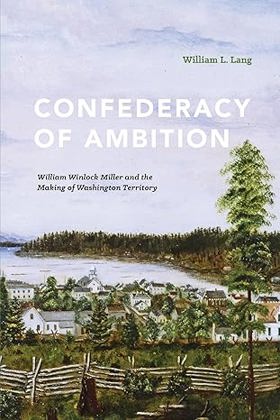
The promise of opportunity drew twenty-seven-year-old Illinois schoolteacher William Winlock Miller west to the future Washington Territory in 1850. Like so many other Oregon Trail emigrants Miller arrived cash-poor and ambitious, but unlike most he fulfilled his grandest ambitions. By the time of his death in 1876, Miller had amassed one of the largest private fortunes in the territory and had used it creatively in developing the region’s assets, leaving a significant mark on the territory’s political and economic history. Appointed Surveyor of Customs at the newly created Port of Nisqually in 1851, Miller was the first federal official north of the Columbia River. Two years later he helped organize the new territory‘s Democratic Party and quickly became a political and financial confidant of governor Isaac Stevens. His involvement in the Indian conflict in 1855–56, a term in the territorial legislature, and his bankrolling of key politicians made him the territory’s most effective political networker. His role as a “hip-pocket banker” in a region without established banks made him a powerful financial broker and a major player in territorial affairs. But in his pursuit of success Miller compromised another ambition he carried west from Illinois. He postponed marriage and family until only a few years before his death and agonized about relationships with his family in Illinois. His experience reminds us that the pioneer settlement era was a period of social dislocation and that public economic and political success could mask personal disappointment. Lang’s biography takes readers into the heart of Washington territorial politics, where alliances often hinged more on mutual economic interest than political principles and nearly all agreed that government should encourage ambitious and energetic men. In this world, Lang argues, Miller succeeded because he parlayed his talents in camaraderie politics and sharp-pencil business affairs with an unabashed mining of governmental opportunities. William Lang’s account of William Winlock Miller and the first quarter century of Washington’s history offers a new view of the pioneer era, emphasizing that the West was developed in large measure by men like Miller who manipulated government and its resources to their own and the region’s advantage. xiii, 310 pages : illustrations, map ; 23 cm CIRC [ 0 ]
|
2014 |
|
Modernism in the Pacific Northwest the mythic and the mystical : masterworks from the Seattle Art Museum by Seattle Art Museum (Issuing body), Patricia A. Junker 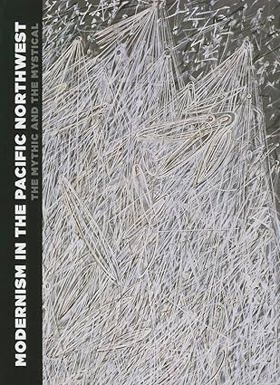
"Few regions of the country produced such a distinctive group of artists with such a particular view on the modern world as did the Pacific Northwest in the 1930s and 1940s. Capitalizing on their particular geographical position at what was a modern art outpost--working free from the strong influences of New York and Europe, and sitting at the portal to the Far East--a close-knit group of artists sought to address the global political, social, and economic ills of their time. The seminal figures in this group--Mark Tobey and Morris Graves especially--quickly garnered critical attention in New York for their uncommon imagery and expressive technique, which drew upon spiritual tenents ranging from Zen Buddhism to the Persian Bahai faith and their mastery of Asian calligraphy. Modernism in the Pacific Northwest presents an overview drawn from SAM's unparalleled collection of the key figures of this generation: painters Mark Tobey, Morris Graves, Guy Anderson, Kenneth Callahan, Leo Kenney, Paul Horiuchi, and George Tsutakawa, and sculptors Phil McCracken and James Washington. Patricia Junker is the Ann M. Barwick Curator of American Art at the Seattle Art Museum and is the author of Albert Bierstadt and Edward Hopper"-- Provided by publisher ix, 102 pages : illustrations ; 32 cm CIRC [ 0 ]
|
2014 |
|
Stirring up Seattle Allied Arts in the civic landscape by R. M. Campbell, Roger Schreiber (Illustrator) 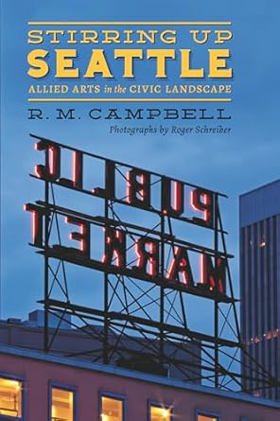
In the 1950s, the city of Seattle began a transformation from an insular, provincial outpost to a vibrant and cosmopolitan cultural center. As veteran Seattle journalist R. M. Campbell illustrates in Stirring Up Seattle: Allied Arts in the Civic Landscape, this transformation was catalyzed in part by the efforts of a group of civic arts boosters originally known as “The Beer and Culture Society.” This “merry band” of lawyers, architects, writers, designers, and university professors, eventually known as Allied Arts of Seattle, lobbied for public funding for the arts, helped avert the demolition of Pike Place Market, and were involved in a wide range of crusades and campaigns in support of historic preservation, cultural institutions, and urban livability. xxxv, 251 pages : illustrations ; 24 cm CIRC [ 0 ]
|
2014 |
|
Return to the land of the head hunters Edward S. Curtis, the Kwaka'wakw, and the making of modern cinema by Brad Evans , Aaron Glass 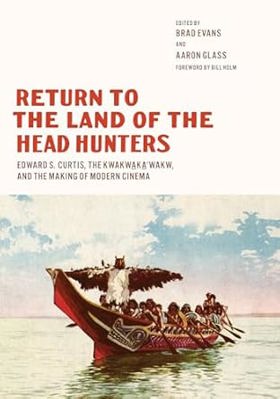
Photographer Edward Curtis’s 1914 orchestrally scored melodrama In the Land of the Head Hunters was one of the first US films to feature an Indigenous cast. This landmark of early silent cinema was an intercultural product of Curtis’s collaboration with the Kwakwa̱ka̱’wakw of British Columbia—meant, like Curtis’s photographs, to document a supposedly vanishing race. But as this collection shows, the epic film is not simply an artifact of colonialist nostalgia. In recognition of the film’s centennial, and the release of a restored version, Return to the Land of the Head Hunters brings together leading anthropologists, Native American authorities, artists, musicians, literary scholars, and film historians to reassess the film and its legacy. The volume offers unique Kwakwa̱ka̱’wakw perspectives on the film, accounts of its production and subsequent circulation, and evaluations of its depictions of cultural practice. Resituated within film history and informed by a legacy of Kwakwa̱ka̱’wakw participation and response, the movie offers dynamic evidence of ongoing cultural survival and transformation under shared conditions of modernity. xxvii, 420 pages ; 26 cm. CIRC [ 0 ]
|
2014 |