Catalog of British Columbiana and Pacific Northwest Americana
Encyclopedia Cascadia Catalog contains book titles of mostly non-fiction Pacific Northwest Coast of North America Titles (primarially British Columbia, Idaho, Oregon and Washington State) in an easy-to-understand title catalog. If you see a link with this badge ONLINE CIRC it means that there is an online institution that provides free access to that title. In some cases there may be more than one institution hosting the title digitally.
| Catalog Title | Published |
|---|---|
|
Reach of tide, ring of history a Columbia River voyage by Sam McKinney 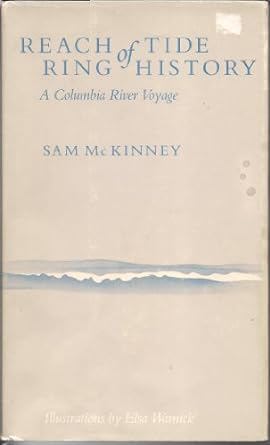
Aboard a small handmade boat, Sam McKinney set out to rediscover the Columbia River of his youth. The story of his voyage offers an intimate history of the great river and of the people who have lived and worked along its shores. McKinney, a seasoned explorer, historian, and riverman, begins his voyage on the sea. Following the path of Robert Gray's ship Columbia Rediviva across the treacherous Columbia River bar, he embarks on an upriver journey that leads beyond urban Portland to the barrier of Bonneville Dam. Along the way, he visits the sites of old Indian villages, the camps of the Lewis and Clark expedition, the rotting piers of early river communities, and the islands of the lower river. Walking out along the jetty at the mouth of the Columbia, McKinney recounts how this infamous bar was formed, and how it was tamed by turn-of-the-century marine engineering. He sloshes through Astoria's rainy streets, recalling its origins as the first American outpost on the Pacific Slope and its lusty past as a working waterfront. His voyage takes him to ghost towns and abandoned villages — Chinookville, Frankfort, Knappton. He describes the development of the river's fishing industry and the harsh conditions faced by fishers during the industry's peak years. He remembers his own boyhood, working on the river as a gillnet fisherman and as a deckhand aboard one of the last sternwheelers. Combining the river's storied history, rich personal memories, and observations gleaned from the deck of the 16-foot Gander, McKinney gives us a sensitive portrait of the Columbia river, a book that reflects the rhythms of tides that the author knows so well. "Two weeks on the river and I was only fifty miles upstream," writes McKinney, grounded on a hidden sandbar. "My wake, had it been recorded, would have revealed a slow, wandering track of curiosity — islands explored, old townsites discovered, and unnamed channels followed." Sam McKinney is a founder of the Lewis and Clark Columbia River Water Trail and the author of Bligh: A True Account of the Mutiny Aboard HMS Bounty. In the late 1980's he completed a 4-year, 5000-mile journey across North America through the inland waterways of the continent. He lives in Vancouver, British Columbia, and is a research associate at the Vancouver maritime Museum. xi, 172 pages : illustrations ; 26 cm CIRC [ 1 ]
|
1987 |
|
Ranch under the rimrock by Dorothy Lawson McCall
|
1968 |
|
Ralph Edwards of Lonesome Lake by Ralph A. Edwards, Ed Gould 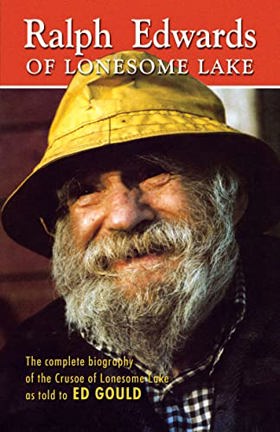
Often called The Crusoe of Lonesome Lake, because of a best-selling book written by the American journalist Leland Stowe, Edwards has gone on to live at least one more life and reveals himself to be a pioneer of a breed that no longer exists. Best known for his almost single-handed rescue of the trumpeter swans from extinction in North America, Edwards now related in his own words other aspects of his long, varied life, including experience with his missionary parents in India, as a telegraph operator under fire in World War I and his eventual return to Lonesome Lake. 293 pages, 20 unnumbered leaves of plates : illustrations (some color) ; 23 cm CIRC [ 1 ]
|
1979 |
|
Raising the roof creating the Kibbie Dome at the University of Idaho by Peter Johnson 
Construction of the University of Idaho's Kibbie Dome, which won the American Society of Civil Engineer's Outstanding Structural Achievement Award for 1976, demonstrates what can be accomplished within a framework of limited budgets and tight timelines. The proposed structure would have a 400 foot clear span, with a clearance above the field equivalent to a twelve-story building. 61 pages : illustrations (some color) ; 25 cm CIRC [ 0 ]
|
1998 |
|
Raise hell and sell newspapers Alden J. Blethen & the Seattle Times by Sharon A. Boswell, Lorraine McConaghy 
Raise Hell and Sell Newspapers, the lively biography of Alden J. Blethen, traces the newspaperman's life from his birth in 1845 to his death in 1915. Longtime editor-in-chief of The Seattle Times, Blethen became the most powerful and influential publisher in the Northwest and one of the foremost newspapermen of his generation. Authors Sharon A. Boswell and Lorraine McConaghy tell the compelling story of this self-made man during a period of dramatic change in American life. Alden Blethen arrived in Seattle broke in 1896, after making and losing fortunes as a newspaper owner and publisher in Kansas City and Minneapolis. One year later, the Klondike gold rush transformed the muddy Puget Sound seaport into a magnificent boomtown. Using a loan from his brother-in-law, Blethen purchased a share in The Seattle Times. During the next two decades, as Seattle grew into the queen city of the Northwest, Blethen transformed The Times into the region's largest paper and reclaimed his family's fortune. x, 291 pages : illustrations (some color), portraits ; 27 cm CIRC [ 1 ]
|
1996 |
|
Raincoast chronicles 20 lilies and fireweed : frontier women of British Columbia by Stephen Hume 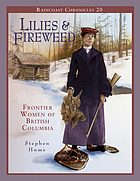
Lilies and Fireweed is packed with unforgettable stories of women surviving in the unforgiving, sometimes hostile environment of pioneer and aboriginal British Columbia. Based on award-winning journalist Stephen Hume's popular series "Frontier Women of BC" that appeared in the Vancouver Sun in 2002, this collection of essays contains stories, photographs and other materials that have never before been published. From hospitals to dance halls, and from the classroom to the cannery floor, this insightful pictorial history examines indigenous and immigrant women's positions in the workplace, home and wilderness. Hume delves into the lives of aboriginal and pioneer women who had an important and multifaceted influence on the development of British Columbia. We meet women such as 17-year-old Frances Barkley, who insisted on accompanying her husband on a merchant voyage to British Columbia in 1786 and subsequently twice circumnavigated the world; Lady Amelia Douglas - a Cree woman and wife of Governor James Douglas - who had her own important but often overlooked role in the forging of British Columbia; Mrs. Washiji Oya, the first Japanese woman to settle in Canada in 1887; and Maria Pollard Grant, who, in 1895, became the first woman elected to public office in BC. Brimming with fascinating historical photographs, Lilies and Fireweed brings to light the forgotten stories of mothers, dance-hall girls, artists, teachers and adventurers that are as enthralling and diverse as BC itself. 80 p. : ill., ports. ; 28 cm. CIRC [ 0 ]
|
2004 |
|
Rain people the story of Ocean Falls by Bruce Ramsey, Roland Neave 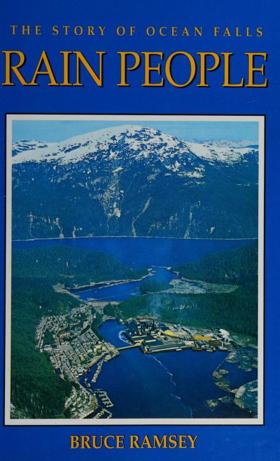
Authored by Bruce Ramsey and edited by Roland Neave, Rain People: The Story of Ocean Falls chronicles the rise and fall of the isolated, company-owned pulp and paper mill town nestled in the rugged coastal fjords of British Columbia. The book traces the community's mid-century heyday as a thriving industrial enclave accessible only by boat or plane, powered by torrential local rainfall and sustained by a tight-knit working-class population. Through archival photographs and personal accounts, the text details the sudden, devastating corporate closure that transformed a bustling boomtown into a damp ghost town. A keen insight drawn from the work is how corporate paternalism created a profound psychological vulnerability in remote industrial outposts; when distant executives pulled the plug on the mill, residents discovered that their entire social fabric, municipal infrastructure, and sense of identity had been built on foundation stones owned entirely by a corporation. xi, 240 p. : ill., maps (1 folded), ports. ; 22 cm. CIRC [ 1 ]
|
1997 |
|
Rails across the Cascades by Eva Greenslit Anderson
|
1989 |
|
Railroads, reclamation and the river a history of Pasco by Walter A. Oberst
|
1978 |
|
Railroading in southern Oregon and the founding of Medford by Bert Webber, Margie Webber
|
1985 |
|
Railroad signatures across the Pacific Northwest by Carlos A. Schwantes 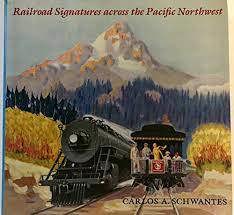
Demonstrates that the railroads profoundly affected the way people lived, how they adjusted to the new opportunities or threats that swift and cheap transportation provided. In short, how they viewed the world.This book is for everyone fascinated by trains and their nineteenth-century opening of the great Northwest. With cases of pictures never before published this book tracks the stories of families lured to settle in the west, revelations about railroad buccaneers, and breathtaking engineering feats of bridges over daunting gorges - Gene Shalit, The Today Show, NBC 359 pages : illustrations (some color) ; 26 x 27 cm CIRC [ 1 ]
|
1993 |
|
Railroad man a conversation with W.J. Gamble, W.I. & M. Ry. Co by Latah County Historical Society 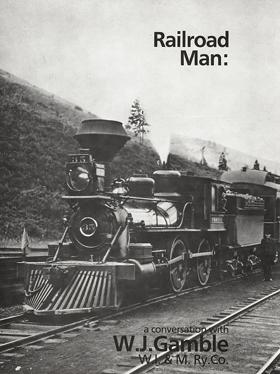
A conversation with W.J. Gamble about his life working for the Washington, Idaho & Montana Railway Company from 1910 until his retirement in 1951, including the origins and development of the railroad and his relationship with it. 16 pages : illustrations, maps, portraits ; 26 cm CIRC [ 0 ]
|
1981 |
|
Radical heritage labor, socialism, and reform in Washington and British Columbia, 1885-1917 by Carlos A. Schwantes 
Historian Carlos A. Schwantes studies the forces that shaped the history of the labor movement on either side of the forty-ninth parallel and the reason for the eventual demise of the socialist movement in Washington State and its continuing vigor in British Columbia. xviii, 288 pages : maps ; 24 cm. (8vo). CIRC [ 1 ]
|
1979 |
|
Queen Anne, community on the hill by Kay Frances Reinartz 
Published in local editions by Kay Frances Reinartz, Queen Anne: Community on the Hill chronicles the rich neighborhood history and architectural evolution of one of Seattle’s most prominent geographic landmarks. The book traces the area's transformation from a dense evergreen forest and native camp into an affluent residential streetcar suburb offering sweeping vistas of Elliott Bay and the Cascade Mountains. Through archival photographs, diaries, and municipal records, the text captures the daily lives of early residents who shaped the hill's distinct community identity amidst rapid urban growth below. A keen insight drawn from the work is how topographical isolation can preserve a distinct community consciousness within an expanding metropolis; by literally rising above the industrial grit and commercial clamor of downtown Seattle, Queen Anne Hill allowed its residents to curate an architectural enclave that visually and socially equated geographic elevation with civic prestige. viii, 231 pages : illustrations, maps ; 28 cm CIRC [ 1 ]
|
1993 |
|
Qualicum Beach a history of Vancouver Island's best kept secrets by Brad Wylie 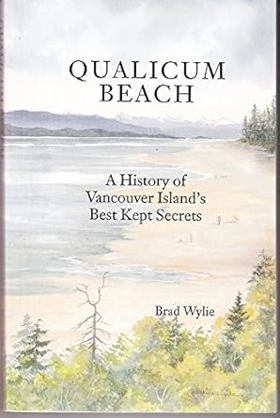
Qualicum Beach: A History of Vancouver Island's Best Kept Secrets is a non-fiction historical work by Brad Wylie, first published in 1992. The book offers a detailed look at the history of the Qualicum Beach region, highlighting its cultural heritage and place within Canadian history. Across its 222 pages, Wylie traces the area's early stories, first settlements, and key regional milestones that helped shape this beautiful coastal community on Vancouver Island. It provides an engaging and informative resource for readers interested in local lore, heritage, and the fascinating historical development of one of British Columbia's unique communities. 219 p. : ill. ; 21 cm. CIRC [ 1 ]
|
1992 |
|
Puyallup a pioneer paradise by Lori Price, Ruth Anderson, Ezra Meeker Historical Society 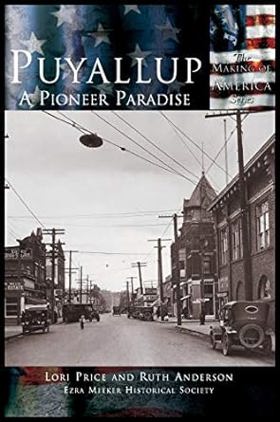
For many early Americans, native and immigrant, Puyallup was much more than simply a destination in Western Washington, but was a fulfillment of a dream, a vision of prosperity and opportunity. The lush valley region along the Puyallup River provided both beauty and bounty, sustaining countless generations and a variety of cultures, from the early American Indians to the later European explorers and settlers. Within this untamed wilderness, a group of hardy and self-reliant pioneers began the great task of carving a livelihood, and through their extraordinary efforts, created a lasting monument to their courage and determination-the city of Puyallup. Puyallup: A Pioneer Paradise chronicles the story of the city's evolution from the indigenous tribe that once populated the valley to the post-World War II building boom that attracted thousands of new residents. Readers travel across several centuries of change as the country of the "Generous People," or Puyallup tribe, succumbed to the unyielding waves of new people, such as the colonists of the Hudson's Bay Company, the stalwart Naches Pass Immigrants, and scores of later men and women searching for the promise of land. This unique volume traces the city's varied history, including its once-prominent agricultural traditions in hops, berries, flowers, fruits, vegetables, and Christmas trees, and remembers a host of its colorful characters, citizens like Ezra Meeker and J.P. Stewart, who worked tirelessly to promote Puyallup's development and supplied much of the land and leadership necessary for its growth. 160 pages : illustrations, map ; 25 cm CIRC [ 1 ]
|
2002 |
|
Pushed out contested development and rural gentrification in the US West by Ryanne Pilgeram 
"What happens to rural communities when their traditional economic base collapses? When new money comes in, who gets left behind? Pushed Out offers a rich portrait of Dover, Idaho, whose transformation from "thriving timber mill town" to "economically depressed small town" to "trendy second-home location" over the past four decades embodies the story and challenges of many other rural communities. Sociologist Ryanne Pilgeram explores the structural forces driving rural gentrification and examines how social and environmental inequality are written onto these landscapes. Based on in-depth interviews and archival data, she grounds this highly readable ethnography in a long view of the region that takes account of geological history, settler colonialism, and histories of power and exploitation within capitalism. Pilgeram's analysis reveals the processes and mechanisms that make such communities vulnerable to gentrification and points the way to a radical justice that prioritizes the economic, social, and environmental sustainability necessary to restore these communities"-- Provided by publisher xv, 194 pages : illustrations (black and white), maps (black and white) ; 24 cm CIRC [ 0 ]
|
2021 |
|
Punjabi rebels of the Columbia River the global fight for Indian independence and citizenship by Johanna Ogden 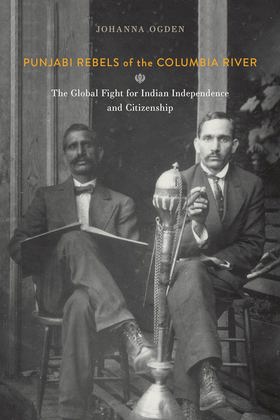
"Oregon is commonly perceived to have little, let alone notable, South Asian history. Yet in the early 1900s Oregon was at the center of two entwined quests for Indian independence and civic belonging that rocked the world. Punjabi Rebels of the Columbia River traces the stories of the radical Indian independence organization known as Ghadar and Bhagat Singh Thind's era-defining US Supreme Court citizenship case. Ghadar sought the overthrow of India's British colonizers while Thind utilized sanctioned legal channels to do so. Despite widely differing strategies, both the movement and the man were targeted, often in coordination, by the highest levels of the US and British governments. The empires' united message: India would not be an independent country and Indians could not be citizens. In the decades that followed, it was a verdict Indians refused to abide. Johanna Ogden's detailed history of migrants' experience expands the time frame, geographic boundaries, and knowledge of the conditions and contributions of Indians in North America. It is the story of a people's awakening amid a rich community of international workers in an age of nationalist uprisings. To understand why one of the smallest western Indian settlements became a resistance center, Punjabi Rebels mines the colonial underpinnings of labor, race, and place-making and their regional and global connections, rendering a history of whiteness and labor as much as of Indian-ness and migration. The first work to rejoin the lived experience of Thind and Ghadar activists, Punjabi Rebels complicates our understanding not just of the global fight for Indian political rights but of multi-racial democracy"-- Provided by publisher 296 pages CIRC [ 0 ]
|
2024 |
|
Puget's sound a narrative of early Tacoma and the southern Sound by Murray Morgan 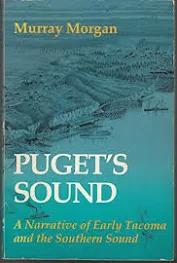
With the same ability to make personalities and events come alive that characterizes his classic "Skid Road", Murray Morgan here tells the colorful story of southern Puget Sound, where major events of Washington's history took place, and of Tacoma, the area's principal city. Drawing upon the original journals and reports, Morgan tells his story largely in terms of individuals, interweaving portraits of well-known historical figures with those who are more obscure but who have a special significance. Journalist and historian Murray Morgan (1916-2000) was the author of more than twenty books, including "Skid Road: An Informal Portrait of Seattle" and "The Last Wilderness". He worked for "Time" magazine, the "New York Herald Tribune", and CBS News before returning to Washington where he taught at Tacoma Community College and for fifteen years hosted the early morning radio show 'Our Town, Our World.' 360 s. : illustrations CIRC [ 1 ]
|
1981 |
|
Puget Sound ferries from canoe to catamaran, an illustrated history by Carolyn Neal, Thomas Kilday Janus 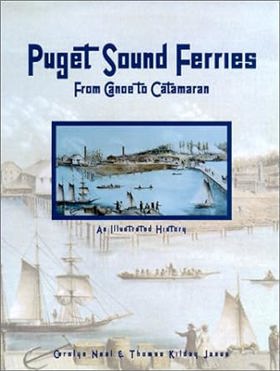
Authored by Carolyn Neal and Thomas Kilday Janus, Puget Sound Ferries: From Canoe to Catamaran, an Illustrated History presents a visual and narrative chronicle of the vessels that have spanned Washington’s inland sea across generations. The book traces the technological evolution of water transit from indigenous dugout canoes and early steam-powered "mosquito fleet" boats to modern automobile ferries and high-speed catamarans. Richly illustrated with historical photographs and detailed vessel logs, the text highlights how changing ship designs directly reflected the growing mobility needs of a decentralized coastal population. A keen insight drawn from the work is how the ferry system functioned as the original democratic equalizer of the region; by stitching together disparate islands and mainland shorelines before bridges were feasible, these vessels created a unified regional community out of a fragmented marine geography. 224 pages : illustrations ; 29 cm CIRC [ 1 ]
|
2001 |
|
Puget Sound and western Washington; cities--towns--scenery by Robert A Reid 
Compiled by publisher Robert A. Reid, Puget Sound and Western Washington: Cities—Towns—Scenery serves as a highly visual, promotional catalog of the region's rapid early 20th-century urban and industrial expansion. Through extensive photographic plates and glowing captions, the book captures a sweeping panorama of bustling deep-water ports, sprawling timber operations, and modernizing civic architecture emerging from the dense coastal forests. Designed primarily for tourists and prospective investors, the pictorial volume functioned to visually prove that the untamed Pacific Northwest had successfully been transformed into a sophisticated, economically robust cornerstone of the American empire. A keen insight drawn from the work is how the strategic curation of early commercial photography operated as an irrefutable tool of regional boosterism; by relying on the presumed objectivity of the camera to document gleaming cityscapes and orderly timber yards while meticulously omitting the displaced indigenous communities and scarred clear-cuts, the volume crafted a sanitized, visual mythology of painless industrial progress. 192 pages : frontispiece, illustrations, map ; 27 cm ONLINE CIRC [ 1 ]
|
1912 |
|
Public power, private dams the Hells Canyon High Dam controversy by Karl Boyd Brooks, William Cronon 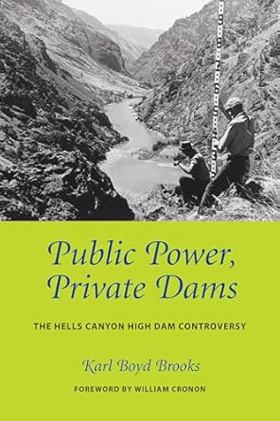
In the years following World War II, the world’s biggest dam was almost built in Hells Canyon on the Snake River in Idaho. Karl Boyd Brooks tells the story of the dam controversy, which became a referendum not only on public-power expansion but also on the environmental implications of the New Deal’s natural resources and economic policy. Private-power critics of the Hells Canyon High Dam posed difficult questions about the implications of damming rivers to create power and to grow crops. Activists, attorneys, and scientists pioneered legal tactics and political rhetoric that would help to define the environmental movement in the 1960s. The debate, however, was less about endangered salmon or threatened wild country and more about who would control land and water and whether state enterprise or private capital would oversee the supply of electricity. By thwarting the dam’s construction, Snake Basin irrigators retained control over water as well as economic and political power in Idaho, putting the state on a postwar path that diverged markedly from that of bordering states. In the end, the opponents of the dam were responsible for preserving high deserts and mountain rivers from radical change. With Public Power, Private Dams, Karl Brooks makes an important contribution not only to the history of the Pacific Northwest and the region’s anadromous fisheries but also to the environmental history of the United States in the period after World War II. xxvii, 290 pages, 16 unnumbered pages of plates : illustrations, map ; 24 cm. CIRC [ 0 ]
|
2006 |
|
Psychiana man a mail-order prophet, his followers, and the power of belief in hard times by Brandon R. Schrand 
Six weeks after the 1929 stock market crash, Frank Bruce Robinson created a self-help religion he called Psychiana. An ingenious mass-marketing pioneer, he sold a correspondence course promising health, wealth, and happiness to those who believed in the “God Power.” In the midst of the Great Depression, his mail-order religion with a money-back guarantee swept the United States and spread to some sixty-seven countries – or so its founder claimed – to become one of the most successful twentieth century New Thought religions. Facing charges of passport fraud in May 1936, an immaculately dressed Robinson arrived at the federal building in rural Moscow, Idaho. A person of considerable local and regional significance, he was Latah County’s largest private employer. Throngs lined the streets and sidewalks waiting for him. He exited his sleek green Duesenberg, waved to the crowd, and smiled for pictures. His son later wrote that the charismatic leader possessed “an insatiable appetite for publicity.” Central to the investigation was Robinson’s true identity. He was not all he claimed to be, and his small-town trial captivated the country and made national headlines. A full-length biography of Robinson combined with an in-depth historical examination of Psychiana, this book traces the improbable rise and fall of a master charlatan while also giving voice to his unwavering followers – from a Dust Bowl farmer to a former heavyweight boxing champion – who clung to their beliefs despite ongoing financial and emotional costs. Their stories reveal how adversity can galvanize faith in a false prophet, and paint an intriguing, intimate portrait of a nation challenged by a brutal depression and war. Brandon R. Schrand is the local, award-winning author of The Enders Hotel: A Memoir and Works Cited: An Alphabetical Odyssey of Mayhem and Misbehavior. His nonfiction has appeared in Sports Illustrated, Utne Reader, the Georgia Review, North American Review, and numerous other publications. A winner of the Pushcart Prize, he has also been a resident at Yaddo. xv, 397 pages : illustrations, portraits ; 23 cm CIRC [ 0 ]
|
2021 |
|
Providence and the invention of American history by Sarah Koenig 
"In 1847, Protestant missionary Marcus Whitman was killed after a disastrous eleven-year effort to evangelize the indigenous peoples of the Pacific Northwest. By 1897, Whitman was a national hero, celebrated in textbooks, monuments, and historical scholarship as the 'Savior of Oregon.' But his fame was based on a tall tale--one that was about to be exposed. Sarah Koenig traces the rise and fall of Protestant missionary Marcus Whitman's legend, revealing two patterns in the development of American history. On the one hand is providential history, marked by the conviction that God is an active agent in human history and that historical work can reveal patterns of divine will. On the other hand is objective history, which arose from the efforts of Catholics and other racial and religious outsiders to resist providentialists' pejorative descriptions of non-Protestants and nonwhites. Koenig examines how these competing visions continue to shape understandings of the American past and the nature of historical truth."-- Provided by publisher xii, 280 pages : illustrations ; 25 cm CIRC [ 0 ]
|
2021 |
|
Protest city Portland's summer of rage by Rian Dundon (Author, Photographer), Donnell Alexander, Carmen P. Thompson (Writer of introduction) 
"In the months leading up to the 2020 presidential election, Portland made national news with nightly social justice protests, often met with violent response by counter protestors and law enforcement. Though frequently regarded as a progressive hub, Portland has a long history of racial inequality and oppression, and the city's entrenched divisions gained new attention during the Trump years. The photographs in Protest City present a visceral visual record of this significant moment in Portland's history. Rian Dundon, who has been photographing the rise of extreme politics on the West Coast since 2016, lived only a short walk from the protests that erupted after the murder of George Floyd. For one hundred days, Dundon enmeshed himself in the demonstrations with an unobtrusive point-and-shoot camera. The result is a graphic portrayal of how social movements become politicized, how spectacle serves as a subtext to change in the digital age, and how modern protests blur distinctions among performance, ritual, and surveillance. As he follows the progress of Portland's conflicts, Dundon draws connections to Oregon's legacy as a stronghold of white supremacist extremism and interrogates the role of whiteness in racial justice movements. Dundon's striking photos recreate the immediacy and impact of the protests, while a foreword by journalist Donnell Alexander and introduction by historian Carmen P. Thompson contextualize the uprising's sociopolitical background. A chronology and author's note are also featured"-- Page 4 of cover xxviii, 187 pages : color illustrations ; 26 cm CIRC [ 0 ]
|
2023 |