Catalog of British Columbiana and Pacific Northwest Americana
Encyclopedia Cascadia Catalog contains book titles of mostly non-fiction Pacific Northwest Coast of North America Titles (primarially British Columbia, Idaho, Oregon and Washington State) in an easy-to-understand title catalog. If you see a link with this badge ONLINE CIRC it means that there is an online institution that provides free access to that title. In some cases there may be more than one institution hosting the title digitally.
| Catalog Title | Published |
|---|---|
|
The most difficult of our camps Vernon Internment Camp, 1914-1920 by Don McNair , Lawrna Myers , Carol Brown , Vivian Elgie , Jerry Thompson , Vernon & District Family History Society (Publisher) 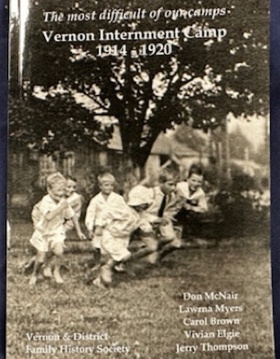
Authored by researchers from the Vernon & District Family History Society, The Most Difficult of Our Camps: Vernon Internment Camp, 1914–1920 presents a comprehensive examination of Canada's First World War internment operations. The volume meticulously documents the experiences of over one thousand "enemy aliens"—including men, women, and children of Austro-Hungarian, German, and Ottoman descent—detained in British Columbia's interior. Utilizing archival photographs, official correspondence, and detailed biographical sketches, the authors illuminate daily life within the camp and its associated regional work projects. Ultimately, the text contributes a vital socio-historical perspective to the broader discourse on state-sponsored detention, civil liberties, and wartime governance in Canada 389 pages : illustrations (some colour), colour maps ; 23 cm CIRC [ 0 ]
|
2022 |
|
Japanese Americans at Heart Mountain networks, power, and everyday life by Saara Kekki 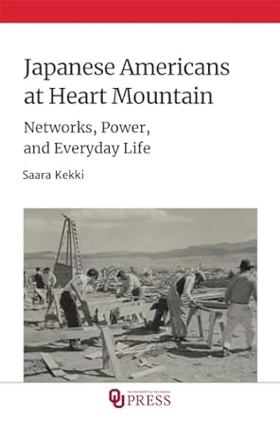
"On August 8, 1942, 302 people arrived by train at Vocation, Wyoming, to become the first Japanese American residents of what the U.S. government called the Relocation Center at Heart Mountain. In the following weeks and months, they would be joined by some 10,000 of the more than 120,000 people of Japanese descent, two-thirds of them U.S. citizens, incarcerated as "domestic enemy aliens" during World War II. Heart Mountain became a town with workplaces, social groups, and political alliances-in short, networks. These networks are the focus of Saara Kekki's Japanese Americans at Heart Mountain. Interconnections between people are the foundation of human societies. Exploring the creation of networks at Heart Mountain, as well as movement to and from the camp between 1942 and 1945, this book offers an unusually detailed look at the formation of a society within the incarcerated community, specifically the manifestation of power, agency, and resistance. Kekki constructs a dynamic network model of all of Heart Mountain's residents and their interconnections-family, political, employment, social, and geospatial networks-using historical "big data" drawn from the War Relocation Authority and narrative sources, including the camp newspaper Heart Mountain Sentinel. For all the inmates, life inevitably went on: people married, had children, worked, and engaged in politics. Because of the duration of the incarceration, many became institutionalized and unwilling to leave the camps when the time came. Yet most individuals, Kekki finds, took charge of their own destinies despite the injustice and looked forward to the day when Heart Mountain was behind them. Especially timely in its implications for debates over immigration and assimilation, Japanese Americans at Heart Mountain presents a remarkable opportunity to reconstruct a community created under duress within the larger American society, and to gain new insight into an American experience largely lost to official history."-- Provided by publisher xvii, 224 pages : illustrations, maps ; 24 cm. CIRC [ 0 ]
|
2022 |
|
Working boats an inside look at ten amazing watercraft by Tom Crestodina (Author, Illustrator) 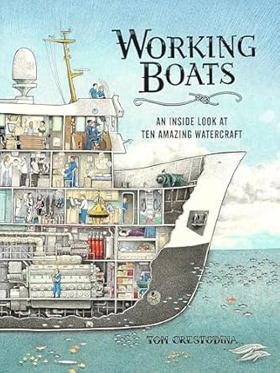
"Want to know what happens during a Coast Guard rescue, what it's like to work on a scientific research vessel, or what's involved when crabbing in the cold waters of the North Pacific? This visually engaging book includes cross sections and exploded views showing in great detail what it's like to live and work aboard ten amazing boats."-- Publisher's description 56 pages : color illustrations, color maps ; 32 cm CIRC [ 0 ]
|
2022 |
|
Shaw Island Earliest Known History to 1994 by Dorothy Powell, Fran Hilen 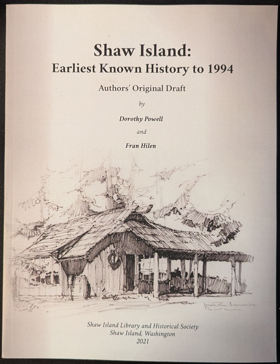
Shaw Island is the smallest of the ferry-served islands in the San Juan Archipelago of Washington State. It boasts a store, a school, a community building, and a wonderful, private, volunteer-run library and museum. The Shaw Island Library and Historical Society was founded in 1966. A year later, two one-acre lots were donated for a building site and the original logs of a homestead cabin were donated to serve as the future Shaw Island Museum. Many generous donations from island volunteers, families, friends, and institutions formed a collection that continues to grow, preserving the heritage of this unique island community.In 1994 Fran Hilen was serving as Curator when Dorothy Powell volunteered as Librarian for the Shaw Island Library and Historical Society. Quietly, they decided to collaborate, writing a remarkable book about the history of Shaw Island beginning in pre-history, through the time of the early settlers, to their present day in the mid-1990's. In the original introduction, the authors invite the community to "add to the history for present and future residents and friends of Shaw Island."The Historical Society, aided by a dedicated team of Shaw Island volunteers, have taken Dorothy and Fran at their word and have supplemented their text with more than 600 historic photos, maps, historic documents, and newspaper clippings. Biographies and quotes from past Shaw Islanders, some of whom left behind prolific daily journals, give us insight into events and a past way of life. 166 pages, photos CIRC [ 1 ]
|
2021 |
|
To share, not surrender Indigenous and settler visions of treaty making in the colonies of Vancouver Island and British Columbia by Peter Cook , Neil Vallance , John S. Lutz , Graham Brazier , Hamar Foster 
"Too often, history and knowledge of Indigenous-settler conflict over land take the form of confidential reports prepared for court challenges. To Share, Not Surrender offers an entirely new approach, opening scholarship to the public and augmenting it with First Nations community expertise. The collection appraises the historical and present-day relevance of treaty-making in the colonies of Vancouver Island and British Columbia. The authors take us back to when James Douglas and his family relocated to Fort Victoria on Vancouver Island in 1849, critically tracing the transition from treaty-making in the colony of Vancouver Island to reserve formation in the colony of British Columbia. Informed by cel'an'en - "our culture, the way of our people" - this multivocal work explicitly addresses the tensions between academic research, Indigenous knowledge, and local experience. The collection includes essays, translations/interpretations of the treaties into the SENĆOŦEN and Lekwungen languages, and contributions by participants of the Songhees, Huu-ay-aht, and WSANEC peoples. The chapters demonstrate that the continuing inability to arrive at equitable land-sharing arrangements stem from a fundamental absence of will with respect to accommodating First Nations world views. To Share, Not Surrender is an attempt to understand why, and thus to advance the urgent task of reconciliation in Canada."-- Provided by publisher xiv, 354 pages : illustrations, maps ; 24 cm CIRC [ 0 ]
|
2021 |
|
Indians, fire, and the land in the Pacific Northwest by Robert T. Boyd , Frank K. Lake 
Instead of discovering a land blanketed by dense forests, early explorers of the Pacific Northwest encountered a varied landscape including open woods, meadows, and prairies. Far from a pristine wilderness, much of the Northwest was actively managed and shaped by the hands of its Native American inhabitants. Their primary tool was fire. This volume takes an interdisciplinary approach to one of the most important issues concerning Native Americans and their relationship to the land. Over more than 10,000 years, Native Americans in the Northwest learned the intricacies of their local environments and how to use fire to create desired effects, mostly in the quest for food. Drawing on historical journals, Native American informants, and ethnobotanical and forestry studies, this book’s contributors describe local patterns of fire use in eight ecoregions, representing all parts of the Native Northwest, from southwest Oregon to British Columbia and from Puget Sound to the Northern Rockies. Their essays provide glimpses into a unique understanding of the environment, one that draws on traditional ecological knowledge. Together, these writings also offer historical perspective on the contemporary debate over “prescribed burning” and management of public lands. This updated edition includes a foreword by Frank K. Lake and a new epilogue by editor Robert T. Boyd. Contributors include Stephen Arno, Stephen Barrett, Theresa Ferguson, David French, Eugene Hunn, Leslie Johnson, Jeff LaLande, Estella Leopold, Henry Lewis, Helen H. Norton, Reg Pullen, William Robbins, John Ross, Nancy Turner, and Richard White. About the author: Robert T. Boyd, , affiliated faculty in the Department of Anthropology, Portland State University, is author of The Coming of the Spirit of Pestilence: Introduced Diseases and Population Decline among Northwest Coast Indians, 1774–1874 and coeditor of Chinookan Peoples of the Lower Columbia. He lives in Portland, Oregon. xvii, 329 pages : illustrations, maps ; 23 cm CIRC [ 0 ]
|
2021 |
|
Solidarity Canada's unknown revolution of 1983 by David Spaner 
"The year 1983 began like any other year in Canada's leftmost--er, West Coast province. Then Bill's bills unleashed four months of public unrest. The newly elected Social Credit government announced an avalanche of far-right legislation that shocked the country. By dropping viciously anti-union legislation that slashed protection for hard-won human rights, Premier Bill Bennett attacked nearly everyone in his contingency. A resistance movement called Solidarity sprung up across the province. Massive street protests, occupations and plans for an all-out general strike had all eyes on B.C.. Like other uprisings--from France in 1968 to the anti-racism protests of 2020--Solidarity arrived unexpectedly and rocked social foundations. Revolution, in one province? Filled with revealing interviews and lively, insightful prose, David Spaner's Solidarity goes behind the scenes of one of the greatest social uprisings in North American history. Spaner delves into the Solidarity months of 1983 through his own experience and that of the activists, both iconic and unsung, that organized B.C.'s masses. Solidarity's intimate storytelling mixes popular culture and rebel politics, finding political answers in the personal lives of those touched by the movement. In recreating this one singularly dramatic event, Spaner's Solidarity becomes the ongoing history of 20th century B.C.--exploring its great divides and unions, cultures and subcultures, and conflicts that continue into the 21st century."-- Provided by publisher xii, 240 pages, 14 unnumbered pages of plates : illustrations ; 23 cm CIRC [ 0 ]
|
2021 |
|
A Liberal-Labour lady the times and life of Mary Ellen Spear Smith by Veronica Jane Strong-Boag 
"A Liberal-Labour Lady restores British Columbia's first female MLA and the British Empire and Commonwealth's first female cabinet minister to history. An imperial settler, liberal-labour activist, and mainstream suffragist, Mary Ellen Smith demanded a fair deal for "deserving" British women and men in the late nineteenth and early twentieth centuries. Born in England in 1863, the daughter and wife of miners, she emigrated to Nanaimo, BC, in 1892. As she became a well-known suffragist and her husband Ralph won provincial and federal elections, the power couple strove to shift Liberal parties leftward to benefit women and workers, while still embracing global assumptions of British racial superiority and bourgeois feminism's privileging of white women. His 1917 death launched Mary Ellen as a candidate in a tumultuous 1918 Vancouver by-election. In the BC legislature until 1928, Smith campaigned for better wages, mothers' and old age pensions, and greater justice, even as she endorsed anti-Asian, settler, and pro-eugenic policies. Her death in 1933 ended an experiment in extending democracy that was both brave and deeply flawed. A Liberal-Labour Lady sheds light on a Canadian suffragist undeservedly neglected by scholars and forgotten by posterity. It also illuminates a half a century of political history, first-wave feminism, immigration, and labour history set in a broad context of shifting ideas, ideologies, and strategies. Although simultaneously intrepid and flawed, Mary Ellen Smith is revealed to be a key figure in early Canada's compromised struggle for greater justice, who helped set the contours of a modern Canada."-- Provided by publisher xiii, 274 pages : illustrations (black and white) ; 24 x 16 cm CIRC [ 0 ]
|
2021 |
|
Capitals, Aristocrats and Cougars Victoria's hockey professionals, 1911-26 by Alan Livingstone MacLeod 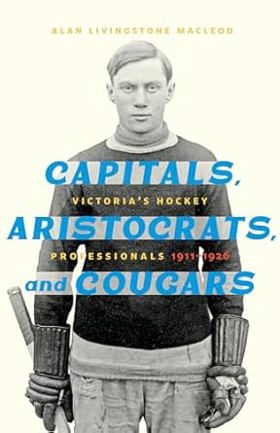
"A fascinating and in-depth look at Victoria's largely unknown professional hockey players in the early twentieth century, and the historical context in which they played. For most hockey fans hailing from Canada's westernmost province, the sport's most coveted prize, the Stanley Cup, has remained frustratingly elusive for nearly a century. But what many people do not know is that the west coast, and in particular the city of Victoria, was once a hockey mecca, where superstars flourished, Hall of Famers were made, and big victories--yes, even the Stanley Cup of 1925--were won. Capitals, Aristocrats, and Cougars is a deep dive into the world of professional hockey in Victoria from 1911 to 1925, an era that saw forty-nine men take their turns in one of the city's newly minted teams. It was also an era of unprecedented social, economic, and political change, a period that spanned the First World War and redefined Canada's national identity. With meticulous research and encyclopedic knowledge,author, historian, and consummate hockey fan Alan Livingstone MacLeod chronicles the key players, coaches, arena builders, and team visionaries who contributed to this long-forgotten chapter of hockey history, and puts them all in the context of what was going on in the world at the time. This in-depth account is sure to delight history buffs and hockey fans alike."-- Provided by publisher 279 pages : (some) black and white illustrations; 23 cm. CIRC [ 0 ]
|
2021 |
|
Flying to extremes memories of a northern bush pilot by Dominique F. Prinet 
"The adventures and misadventures of Arctic bush pilot Dominique Prinet in the Northwest Territories make for a bracing read. Writing with clarity, humour, and precision, Prinet, an economist and engineer, flies us into a world of endless snow and ice and dim grey winter days over sparsely settled tundra. Flying into bad weather, his single-engine plane icing up and heading down, Prinet wonders if he should tell the sports fishermen snoozing in the cabin amid boxes of fish and fishing gear they are about to crash. Maybe not. Or while rescuing his bride from their plane sinking through the ice, he meets an Indigenous trapper who drove his dogsled through the bush to find out why a plane had landed but not taken off."-- Provided by publisher 279 pages : colour illustrations, maps ; 22 cm CIRC [ 0 ]
|
2021 |
|
Muggins the life and afterlife of a Canadian canine war hero by Grant Hayter-Menzies , Mark Zuehlke 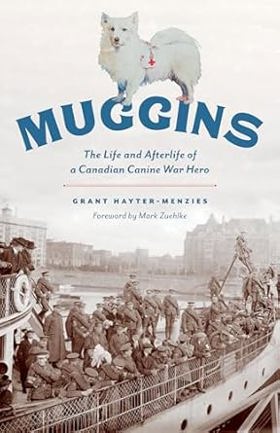
"The unusual and moving tale of Muggins, a famed fundraising dog who became a mascot of the Canadian Red Cross during the First World War. Born in 1913 in the home of a millionaire philanthropist, Muggins was a purebred Spitz, a sharp-eared, sharp-nosed, fluffy-tailed sort of dog most often seen in the lap of a lady of leisure. But Muggins defied the odds, rising to unlikely fame during the First World War, when he became Victoria, BC's most diminutive fundraiser. He was taught to wander through downtown during the war with two change donation boxes tied to his back, and ultimately collected the equivalent of $400,000 for charities and causes including the Red Cross, the Blue Cross, food for poor children and prisoners of war, victims of Jewish pogroms, to name a few. During his short life, Muggins visited ferries and freight liners stopping in Victoria. He appeared in photos with the Prince of Wales and with famous Canadian general Sir Arthur Currie, among other celebrated admirers. He was also a favourite of the rank and file, helping cheer up wounded soldiers at Esquimalt Military Hospital. Muggins was made an honourary first lieutenant by the United States military for his service raising funds in Seattle. And he was so loved by departing soldiers he was more than once nearly taken along to the theatre of war. Based on valuable documents, memorabilia, newspaper and newsreel accounts of Muggins's brief but brilliant career, this book tackles the difficult question of human use of animals in war, at home and on the battlefield. It explores how crucial animals, specifically dogs, have been to wounded veterans recovering from physical and emotional damage--both in Muggins's lifetime and now."-- Provided by publisher xv, 199 pages, 24 unnumbered pages of plates : illustrations, portraits ; 22 cm CIRC [ 0 ]
|
2021 |
|
Tales of B.C. 50 years of wacky, wild & thought-provoking adventures by Daniel Wood 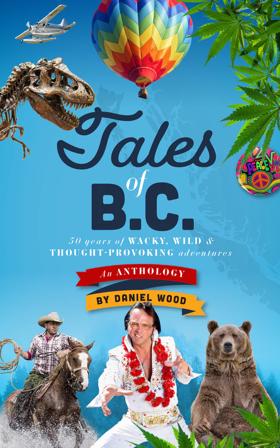
With a career spanning five decades, writer Daniel Wood's adventures have inspired, informed, and entertained generations of readers about British Columbia's charms. Whether he's exploring human nature, scientific discoveries, oddities, or environmental wonders, at the centre of those explorations are people, their ideas, and their dreams. Written by B.C.'s most acclaimed writer and journalist, this anthology features 28 award-winning magazine articles, including a near-death hotair balloon ride, B.C.'s pot-growing pioneers, Elvis impersonators in the Okanagan, the province's first dino-dig, and its last free-range cowboys. You won't find a better collection of B.C. tales anywhere 255 pages : illustrations ; 21 cm CIRC [ 0 ]
|
2021 |
|
Tales of the KVR the Kettle Valley Railway remembered by Barrie Sanford 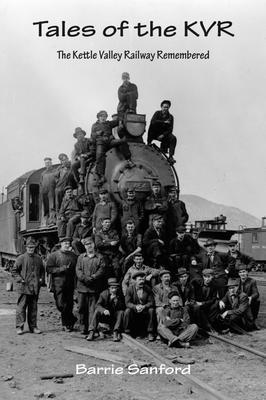
The Kettle Valley Railway may be gone, but it springs back to life in this collection of stories and photos from Barrie Sanford. From years of recording stories told to him by railroaders and their descendants, coupled with his own research, Barrie has compiled stories of the men -- and women -- who gave the KVR life and purpose. Here are the surveyors who charted the railway through the wilderness, the labourers who built the railway with pick and shovel, and the locomotive firemen and engineers who ran the trains through winter storms and summer heart. Told as a series of long and short pieces, this is social history preserved by one of BC's foremost railway history experts.--Adapted from back cover viii, 165 pages : illustrations, map ; 23 cm CIRC [ 0 ]
|
2021 |
|
Art of the Northwest coast by Aldona Jonaitis 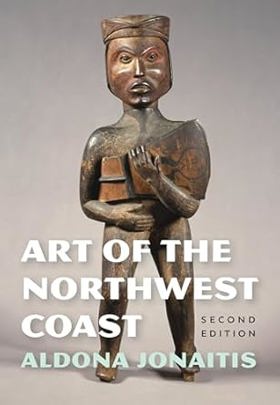
"Originally published in 2006, Art of the Northwest Coast offers an expansive history of this great tradition, from the earliest known works to those made at the beginning of the twenty-first century. Although non-Natives often claimed that First Nations cultures were disappearing, Northwest Coast Native people continued to make art during the painful era of colonization, often subtly expressing resistance to their oppressors and demonstrating the resilience of their heritage. Integrating the art's development with historical events following contact with Euro-Americans sheds light on the creativity of artists as they appropriated and transformed foreign elements into uniquely Indigenous statements. A new chapter discusses contemporary artists, including Marianne Nicholson, Nicholas Galanin, Lawrence Paul Yuxweluptun, and Sonny Assu, who address pressing issues ranging from Indigenous sovereignty and destruction of the environment to the power of Native women and efforts to work with non-Natives to heal the wounds of racism and discrimination"-- Provided by publisher xxiv, 387 pages : illustrations (some color), maps ; 25 cm CIRC [ 0 ]
|
2021 |
|
Where the power is indigenous perspectives on Northwest Coast art by Karen Duffek , Bill McLennan , Ellen J. Lehman (Donor), Jordan Wilson , University of British Columbia Museum of Anthropology (Issuing body) 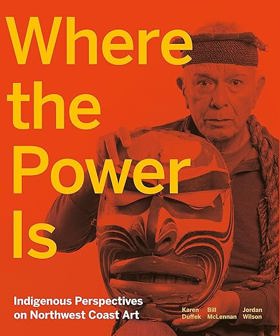
"Where the Power Is: Indigenous Perspectives on Northwest Coast Art brings together contemporary Indigenous knowledge holders with extraordinary works of historical Northwest Coast art that transcend the category of "art" or "artifact" and embody distinct ways of knowing and being in the world. Dozens of Indigenous artists and community members visited the Museum of Anthropology at the University of British Columbia to engage with these objects and learn from the hands of their ancestors. The photographs and their commentaries speak to the connections between tangible and intangible cultural belongings; how "art" remains part of Northwest Coast peoples' ongoing relationships to their territories and governance; Indigenous experiences of reconnection, reclamation, and return; and critical and necessary conversations around the role of museums."-- Provided by publisher 371 pages : illustrations (chiefly color), color maps ; 32 cm CIRC [ 0 ]
|
2021 |
|
Lost Kootenays a history in pictures by Greg Nesteroff , Eric Brighton 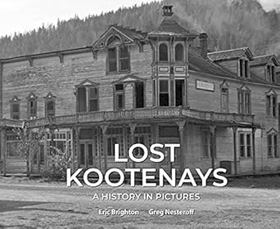
"Greg Nesteroff and Eric Brighton started the Lost Kootenays Facebook Group with the intent of preserving, promoting and sharing the history of the Kootenays and the people who lived here. Today the Lost Kootenays community is 48,000 strong and one of the most dynamic sites in British Columbia. Together Greg Nesteroff and Eric Brighton have put together the definitive photographic account of the Kootenays. From its First Peoples, to mining, forestry, fruit farming, railroading and steamboating, it is all here. With more than 130 photographs--many of them seen here for the first time--Lost Kootenays offers us a window into the past, showing life as it was then, and stirring in us the emotions of wonder and curiosity about those who have gone before us and the lives they lived."-- Provided by publisher 128 pages : illustrations ; 21 x 26 cm CIRC [ 0 ]
|
2021 |
|
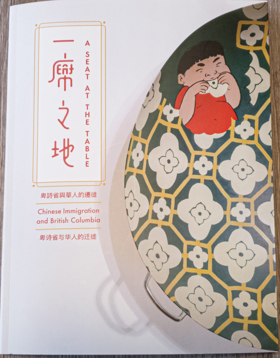
A seat at the table Chinese immigration and British Columbia by curators & editors : Denise Fong, Viviane Gosselin, Henry Yu = 一席之地 : 卑诗省与华人的迁徙 / 策展与编辑方静怡, Viviane Gosselin, 余全毅., 方静怡 , Viviane Gosselin , 余全毅 , Museum of Vancouver (Host institution, Issuing body), University of British Columbia (Issuing body) / Viviane Gosselin, Henry Yu = Yi xi zhi di : Beishi
|
2021 |
|
Deep, dark and dangerous the story of British Columbia's world-class undersea tech industry by Vickie Jensen 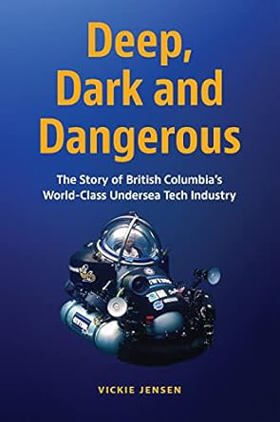
"How British Columbia became an international hotspot for submarines, submersibles, Newtsuits, underwater robotics, Arctic sonar and a host of other cutting-edge undersea technologies. In Deep, Dark & Dangerous, maritime historian Vickie Jensen explores the fascinating story of British Columbia's rise to become a world leader in the underwater tech industry. She profiles both trailblazing innovators and newcomers to the field, and traces BC's colourful history and bright future as a front runner in the world of subsea technology innovation. This little-known saga began in the early 1960s. Two commercial hard-hat divers from the Vancouver area, Don Sorte and Al Trice, realized that they needed a small manned submersible with robot arms for deep-sea work. They couldn't find one to buy, so they decided to partner with machinist Mack Thomson and build their own. Experts told them it would be suicidal to try a home-made version, but just over two years and $100,000 later, their Pisces I was successfully making two-thousand-foot dives. They formed International Hydrodynamics, which went on to build fourteen submersibles and produce a generation of experts that would launch an entire industry of subsea companies in BC. During the same period, Phil Nuytten went from opening Vancouver's first scuba shop as a teenager to becoming a commercial diver and starting his undersea construction company at age twenty-five. Now, Nuytten is best known for his atmospheric diving suits, Newtsuit and Exosuit, along with a series of submersibles for scientific research. Drawing on her background in documenting both history and industry, Jensen uncovers the stories of over forty subsea pioneers, both historical and current, and details the innovations that are responsible for BC's remarkable and continuing subsea reputation. Written with colour and flair, this is a fascinating and exciting story that anyone can enjoy."-- Provided by publisher 282 pages : illustrations ; 24 cm CIRC [ 0 ]
|
2021 |
|
Edward Feuz Jr a story of enchantment by D. L. Stephen 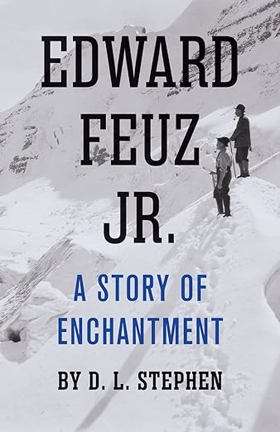
"An intimate look at the life and climbs of Swiss alpine guide Edward Feuz Jr., patriarch of Canadian alpinism and genuine lover of mountains." --Bookmanager 318 pages : illustrations ; 22 cm CIRC [ 0 ]
|
2021 |
|
Luschiim's plants traditional Indigenous foods, materials and medicines by Luschiim Arvid Charlie , Nancy J. Turner , Harbour Publishing (Publisher) 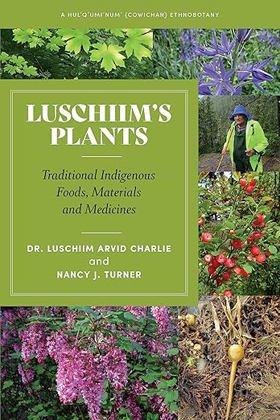
"Respected Cowichan Tribe Elder and botanical expert Luschiim, Arvid Charlie, began his education in early childhood, learning from his great grandparents and others of their generation. Luschiim's Plants represents his dedication to the survival of the Hul′q′umi′num′ language and traditional knowledge of plants for future generations. From the healing properties of qaanlhp (arbutus) to the many practical applications of q'am (bull kelp), the information presented in this remarkable guide shares knowledge of plants that Luschiim is familiar with through his own Elders' teachings and by way of direct experience over the course of his lifetime, and compiled from field outings and interviews with notable ethnobiologist and botanist Nancy Turner. In this unprecedented collection of botanical information, over 140 plants are categorized within their broad botanical groupings: algae and seaweeds, lichens, fungi and mushrooms, mosses and liverworts, ferns and fern-allies, coniferous trees, deciduous trees, shrubs and vines, and herbaceous flowering plants. Each entry is illustrated with a colour photo and includes the plant's common, scientific and Hul′q′umi′num′ names; a short description; where to find it; and cultural knowledge related to the plant. Additional notes encompass plant use, safety and conservation; the linguistic writing system used for Hul′q′umi′num′ plant names; as well as miscellaneous notes from interviews with Luschiim. This volume is an important addition to the bookshelves of botanists, and will fascinate anyone with an interest in plants of the West Coast and their traditional uses by Coast Salish peoples."-- Provided by publisher xiii, 274 pages : color illustrations, color portrait ; 23 cm CIRC [ 0 ]
|
2021 |
|
Lucky the wit and wisdom of Governor Phil Batt by Rod Gramer (Interviewer, Editor), Butch Otter, Dirk Kempthorne, Lindy High, Marc C. Johnson, Randy Stapilus, James B. Weatherby 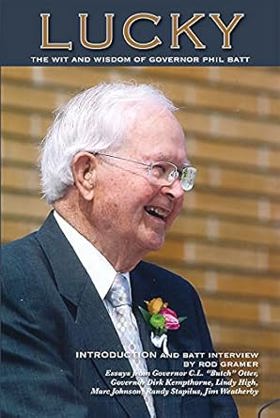
"In Lucky, Former Idaho Governor Phil Batt tells us that he has lived a “lucky” life. It is true that Batt has lived a charmed life, but it took more than luck for his half-century long and\ndistinguished political career. Wisdom and wit and more than a heavy dose of common sense and decency contributed to his success as a legislator, party chair, lieutenant governor and governor. Batt brought a practical, business-like discipline to the Statehouse, but one tempered with a soft heart for Idahoans who needed support: the young, vulnerable, and marginalized. A champion of conservative fiscal values, he was also a champion of human values like equality and fairness. Batt reflects back on his remarkable career and takes a stand on some of the pressing issues of our time- human rights,immigration, deficits, and the lack of political civility. He remembers many of the political luminaries he worked with,notably the late Democratic Governor Cecil Andrus and late Republican Senator Jim McClure. Lucky also includes insightful essays by those who know Batt well, including two former governors who credit Batt for advancing their political careers. Lucky shows us that there was more than luck to the man some call the “little giant,” it also reminds us of how lucky Idaho was to have him as its 29th governor." -- from publisher 137 pages : illustrations (some color) ; 23 cm CIRC [ 0 ]
|
2021 |
|
Idaho inside and out by R. G. Robertson , Karen A. Robertson (Photographer) 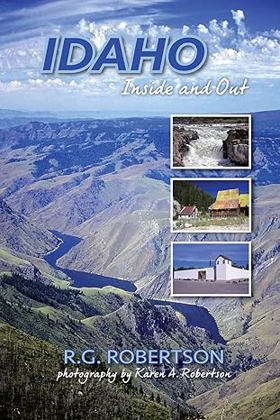
"From Porthill to Franklin-from Weiser to Driggs, "Idaho inside and out" recounts the geology and the people who make the Gem State unique. Supercontinent Pangaea, the Snake River Plan, the Bonneville Flood, an aquifer with enough water to fill Lake Erie, and a subterranean ice cave in the midst of a lava desert are but a few of Idaho's natural wonders that are described. Sacajawea, Diamondfield Jack, Peg Leg Annie, John Mullan, Chief Pocatello, General B.L.E. Bonneville and many other colorful Idahoans are chronicled. Some were pillars of their communities, whereas others had no more influence than a whisp of smoke. Yet each of them added to Idaho's intriguing history. Additionally, "Idaho inside and out" contains 50 current and historical photos plus driving directions to the selected sites"-- Provided by publisher 189 pages : illustrations (chiefly color) ; 23 cm CIRC [ 0 ]
|
2021 |
|
Roadside geology of Idaho by P. K. Link , Shawn Willsey , Keegan L. Schmidt 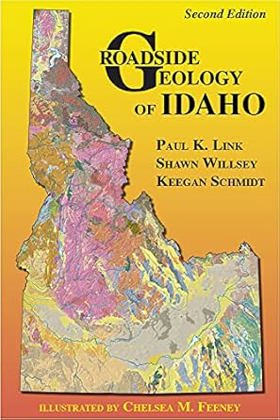
"Learn about the remarkable geologic diversity of the Gem State with the completely revised, full-color edition of Roadside Geology of Idaho. Excellent graphics, spectacular photographs, and straightforward writing describe and interpret the rocks and landscapes visible outside your car window, whether you're speeding across the Snake River Plain or following a narrow canyon enroute to a weekend getaway. The authors, a trio of experienced field geologists, guide you to outcrops and roadcuts where you can stretch your legs and expand your minds. The rocks of Idaho span a vast chunk of Earth's long-lived history and tell stories with many plot twists. Time and time again, geologic processes transformed the landscape-mountains grew to towering heights only to be leveled by erosion, vast lakes drained in massive floods when ice and sediment dams failed, and lava poured into river valleys, creating new dams. With this book as their travel companion, residents and visitors alike are sure to understand and appreciate Idaho's sprawling plains, forested hills, and deep canyons in a completely new"-- Provided by publisher xiii, 384 pages : illustrations (chiefly color), color maps ; 23 cm. CIRC [ 0 ]
|
2021 |
|
Becoming Nisei Japanese American urban lives in prewar Tacoma by Lisa M. Hoffman , Mary L. Hanneman 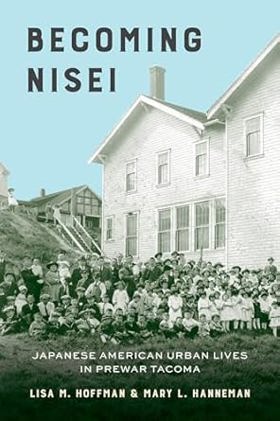
Tacoma’s vibrant Nihonmachi of the 1920s and '30s was home to a significant number of first generation Japanese immigrants and their second generation American children, and these families formed tight-knit bonds despite their diverse religious, prefectural, and economic backgrounds. As the city’s Nisei grew up attending the secular Japanese Language School, they absorbed the Meiji-era cultural practices and ethics of the previous generation. At the same time, they positioned themselves in new and dynamic ways, including resisting their parents and pursuing lives that diverged from traditional expectations. Becoming Nisei, based on more than forty interviews, shares stories of growing up in Japanese American Tacoma before the incarceration. Recording these early twentieth-century lives counteracts the structural forgetting and erasure of prewar histories in both Tacoma and many other urban settings after World War II. Lisa Hoffman and Mary Hanneman underscore both the agency of Nisei in these processes as well as their negotiations of prevailing social and power relations. xv, 289 pages : illustrations, maps ; 23 cm. CIRC [ 0 ]
|
2021 |
|
William Hobson (1820-1891) pioneer, minister, and founder of the Evangelical Friends Church (Quakers) in the Pacific Northwest by Julie M. Anderson 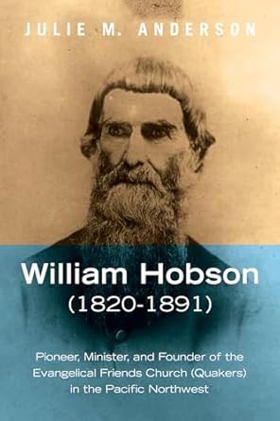
"William Hobson, a staunch nineteenth-century Quaker minister and determined follower of Jesus Christ, was shaped by revival, Quaker history, and his Friends upbringing. As a young adult he left his home state of North Carolina for the Iowa frontier where he honed his God-given leadership skills while shepherding the pioneer congregation at Honey Creek. After two decades in Iowa, Hobson received a mid-life call from God to establish a new missions-focused Quaker community somewhere on the West Coast. Following an extensive search for the perfect location, Hobson eventually chose Newberg, Oregon, and Quaker influence in the region quickly spread, culminating in the organization of the Evangelical Friends Church (Quakers) in the Pacific Northwest. Hobson's lifelong determination to follow God continues to serve as a godly example inspiring us to likewise dedicate our lives to God's kingdom purposes"-- Back cover xvii, 262 pages : illustrations (black and white) ; 23 cm CIRC [ 0 ]
|
2021 |