Douglas County County
The county was created out of Lincoln County on November 28, 1883 and is named for American statesman Stephen A. Douglas.
Mapped Location
Douglas County: The mapped location is an approximation and should not be used for navigation or wayfinding.
Information
General information on Douglas County
- Feature Type: County
- County Seat: Town of Waterville
- Established: Wednesday, November 28, 1883
Official, historical, colloquial and alternative toponyms for Douglas County
A brief list of names that this geographic feature has been named
| Name | Description |
|---|---|
| Douglas County | Official |
Origin Notes and History of Douglas County
References to Douglas County that document the origin of its place name
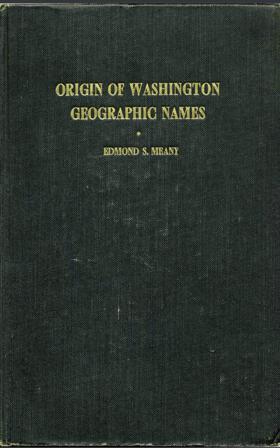
DOUGLAS COUNTY, created on November 28, 1883, and named in honor of Stephen A. Douglas. Lincoln County had been created and named four days earlier showing how impartial were the pioneer legislators when bestowing such honors. In the western part of the county is a town which was named Douglas in 1884 by Ole Rudd in honor of the new county's name. (M. E. Hatcher, in Names MSS, Letter 526.)
Related Catalog Titles
A Bibliography for Douglas County, County
An illustrated history of the Big Bend country, embracing Lincoln, Douglas, Adams, and Franklin counties, state of Washington by Richard F. Steele , Arthur P. Rose
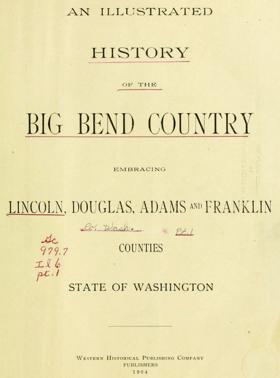
Published in 1904, this comprehensive volume documents the pioneer settlement, agricultural development, and civic formation of the Columbia River's Big Bend region in eastern Washington. A keen insight drawn from the text is how the seemingly barren, arid landscape was rapidly transformed into a highly lucrative wheat-producing powerhouse through the advent of dry farming techniques and the critical expansion of railroad infrastructure. The authors chronicle this dramatic economic and cultural shift across Lincoln, Douglas, Adams, and Franklin counties, detailing their transition from harsh frontier to thriving agricultural communities. Furthermore, the book serves as an invaluable genealogical archive by providing extensive biographical sketches of the resilient early settlers who drove this remarkable regional transformation.
xxiv, 1024 pages : plates, portraits ; 31 cm
ONLINE CIRC [ 2 ]
Douglas County
- Alstown
- Appledale
- Baird (historical)
- Beebe
- Brandts Landing
- City of Bridgeport
- Broadway
- Crown Point Vista
- Douglas
- Downing
- Dyer
- City of East Wenatchee
- Fairview
- Farmer
- Howard
- Jameson (historical)
- Lamoine
- Leahy
- Town of Mansfield
- Matthiesen (historical)
- McCarteney
- McLeans Orchard (historical)
- Mold
- Mud Spring
- Nilles Corner
- Okanogan City (historical)
- Orondo
- Osborne Corner
- Palisades
- Patterson (historical)
- City of Rock Island
- Rocky Butte
- Saint Andrews
- Saint Hubert (historical)
- Sims Corner
- Sunny Hill
- Supplee
- Terrace Park
- Touhey
- Voltage
- Town of Waterville
- Withrow
Political Boundaries
Last updated: 2017-06-30