Catalog of British Columbiana and Pacific Northwest Americana
Encyclopedia Cascadia Catalog contains book titles of mostly non-fiction Pacific Northwest Coast of North America Titles (primarially British Columbia, Idaho, Oregon and Washington State) in an easy-to-understand title catalog. If you see a link with this badge ONLINE CIRC it means that there is an online institution that provides free access to that title. In some cases there may be more than one institution hosting the title digitally.
| Catalog Title | Published |
|---|---|
|
Scoundrels of the Salish Sea tales of crime and punishment in Washington State's history by Carol Turner 
"From Orcas Island to Tacoma, and west to the Kitsap and Olympic Peninsulas, the American section of the Salish Sea serves as an abundant setting for a wild ride through Washington's history of crime and punishment. These stories came primarily from the pages of old newspapers--the earliest occurred in 1856, the latest in 1938. They are the tales of crimes and criminals, of the lawmen who hunted them down, and the lawyers and judges who threw them into our system of justice. They are also the stories of lost lives and shattered families. Most of these tales from Washington State's boisterous history generated enormous headlines at the time, and local newspapers sometimes played an outsize role in the unfolding drama. Other stories simply offer an irresistible cast of characters or a stunning twist in our justice system. Although the language and manners might seem quaint and occasionally absurd, and the iniquities and prejudices of the day were blatant, the details often show that, after all, not much has changed."--Amazon.com 160 pages, 16 unnumbered pages of plates : illustrations (some color), color map ; 24 cm. CIRC [ 1 ]
|
2020 |
|
Symbols signs and songs by Rick Just 
"The first book in the Speaking of Idaho Series, inspired by the popular blog of the same name. It's filled with Idaho history, loosely defined and quirky. Learn about Chicken Dinner Road, Grace Slick's tenuous connection to Idaho, why a governor didn't care for a beloved folk singer, the unique trick played by the Idaho giant salamander, where that Hot Rod Lincoln race really took place, and more useless but entertaining trivia about the Gem State"--Publisher 89 pages : illustrations ; 23 cm CIRC [ 1 ]
|
2020 |
|
Saving the Oregon Trail Ezra Meeker's last grand quest by Dennis M. Larsen 
"Much has been written about Ezra Meeker, most of it by Meeker himself. Despite the paper trail he left behind, no one has yet written his comprehensive biography. In this, the last of three volumes on Meeker, Larsen examines the pioneer's most enduring legacy-his grand and much publicized promotion of the Oregon Trail"-- Provided by publisher xi, 266 pages : illustrations, map, portraits ; 23 cm CIRC [ 0 ]
|
2020 |
|
Tahoma and its people a natural history of Mount Rainier National Park by Jeff Antonelis-Lapp 
"A natural and environmental history of Mount Rainier National Park and its watersheds and surrounding human communities, with emphasis on Native American people and their millennia-long association with the mountain"-- Provided by publisher 266 pages : illustrations (some color), maps ; 23 cm CIRC [ 0 ]
|
2020 |
|
The coals of Newcastle a hundred years of hidden history by Lucile Saunders McDonald, Richard McDonald, Newcastle Historical Society (Wash) 
From 1864 to 1963, Newcastle, Washington was the center of a busy coal mining industry producing nearly 11 million tons of coal from a crisscross of tunnels under present day Cougar Mountain, Coal Creek Natural Area and The Golf Club at Newcastle. There were two main town sites as well as large mining structures, buildings and homes. A railroad ran from the mines to Renton and Seattle, and there were roads extending to Lake Sammamish, May Valley and Lake Washington. Very little evidence of the once bustling coal mining town of more than 1000 people remains. This book tells the story of the mines, coal companies, transportation and the people of an almost forgotten era. xii, 172 pages : illustrations (some color), maps (some color), portraits (some color) ; 28 cm CIRC [ 0 ]
|
2020 |
|
Vancouver's women in blue trailblazers of the Vancouver Police Department, 1904-1975 by Carolyn J. Daley 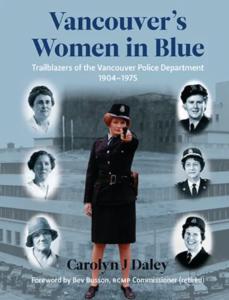
Women in Blue is a comprehensive history of women in the VPD from 1904 (as it turns out) through 1975. For decades, VPD history noted that the first females were hired in 1912, but it turns out four matrons were hired between 1904 and 1912. The matrons performed many of the same duties as the police women who were hired in 1912. 266 pages : illustrations (some colour), portraits ; 28 cm CIRC [ 0 ]
|
2020 |
|
A great revolutionary wave women and the vote in British Columbia by Lara Campbell 
"British Columbia is often overlooked in the national story of women's struggle for political equality. This book rights that wrong. A Great Revolutionary Wave follows the propaganda campaigns undertaken by suffrage organizations and traces the role of working-class women in the fight for political equality. It demonstrates the connections between provincial and British suffragists, and examines how racial exclusion and Indigenous dispossession shaped arguments and tactics for enfranchisement. Lara Campbell rethinks the complex legacy of suffrage and traces the successes and limitations of women's historical fight for political equality. That legacy remains relevant today as Canadians continue to grapple with the meaning of justice, inclusion, and equality."-- Provided by publisher 310 pages : illustrations ; 23 cm. CIRC [ 0 ]
|
2020 |
|
The Birdcages British Columbia's First Legislative Buildings, 1859-1957 by Robert Ratcliffe Taylor 
Revealing a little-known chapter in the history of Victoria, British Columbia, The Birdcages, the province's first legislative buildings, were built 1859-1864, the formative, tumultuous time of the Gold Rushes. Constructed on the site of the present Legislature, they were built amid controversy and derided for their style. The brainchild of Governor James Douglas, they resembled, according to journalist/politician Amor de Cosmos, "something between a Dutch toy and a Chinese pagoda." Readers will discover how civil servants and politicians felt about them as a workplace and what the general public thought about them as civic architecture. The career of their designer, the mysterious Hermann Otto Tiedemann, one of Victoria's vivid early "characters," is recounted as are the contributions of local contractors and tradesmen. The site of events of national importance until their demise in 1898, the Birdcages reflected the history, character, and heritage of Victoria and played an important role in the developing political traditions of the province and the young Dominion of Canada. A place for political demonstrations and community celebrations, the House of Assembly was where the MLAs debated joining Confederation, granting the vote to women, and excluding Asian immigrants. Based on personal memoirs and letters, government documents, photographs and plans, this book will interest both students and adults, history buffs and professional historians CIRC [ 0 ]
|
2020 |
|
On their own terms true stories of trailblazing women of Vancouver Island by Haley Healey 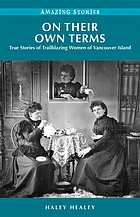
"A fascinating collection of concise stories about twenty-one courageous, independent, and diverse women who shaped the history of Vancouver Island. From the lush rainforest of Clayoquot Sound to the bustling city streets of Victoria, Vancouver Island has been home to an astounding number of inspiring women. On Their Own Terms: True Stories of Trailblazing Women of Vancouver Island celebrates the achievements of twenty-one amazing heroines working in multiple fields, from world-famous artists to social activists to groundbreaking scientists and quietly defiant labourers. The diverse women in this engaging new collection include: - pioneer and midwife Tuwa 'hwiye Tusium Gollelim, Mary Ann Gyves; - world-renowned algae botanist Josephine Tilden; - undiscovered aviatrix Lilian Bland; - Vancouver Island's first African-Canadian teacher, Emma Stark; and - entrepreneur and bounty hunter Ada Annie Rae-Arthur, better known as Cougar Annie. On Their Own Terms will delight and empower anyone looking for true stories of nineteenth- and twentieth-century women who confronted uncertainty, challenged gender norms, and excelled in their respective vocations. Whether you are an entrepreneur, an educator, a rebellious spirit, or an armchair adventurer, these incredible women who thrived on Vancouver Island will captivate you."-- Provided by publisher 141 pages : illustrations ; 22 cm. CIRC [ 0 ]
|
2020 |
|
Courage to speak honouring ancestors voices by Siyamtelot 
Courage to Speak shares the story of the early efforts of a handful of Elders to develop a written form of their Halq'emeylem language that could easily be learned. Working with Brent Galloway, a trained linguist, the Coqualeetza Elders adopted a modified and illustrated alphabet, recorded thousands of words and created a dictionary. Their early curriculum work presented experiential teaching methods and rusulted in publication of seven teaching stories based on traditional life experiences and knowledge. Capturing the experience of three strong Elders - Qwe'et'osiya Nancy Joe Phillips, Siyamiya Amelia Aleck Douglas and Xwiy'alemot Matilda Jackson Gutierrez influenced by leaders in Sto:lo communities in the upper Fraser River, these stories will entertain and inspire today's generations of teachers and learners 147 pages : illustrations, portraits ; 25 cm CIRC [ 0 ]
|
2020 |
|
Paradise won the struggle to create Gwaii Haanas National Park Reserve by Elizabeth May 
Originally published in 1990, Paradise Won has been updated and details the epic 12-year struggle to stop logging in the unique global ecosystem referred to as “Canada’s Galapagos.” Gwaii Haanas National Park Reserve is located in the southernmost part of Haida Gwaii (formerly known as the Queen Charlotte Islands), 130 kilometres off the mainland of British Columbia, Canada. Gwaii Haanas protects an archipelago of 138 islands in the territory of the Haida people, who have lived in Haida Gwaii for well over 14,000 years. From the 1970s through the early 1980s, plans to expand logging in the area led to the first concerted efforts to protect Gwaii Haanas and – in 1985 – the Haida Nation created the “Haida Heritage Site.” In spite of efforts to protect the landscape, logging continued and resulted in a prolonged legal and political battle. In 1987, logging finally ended when the governments of Canada and British Columbia signed the South Moresby Memorandum of Understanding, which safeguarded the area and permitted shared stewardship, treating the unique marine and terrestrial environments as though they were a national park, though many land claims were still outstanding. This updated edition of Paradise Won includes a new foreword by the author and will bring back into focus this remarkable story of the power and importance of Indigenous rights and how activism can spur average citizens to action in order to fight climate change and protect fragile ecosystems everywhere. 326 pages : color illustrations, map ; 23 cm CIRC [ 0 ]
|
2020 |
|
Legacy of trees purposeful wandering in Vancouver's Stanley Park by Nina Shoroplova 
"An engaging, informative, and visually stunning tour of the numerous native, introduced, and ornamental tree species found in Vancouver's Stanley Park, combining a wealth of botanical knowledge with a fascinating social history of the city's most celebrated landmark"-- Provided by publisher x, 278 pages : illustrations (chiefly colour), colour map ; 23 cm CIRC [ 0 ]
|
2020 |
|
Step into wilderness a pictorial history of outdoor exploration in and around the Comox Valley by Deborah Griffiths , Christine Dickinson , Judy Hagen , Catherine Siba , Merrie-Ellen Wilcox , Courtenay and District Museum (Issuing body) 
"The spectacular landscapes in and surrounding the Comox Valley on Vancouver Island have long shaped the lives of the valley's diverse inhabitants. From expansive shorelines to snowy mountain peaks, the region contains a wide variety of attractions to lure people over their thresholds for sustenance, recreation and survival, including such landmarks as Forbidden Plateau, Paradise Meadows, Comox Glacier, Mt. Washington and Miracle Beach. Step into Wilderness features never-before-seen photos from the Courtenay and District Museum collection, showcasing the growing community's varied interactions with the wilderness they inhabit, from early hiking and skiing expeditions to encounters with wildlife, afternoon tea in the wilderness, beach races and early outdoor activity clubs. The collection also explores the ways in which inhabitants have altered the landscape, including K'omoks Bay fish traps and stump blasting to clear fields. These unique and arresting photos are complemented by equally engaging accounts of individuals surviving and thriving in the midst of natural beauty and great devastation, including survivors of the great fire of 1922 and pioneer skiers on Forbidden Plateau during the Great Depression. More than a collection of beautiful photos, this collection illustrates a community's evolving relationship with the natural wonders surrounding it, as well as the emergence of outdoor exploration on Vancouver Island."-- Provided by publisher 208 pages : illustrations (some colour), portraits ; 29 cm CIRC [ 0 ]
|
2020 |
|
Balancing Bountiful what I learned about feminism from my polygamist grandmothers by Mary Jayne Blackmore 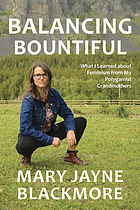
"As the daughter of Mormon leader Winston Blackmore, Mary Jayne Blackmore grew up within the closed-off polygamist community of Bountiful, BC. She spent her younger years riding ponies, raising pet lambs and playing in the hay in the Old Barn, under the constant shadow of religious fanaticism, doomsday preparation and an instilled fear of the world outside of Mormonism. In 2017 her father was charged and convicted of practicing polygamy, splitting the community in two and further inciting the media sensationalism and worldwide criticism that had always surrounded Bountiful. As the world she had always known imploded, Mary Jayne was forced to redefine her faith, family and womanhood for herself. Today, through her work and her personal exploration of feminism, Mary Jayne is helping to heal a broken community, one that she watched turn from safe and loving to angry, arrogant and resentful. She is also building her own place in the world--as a teacher, mother, writer and educated woman--and she has managed to retain loving bonds with her family, including her father. From a childhood in an idyllic but sheltered community to early adulthood in an arranged marriage, ensuing divorce, and eventual return to Bountiful, Bridging Bountiful is Mary Jayne's journey of coming of age and coming to terms with her background as she strives to answer the question: What is the right kind of family, the right kind of woman and the right kind of feminist?"-- Provided by publisher 319 pages : back and white illustration ; 23 cm CIRC [ 0 ]
|
2020 |
|
Yellow Wolf, his own story by Yellow Wolf, Lucullus Virgil McWhorter 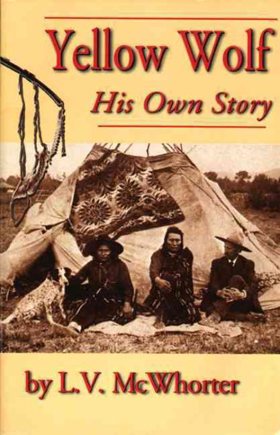
The Nez Perce Indian War was the outstanding front-page story in American newspapers during the late summer of 1877. Chief Joseph's supposedly impossible retreat from Idaho into Montana across the impregnable Bitterroots was a piece of military strategy so spectacular as to elicit comparisons with the greatest of Napoleon's maneuvers. It is fitting that Yellow Wolf, the last great Nez Perce warrior, should be the one to reveal the entire history of the Nez Perce revolt against oppression, their ultimate gesture against the loss of their immemorial homeland, as it culminated in this dramatic struggle. In addition to Yellow Wolf's day-by-day account of the entire war, this volume includes a special appendix of more than a dozen eye-witness narratives by Indians who witnessed the decisive battle of the Big Hole 328 pages, 35 unnumbered pages of plates : illustrations, map, portraits ; 24 cm CIRC [ 0 ]
|
2020 |
|
Remote finding home in the Bitterroots by Debbie Lee 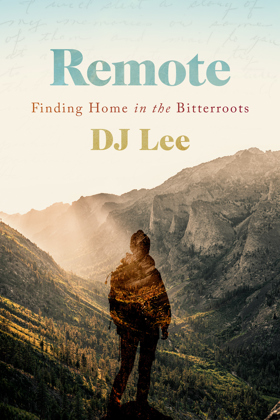
"When DJ Lee's dear friend vanishes in the vast Selway-Bitterroot Wilderness of Idaho and Montana, she travels there to seek answers. The journey unexpectedly brings to an end her fifteen-year quest to uncover the buried history of her family in this remote place. Although Lee doesn't find all the answers, she comes away with a penetrating memoir that weaves her present-day story with past excursions into the region, wilderness history, and family secrets. As she grapples with wild animal stand-offs, bush plane flights in dense fog, raging forest fires, and strange characters who have come to the wilderness to seek or hide, Lee learns how she can survive emotionally and how the wilderness survives as an ecosystem. Her growing knowledge of the life cycles of salmon and wolverine, the regenerative role of fire, and Nimíipuu land practices helps her find intimacy in this remote landscape. Skillfully intertwining history, outdoor adventure, and mystery, Lee's memoir is an engaging contribution to the growing body of literature on women and wilderness and a lyrical tribute to the spiritual connection between people and the natural world"-- Provided by publisher 204 pages : illustrations ; 23 cm CIRC [ 0 ]
|
2020 |
|
The collected poems of Ada Hastings Hedges by Ada Hastings Hedges , Alan Contreras , Ulrich H. Hardt , Ingrid Wendt 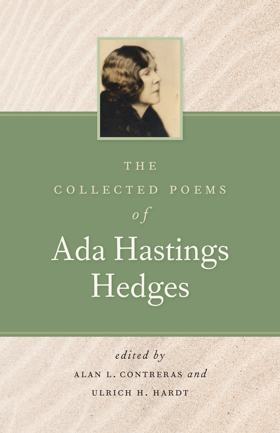
"Although for the most part forgotten today, Ada Hastings Hedges was among Oregon's foremost mid-twentieth-century poets. Famous in her lifetime, she was best known for her superb poems set in Oregon's high desert, which offer a fascinating counterpoint to C.E.S. Wood's seminal The Poet in the Desert. Except for a twelve-year sojourn in southeastern Oregon and two years in Los Angeles where her physician-husband served in the City Health Department, Hedges lived in Portland from 1912 until her death in 1980. She was assistant editor at Binfords and Mort Publishers and a supervising editor in the Works Progress Administration. She taught briefly at Warner Pacific College in the 1960s. Hedges wrote in a style notable for precision, clarity, and smoothness of line. More than half of her poems in this collection are sonnets. A poet of the city as well as the desert, her work offers a compelling perspective on mid-century Portland life. In 1933 she published her only book, Desert Poems. That collection is reprinted here in its entirety, along with scores of additional poems published in a wide variety of venues, making this the first comprehensive collection of Hedges's work. A detailed introduction by the editors and annotations to the text provide information about revisions, publication dates, and notable features. Also included is an essay by Hedges asking "Can Poetry Be Taught?" In her afterword, Oregon poet Ingrid Wendt writes of her admiration for Hedges's "fierceness of spirit, lack of sentimentality, and complex vision," accompanied by her "dogged determination to keep 'dreaming beauty from every land'." For readers interested in women's literature, Pacific Northwest poetry, and the literature of Eastern Oregon, this volume reintroduces a compelling regional voice"-- Provided by publisher xvi, 147 pages : illustrations, portraits ; 22 cm. CIRC [ 0 ]
|
2020 |
|
Struggle on the North Santiam power and community on the margins of the American West by Bob H. Reinhardt 
"A sixty-mile forested corridor dotted with small towns stretching from the gently sloped farmlands of the Willamette Valley to the Cascade mountains, Oregon's North Santiam Canyon is like many other marginalized places in the American West. Its residents have long sought to exercise limited power in the face of real and exaggerated external forces: global economic systems, cultural power emanating from larger cities, and political forces in the form of state and federal government agencies. Struggle on the North Santiam examines how these Oregonians have responded to, interacted with, and sometimes gotten the better of such external forces. In this deeply researched account, historian Bob H. Reinhardt connects the North Santiam Canyon's history to that of the Pacific Northwest and the United States more broadly. Readers will learn about specific events that illuminate famous and infamous themes in the region's history: railroad development as seen through the failed dreams of the Oregon and Pacific Railroad, federal land scams in the Oregon Land Fraud Trails of the early twentieth century, the causes and consequences of mid-century river development projects like Detroit Dam, the post-war booms and busts of the timber industry, the spotted owl/ancient forest debate in the 1980s and 1990s, and the promises and perils of Oregon's recreational tourism economy. From nineteenth-century interactions between Native and non-Native peoples to the changing fortunes of the timber industry and questions about economic and environmental sustainability in the twenty-first century, the book offers important insights into power dynamics in small communities and marginal places. Struggle on the North Santiam will be of interest to scholars of the American West and thoughtful readers interested in Oregon and Pacific Northwest history"-- Provided by publisher x, 222 pages : illustrations, maps ; 23 cm CIRC [ 0 ]
|
2020 |
|
Storm beat a journalist reports from the Oregon coast by Lori Tobias 
"Journalist Lori Tobias arrived on the Oregon Coast in 2000. After freelancing from Newport for several years, she signed on to the Oregonian as a stringer covering the coast from Florence to Astoria; later she would be hired as a staff writer responsible for the entirety of Oregon's coast-one person for more than three hundred miles. This meant long hours, being called out for storms in the middle of the night (and in dangerous conditions), driving hundreds of miles in a day if stories called for it. The Oregon Coast is a rugged, beautiful region. Separated from the state's population centers by the Coast Range, it is a land of small towns reliant primarily on fishing and tourism, known for its dramatic landscapes and dramatic storms. Many of the stories Tobias covered were tragedies: car crashes, falls, drownings, capsizings. And those are just the accidents; Tobias covered plenty of violent crimes as well. But her stories also include more lighthearted moments, including her own experiences learning to live on and cover the coast. Tobias's story is as much her own as it is the coast's; she takes the reader through familiar beats of life (regular trips back east as her parents age), the decline of journalism in the twenty-first century, and the unexpected (and not entirely glamorous) experiences of a working reporter-such as a bout of vertigo after rappelling from a helicopter. Ultimately, Tobias tells a compelling story of a region that many visit but few truly know"-- Provided by publisher xviii, 181 pages : illustrations ; 23 cm CIRC [ 0 ]
|
2020 |
|
Rough house a memoir by Tina Ontiveros 
"A story of growing up in turmoil, Rough House recounts a childhood divided between a charming, mercurial, abusive father in the forests of the Pacific Northwest, and a mother struggling with poverty in The Dalles. It is also a story of generational trauma, especially for the women - a story of violent men and societal restrictions, of children not always chosen, and frequently raised alone. Tracing her childhood through the working class towns and forests of Washington and Oregon, Ontiveros explores themes of love and loss, parents and children, and her own journey to a different kind of adulthood"-- Provided by publisher 187 pages : illustrations ; 23 cm CIRC [ 0 ]
|
2020 |
|
Hops historic photographs of the Oregon hopscape by Kenneth I. Helphand 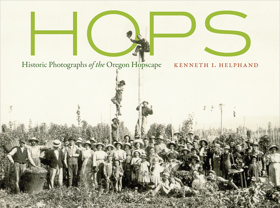
"Hops: Historic Photographs of the Oregon Hopscape is a visual dive into the physical presence of a plant that many people discuss but few could identify. Oregon was once the leading producer of hops in the United States (a title now held by Washington). Kenny Helphand has scoured archives across the state to bring together historic photos of hop pickers in the late nineteenth and early twentieth centuries. Hops brings to life pickers of all backgrounds, through different eras of agricultural practice. Here are children, nuns, families, immigrants, and college students in fields, hop driers, and tent camps. The photos range from the candid to the highly professional - including five images from Dorothea Lange's iconic Farm Service Administration work. The 85 high quality photos are accompanied by captions that provide, variously, historical background, selections from oral histories, and visual guidance. A historical essay gives interested readers a short overview of the plant's history and the world of hop growing and picking"-- Provided by publisher x, 181 pages : illustrations (some color), map ; 21 x 26 cm CIRC [ 0 ]
|
2020 |
|
The view from Cascade Head lessons for the biosphere from the Oregon coast by Bruce A. Byers , Nora Sherwood (Illustrator) 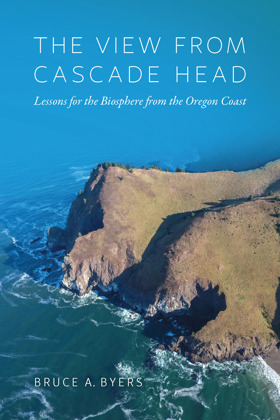
Cascade Head, on the Oregon Coast between Lincoln City and Neskowin, has stunning ocean views, abundant recreational opportunities, and a rich history of ecological research and conservation. Its landscape and seascape support a multitude of species, some of which are threatened, such as the Oregon silverspot butterfly, spotted owl, and coho salmon. In The View from Cascade Head, Bruce Byers tells the fascinating story of this special place and the people who have worked to protect it. Drawing from his lifelong relationship with the Oregon Coast and recent experience living and working at Cascade Head, Byers weaves together personal observations, ecological science, and the history and philosophy of nature conservation in a series of interconnected essays. Cascade Head is Oregon’s only biosphere reserve, part of the international network of biosphere reserves coordinated by UNESCO. Biosphere reserves around the world are laboratories for understanding how humans affect ecosystems and models for how we can heal the human-nature relationship. The View from Cascade Head illustrates three main lessons: the actions and efforts of committed individuals can make a difference; ecological mysteries still abound despite decades of scientific research; and our worldviews—how we think about our place in nature—shape our individual and collective effect on the ecosystems we inhabit. Byers helps us understand how these lessons apply everywhere and can lead us toward a more sustainable relationship with our home planet. 223 pages : illustrations, map ; 23 cm CIRC [ 0 ]
|
2020 |
|
A place for inquiry, a place for wonder the Andrews Forest by William G. Robbins 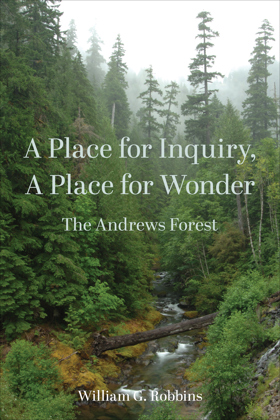
"The H.J. Andrews Experimental Forest is a slice of classic Oregon: due east of Eugene in the Cascade Mountains, the Andrews Forest comprises almost 16,000 acres of the Lookout Creek watershed. The landscape is steep, with hills and deep valleys and cold, fast-running streams. The densely forested landscape includes cedar, hemlock, and moss-draped ancient Douglas fir trees. One of eighty-one USDA experimental forests, the Andrews is administered cooperatively by the US Forest Service, Oregon State University, and the Willamette National Forest. While many Oregonians may think of the Andrews simply as a good place for a hike, research conducted there has profoundly reshaped Forest Service management policies and contributed to our understanding of healthy forests"-- Provided by publisher xi, 233 pages ; illustrations, map, portraits ; 23 cm CIRC [ 0 ]
|
2020 |
|
Trees to know in Oregon and Washington by Edward C. Jensen (Author, Photographer), Charles R. Ross, Oregon State University Extension Service (Publisher) 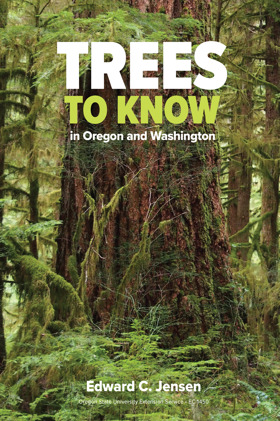
For 70 years, people have turned to one book to learn about Northwest trees: Trees to Know in Oregon. This new edition, retitled Trees to Know in Oregon and Washington, expands its scope to cover more territory and include more trees. The book was first published in 1950. Charles R. Ross, an Oregon State University Extension forester, wanted to introduce readers to the towering giants in their backyards. Since then, Edward C. Jensen has stewarded the publication through several more editions. This edition features several rare species native to southwest Oregon. It also updates scientific names and adds a new section on how Northwest forests are likely to be affected by changing climates. Since its initial publication, Trees to Know has become a mainstay for students, gardeners, small woodland owners and visitors to the Pacific Northwest 172 pages : color illustrations, color maps ; 23 cm. CIRC [ 0 ]
|
2020 |
|
Good time girls of the Pacific Northwest a red-light history of Washington, Oregon, and Alaska by Jan MacKell Collins 
As more and more pioneers braved the harsh, unforgiving conditions of moving West, prostitution grew and flourished within the mining camps, small towns, and cities of the nineteenth-century Pacific Northwest. Oregon, Alaska, and Washington State had their share of working girls and madams like Nellie Curtis and Klondike Kate who remain notorious celebrities in the annals of history, but Collins also includes the stories of lesser-known women whose roles in this illicit trade help shape our understanding of the American West xiv, 257 pages : illustrations ; 23 cm CIRC [ 0 ]
|
2020 |