Catalog of British Columbiana and Pacific Northwest Americana
Encyclopedia Cascadia Catalog contains book titles of mostly non-fiction Pacific Northwest Coast of North America Titles (primarially British Columbia, Idaho, Oregon and Washington State) in an easy-to-understand title catalog. If you see a link with this badge ONLINE CIRC it means that there is an online institution that provides free access to that title. In some cases there may be more than one institution hosting the title digitally.
| Catalog Title | Published |
|---|---|
|
Summer of promise Victoria 1864-1914 by Derek Pethick 
In 1864 Governor James Douglas handed over his office to Arthur Edward Kennedy, closing an era in Vancouver Island's history and ushering in a period of growth and development. The optimism felt by its people was to a large extent justified; the ensuing years were to bring stability, prosperity and many changes. In Summer of Promise, a sequel to Victoria: The Fort, the author chronicles the years from 1864 to the outbreak of World War One in 1914, seeing them through the eyes of the inhabitants of the city which was the capital of the colony and later of the province. Despite its geographical isolation, its population remained well aware of world events: the Boer War, the death of Queen Victoria, the ascension of Edward VII to the throne and the rising threat of the German navy were as much talked about as the waning of many traditional religious beliefs and the enfranchisement of women. Nearer home, these were important years for Victoria as the colony voted to join the Dominion of Canada, the railroad connected the new province with the rest of the country, and the "All Red Route" linked it by steamship to Australia and the Orient. Motorcars, aeroplanes, telephones, the telegraph and electricity brought British Columbia into the twentieth century. From the momentous to the mundane, and sometimes even to the ridiculous, Derek Pethick documents an era in Victoria's history. Summer of Promise is enlightening, fascinating and enjoyable reading. 191 pages, 8 unnumbered leaves of plates : illustrations ; 23 cm CIRC [ 1 ]
|
1980 |
|
Stubborn twig three generations in the life of a Japanese American family by Lauren Kessler, Ted Kulongoski 
To celebrate Oregon's 150th birthday, the Oregon Library Association has chosen one book for all Oregonians to read: Stubborn Twig. Lauren Kessler's award-winning book, the selection for the statewide Oregon Reads program, is a classic story of immigrants making their way in a new land. It is a living work of social history that rings with the power of truth and the drama of fiction, a moving saga about the challenges of becoming an American. Masuo Yasui traveled from Japan across the other Oregon Trail — the one that spanned the Pacific Ocean — in 1903. Like most immigrants, he came with big dreams and empty pockets. Working on the railroads, in a cannery, and as a houseboy before settling in Hood River, Oregon, he opened a store, raised a large family, and became one of the area's most successful orchardists. As Masuo broke the race barrier in the local business community, his American-born children broke it in school, scouts and sports, excelling in most everything they tried. For the Yasuis' first-born son, the constraints and contradictions of being both Japanese and American led to tragedy. But his seven brothers and sisters prevailed, becoming doctors, lawyers, teachers, and farmers. It was a classic tale of the American dream come true — until December 7, 1941, changed their lives forever. The Yasuis were among the 120,000 people of Japanese ancestry along the West Coast who were forced from their homes and interned in vast inland "relocation camps." Masuo was arrested as a spy and imprisoned for the rest of the war; his family was shamed and broken. Yet the Yasuis endured, as succeeding generations took up the challenge of finding their identity as Americans. Stubborn Twig is their story — a story at once tragic and triumphant, one that bears eloquent witness to both the promise and the peril of America. xvi, 308 pages : illustrations, portraits ; 23 cm CIRC [ 0 ]
|
2008 |
|
Struggle on the North Santiam power and community on the margins of the American West by Bob H. Reinhardt 
"A sixty-mile forested corridor dotted with small towns stretching from the gently sloped farmlands of the Willamette Valley to the Cascade mountains, Oregon's North Santiam Canyon is like many other marginalized places in the American West. Its residents have long sought to exercise limited power in the face of real and exaggerated external forces: global economic systems, cultural power emanating from larger cities, and political forces in the form of state and federal government agencies. Struggle on the North Santiam examines how these Oregonians have responded to, interacted with, and sometimes gotten the better of such external forces. In this deeply researched account, historian Bob H. Reinhardt connects the North Santiam Canyon's history to that of the Pacific Northwest and the United States more broadly. Readers will learn about specific events that illuminate famous and infamous themes in the region's history: railroad development as seen through the failed dreams of the Oregon and Pacific Railroad, federal land scams in the Oregon Land Fraud Trails of the early twentieth century, the causes and consequences of mid-century river development projects like Detroit Dam, the post-war booms and busts of the timber industry, the spotted owl/ancient forest debate in the 1980s and 1990s, and the promises and perils of Oregon's recreational tourism economy. From nineteenth-century interactions between Native and non-Native peoples to the changing fortunes of the timber industry and questions about economic and environmental sustainability in the twenty-first century, the book offers important insights into power dynamics in small communities and marginal places. Struggle on the North Santiam will be of interest to scholars of the American West and thoughtful readers interested in Oregon and Pacific Northwest history"-- Provided by publisher x, 222 pages : illustrations, maps ; 23 cm CIRC [ 0 ]
|
2020 |
|
Strong Winds and Widow Makers workers, nature, and environmental conflict in pacific northwest... timber country by STEVEN C. BEDA 
Often cast as villains in the Northwest's environmental battles, timber workers in fact have a connection to the forest that goes far beyond jobs and economic issues. Steven C. Beda explores the complex true story of how and why timber-working communities have concerned themselves with the health and future of the woods surrounding them. Life experiences like hunting, fishing, foraging, and hiking imbued timber country with meanings and values that nurtured a deep sense of place in workers, their families, and their communities. This sense of place in turn shaped ideas about protection that sometimes clashed with the views of environmentalists--or the desires of employers. Beda's sympathetic, in-depth look at the human beings whose lives are embedded in the woods helps us understand that timber communities fought not just to protect their livelihood, but because they saw the forest as a vital part of themselves. 287 pages : illustrations ; 23 cm. CIRC [ 0 ]
|
2022 |
|
Strathcona a history of British Columbia's first provincial park by Wallace Baikie, Rosemary Phillips
|
1986 |
|
Strathcona Vancouver's first neighbourhood by John Atkin 
Authored by local historian John Atkin, Strathcona: Vancouver's First Neighbourhood chronicles the vibrant history, architectural evolution, and immigrant roots of Vancouver's oldest residential district. The book traces how the working-class enclave—sandwiched between industrial waterfronts and the city's commercial core—became a diverse melting pot of European, Asian, and Indigenous residents who built tight-knit community networks in the shadow of urban expansion. Through archival photographs and detailed municipal records, the text highlights the fierce neighborhood activism that repeatedly saved the area from twentieth-century freeway demolition and industrial rezoning. A keen insight drawn from the work is how grassroots architectural preservation serves as a radical form of working-class self-defense; by fighting to protect their modest wooden homes and walkable streets from municipal "renewal" projects, Strathcona residents proved that neighborhood history and vernacular architecture are vital bulwarks against the erasure of marginalized communities by corporate and bureaucratic urban planning. 93 pages : illustrations ; 24 cm CIRC [ 1 ]
|
1994 |
|
Strangers in blood fur trade company families in Indian country by Jennifer S. H. Brown 
Describes the social world of the traders in the 18th and 19th centuries. Examines differences between the North West Company and the Hudson's Bay Company and their effects on Indian-white relations xxiii, 255 pages, 6 unnumbered leaves of plates : illustrations (some color) ; 24 cm CIRC [ 0 ]
|
1980 |
|
Strand an odyssey of Pacific Ocean debris by Bonnie Henderson 
"In Strand, travel writer and amateur naturalist Bonnie Henderson traces the stories of wrack washed up on the mile-long stretch of Oregon beach she walked has regularly for more than a decade." "Henderson's writing conveys both a keen attention to the specifics of place and an expansive field of vision. The burned hull of a long-abandoned fishing boat, a glass fishing float, the egg case of a skate, a beached minke whale, an unusual number of dead murres, and an athletic shoe are the starting points for essays that reach across the globe. Henderson takes readers from Coos Bay, Oregon, to Vancouver, B.C.; from the currents circulating through the North Pacific to the "Eastern Garbage Patch" between Hawaii and California; from China's Shenzhen Special Economic Zone to fishing villages on the coast of Hokkaido, Japan." "As Henderson uncovers these odysseys, she meditates on current issues, events, and phenomena - oil spills, the proliferation of ocean debris, international trade, the evolution of sharks, and the survival prospects of whales. The characters that emerge range from the world's leading minke whale researchers to the crew of a Coast Guard airbase to a small-town salvager of wrecked fishing boats, glued to the radio and praying for disaster." "Strand offers a thoughtful look at the surprisingly far-ranging journeys of what washes up on our Pacific shores."--Jacket 216 pages : maps ; 23 cm CIRC [ 0 ]
|
2008 |
|
Storm beat a journalist reports from the Oregon coast by Lori Tobias 
"Journalist Lori Tobias arrived on the Oregon Coast in 2000. After freelancing from Newport for several years, she signed on to the Oregonian as a stringer covering the coast from Florence to Astoria; later she would be hired as a staff writer responsible for the entirety of Oregon's coast-one person for more than three hundred miles. This meant long hours, being called out for storms in the middle of the night (and in dangerous conditions), driving hundreds of miles in a day if stories called for it. The Oregon Coast is a rugged, beautiful region. Separated from the state's population centers by the Coast Range, it is a land of small towns reliant primarily on fishing and tourism, known for its dramatic landscapes and dramatic storms. Many of the stories Tobias covered were tragedies: car crashes, falls, drownings, capsizings. And those are just the accidents; Tobias covered plenty of violent crimes as well. But her stories also include more lighthearted moments, including her own experiences learning to live on and cover the coast. Tobias's story is as much her own as it is the coast's; she takes the reader through familiar beats of life (regular trips back east as her parents age), the decline of journalism in the twenty-first century, and the unexpected (and not entirely glamorous) experiences of a working reporter-such as a bout of vertigo after rappelling from a helicopter. Ultimately, Tobias tells a compelling story of a region that many visit but few truly know"-- Provided by publisher xviii, 181 pages : illustrations ; 23 cm CIRC [ 0 ]
|
2020 |
|
Stories of Richmond Beach growing up in Richmond Beach on Puget Sound in the 1930's and 40's by Norman R. Hansen , Barry W. Hansen 
"Think of the time when settlers came to the area north of Seattle. This forested area along scenic Puget Sound attracted those willing to work the land, including my ancestors in the early 1900s on both sides of my family. I grew up in Richmond Beach on the property settled by my great-grandfather Morton M. Anderson. Read these stories and think of the aroma of strawberries, freshly baked bread, linen on the clothesline, water from a pump, hay bales, leather saddles on horses, fresh salt air, cleanly cut lumber, a whiff of chickens, and a hint of Flamo. There are many pictures from our family to fill in the details"-- Publisher description x, 207 pages : illustrations ; maps ; portraits ; 23 cm CIRC [ 1 ]
|
2015 |
|
Stories from Riffe, Wash. by Buddy Rose 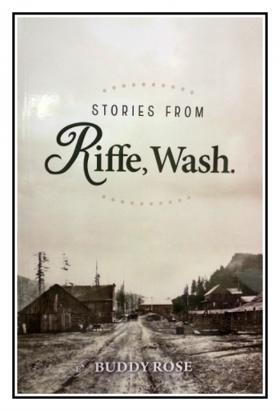
IN EARLY 1968, the gates of City of Tacoma's Mossyrock Dam on the Cowlitz River in Lewis County, Washington closed and the 23.5 mile long reservoir be- hind the dam began to fill, inundating the former town sites of Riffe, Nesika and Kosmos. Thus ended the short-lived history of a fertile valley that had first been settled in the 1880s and 1890s; mostly by people from Appalachia who came west looking for a better life. The town of Riffe was named after one of those early settlers, Floyd Riffe, who came to the area from West Virginia in 1893 with a group of about 60 people. Riffe established a post office, named after him, that would eventually serve about 1,500 people until they were all forced to sell their homes and land and leave the valley so the City of Tacoma could build their dam. Stories from Riffe, Wash, is a collection of narratives that recalls some of those peo- ple, how they lived and died, and what it was like in the valley that now lies deep beneath the waters of Riffe Lake. --From Backcover ix, 150 pages : illustrations ; 23 cm CIRC [ 1 ]
|
2013 |
|
Stirring up Seattle Allied Arts in the civic landscape by R. M. Campbell, Roger Schreiber (Illustrator) 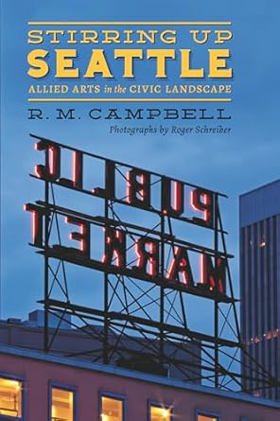
In the 1950s, the city of Seattle began a transformation from an insular, provincial outpost to a vibrant and cosmopolitan cultural center. As veteran Seattle journalist R. M. Campbell illustrates in Stirring Up Seattle: Allied Arts in the Civic Landscape, this transformation was catalyzed in part by the efforts of a group of civic arts boosters originally known as “The Beer and Culture Society.” This “merry band” of lawyers, architects, writers, designers, and university professors, eventually known as Allied Arts of Seattle, lobbied for public funding for the arts, helped avert the demolition of Pike Place Market, and were involved in a wide range of crusades and campaigns in support of historic preservation, cultural institutions, and urban livability. xxxv, 251 pages : illustrations ; 24 cm CIRC [ 0 ]
|
2014 |
|
Sticky wicket over 150 years of cricket on Vancouver Island by John A. Schofield 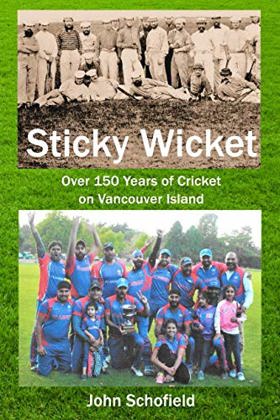
"British colonialism, US cultural influences and Canadian immigration policies - these and other forces in Canadian history have helped to shape the evolution of cricket on Vancouver Island. Declared to be the national sport of Canada in the mid-nineteenth century, and today one of the world's most widely played mass spectator sports, cricket has gone largely into the shadows in Canada. Yet the sport retains a committed player base, has become a symbol of Canadian multiculturalism, and has one of the most active cricket communities in the country on Vancouver Island. This in-depth review of a largely overlooked part of the island's social history should appeal not only to those involved in Vancouver Island cricket, but also to historians of sport, local history buffs and enthusiasts of the game beyond Vancouver Island."-- Amazon.ca web site xiii, 178 pages : illustrations ; 23 cm CIRC [ 0 ]
|
2019 |
|
Stewards of splendour a history of wildlife and people in British Columbia by Jennifer Bonnell , Royal British Columbia Museum (Publisher) 
"The subject of wildlife both unites and deeply divides British Columbians. From concern over dwindling orca populations to deeply political debates over hunting and harvesting, questions surrounding fish and wildlife harvest rights and methods, and the effects of industrial resource extraction, tourism, and residential development upon wildlife populations, have produced an atmosphere of conflict and distrust in BC. Spanning the deep history of human relationships with wildlife, from pre-contact Indigenous land stewardship to the present day, Stewards of Splendour explores the ways that government, Indigenous communities and stakeholder groups have sought to shape and deliver, or responded to the consequences of, wildlife management policies and practices and resource development activities in the province. Throughout, it emphasizes the circumstances and initiatives that made and continue to make BC different, from the astonishing diversity of our ecosystems to our unusually high proportion (over 94%) of public land while profiling instances of made-in-BC approaches. Drawing upon a rich body of historical, scientific and policy-related literature and over 80 interviews, Stewards of Splendour examines changing societal values around wildlife and the implications of these changes for wildlife managers today."-- Provided by publisher xxiv, 589 pages, 8 unnumbered pages of plates : illustrations (some color), map (some color) ; 23 cm CIRC [ 0 ]
|
2023 |
|
Stevens Pass the story of railroading and recreation in the North Cascades by JoAnn Roe 
A history of the massive undertaking required to build the railroads and roadways through the northern Cascades into the Seattle region. 191 pages : illustrations, maps ; 21 cm CIRC [ 1 ]
|
2013 |
|
|
1984 |
|
Stern-wheelers up Columbia a century of steamboating in the Oregon country by Randall V. Mills 
Jennie was different. Her wheels were astern, instead of port and starboard. Her rudders were close to the wheel. But she was the prize forerunner of a host of river favorites - the stern-wheelers - that were particularly adaptable to river sailing. The Jennie Clark was fast; she could cut swiftly through the rough waters of the Columbia River; she was narrow enough to skim around rocks and rapids. The story of her trips, and those of many of her successors, presents a nostalgic panorama of the adventurous days of the old Northwest, when steamboats and the men who captained them sailed their way into a new civilization. This is the first special account of steamboat navigation in the Columbia River country, and a comprehensive picture of the opening up and subsequent development of the Northwest. From the arrival of the little Beaver at Fort Vancouver in 1836 to the maiden voyage of the 219-foot stern-wheeler Portland in 1947, this entertaining book offers many facets, including the historical conflicts with Indians, the development of the wheat fleet, famous ship disasters, and accounts of the spectacular ships that ran the rapids. The region covered includes all the rivers and lakes of the Northwest except the Puget Sound area. There are tales, too, of the men who manned these ships - of Captain J. C. Ainsworth, who learned steamboating on the Mississippi; of Ben Holladay, far-famed in stagecoach history, who came north to carve his niche in steamship transportation; of U. B. Scott, whose steamship system grew to huge proportions; of the men of the Oregon Steamship Navigation Company, and many others. There are few Jennies left. Boat enthusiasts should take note of the compact appendix listing all boats, with dates of construction, sizes, types, and details of their final dispositions. It is all here - rich in lore, in the grandeur and dynamism that characterizes the great Northwest itself. 212 pages : illustrations, maps ; 25 cm CIRC [ 1 ]
|
1947 |
|
Step into wilderness a pictorial history of outdoor exploration in and around the Comox Valley by Deborah Griffiths , Christine Dickinson , Judy Hagen , Catherine Siba , Merrie-Ellen Wilcox , Courtenay and District Museum (Issuing body) 
"The spectacular landscapes in and surrounding the Comox Valley on Vancouver Island have long shaped the lives of the valley's diverse inhabitants. From expansive shorelines to snowy mountain peaks, the region contains a wide variety of attractions to lure people over their thresholds for sustenance, recreation and survival, including such landmarks as Forbidden Plateau, Paradise Meadows, Comox Glacier, Mt. Washington and Miracle Beach. Step into Wilderness features never-before-seen photos from the Courtenay and District Museum collection, showcasing the growing community's varied interactions with the wilderness they inhabit, from early hiking and skiing expeditions to encounters with wildlife, afternoon tea in the wilderness, beach races and early outdoor activity clubs. The collection also explores the ways in which inhabitants have altered the landscape, including K'omoks Bay fish traps and stump blasting to clear fields. These unique and arresting photos are complemented by equally engaging accounts of individuals surviving and thriving in the midst of natural beauty and great devastation, including survivors of the great fire of 1922 and pioneer skiers on Forbidden Plateau during the Great Depression. More than a collection of beautiful photos, this collection illustrates a community's evolving relationship with the natural wonders surrounding it, as well as the emergence of outdoor exploration on Vancouver Island."-- Provided by publisher 208 pages : illustrations (some colour), portraits ; 29 cm CIRC [ 0 ]
|
2020 |
|
Stehekin, a valley in time by Grant McConnell 
Looks at the remote community of Stehekin in Washington's Cascade mountains and describes how a pioneering style of life has become more like that of the outside world 206 pages : map ; 24 cm CIRC [ 1 ]
|
1988 |
|
Stehekin glimpses of the past : a collection of early writings by Carol M. Stone (Compiler) 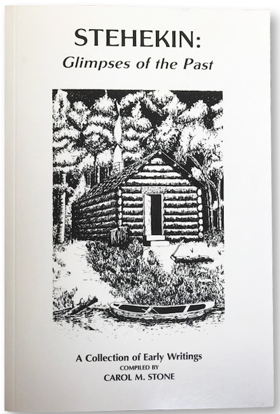
A rare collection of the early history of the Stehekin valley, head of Lake Chelan, in Washington’s North Cascades. Lively narratives describe adventures of early explorers with pack trains, and accounts of riding the first steam boats on Lake Chelan. Writing styles of the 1900’s paint vivid and enticing pictures of exciting journeys to the upper mining holds in Horseshoe Basin, the presence of Native Americans, and the influence of the railroad bringing visitors clear across the country to relax and recreate in glorious mountain surroundings. Republished by Stehekin Heritage, Carol Stone’s collection of stories are gathered from early local newspaper articles and explorer’s journals. For those that know and love Stehekin, or wish to know how settlement began in this remote community, Glimpses of the Past is a worthy compilation and reference of accurate history of the Chelan area. xi, 248 pages : illustrations, map, portrait ; 22 cm CIRC [ 1 ]
|
1983 |
|
Stehekin a wilderness journey into the Northern Cascades by William A. Bake, United States National Park Service
|
1977 |
|
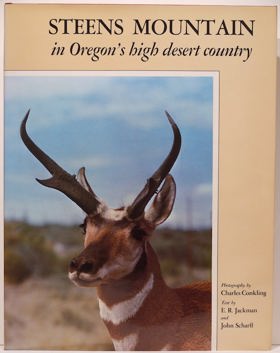
Steens Mountain in Oregon's high desert country by Charles Conkling, E. R. Jackman , John Scharff
|
1967 |
|
Steamer's wake by Jim Faber, Murray Morgan
|
1985 |
|
Steamer to Tacoma by Wilbur Thompson, Allen Beach
|
1963 |
|
Steamboats on Northwest rivers by Bill Gulick 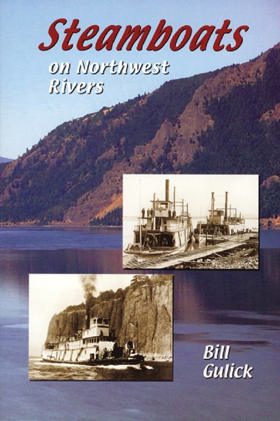
Before the Northwest sported trains and roads alongside its rivers, steamboats took the curious and the settlers as far inland as the water could take them. Gulick describes the boats and the people who plied the rivers from Idaho to Alaska in the early days of white settlement, focusing on the career of the irascible William Polk Gray, who turned from his aspirations to be a missionary medical man to become a skilled fresh-water mariner. Gray and only a few dozen others like him managed xviii, 248 pages : illustrations, map ; 23 cm CIRC [ 0 ]
|
2004 |