Catalog of British Columbiana and Pacific Northwest Americana
The Encyclopedia Cascadia Catalog indexes mostly non-fiction literature covering the Pacific Northwest coast of North America, with an emphasis on British Columbia, Idaho, Oregon, and Washington State.
| Catalog Title | Published |
|---|---|
|
San Juan Island by Mike Vouri , Julia Vouri, San Juan Historical Society 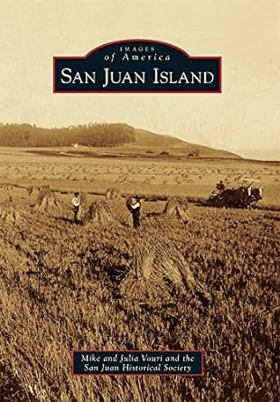
With sheltered harbors, open prairies, and secluded woodlands, San Juan Island has been a magnet for human habitation for thousands of years. Settlers and Indians sometimes intermarried, and many of their descendants remain to this day. San Juan Islanders of all generations have worked hard to preserve their home, thus maintaining a sense of place that is as evident today as it was when the first canoes came ashore 127 pages : illustrations, maps, portraits ; 24 cm. Non-circulating [ 1 ]
|
2010 |
|
Lopez Island by Susan Lehne Ferguson, Lopez Island Historical Society and Museum (Lopez Island, Wash) 
The story of Lopez Island is a story of community. Skilled, brave, generous people like Sampson Chadwick, Mother Brown, Captain Barlow, and Amelia Davis carved a spirited, nurturing community out of seaside wilderness. Homesteaders cleared forests, built farms, grew food, and raised large families, surviving then thriving together. The hamlets of Port Stanley, Richardson, and Lopez emerged, creating hubs with stores, post offices, and schools as well as thriving fishing, canning, and shipping industries. The community fostered education, music, writing, dances, chivarees, baseball, quilting, a birthday club, and grand Fourth of July celebrations. Living self-reliant lives while helping friends, neighbors, and newcomers, Lopezians created a unique community character that abides today 127 pages : chiefly illustrations, map ; 24 cm. Non-circulating [ 1 ]
|
2010 |
|
Vancouver exposed a history in photographs by Donald E. Waite 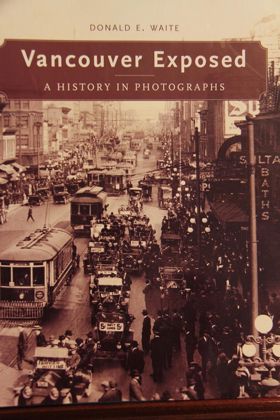
Vancouver has experienced many dramatic changes since its beginnings on the edge of the frontier. Once an almost inaccessible logging town, it has grown to be a major North American urban centre, and a jewel of the Pacific Rim. Within a mere century, it has metamorphosed from a little ventured rainforest to a thriving and cosmopolitan metropolis. This book tells the extraordinary story of that coming of age. 150 striking images, carefully reproduced, capture Vancouver in every phase of its growth. See the boomtown created by the coming of the railway. The land of mansions and motor car bought by the Roaring Twenties. The lean city of the Depression and the war years. The scene of intense urban expansion since the fifties. An entertaining chronicle, this Vancouver photo history is essential for every visitor and resident. 272 p. : ill. (some col.), maps, ports. ; 29 cm. Non-circulating [ 1 ]
|
2010 |
|
Legendary Lake Pend Oreille Idaho's wilderness of water by Jane Fritz, Kevin Davis, Hazel Hall, Francis Cullooyah 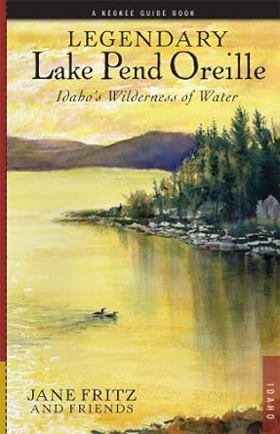
Experience Lake Pend Oreille, Idaho's wilderness of water. Sprawling 43 miles long with 111 miles of shoreline, Idaho's largest natural lake is truly awe-inspiring. At more than 1,100 feet deep, it's the fifth-deepest lake in the nation. During the last ice age, it was the nexus of the most cataclysmic floods ever to scour the planet. For the native Kalispel Indians, it was the cradle of creation. It was the site of the first trading post in Idaho, built in 1809 by vayageur David Thompson. The lake has also yielded the world-record Kamloops trout. Add the lake's spectacular setting amid three major ranges of the Rocky Mountains, and it's no wonder Lake Pend Oreille inspires such awe. This book captures the lake's incredible features with comprehensive guides to: - All public recreations sites for swimming, picnicking, camping and watercraft access - Resources and advice for boaters and sailors - Complete guide to over 30 hiking trails - Paddle routes for kayakers and canoeists Legendary Lake Pend Oreille is far more than a recreationist's directory. Rich with sketches about biology and botany, loaded with fascinating historical lore, and abundantly illustrated, this is a bible for Lake Pend Oreille ix, 406 pages : illustrations (some color), maps (1 folded color), portraits ; 23 cm Non-circulating [ 1 ]
|
2010 |
|
A guide to the Indian tribes of the Pacific Northwest by Robert H. Ruby, John A. Brown, Cary C. Collins, M. Dale Kinkade, Sean O'Neill 
This third edition includes the recent economic, political, and cultural developments that affect the native communities, as well as other contemporary issues such as Indian gaming and the Native American Graves Protection and Repatriation Act. All entries include information on tribal history, location, demographics, and cultural traditions xliv, 415 pages : illustrations, maps ; 24 cm. Non-circulating [ 1 ]
|
2010 |
|
Astoria an Oregon history by Karen L. Leedom 
The rest of the country is just beginning to discover Astoria, Oregon, that historic gem of a town at the mouth of the Columbia River west of Portland, and the oldest European-American settlement west of the Rockies. The author provides a chronological look dating back to the 1500s, including European exploration, Native American life, logging, fishing, Chinese laborers in the salmon industry, a giant cheese in the Civil War, Oregon’s first female surgeon, Victorian architecture, and valiant Coast Guard rescues. vi, 218 pages : illustrations, maps ; 23 cm Non-circulating [ 1 ]
|
2010 |
|
Oregon and the collapse of Illahee U.S. empire and the transformation of an indigenous world, 1792-1859 by Gray H. Whaley 
Modern western Oregon was a crucial site of imperial competition in North America during the formative decades of the United States. Whaley examines relations among newcomers and between newcomers and Native peoples--focusing on political sovereignty, religion, trade, sexuality, and the land--from initial encounters to Oregon's statehood. He argues that the process of Oregon's founding is best understood as a contest between the British empire and a nascent American one, with Oregon's Native people and their lands at the heart of the conflict xi, 303 pages : illustrations, maps ; 24 cm Non-circulating [ 1 ]
|
2010 |
|
Another way the river has taut true tales from the Northwest by Robin Cody , Brian Doyle, Oregon State University Press (Issuing body) 
A collection of Robin Cody's nonfiction writing, 1982-2008. Another Way the River Has collects Robin Cody’s finest nonfiction writings, many appearing for the first time in print. Cody’s prose rings with a sense of place. He is a native speaker who probes the streams and woods and salmon that run to the heart of what it means to live and love, to work and play, in Oregon. His characters—from loggers to fishers to cowboys to the kids on his school bus—are smart and curious, often off-beat, always vivid. Cody brings the ear of a novelist and the eye of a reporter to the people and places that make the Northwest, and Northwest literature, distinctive. 190 pages ; 23 cm. Non-circulating [ 1 ]
|
2010 |
|
Edward Sheriff Curtis visions of the first Americans by Don Gulbrandsen, Edward S. Curtis 
Contains over 300 photographs by Edward Sheriff Curtis from his inspirational work on the North American Indian. The book includes many regions, tribes and ages of people, and in some ways even some of the more negative aspects of his photographs are invaluable because they informed much of the mainstream American (worldwide, really) mythology that surrounds First Nations peoples of North America. The photos are somewhere between documentary and romanticism. Where he could have taken straight documentary photos of poverty and tattered Western/white clothing, he instead staged warrior meetings on horseback and the like. 256 pages : chiefly illustrations, color map, portraits ; 25 x 36 cm Non-circulating [ 1 ]
|
2010 |
|
Secret beaches of southern Vancouver Island Qualicum to the Malahat by Theo Dombrowski 
This is your guide to dozens of spectacular and often hidden beaches on the eastern coast of Vancouver Island between Qualicum and the Malahat. While some of them are well used by people living nearby, many are virtually impossible to find without combing through official maps and back-road guides. From tiny rocky coves to broad sandy beaches, these public-access spots are enormously diverse. Just as important as finding these spots is knowing what to expect. Thus each location is accompanied by detailed information that any beach explorer should know before setting out. Is the beach a few level steps from a vehicle or down a high, steep bank? Is the beach suitable for children? Large groups? Kayakers? 255 pages : illustrations (chiefly color), maps ; 22 cm Desiderata
|
2010 |
|
Voices from two rivers harnessing the power of the Peace and Columbia by Meg Stanley , BC Hydro Power Pioneers 
Stories of those who lived and worked around the building of large dams and powerhouses that would turn the "Two Rivers Policy" into megawatts vii, 312 pages : illustrations (some color) ; 29 cm Desiderata
|
2010 |
|
The graveyard of the Pacific shipwreck tales from the depths of history by Anthony Dalton 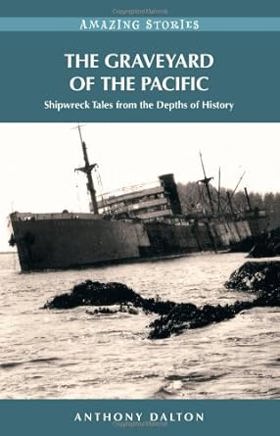
On January 22, 1906, the passenger ship Valencia lost her way in heavy fog and rain and rammed into the deadly rocks at Pachena Point on the west coast of Vancouver Island. As the wreck was shattered by the pounding waves, the survivors clung desperately to the rigging. Few made it the short distance to shore through the frigid and turbulent waves—117 of the 164 souls aboard perished. A year earlier, the King David had been wrecked on Bajo Reef near Nootka Sound. The fate of her sailors was much more mysterious. Today, the magnificent Pacific coastline of Vancouver Island draws hikers, surfers and storm-watchers to marvel at its natural splendour. But the ghosts of the Valencia, King David, Janet Cowan, Pacific, Soquel and dozens of other lost ships still haunt the rugged shores of the Graveyard of the Pacific. Anthony Dalton tells the incredible stories of many of these ships and their courageous crews, who often discovered that their nightmares had only begun once they made it ashore. These true tales of disaster and daring rescues are a fascinating adventure into British Columbia maritime history. 124 pages : illustrations ; 22 cm Desiderata
|
2010 |
|
Historic shipwrecks of the central coast of British Columbia by Rick James , Jacques F. Marc , Underwater Archaeological Society of British Columbia 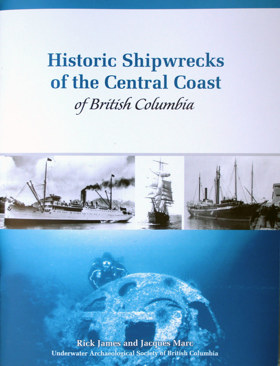
In this latest UASBC publication a fascinating marine history of BC's Central Coast is reflected in the stories of 13 shipwrecks surveyed by the UASBC over a 10 year period. The latest publication examines the area between Cape Caution and Prince Rupert. Each shipwreck story is illustrated with a site plan and photographs. 8.5" x 11", 76 pages. 76 p. : ill., maps ; 28 cm Desiderata
|
2010 |
|
The people are dancing again the history of the Siletz tribe of western Oregon by Charles F. Wilkinson 
The history of the Siletz is in many ways the history of all Indian tribes in America: a story of heartache, perseverance, survival, and revival. It began in a resource-rich homeland thousands of years ago and today finds a vibrant, modern community with a deeply held commitment to tradition. The Confederated Tribes of Siletz Indians—twenty-seven tribes speaking at least ten languages—were brought together on the Oregon Coast through treaties with the federal government in 1853–55. For decades after, the Siletz people lost many traditional customs, saw their languages almost wiped out, and experienced poverty, killing diseases, and humiliation. Again and again, the federal government took great chunks of the magnificent, timber-rich tribal homeland, a reservation of 1.1 million acres reaching a full 100 miles north to south on the Oregon Coast. By 1956, the tribe had been “terminated” under the Western Oregon Indian Termination Act, selling off the remaining land, cutting off federal health and education benefits, and denying tribal status. Poverty worsened, and the sense of cultural loss deepened. The Siletz people refused to give in. In 1977, after years of work and appeals to Congress, they became the second tribe in the nation to have its federal status, its treaty rights, and its sovereignty restored. Hand-in-glove with this federal recognition of the tribe has come a recovery of some land--several hundred acres near Siletz and 9,000 acres of forest--and a profound cultural revival. This remarkable account, written by one of the nation’s most respected experts in tribal law and history, is rich in Indian voices and grounded in extensive research that includes oral tradition and personal interviews. It is a book that not only provides a deep and beautifully written account of the history of the Siletz, but reaches beyond region and tribe to tell a story that will inform the way all of us think about the past. xvi, 564 pages : illustrations, maps ; 26 cm Desiderata
|
2010 |
|
Mexicanos in Oregon their stories, their lives by Erlinda Gonzales-Berry, Marcela Mendoza 
This important volume sheds new light on the stories and lives of mexicanos in Oregon: why migrants come to Oregon fields, construction sites, and warehouses; what their experiences are when they settle here; and how they adapt to life in the United States. Building on the work of earlier scholars and providing new and original research, Gonzales-Berry and Mendoza draw from the disciplines of history, anthropology, sociology, and gender and cultural studies to present a comprehensive view of the experiences of the Mexican-origin population in Oregon. The number of Latinos residing in Oregon has increased dramatically in the last two decades, leading to increased diversity across the state, particularly visible in the public school system and in agricultural and service occupations. This, however, is not a new phenomenon. There has been a settled Mexican-origin population in Oregon since the mid-nineteenth century. Mexicanos in Oregon explores this history of migration and settlement of mexicanos, highlighting their sustained practices of community building, their struggles for integration, and their contributions to the economic and cultural life of the state. Using archival records, primary and secondary scholarly works, demographic statistics, and personal testimonies, the authors create a picture of the economic, political, social, and cultural conditions that have shaped the lives of mexicanos. The blend of scholarly research and individual stories reflect the very human dimension and complex forces that make up the whole story of Mexican migration and settlement in Oregon. It is an essential resource for immigration scholars, historians, students, and for all Oregonians. 287 pages : illustrations ; 23 cm Desiderata
|
2010 |
|
Imprisoned in Paradise Japanese internee road workers at the World War II Kooskia Internment Camp by Priscilla Wegars, Michiko Midge Ayukawa, University of Idaho Asian American Comparative Collection (Publisher) 
The Kooskia Internment Camp, a unique, virtually forgotten, World War II Detention and road building facility, was located on the remote, wild, and scenic Lochsa River in north central Idaho. Between mid-1943 and mid-1945 the Kooskia camp held an all-male contingent of some 265 so-called "enemy aliens" of Japanese ancestry. Most came from 21 states and 2 territories, but others were from Mexico; some were even kidnapped from Panama and Peru. Two alien internee doctors, an Italian and later a German, provided medical services; 25 Caucasian employees included several women; and a Japanese American man censored the mail. Despite having committed no crimes, but suspected of potential sabotage, these noncitizen U.S. residents of Japanese descent had been interend elsewhere in the U.S. following Japan's attack on Pearl Harbor in December 1941. They volunteered for transfer to the Kooskia Internment Camp and received wages for helping construct the Lewis-Clark Highway, now Highway 12, supervised by U.S. Bureau of Public Roads employees. Knowledge of their rights under the 1929 Geneva Convention empowered the Kooskia internees to successfully challenge administrative mistreatment, thereby regaining much of the self-respect they had lost by being so unjustly interned. Here, finally, is their story. --back cover xxxiv, 323 pages : illustrations, maps, portraits ; 23 cm Desiderata
|
2010 |
|
A force for change Beatrice Morrow Cannady & the struggle for civil rights in Oregon, 1912-1936 by Kimberley Mangun 
"A Force for Change is the first full-length study of the life and work of one of Oregon's most dynamic civil rights activists, Beatrice Morrow Cannady." "Between 1912 and 1936, Cannady tirelessly promoted interracial goodwill and fought segregation and discrimination. She gave hundreds of lectures to high school and college students and shared her message with radio listeners across the Pacific Northwest. She was assistant editor, and later publisher, of The Advocate, Oregon's largest African American newspaper. Cannady was the first black woman to graduate from law school in Oregon, and the first to run for state representative. She held interracial teas in her home in Northeast Portland and protested repeated showings of the racist film The Birth of a Nation. And when the Ku Klux Klan swept into Oregon, she urged the governor to act quickly to protect black Oregonians' right to live and work without fear. Despite these accomplishments, Beatrice Cannady fell into obscurity when she left Oregon in the late 1930s." "A Force for Change illuminates Cannady's key role in advocating for better race relations in Oregon in the early decades of the twentieth century. It describes her encounters with the period's leading black artists, editors, politicians, and intellectuals, including W. E. B. Du Bois, Langston Hughes, Oscar De Priest, Roland Hayes, and James Weldon Johnson. It dispels the myth that African Americans played little part in Oregon's history and it enriches our understanding of the black experience in Oregon and the civil rights movement across the country."--BOOK JACKET [vii], 344 pages : illustrations, portraits ; 23 cm Desiderata
|
2010 |
|
Idaho wine country by Alan Minskoff, Paul Hosefros 
Writer Alan Minskoff and photographer Paul Hosefros took to the back roads of Idaho for fifteen months, interviewing and photographing more than fifty winemakers and grape growers and documenting all stages of grape and wine production. Their book, the first full-length exploration of the state s emerging wine industry, chronicles an enterprise on the verge of discovery. xv, 188 pages : illustrations (chiefly color), color maps ; 26 cm Desiderata
|
2010 |
|
Atlas of Oregon wilderness by William L. Sullivan 
With the addition of 200,000 more acres designated by Congress as Oregon wilderness in 2009, use this as a planning guide to explore new areas and old favorites from The Three Sisters and Mount Hood to Eagle Cap and Steens Mountain. This is a complete guide to Oregon's backcountry. This complete guide to Oregon's backcountry includes the new wilderness areas designated by Congress in March 2009 as well as old favorites from Mt. Hood and the Three Sisters to Steens Mountain and the Wallowas. The atlas features 70 pages of detailed, shaded-relief maps, 40 pages of color photographs, 146 recommended backpacking trips, 500 featured hikes, and tips for mountain climbers, whitewater rafters, kayakers, Nordic skiers, and snowshoers. 384 pages : illustrations (some color), maps, plates ; 23 cm Desiderata
|
2010 |
|
The lumberman's frontier three centuries of land use, society, and change in America's forests by Thomas R. Cox 
With The Lumberman’s Frontier, Thomas Cox has reconstructed a groundbreaking history that stands apart from all previous studies of American forests. Forests were ubiquitous in early America, but it was only in selected areas that trees, rather than farming, ranching, or mining, attracted settlement. These areas constitute the lumberman’s frontier, which appeared first in northern New England in the seventeenth century, followed by upstate New York, the Allegheny Plateau, the upper Great Lakes states, the Gulf South, and the Far West. The forest frontiers generated capital and building materials important in the nation’s development, but they also left a legacy of environmental problems, class and urban-rural divisions, and economic frictions. The 1930s marked the end of the lumberman’s frontier, but these consequences continue to shape attitudes and policies toward forests, most notably the questions “Whose forests are they?” and “How and by whom should forests be used?” Drawing upon recent work in social and economic history, as well as a wealth of historical data on forest industries and individuals, The Lumberman’s Frontier neither glorifies economic development nor falls into the maw of ecological gloom-and-doom. It puts individual actors at center stage, allowing the points of view of the workers and lumbermen to emerge. xi, 531 pages : illustrations, maps ; 23 cm Desiderata
|
2010 |
|
A river without banks place and belonging in the Inland Northwest by William C. Johnson 
A River Without Banks chronicles one family’s journey to Idaho, with all of its uncertainties, promises, and hopes. The book explores their encounters with a place still partly wild, whose communities and landscapes teach them how to respect the earth and each other. William Johnson’s essays move from a family vacation spent observing moose, to a comparison of the creation myths from Genesis and the Nez Perce, to watching a raptor seeking prey. Johnson meditates on how places, animals, and people teach us “how to see, and how we do, and don’t, belong.” In prose that reveals a poet’s eye, Johnson examines how family relationships affect how we see the natural world. He explores the power of words to divide and to heal. He illuminates the challenges of sustaining a vital relationship with a home place. A River Without Banks will appeal to readers interested in the literature of place, ecology, natural history, indigenous culture, and conservation. 160 pages ; 22 cm Desiderata
|
2010 |
|
To the woods sinking roots, living lightly, and finding true home by Evelyn Searle Hess 
To the Woods is a tale of adventure, inspiration, and living life in concert with nature. It is the true story of Evelyn Searle Hess, who, in her late fifties, walks away from the world of modern conveniences to build a new life with her husband on twenty acres of wild land in the foothills of Oregon's Coast Range. To the Woods tracks the natural history of place through the seasons. It describes Hess's day-to-day challenges, from living in a trailer without electricity or indoor plumbing to excavating a pond to dealing with health crises. It explores the joys of living simply, building a relationship with the natural world, and awakening to the interconnectedness of all life. Hess's careful attention to detail, her extensive knowledge of local flora and fauna, and her thoughtful philosophical meditations add richness to her engaging prose. To the Woods will appeal to readers interested in the environment and sustainable living, and to anyone who has ever considered fleeing the city for a life closer to nature. xvi, 175 pages ; 23 cm Desiderata
|
2010 |
|
The final forest big trees, forks, and the Pacific Northwest by William Dietrich 
"Before Forks, a small town on Washington's Olympic Peninsula, became famous as the location for Stephenie Meyer's Twilight book series, it was the self-proclaimed "Logging Capital of the World" and ground zero in a regional conflict over the fate of old-growth forests. Since Pulitzer Prize-winning journalist William Dietrich first published The Final Forest in 1992, logging in Forks has given way to tourism, but even with its new fame, Forks is still a home to loggers and others who make their living from the surrounding forests. The new edition recounts how forest policy and practices have changed since the early 1990s and also tells us what has happened in Forks and where the actors who were so important to the timber wars are now."--Pub. desc 336 pages : maps ; 23 cm Desiderata
|
2010 |
|
Shadow tribe the making of Columbia River Indian identity by Andrew H. Fisher 
Shadow Tribe offers the first in-depth history of the Pacific Northwest’s Columbia River Indians -- the defiant River People whose ancestors refused to settle on the reservations established for them in central Oregon and Washington. Largely overlooked in traditional accounts of tribal dispossession and confinement, their story illuminates the persistence of off-reservation Native communities and the fluidity of their identities over time. Cast in the imperfect light of federal policy and dimly perceived by non-Indian eyes, the flickering presence of the Columbia River Indians has followed the treaty tribes down the difficult path marked out by the forces of American colonization. Based on more than a decade of archival research and conversations with Native people, Andrew Fisher’s groundbreaking book traces the waxing and waning of Columbia River Indian identity from the mid-nineteenth through the late twentieth centuries. Fisher explains how, despite policies designed to destroy them, the shared experience of being off the reservation and at odds with recognized tribes forged far-flung river communities into a loose confederation called the Columbia River Tribe. Environmental changes and political pressures eroded their autonomy during the second half of the twentieth century, yet many River People continued to honor a common heritage of ancestral connection to the Columbia, resistance to the reservation system, devotion to cultural traditions, and detachment from the institutions of federal control and tribal governance. At times, their independent and uncompromising attitude has challenged the sovereignty of the recognized tribes, earning Columbia River Indians a reputation as radicals and troublemakers even among their own people. Shadow Tribe is part of a new wave of historical scholarship that shows Native American identities to be socially constructed, layered, and contested rather than fixed, singular, and unchanging. From his vantage point on the Columbia, Fisher has written a pioneering study that uses regional history to broaden our understanding of how Indians thwarted efforts to confine and define their existence within narrow reservation boundaries. xi, 337 pages, 16 unnumbered pages of plates : illustrations, maps ; 23 cm. Non-circulating [ 2 ]
|
2010 |
|
Maple Ridge & Pitt Meadows a history in photographs by Donald E. Waite 
This a colorful history of this particular area in the lower Mainland of British Columbia, dealing with the families who first settled there, the First Nations peoples who were the original inhabitants and the businesses that developed. It is liberally illustrated with B&W, sepia and colourful photos as well as maps. Scattered throughout are tasteful advertisements from local businesses that have sponsored the publication of this book. 304 p. : ill. (some col.), ports. (some col.) ; 29 cm. Desiderata
|
2010 |