Catalog of British Columbiana and Pacific Northwest Americana
Encyclopedia Cascadia Catalog contains book titles of mostly non-fiction Pacific Northwest Coast of North America Titles (primarially British Columbia, Idaho, Oregon and Washington State) in an easy-to-understand title catalog. If you see a link with this badge ONLINE CIRC it means that there is an online institution that provides free access to that title. In some cases there may be more than one institution hosting the title digitally.
| Catalog Title | Published |
|---|---|
|
Nisei soldiers break their silence coming home to Hood River by Linda Tamura 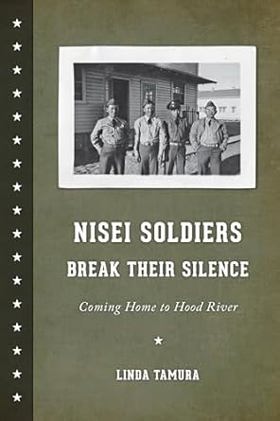
Nisei Soldiers Break Their Silence is a compelling story of courage, community, endurance, and reparation. It shares the experiences of Japanese Americans (Nisei) who served in the U.S. Army during World War II, fighting on the front lines in Italy and France, serving as linguists in the South Pacific, and working as cooks and medics. The soldiers were from Hood River, Oregon, where their families were landowners and fruit growers. Town leaders, including veterans' groups, attempted to prevent their return after the war and stripped their names from the local war memorial. All of the soldiers were American citizens, but their parents were Japanese immigrants and had been imprisoned in camps as a consequence of Executive Order 9066. The racist homecoming that the Hood River Japanese American soldiers received was decried across the nation. Linda Tamura, who grew up in Hood River and whose father was a veteran of the war, conducted extensive oral histories with the veterans, their families, and members of the community. She had access to hundreds of recently uncovered letters and documents from private files of a local veterans' group that led the campaign against the Japanese American soldiers. This book also includes the little known story of local Nisei veterans who spent 40 years appealing their convictions for insubordination. xx, 346 pages : illustrations ; 23 cm. CIRC [ 0 ]
|
2012 |
|
Nipika a story of Radium Hot Springs by David Zieroth , Dianne Bersea (Illustrator), Parks Canada Western Region
|
1978 |
|
Ninstints, Haida world heritage site by George F. MacDonald 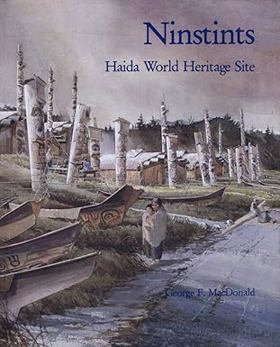
Ninstints, located on Anthony Island, one of the smallest and most southerly of the Queen Charlotte chain, contains the vestiges of the great wooden structures and houses of the Kunghit Haida people who abandoned the village in the late 1800s. George MacDonald combines archival material and scientific and photographic evidence to record what is known of the history of Ninstints and its people. Details are given of their houses, of their great chiefs, and finally of their exodus from Ninstints. 60 pages : illustrations (some color) ; 26 cm CIRC [ 0 ]
|
1990 |
|
Nez Perce women in transition, 1877-1990 by Caroline James 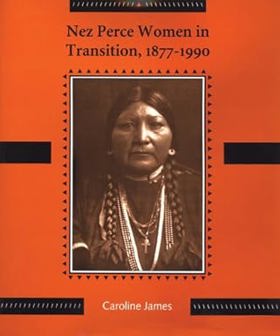
Traditionally Nez Perce Indian women have held important roles within the tribe. The women conducted vital, routine, day-in and day-out domestic chores as well as maintaining a strong influence in tribal community, culture, and tradition. As white encroachment on Nez Perce lands increased and the missionaries increased their influence, the lives of the Nez Perce changed dramatically. This volume is the first look into the lives and contributions of Nez Perce women as they struggled to maintain their families and communities in times of great change. Nez Perce Women in Transition includes unique individual accounts recorded directly from personal interviews with Nez Perce women ranging in age from twenty to ninety. The narratives, in combination with a broad selection of photographs, present some of the major historical, political, and cultural changes that have occurred and provide an opportunity to view Nez Perce women as they made and continue to make dramatic transitions xxix, 245 pages : illustrations, maps ; 27 cm CIRC [ 0 ]
|
1996 |
|
Nez Perce summer, 1877 the U.S. Army and the Nee-Me-Poo crisis by Jerome A. Greene 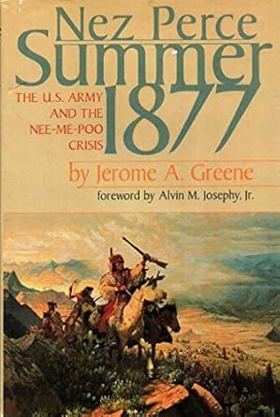
Greene (research historian, National Park Service) recounts the fighting retreat of the nontreaty Nez Perces, including Chief Joseph, across nearly 1,000 miles of Pacific Northwest wilderness. Greene draws from both U.S. Army and Nez Perce sources to explain their circuitous route through Yellowstone National Park and their attempts to seek refuge among the Crow Indians. Twenty-six illustrations and photographs and 16 maps are included. Annotation copyrighted by Book News Inc., Portland, OR xix, 554 pages : illustrations ; 24 cm CIRC [ 0 ]
|
2000 |
|
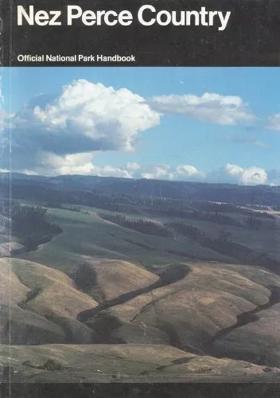
Nez Perce country a handbook for Nez Perce National Historical Park, Idaho by United States National Park Service Division of Publications
|
1983 |
|
Newcastle Island a place of discovery by Bill Merilees 
Authored by naturalist and historian Bill Merilees, Newcastle Island: A Place of Discovery explores the rich natural and industrial heritage of the historic island park located off the coast of Nanaimo, British Columbia. The book traces the island's multifaceted past, from its early significance to the Snuneymuxw First Nation and its late 19th-century boom as a bustling coal-mining and sandstone-quarrying hub to its eventual transition into a beloved coastal recreation area. Through archival photographs, maps, and detailed natural history notes, the text captures how a small marine island became a microcasm of regional resource extraction and leisure. A keen insight drawn from the work is how industrial wastelands can be successfully reclaimed by nature and public memory; by documenting the physical transition from smoky coal pits to tranquil park trails, the narrative reveals that the landscape itself acts as a resilient archivist, quietly healing its extraction scars to offer new generations a sanctuary for ecological discovery. 128 pages : illustrations, facsimiles, maps, portraits ; 22 cm CIRC [ 1 ]
|
1998 |
|
New Spain's far northern frontier essays on Spain in the American West, 1540-1821 by David J. Weber , George P. Hammond, Donald C. Cutter, Odie B. Faulk, Sandra L. Myres, Marc Simmons, Albert H. Schroeder, John L. Kessell, James H. Sutton Jr and Sylvia Leal Carvajal Collection 
This is a collection of some of the finest studies, eighteen of them, which have appeared on aspects of the historical past of New Spain's Far Northern Frontier. It is intended primarily as a reader to supplement a course on the so-called Spanish Borderlands, putting at the easy disposal of the student outstanding bits of scholarship, developed, with one or other exception, in the 1960s and 1970s. The book can be valuable to the scholar, making quickly available as it does these same studies, which other-wise might have to be run down in the file of journals in which each appeared. The editor has prefaced the volume with a thoughtful and thought-provoking Introduction, in which he offers his concept of the place of Spain's borderlands in American history. The editor has also furnished a setting for each piece, along with a mini-biographical note and short bibliography of the works of each author. He has added "Suggestions for Further Reading and Research." Two of the essays-Albert H. Schroeder, "Shifting for Survival in the Spanish Southwest" (1968), and George Harwood Phillips, "Indians and the Breakdown of the Spanish Mission System in California" (1974)-have direct Indian pertinence. Many of the others have valuable insights for the student of the Native Americans. The book is welcome as a student reader and a convenient reference tool for the scholar of Spain in North America. -- JOHN FRANCIS BANNON, Saint Louis University xix, 321 pages : illustrations ; 24 cm CIRC [ 0 ]
|
1979 |
|
New light on the early history of the greater North-west. The manuscript journals of Alexander Henry ... and of David Thompson ... 1799-1814. Exploration and adventure among the Indians on the Red, Saskatchewan, Missouri, and Columbia rivers by Alexander Henry, David Thompson, Elliott Coues
Published in 1897 and meticulously annotated by historian Elliott Coues, this foundational three-volume work compiles the raw manuscript journals of North West Company fur trader Alexander Henry and master topographer David Thompson from 1799 to 1814. A keen insight drawn from the text is how Henry’s brutally candid daily entries shatter the romanticized myth of the heroic frontiersman, exposing the early North American fur trade as a ruthlessly pragmatic enterprise heavily reliant on the deliberate weaponization of alcohol to control and exploit Indigenous populations. The narrative tracks their extensive expeditions across the Red, Saskatchewan, Missouri, and Columbia river basins, providing granular details on frontier survival, commercial logistics, and complex tribal negotiations. Ultimately, by fusing Thompson’s unparalleled geographical surveys with Henry’s gritty cultural observations, the compilation stands as an indispensable primary source for understanding the harsh geopolitical realities of the early Pacific Northwest. 3 volumes frontispiece (portrait) maps (in pocket) 25 cm ONLINE CIRC [ 3 ]
|
1897 |
|
New land, north of the Columbia historic documents that tell the story of Washington State from territory to today by Lorraine McConaghy 
New Land North of the Columbia features an 1860 letter protesting the escape of an Olympia slave to Victoria on the Puget Sound Underground Railroad. There's also territorial Governor Pickering's telegram to Abraham Lincoln sent on the brand-new telegraph--and Lincoln's hand-signed response. Other ephemera include posters and letters that support and condemn women's right to vote, prohibition of the sale of alcohol, and aid to the unemployed during the Great Depression. Here are documents about the massive, secret Hanford Engineering Works that was Washington's Manhattan Project. The book includes an ad for the first Lame Fest concert featuring Mudhoney and Nirvana, the original box that contained Windows 95, and a poster calling all protesters to the 1999 WTO conference. Historian Lorraine McConaghy has traversed the state and sifted through the files of three dozen archives to cull the 400 fascinating documents that bring to life Washington's last 150 years. vi, 153 pages : illustrations (some color), maps (some color) ; 25 x 29 cm CIRC [ 1 ]
|
2011 |
|
New land, new lives Scandinavian immigrants to the Pacific Northwest by Janet Elaine Rasmussen 
"NEW LAND, NEW LIVES tells in their own words the experiences of 45 immigrants (28 of them women) in the early years of the 20th century. Rasmussen's selections capture the textures and tones of ordinary life. They show how the cultures the immigrants had known in the Old World influenced . . . life in the Pacific Northwest".--TACOMA NEWS TRIBUNE. 41 photos xiii, 320 pages : illustrations, 2 maps ; 25 cm CIRC [ 0 ]
|
1993 |
|
New land southeast asian refugees finding home in Washington by John C. Hughes , Edward Echtle , Legacy Washington (Program) (Publisher), Washington (State). Office of the Secretary of State (Publisher) 
Published by the Office of the Secretary of State's Legacy Washington program, New Land: Southeast Asian Refugees Finding Home in Washington chronicles the profound humanitarian effort and individual resilience surrounding the resettlement of Vietnamese, Cambodian, and Laotian refugees in the Pacific Northwest following the 1975 fall of Saigon. Drawing on extensive oral histories and archival research, authors John C. Hughes and Edward Echtle trace how thousands of displaced families rebuilt their lives from the ground up, establishing enduring cultural, economic, and civic roots across the state. A keen insight drawn from the book is how Washington's successful integration of these communities—spearheaded by pioneering political leadership under figures like Governor Dan Evans—fundamentally transformed the state's cultural landscape. By shifting the historical perspective away from distant geopolitical conflict to focus on grassroots local welcome, the book highlights how regional humanitarian action successfully countered national xenophobia and redefined the Pacific Northwest as a vibrant, multicultural diaspora. 327 pages, 14 unnumbered pages : illustrations, portraits ; 26 cm. CIRC [ 0 ]
|
2025 |
|
New heights transforming Seattle's iconic Space Needle by Olson Sundberg (Firm) , Olson Kundig (Firm) 
Originally built for the 1962 World's Fair, the Space Needle quickly became an international icon of the Pacific Northwest and a symbol of Seattle. At the time of its construction, the tower pointed the way toward the future with a sense of optimism, possibility, and invention. In its 55th year, the Space Needle is again representing an enhanced future with the Century Project, a holistic renovation of the upper levels led by Olson Kundig that repositions the iconic tower for its next fifty years. 'New Heights: Transforming Seattle's Iconic Space Needle' documents this latest chapter of the Space Needle's story with an in-depth look at the innovations, challenges, and triumphs realized by the client and project team, as seen through the eyes of the architects 191 pages : chiefly color illustrations ; 26 cm CIRC [ 0 ]
|
2023 |
|
New era reflections on the human and natural history of Central Oregon by Jarold Ramsey 
The first book-length ethnography of any Western Oregon native group, The Nehalem Tillamook fills an important gap in what was previously known about southern Northwest Coast native cultures. In 1933 and 1934, Elizabeth Jacobs, advised by her husband, the noted anthropologist Melville Jacobs, conducted fieldwork on the Nehalem Tillamook culture of northwestern Oregon. Working with her extraordinarily able Nehalem Tillamook consultant Clara Pearson, Jacobs recorded extensive ethnographic and folkloric materials that far surpass in quality and quantity the Tillamook research of previous investigators. Jacobs's collaboration with Pearson eventually resulted in the publication of Nehalem Tillamook Tales, an exceptional collection of myths and tales recorded in English. But the companion ethnography was never finished. The Nehalem Tillamook grew from that unfinished manuscript. In consultation with Elizabeth Jacobs, the manuscript was expanded and extensively edited by William Seaburg. After Elizabeth Jacobs's death in 1983, Seaburg added careful annotations and a detailed historical introduction. The result is a remarkable book that makes a major contribution to our understanding of Nehalem Tillamook culture and will be invaluable for drawing comparisons with other Northwest native cultures. About the author: JAROLD RAMSEY was born in central Oregon and grew up on his family’s ranch there. He left the ranch to attend college, and became an award-winning essayist and poet, as well as a published playwright and a respected authority on traditional American Indian literature. He is professor emeritus of English at the University of Rochester and the author of several books. In 2017, he received the Charles Erskine Scott Wood Distinguished Writer Award for lifetime achievement from Literary Arts. He lives in Madras, Oregon. 154 pages : illustrations ; 23 cm CIRC [ 0 ]
|
2003 |
|
Neighbor power building community the Seattle way by Jim Diers 
Building on the lessons of early labor leaders, civil rights volunteers, and political activists, Jim Diers has developed his own models and successful strategies for community development. Neighbor Power chronicles his involvement with Seattle’s communities. This book not only gives hope that participatory democracy is possible, but it offers practical applications and invaluable lessons for ordinary, caring citizens who want to make a difference. It also provides government officials with inspiring stories and proven programs to help them embrace citizen activists as true partners. Diers’s experience is extensive. He began as a community organizer in 1976, then moved on to help establish and staff a system of consumer-elected medical center councils. This led him to Seattle city government, where he served under three mayors as the first director of the Department of Neighborhoods, recognized as the national leader in such efforts. In the 1990s, Jim Diers helped Seattle neighborhoods face challenges ranging from gang violence to urban growth. The Neighborhood Matching Fund grew to support over 400 community self-help projects each year while a community-driven planning process involved 30,000 people. Diers provides evidence that productive community life is thriving, not just in Seattle, Washington, but in towns and cities across the globe. Both practical and inspiring, Neighbor Power offers real-life examples of how to build active, creative neighborhoods and enjoy the rich results of community empowerment. x, 202 pages : illustrations, maps ; 23 cm CIRC [ 0 ]
|
2004 |
|
Nehalem Tillamook tales by Elizabeth derr Jacobs, Melville Jacobs
|
1959 |
|
Necktie parties a history of legal executions in Oregon, 1851-1905 by Diane L. Goeres-Gardner 
Diane Goeres-Gardner makes readers eyewitnesses to frontier justice in Necktie Parties. This is the story of the men who climbed the gallows steps and faced the hangman's noose during the early years of settlement in Oregon. Today, capital punishment is a controversial topic, in the United States and around the world. That wasn?t the case during the 1800s on America's western frontier. Executions were public events drawing hundreds?sometimes thousands?of residents from miles around. The xxiv, 316 pages : illustrations, maps, portraits ; 23 cm CIRC [ 0 ]
|
2005 |
|
Nch'i-wána, "the big river" Mid-Columbia Indians and their land by Eugene S. Hunn, James Selam 
The mighty Columbia River cuts a deep gash through the Miocene basalts of the Columbia Plateau, coursing as well through the lives of the Indians who live along its banks. Known to these people as Nch’i-Wana (the Big River), it forms the spine of their land, the core of their habitat. At the turn of the century, the Sahaptin speakers of the mid-Columbia lived in an area between Celilo Falls and Priest Rapids in eastern Oregon and Washington. They were hunters and gatherers who survived by virtue of a detailed, encyclopedic knowledge of their environment. Eugene Hunn’s authoritative study focuses on Sahaptin ethnobiology and the role of the natural environment in the lives and beliefs of their descendants who live on or near the Yakima, Umatilla, and Warm Springs reservations. xi, 378 pages : illustrations, maps ; 24 cm CIRC [ 0 ]
|
1990 |
|
Navigating the coast a history of the Union Steamship Company by Peter Chapman, John Haskell Kemble (Donor), Provincial Archives of British Columbia
|
1977 |
|
Naval Station Puget Sound at Sand Point by Dennis Stuhaug, United States Department of the Navy Morale, Welfare and Recreation Department 
Published by the Department of the Navy alongside local author Dennis Stuhaug, Naval Station Puget Sound at Sand Point chronicles the fascinating military and aviation heritage of Seattle’s historic waterfront base. The book details the facility's evolution from a vital 1920s naval air station—famous as a key stop for the 1924 round-the-world flight—into a crucial World War II training and logistics hub. Through archival photographs and military records, the text captures how the installation served as a dynamic nexus between civilian urban life and naval defense along Lake Washington. A keen insight drawn from the work is how the transformation of military bases into public parks reflects the shifting priorities of modern cities; as Sand Point was decommissioned and turned into Magnuson Park, it demonstrated how post-industrial urban spaces are reclaimed to heal the ecological and social splits left behind by military-industrial expansion. 104 pages : illustrations (1 color), portraits (1 color) ; 29 cm CIRC [ 0 ]
|
1992 |
|
Nature's justice writings of William O. Douglas by William O. Douglas, James O'Fallon 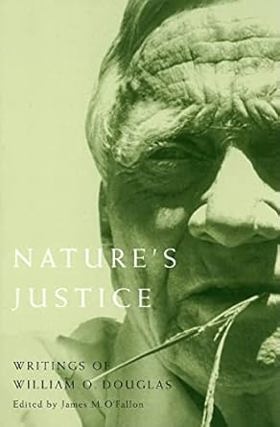
As the longest serving Justice in the history of the U.S. Supreme Court, William O. Douglas was known for writing a host of dissenting opinions. He was also a prolific writer off the bench, a man whose work was as much concerned with nature as with law. This collection brings together writings that represent the wide range of Douglas's interests. It includes selections from his autobiographical and political books, and opinions from landmark cases—all reflecting not only his love of justice but also his roots in the Northwest and his lifelong commitment to the environment. Several selections from Douglas's first book Of Men and Mountains portray his abiding love of the outdoors—particularly the Northern Cascades—and the rugged people who live there. These personal writings warmly recall events of his youth and celebrate the power of the mountains to renew the human spirit. Other selections evoke Douglas's professional activities: as a New Deal insider and Supreme Court Justice, a champion of civil liberties and the rights of minorities, a strong internationalist, and an unflagging supporter of environmental issues. These latter writings include passages from My Wilderness and his dissenting opinion in Sierra Club v. Morton arguing that trees have legal standing to bring lawsuits. These writings demonstrate that Douglas never shied from controversy—whether over interpretation of the Fourteenth Amendment or the choice between flies and bait for trout fishing—and offer inspiration for both environmentalists and all who yearn for a more just society. Whether extolling the joys of the wild or defending the rights of citizens, Douglas shows in this work that he truly was Nature's Justice—and one of a kind. x, 310 pages : illustrations ; 24 cm. CIRC [ 0 ]
|
2000 |
|
Nature rambles in the Wallowas sketches of the natural history of northeastern Oregon by Elmo Nall Stevenson 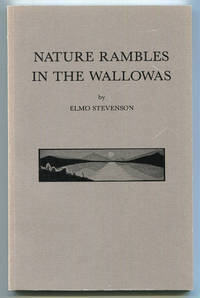
Sketches of the natural history of northeastern Oregon. 100 pages including plates : illustrations, map ; 23 cm CIRC [ 1 ]
|
1937 |
|
Natural vegetation of Oregon and Washington by Jerry F. Franklin, C. T. Dyrness
|
1988 |
|
Native Seattle histories from the crossing-over place by Coll-Peter Thrush 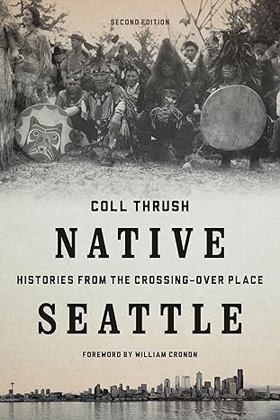
In traditional scholarship, Native Americans have been conspicuously absent from urban history. Indians appear at the time of contact, are involved in fighting or treaties, and then seem to vanish, usually onto reservations. In Native Seattle, Coll Thrush explodes the commonly accepted notion that Indians and cities--and thus Indian and urban histories--are mutually exclusive, that Indians and cities cannot coexist, and that one must necessarily be eclipsed by the other. Native people and places played a vital part in the founding of Seattle and in what the city is today, just as urban changes transformed what it meant to be Native. On the urban indigenous frontier of the 1850s, 1860s, and 1870s, Indians were central to town life. Native Americans literally made Seattle possible through their labor and their participation, even as they were made scapegoats for urban disorder. As late as 1880, Seattle was still very much a Native place. Between the 1880s and the 1930s, however, Seattle's urban and Indian histories were transformed as the town turned into a metropolis. Massive changes in the urban environment dramatically affected indigenous people's abilities to survive in traditional places. The movement of Native people and their material culture to Seattle from all across the region inspired new identities both for the migrants and for the city itself. As boosters, historians, and pioneers tried to explain Seattle's historical trajectory, they told stories about Indians: as hostile enemies, as exotic Others, and as noble symbols of a vanished wilderness. But by the beginning of World War II, a new multitribal urban Native community had begun to take shape in Seattle, even as it was overshadowed by the city's appropriation of Indian images to understand and sell itself. After World War II, more changes in the city, combined with the agency of Native people, led to a new visibility and authority for Indians in Seattle. The descendants of Seattle's indigenous peoples capitalized on broader historical revisionism to claim new authority over urban places and narratives. At the beginning of the twenty-first century, Native people have returned to the center of civic life, not as contrived symbols of a whitewashed past but on their own terms. In Seattle, the strands of urban and Indian history have always been intertwined. --From publisher's description 1 online resource (xxi, 326 pages) : illustrations CIRC [ 1 ]
|
2007 |
|
Native river the Columbia remembered : Priest Rapids to the international boundary by William D. Layman 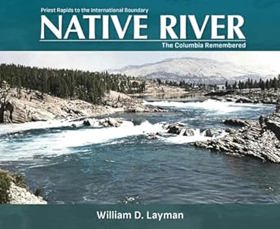
In images and narratives, Native River recreates the untamed Mid-Columbia--the river as it once was, before the building of seven major dams. Featuring a wealth of illustrations, maps, and photographs, many never before published, this finely crafted book focuses on the 350-mile reach of the middle Columbia River from Priest Rapids in south-central Washington to the U.S. Canadian border. William Layman affords each segment of this waterway with its own rich visual documentation, forming a backdrop to many absorbing river stories. -- Amazon xii, 195 pages : illustrations, maps ; 24 x 29 cm CIRC [ 1 ]
|
2002 |