Catalog of British Columbiana and Pacific Northwest Americana
Encyclopedia Cascadia Catalog contains book titles of mostly non-fiction Pacific Northwest Coast of North America Titles (primarially British Columbia, Idaho, Oregon and Washington State) in an easy-to-understand title catalog. If you see a link with this badge ONLINE CIRC it means that there is an online institution that provides free access to that title. In some cases there may be more than one institution hosting the title digitally.
| Catalog Title | Published |
|---|---|
|
A journey back to nature a history of Strathcona Provincial Park by Catherine Marie Gilbert 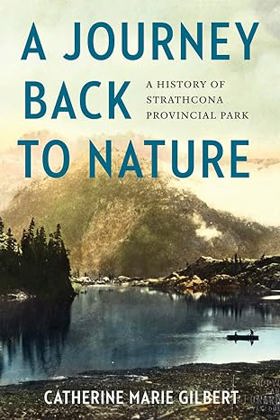
"A fascinating account of the century-long effort to define, access, preserve, develop, and exploit the uniquely beautiful area of rugged wilderness now known as Strathcona Provincial Park on Central Vancouver Island. Strathcona Provincial Park is situated in the middle of Vancouver Island, bordering Clayoquot Sound on the west, Port Alberni on the south, and a large property once known as the Esquimalt and Nanaimo (E&N) land grant on the east. Measuring 250,000 hectares, this breathtaking park, with its gorgeous mountains, lakes, and waterfalls, is a nature lover's paradise. Yet behind this picture of serenity lies a volatile history. A Journey Back to Nature: A History of Strathcona Provincial Park takes a comprehensive look at this rich, beautiful stretch of wilderness and the competing interests that struggled to protect it, define it, and/or control it--from Indigenous Peoples, who have lived on the land for millennia, to European explorers and industrialists, who could not see beyond the wealth of its natural resources, to early conservationists and enterprising settlers, who wished to preserve the area as a wilderness playground for BC's booming population and nascent tourist industry. Over the course of a century, Strathcona Provincial Park was frequently at the centre of some of the most heated public debates in BC history, between economic and environmental interests. This detailed account--lavishly illustrated with archival and contemporary photographs and maps--uncovers the intriguing history, complex legacy, and majestic natural beauty of BC's first provincial park."-- Provided by publisher 248 pages, 32 unnumbered pages of plates : illustrations (some color), maps ; 23 cm CIRC [ 1 ]
|
2021 |
|
Go west, young man a father and son rediscover America on the Oregon Trail by B. J. Hollars 
"B.J. Hollars and his son strike out on a two-week, 2,500-mile road trip to retrace the Oregon Trail. Their mission: to rediscover America--and Americans--along the way"-- Provided by publisher xiv, 232 pages : illustrations, map ; 22 cm CIRC [ 0 ]
|
2021 |
|
William Lovell Finley champion of Oregon's wildlife refuges by Joe R. Blakely 
This biography of the pioneer photographer and conservationist, William Finley, not only tells the astonishing story of his efforts to save Oregon wildlife in the early 1900s, but includes the original photographs of birds that made his work so successful. William Finley and Herman Bohlman climbed 150-foot trees, scaled cliffs, crawled through poison oak, and paddled on mosquito-infested lakes carrying heavy camera gear in search of wild birds to photograph. Finley worked for over 25 years to save the Malheur National Wildlife Refuge in Eastern Oregon. Finley fought to clean up the Willamette River. Possibly every wildlife refuge in Oregon -- including the one named in his honor south of Corvallis -- owes its existence to this man's struggle to provide sanctuaries for wild animals 208 pages : illustrations, photographs, maps ; 23 cm. CIRC [ 0 ]
|
2021 |
|
Tales of the public domain a history of the United States General Land Office in Oregon by Champ Clark Vaughan , Jerome E. Perez 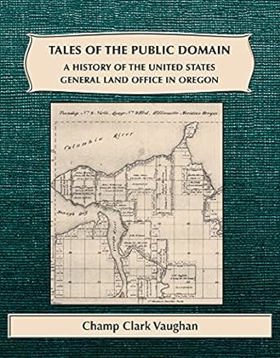
"From his perspective as a geographer and expert in public land law, Vaughan provides the reader with historical context to the GLO, a summary of key public land laws, an understanding of the mission, roles, and administrative responsibilities of the GLO, and a review of the controversies involving migration, settlement, and American Indian title."--Page 4 of cover x, 101 pages : illustrations some color, maps some color ; 26 cm CIRC [ 0 ]
|
2021 |
|
Portland public sculptors monuments, memorials and statuary, 1900-2003 by Fred F. Poyner 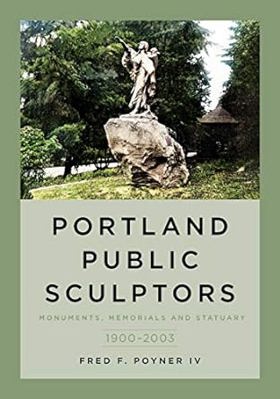
"This book is a non-fiction study of the lives of ten different sculptors and the key public sculptures each contributed to the landscape and identity of Portland, Oregon, between 1900 and 2003. Each chapter examines the history of how these artworks were created, the challenges each sculptor faced, and how these artworks in a variety of sculpture media have contributed to the public arts scene of Portland into the twenty-first century. For its discussion of historical sculpture unique to Portland, a researched examination is made into those subjects selected by each sculptor, where influences of national identity, patriotism, symbolic representation, and the lives of each sculptor help to better understand the history and forces at work which brought these sculptures into existence. Interviews with two of the sculptors offer personal insights into their creative process: from the studio design to final installation in Portland. From Roland Hinton Perry and Alice Cooper, to James Lee Hansen and Raymond Kaskey, sculptures ranging from bronze castings of U.S. presidents, to other historical and allegorical figures in copper and marble, the author provides an in-depth review and presentation of Portland's public art as never seen before"-- Publisher's website 128 pages : illustrations (some color), portraits ; 24 cm CIRC [ 0 ]
|
2021 |
|
Pioneering Oregon architect W.D. Pugh by Terence Emmons 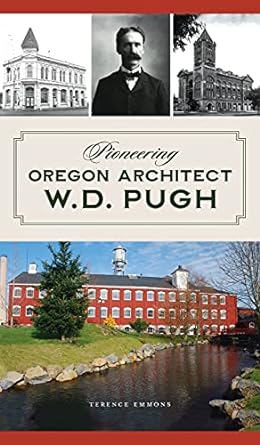
"The son of Oregon pioneers, Walter D. Pugh spent his career as an architect building landmarks throughout his home state. From designing the Thomas Kay Woolen Mill and supervising the installation of the state capitol dome in Salem to drawing the plans for the Crook County Courthouse in Prineville, Pugh had a hand in a wide variety of buildings. In less than twenty-five years, he worked on more than one hundred projects before fading into obscurity. Many of these structures are still standing, a testament to his skill even after his contributions have been all but forgotten. Join author and historian Terence Emmons as he explores the life and legacy of one of Oregon's foremost architects"-- Publisher's website 171 pages : illustrations, plans ; 23 cm CIRC [ 0 ]
|
2021 |
|
Sounding for Harry Smith early Pacific Northwest influences by Bret Lunsford , John F. Szwed, Phil Elverum (Writer of preface) 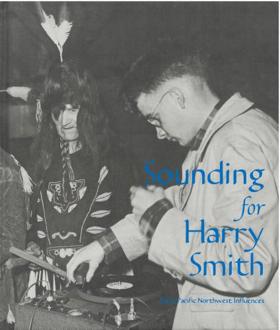
Pacific Northwest musician-historian Bret Lunsford (Beat Happening/D+) unravels a string of mysteries to reveal the avant-garde shards of a 20th century alchemist in his hometown. Harry Everett Smith (1923-1991) was a boyhood resident of Anacortes, Washington for ten years of the Great Depression. Sounding for Harry Smith: Early Pacific Northwest Influences is a visually compelling oral history-based biography that immerses the reader in Salish Sea traditions and discord to explore the myths of a countercultural shaman whose strange impacts on art, music and film resound from studies of place to beat improvisation, through brain paintings to a Grammy Award for his folk music bible. -from back cover 231 pages : illustrations (some color), maps, portraits (some color) ; 26 cm. CIRC [ 0 ]
|
2021 |
|
Here on the Coast reflections from the Rainbelt by Howard White 
"No matter where people live on the BC coast, says Howard White, they have certain shared experiences: frustration with rain and ferries, familiarity with gumboots, bumbershoots, seagull droppings and barnacles in the wrong places. But each little community clings to its own sense of uniqueness and considers itself the true West Coast. As a case in point, White offers fifty funny sketches of life as he has come to know it in sixty-odd years of living along that hundred-mile stretch of monsoon-prone shoreline ironically known as the Sunshine Coast. Included is what must be one of the most admiring testaments ever written about the virtues of the old-time outhouse; fond remembrances of saltwater fishing when a bad day meant you didn't hook something in twenty minutes; and explorers who stooped to naming islands after favourite racehorses. We also meet a bouquet of characters, including a lyrical logger known as Pete the Poet; a diabolical seagoing remittance man; the saintly Quaker philosopher Hubert Evans and White's barrier-busting Aunt Jean who taught him the advantages of 'scientifically enlarging the truth.' Along with accounts of waste disposal wars and wry observations on modern technology, Here On the Coast offers a West Coast counterpart to such favourites as Letters From Wingfield Farm and Sunshine Sketches of a Little Town."-- Provided by publisher xiv, 205 pages : illustrations ; 23 cm CIRC [ 0 ]
|
2021 |
|
What was said to me the life of Sti'tum'atul'wut, a Cowichan woman by Ruby Peter , Helene Demers , Royal British Columbia Museum (Issuing body) 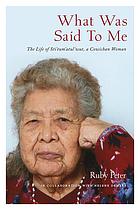
"A narrative of resistance and resilience spanning seven decades in the life of a tireless advocate for Indigenous language preservation. Life histories are a form of contemporary social history and convey important messages about identity, cosmology, social behaviour and one's place in the world. This first-person oral history--the first of its kind ever published by the Royal BC Museum--documents a period of profound social change through the lens of Sti'tum'atul'wut--also known as Mrs. Ruby Peter--a Cowichan elder who made it her life's work to share and safeguard the ancient language of her people: Hul'q'umi'num'. Over seven decades, Sti'tum'atul'wut mentored hundreds of students and teachers and helped thousands of people to develop a basic knowledge of the Hul'q'umi'num' language. She contributed to dictionaries and grammars, and helped assemble a valuable corpus of stories, sound and video files--with more than 10,000 pages of texts from Hul'q'umi'num' speakers--that has been described as "a treasure of linguistic and cultural knowledge." Without her passion, commitment and expertise, this rich legacy of material would not exist for future generations. In 1997 Vancouver Island University anthropologist Helene Demers recorded Sti'tum'atul'wut's life stories over nine sessions. The result is rich with family and cultural history--a compelling narrative of resistance and resilience that promises to help shape progressive social policy for generations to follow."-- Provided by publisher xviii, 167 pages, 31 pages of plates : illustrations (chiefly color), maps ; 23 cm CIRC [ 0 ]
|
2021 |
|
Flourishing and free more true stories of trailblazing women of Vancouver Island by Haley Healey 
"An inspiring and eye-opening collection of true stories about fourteen women who blazed their own trails in life and contributed in a fundamental way to the history of Vancouver Island and the surrounding islands. In this fascinating follow-up to On Their Own Terms, author Haley Healey chronicles the lives of a whole new crop of resilient, hard-working, rule-breaking, diverse women who lived on and around Vancouver Island. Flourishing and Free introduces readers to Sylvia Stark (1839-1944), who was born into slavery in Missouri and went on to become a homesteader on Salt Spring Island; Mary Ann Croft (1865-1935), the first female lighthouse keeper in all of Canada; Victoria Chung (1897-1966), the first Asian-Canadian person to earn a medical degree, who provided urgent care during the Second World War; Dr. Ellen White (1922-2018), a renowned Coast Salish educator, author, and storyteller; and Isabel Kimoto (1921-), a cook, who was sent to a Japanese-Canadian internment camp in 1942 with her three-month-old baby; and many more. Uplifting, empowering, and entertaining, this concise collection of stories will appeal to anyone interested in learning more about the unsung heroines of the West Coast."-- Provided by publisher 144 pages : illustrations ; 22 cm. CIRC [ 0 ]
|
2021 |
|
Making a Living on Saturna: Jon and Priscilla an oral history by William Gerald Schermbrucker 
"Interviews with Jon Guy and Priscilla Ewbank who came separately to Saturna Island in the 1970's and made a rich life and living together, raising three children and making several successful businesses as part of a vibrant community. The interviews and postscript bring us to the present. The text is enriched with 10 colour and 30 BW photographs from the family collections, as well as an original colour map of the island showing places mentioned. Jon and Priscilla were and are key island figures who were involved deeply in every key aspect of the community over these decades."-- Provided by publisher pages cm CIRC [ 0 ]
|
2021 |
|
Wagon road north the saga of the Cariboo Gold Rush by Art Downs 
"A newly revised and updated edition of the classic pictorial account of the Cariboo Gold Rush trail. First published in 1960, Wagon Road North is the quintessential popular history book chronicling gold-rush-era BC. Focusing on the Cariboo Wagon Road--the crucial transportation route stretching from Fort Yale to Barkerville that made it possible for tens of thousands of prospectors to make their way to the Cariboo goldfields in the 1860s--this newly updated, expanded, and re-designed edition brings to life the adventures, hardships, and blind ambitions of the men and women who risked everything in the quest for gold. Packed with more than one hundred archival photos, many of them rarely seen, as well as maps and contemporary images of historical sites, this fascinating book is a visual celebration of a pivotal chapter in early BC history."-- Provided by publisher 154 pages : illustrations, maps, portraits ; 28 cm CIRC [ 0 ]
|
2021 |
|
Victoria unbuttoned a red-light history of BC's capital city by Linda J. Eversole 
"From the establishment of Fort Victoria, BC's capital city has had a long history of prostitution. But little has been written on the lives of the women themselves--some of the most enterprising women in Victoria's past. Instead, these women's stories have been relegated to judgmental newspaper headlines. Now historian Linda J. Eversole takes a deeper look at their lives, from the mid-nineteenth century to the First World War and the Moral Reform movement. Story by story, from the fur trade, through confederation, waves of immigration, and attempts at reform and legislation, Eversole uncovers the histories of the women who made a living, and in some cases a fortune, from the world's oldest profession. With accompanying maps and historical photos, new research, and the support of the descendants of some of her subjects, Eversole presents a nuanced, human series of portraits that enhances our understanding of this important strand of the city's history."-- Provided by publisher 210 pages : illustrations ; 20 cm CIRC [ 0 ]
|
2021 |
|
Craigdarroch Castle in 21 treasures by Moira Dann 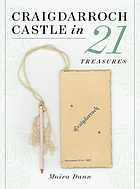
"Craigdarroch Castle, built by coal baron Robert Dunsmuir for his wife, Joan, and their family, was completed in 1890. Following Joan's death, the castle was put up for sale in 1908, and later housed a military hospital and the nascent University of Victoria. Since 1979 the castle has operated as a museum and is one of the top tourist attractions in the city, a prime example of a 'bonanza castle' and a rich repository of Victorian-era furnishings and décor, as well as objects evoking the hospital and college eras. Author Moira Dann offers the reader 21 selections from the castle's collection, using each artifact as a portal into the history of the building and life in Victorian and more recent times. The Black Forest clock, acquired by Joan on a trip to Europe; the telescope used by the eldest Dunsmuir son, James, aboard his yacht the Dolaura; the castle's famous stained-glass windows; a nineteenth-century intercom system known as a speaking tube--these and 17 more are described with detail and enthusiasm, and accompanied by photographs. Dann provides careful research into each object's provenance and manufacture, while inviting readers to join her imaginative journeys into the lives of the castle's occupants through the years."-- Provided by publisher 142 pages : illustrations (some color) ; 23 cm CIRC [ 0 ]
|
2021 |
|
Dreamers, skeptics, and healers the story of BC's medical school by Wendy Cairns , John Cairns , David Ostrow , Gavin Stuart 
"A legacy of care. Hailed as one of the world's top-ranked medical schools, the UBC Faculty of Medicine is globally recognized as a leader in medical education and health sciences research. In celebration of its 70th anniversary, this richly illustrated history is an inspiring reflection on the Faculty's rise from humble beginnings to its standing today as a beacon of excellence. This beautifully illustrated book documents the history of the UBC Faculty of Medicine, from its creation to the present day. Tracing the trials, tribulations, and triumphs of the many people who strove to first bring the Faculty into existence, and then to ensure its success, it is a testament to their work in transforming aspiration into reality. Unlikely though it may seem today, the UBC Faculty of Medicine's creation was threatened from the moment British Columbia entered Confederation in 1871. Proposals for a provincial medical school encountered myriad challenges. There was no university until 1915, and it took eight decades from the early dream to enrollment of the first medical students. And yet, establishing the medical school was only the first of many milestones reached despite great odds. Today, the Faculty's medical undergraduate program is the fourth largest in North America. Its faculty members have garnered numerous illustrious awards--including the Nobel Prize. Its province-wide, distributed undergraduate and postgraduate program, established in 2004 as the first of its kind in Canada, is developing a new generation of doctors, bringing health education to remote regions and communities, and enhancing the quality of health care. And its researchers continue to make breakthroughs in the priority areas of precision health, cancer, brain and mental health, heart and lung health, population health, and chronic diseases as well as across the breadth of health and life sciences."-- Provided by publisher xvii, 210 pages : illustrations, color and black and white ; 26 cm CIRC [ 0 ]
|
2021 |
|
Hastings Mill the historic times of a Vancouver community by Lisa Anne Smith 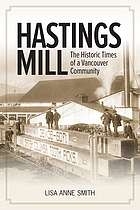
"In the summer of 1865 when Captain Edward Stamp began to organize the construction of a small sawmilling operation on the south shore of Burrard Inlet, he likely never realized that a future metropolis was in the making. The fledgling Stamp's Mill, later to become known as Hastings Mill, was Vancouver's first community -- a townsite inhabited by an eclectic mix of colourful characters from widely diverse backgrounds. Life centered on the iconic Hastings Mill Store, where one came to obtain groceries, hardware, mail and the warmth of human interaction around an oil drum fire. Historic times aplenty unfolded at Hastings Mill. Here residents rallied to assist victims of the Great Vancouver Fire in 1886. Cargo loads of lumber of legendary size and quality were shipped to markets near and far. Dominion Day festivities were celebrated in fine style on a sports field of mill sawdust. Indigenous occupants of the region engaged in mill employment and commerce. Chinook jargon was widely spoken, the multi-lingual trade language of the era. When time and local demographics ultimately spelled the death knell for the sawmill and its weathered structures in 1930, an unlikely group of determined ladies rose to the challenge of saving the Hastings Mill Store, Vancouver's oldest building."-- Back cover xiii, 329 pages : illustrations, map ; 23 cm CIRC [ 0 ]
|
2021 |
|
Joseph William McKay a Métis business leader in colonial British Columbia by Greg N. Fraser 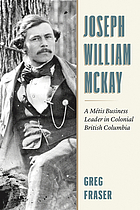
"An intriguing look at the accomplishments and contradictions of Joseph William McKay, best known as the founder of Nanaimo, BC, and one of the most successful Métis men to rise through the ranks of the Hudson's Bay Company in the late nineteenth century. When examining the history of British Columbia, one would be hard-pressed to find an Indigenous person who so successfully navigated the echelons of colonial power as did Joseph William McKay (1829-1900). McKay was Métis, born in Quebec, and began his career in Oregon during the dispute over the international boundary in 1845-46. After moving north, he met his mentor James Douglas and, at age twenty-three, was given the job of building the city of Nanaimo from the ground up and establishing its coal mines. McKay made several exploratory trips with Douglas during the Gold Rush, and he surveyed the route for the Overland Telegraph, which ran throughout BC. He rose through the ranks of the Hudson's Bay Company, eventually earning the appointment of Chief Factor, the company's highest rank. This was at a time when few Indigenous employees of HBC were permitted to rise beyond the rank of postmaster. After leaving the company in 1878, McKay began a second career in the Department of Indian Affairs. He was a federal Indian Agent and later the Assistant Commissioner of Indian Affairs for British Columbia. A product of his time who had found personal success working within the colonial system, McKay is a complicated figure when viewed through a twenty-first-century lens. He advocated on behalf of Indigenous Peoples when he tried to prevent the trespass of CPR crews and European settlers on their ancestral land. Between 1886 and 1888, he personally inoculated more than a thousand Indigenous people with the smallpox vaccine. Yet, he also participated in a system that did untold harm to First Nations, Métis, and Inuit people. This fascinating new biography, endorsed by the BC Métis Federation, sheds light on an accomplished and complex man."-- Provided by publisher xii, 199 pages : illustrations, maps ; 23 cm CIRC [ 0 ]
|
2021 |
|
Plants of Haida Gwaii = X̲aadaa gwaay gud gina k̲'aws (Skidegate) = X̲aadaa gwaayee guu ginn k̲'aws (Massett) by Nancy J. Turner , Florence Edenshaw Davidson , John Enrico 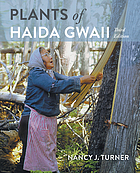
"For many thousands of years the lands and waters of Haida Gwaii have been home to the Haida. Plants of Haida Gwaii, written with the cooperation and collaboration of Haida knowledge holders and botanical experts, is a detailed and insightful record of the traditional uses of over 150 species of native plants. Moreover, it explains the systems of knowledge and understanding that enabled the Haida to use the resources of their islands sustainably from one generation to the next over millennia. The Haida names of these plants indicate their importance, as do the many narratives featuring them. From the ts'uu--massive western red-cedars--of the forests which provide wood used for canoes, house posts, poles and boxes, and bark carefully harvested for weaving mats, baskets and hats, to the ngaal--tough, resilient fronds of giant kelp--used to harvest herring eggs, the botanical species used by the Haida are found from the ocean to the mountain tops, and are as important today as ever before. With over 250 photographs and illustrations, this book is both beautiful and informative."-- Provided by publisher 262 pages : illustrations (some colour), colour maps, portraits (some colour) ; 24 cm CIRC [ 0 ]
|
2021 |
|
A voice for justice writings of David Schuman by David Schuman , Sharon Schuman , Wayne Morse Center for Law and Politics 
As an educator, speaker, deputy attorney general, and judge, David Schuman was known for his ability to clarify difficult legal concepts. According to James Egan, chief judge of the Oregon Court of Appeals, he was the “intellectual giant of our generation.” A Voice for Justice reveals how David Schuman’s unique jurisprudence came to be. His friends and associates knew that Oregon Supreme Court Justice Hans Linde convinced Schuman to turn to the Oregon Constitution rather than the federal one to protect individual rights. But even some of Schuman’s closest friends were unaware of his fiction, which provides a window into his deep capacity for empathy and casts new light on his ability to write elegant, sometimes funny, judicial opinions. His legal thinking also had deep roots in literature and political theory. Schuman’s 672 judicial opinions are not just brilliant, but written so that anyone can understand them. Like Ruth Bader Ginsberg, he knew there was nothing to gain by communicating only to specialists. He wanted citizens to be able to make up their own minds about important issues. A Voice for Justice brings together for the first time writings that span over fifty years. Lawyers and laypeople alike will appreciate Schuman’s lucid, engaging observations, which are highly relevant to our current anxieties about institutional racism and democracy under stress. The short stories, speeches, op-eds, articles, legal opinions, and dissents selected for this volume constitute a call to action for everyone to become voices for justice. xviii, 237 pages : illustrations ; 23 cm CIRC [ 0 ]
|
2021 |
|
All the leavings by Laurie Easter 
"In this nonlinear, loosely chronological memoir, Laurie Easter deftly navigates the rugged terrain of living off the grid in rural southern Oregon, along with the many hazards of the human heart. In quiet, searching, and sometimes experimental essays, she bravely explores the liminal spaces between guilt and forgiveness, life and death, grief and love, human society and the natural world. Whether recounting the home birth of her second child, encounters with cougars, the fraught dynamics of mother-daughter relationships, the destructive power of wildfires, or the community bonds challenged by a tragic suicide, Easter's writing is firmly grounded in place. She takes readers deep into the heart of a still-wild Oregon, perilous yet rich with natural beauty. Written from one woman's perspective as a mother, wife, and friend, All the Leavings is ultimately a book about love-for the child who faces a health crisis, for the friend dying of AIDS, for the one entangled by addiction who then disappears. Long after the final page is turned, it will resonate with readers interested in essays, memoir, alternative lifestyles, and the literature of the West"-- Provided by publisher xi,164 pages ; 23 cm CIRC [ 0 ]
|
2021 |
|
The ground at my feet sustaining a family and a forest by Ann Stinson 
"Ann Stinson grew up on her family's tree farm in southwestern Washington state, on a ridge above the Cowlitz River. After building a life in New York and Portland, she returned home at the age of fifty, when her brother's death from cancer left her manager and co-owner of three hundred acres planted in Douglas fir, western red cedar, and ponderosa pine. The Ground at My Feet is a memoir about loss and grief as well as a portrait of a family, a region, and an industry. Combining personal story and research, Stinson weaves essays, poems, history, and science into a rich and layered account of life in a family forest in the Pacific Northwest. She maps interactions between the land and its people over two centuries: the Cowlitz peoples, homesteaders, and several generations of logging families who have worked the property. She follows her family's logs as they become lumber for fence boards and suburban homes, touring a local cedar mill and traveling with her father to visit mills in Japan. Stinson adds a landowner's voice to conversations about the human tendency to demand more of the land than it can sustain. With its uniquely personal view of the Pacific Northwest's timber and forestry heritage, The Ground at My Feet is an engaging addition to the literature of the landscape and ecology of the West"-- Provided by publisher 152 pages : illustrations ; 22 cm CIRC [ 0 ]
|
2021 |
|
Shadows on the Klamath a woman in the woods by Louise Wagenknecht 
"In 1973, Louise Wagenknecht was just another college graduate, but unlike many, she wanted to go home, back to the Klamath Mountains where she was raised. When a job offer from the Klamath National Forest gave her that chance, she jumped at it. She landed in the logging town of Happy Camp, where she'd spent part of her childhood, as chronicled in her previous memoirs, White Poplar, Black Locust and Light on the Devils. With Shadows on the Klamath, Louise Wagenknecht completes her trilogy about life in remote northwestern California. In this new work, she recounts her years in the Forest Service, starting as a clerical worker on the Klamath National Forest before moving to a field position where she did everything from planting trees to fighting fires. Her story is about a Forest Service in transition, as forest management practices began to shift. Not least among these changes was the presence of women in the ranks-a change that many in the Forest Service resisted. Wagenknecht blends the personal and professional to describe land management in the West and the people who do it-their friendships, rivalries, and rural communities. Anyone with an interest in the Klamath-Siskiyou region, or the history of women in natural resource agencies, or the many issues associated with industrial forestry, should read this book for its valuable firsthand perspective. General readers interested in the rural West and personal memoir will also be richly rewarded"-- Provided by publisher xi, 242 pages : illustrations ; 23 cm CIRC [ 0 ]
|
2021 |
|
White poplar, black locust by Louise Wagenknecht 
"Growing up in one of the West's last company lumber towns, a small community called Hilt on the California-Oregon border, Louise Wagenknecht witnessed the dying years of a unique way of life. The tail-end of the 1950s lumber boom would devastate the ancient old-growth forests of the Klamath Mountains as well as the people of Hilt, whose lives were inextricably tied to the company lumber mill. White Poplar, Black Locust is the story of that transformation, but it is also something more-a noteworthy addition to the literature of place, and a sensitive and richly textured family memoir. As Wagenknecht unravels the threads that still bind her to both Hilt's history and her own, unforgettable characters emerge, and what should have been the happy ending to this story, the marriage of her divorced mother to a forester working for the Fruit Growers Supply Company, becomes instead the end of childhood innocence, foretelling the demise of the mill and the end of Hilt itself. Originally published by the University of Nebraska Press in 2003, this first book in Louise Wagenknecht's trilogy about life in the Klamath Mountains is now available through Oregon State University Press, together with Light on the Devils (2011) and Shadows on the Klamath (2021)"-- Provided by publisher viii, 238 pages : illustrations ; 23 cm CIRC [ 0 ]
|
2021 |
|
A tidal odyssey Ed Ricketts and the making of Between Pacific tides by Richard Astro , Donald G. Kohrs 
"Between Pacific Tides by Edward F. Ricketts and Jack Calvin is arguably the most important book about marine ecology on the Pacific coast of North America. At a time when almost all studies of life in the intertidal zones were taxonomic, Ricketts and Calvin revolutionized the field and helped to lay the groundwork for studies of the impact of environmental change on the natural world. Though Ricketts is perhaps best known as a quirky character in John Steinbeck's fiction, he was a serious marine biologist who conducted pioneering research. In A Tidal Odyssey, literary scholar Richard Astro and archivist Donald Kohrs explore how Between Pacific Tides came to be, covering both the writing process and the long journey to publication. They tell three interwoven stories: the development of ecology as a valuable new approach to the study of marine life in the intertidal zone; a case study of how new and dynamic science is published and reaches a larger audience; and the intellectual development of Ed Ricketts. Not only a scientist but also an expert in music, philosophy, history, and literature, Ricketts and his work impacted a broad range of writers and scholars. A number of these intellectual figures appear in A Tidal Odyssey, including Ricketts's co-author, Jack Calvin, and illustrator, Ritch Lovejoy; mythologist Joseph Campbell; novelist Henry Miller; composer John Cage; and of course John Steinbeck. The authors have drawn extensively from Ricketts's archive, including previously unpublished letters, memoranda, notebooks, and photographs. A Tidal Odyssey is for anyone interested in the world of Ed Ricketts as well as marine biology, intertidal ecology, and how ecological studies underpin our understanding of the impact of environmental change on the well-being of our planet"-- Provided by publisher xv, 232 pages : illustrations ; 23 cm CIRC [ 0 ]
|
2021 |
|
Trails & trials of the pioneers of the Olympic Peninsula, State of Washington by Jann Castleberry (Compiler) 
“In Grays Harbor's historical record Trails & Trials of the Pioneers stands alone as an enduring trove of firsthand settler stories. ... the book came to fruition after years of conducting interviews, collecting written recollections, and compiling them into scrapbooks. ... Jann Castleberry’s revised fourth edition … is a fresh and expanded version of Cleland’s original. Historic photographs sourced from individuals, museums, and archives provide a valuable visual supplement to the original text. Castleberry also solicited new submissions from Quinault area residents whose stories compliment those captured so many years ago.”--Introduction 247 pages : illustrations, maps, portraits ; 22 cm CIRC [ 0 ]
|
2021 |