Catalog of British Columbiana and Pacific Northwest Americana
Encyclopedia Cascadia Catalog contains book titles of mostly non-fiction Pacific Northwest Coast of North America Titles (primarially British Columbia, Idaho, Oregon and Washington State) in an easy-to-understand title catalog. If you see a link with this badge ONLINE CIRC it means that there is an online institution that provides free access to that title. In some cases there may be more than one institution hosting the title digitally.
| Catalog Title | Published |
|---|---|
|
Northern Paiutes of the Malheur high desert reckoning in Oregon Country by David H. Wilson 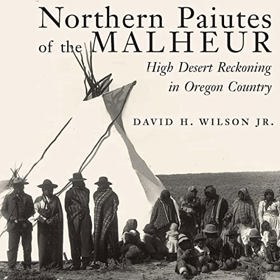
"In Northern Paiutes of the Malheur, David H. Wilson Jr. recounts the epic story of settler colonialism and protracted periods of warfare between Northern Paiutes and White settlers in the Oregon Country from the early 1850's to the Indian New Deal in the 1930s. The engaging narrative of Northern Paiute survivance in the face of 19th-Century war, population decline, and eventual tribal resurgence is a tale of resistance, adaptation, and tribal strategies to retain land and sovereignty"-- Provided by publisher xxiii, 305 pages : illustrations, maps ; 24 cm CIRC [ 0 ]
|
2022 |
|
Murder & mayhem in Boise by Mark Iverson , Jeff Wade 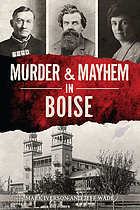
Cemetery stories : where'd Dr. McIteeny get to and the Sad tale of Sergeant Peter Vogel; Ezekiel Litell's axe to grind; Grove Street gutting; H.B. Lane orders a drink, is served a shot; The wheels of justice begin to turn; Simeon Walters's short drop; A bad year in the life of T. Burmester, Esquire; Never let your guard down at Goodwin's mill 127 pages : illustrations ; 23 cm CIRC [ 0 ]
|
2022 |
|
Cascade Locks and Canal by Friends of the Cascade Locks Historical Museum 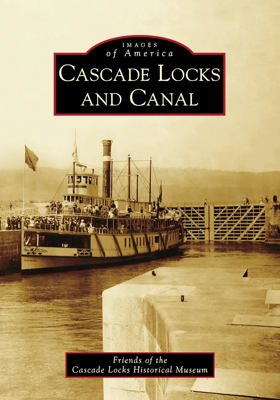
"A stretch of tumbling white water five miles long, the Cascades of the Columbia River were the single greatest barrier to inland river trade and travel in the Pacific Northwest. One solution, the Cascade Locks and Canal, took nearly 18 painstaking years to construct. From 1878 to 1896, hundreds of laborers blasted, chipped, and hauled over 800,000 cubic yards of rock and debris from the riverbed, carved and laid masonry, and welded steel to create the locks. After their completion, thousands of trips, millions of dollars in freight, and hundreds of thousands of passengers made their way through the locks. Made redundant in 1938 by the completion of the Bonneville Dam, the remnants of the structure are still visible today in Cascade Locks, Oregon."--Page 4 of cover 127 pages : illustrations ; 24 cm. CIRC [ 0 ]
|
2022 |
|
Homewaters a human and natural history of Puget Sound by David B. Williams 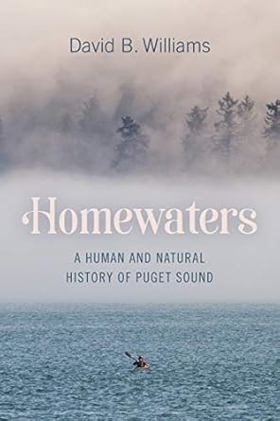
"Not far from Seattle skyscrapers live 150-year-old clams, more than 250 species of fish, and underwater kelp forests as complex as any terrestrial ecosystem. For millennia, vibrant Coast Salish communities have lived beside these waters dense with nutrient-rich foods, with cultures intertwined through exchanges across the waterways. Transformed by settlement and resource extraction, Puget Sound and its future health now depend on a better understanding of the region's ecological complexities. Focusing on the area south of Port Townsend and between the Cascade and Olympic mountains, Williams uncovers human and natural histories in, on, and around the Sound. In conversations with archaeologists, biologists, and tribal authorities, Williams traces how generations of humans have interacted with such species as geoducks, salmon, orcas, rockfish, and herring. He sheds light on how warfare shaped development and how people have moved across this maritime highway, in canoes, the mosquito fleet, and today's ferry system. The book also takes an unflinching look at how the Sound's ecosystems have suffered from human behavior, including pollution, habitat destruction, and the effects of climate change. Witty, graceful, and deeply informed, Homewaters weaves history and science into a fascinating and hopeful narrative, one that will introduce newcomers to the astonishing life that inhabits the Sound and offers longtime residents new insight into and appreciation of the waters they call home"-- Provided by publisher xiv, 245 pages : illustrations (black and white), maps (black and white) ; 23 cm CIRC [ 0 ]
|
2022 |
|
Strong Winds and Widow Makers workers, nature, and environmental conflict in pacific northwest... timber country by STEVEN C. BEDA 
Often cast as villains in the Northwest's environmental battles, timber workers in fact have a connection to the forest that goes far beyond jobs and economic issues. Steven C. Beda explores the complex true story of how and why timber-working communities have concerned themselves with the health and future of the woods surrounding them. Life experiences like hunting, fishing, foraging, and hiking imbued timber country with meanings and values that nurtured a deep sense of place in workers, their families, and their communities. This sense of place in turn shaped ideas about protection that sometimes clashed with the views of environmentalists--or the desires of employers. Beda's sympathetic, in-depth look at the human beings whose lives are embedded in the woods helps us understand that timber communities fought not just to protect their livelihood, but because they saw the forest as a vital part of themselves. 287 pages : illustrations ; 23 cm. CIRC [ 0 ]
|
2022 |
|
The most difficult of our camps Vernon Internment Camp, 1914-1920 by Don McNair , Lawrna Myers , Carol Brown , Vivian Elgie , Jerry Thompson , Vernon & District Family History Society (Publisher) 
Authored by researchers from the Vernon & District Family History Society, The Most Difficult of Our Camps: Vernon Internment Camp, 1914–1920 presents a comprehensive examination of Canada's First World War internment operations. The volume meticulously documents the experiences of over one thousand "enemy aliens"—including men, women, and children of Austro-Hungarian, German, and Ottoman descent—detained in British Columbia's interior. Utilizing archival photographs, official correspondence, and detailed biographical sketches, the authors illuminate daily life within the camp and its associated regional work projects. Ultimately, the text contributes a vital socio-historical perspective to the broader discourse on state-sponsored detention, civil liberties, and wartime governance in Canada 389 pages : illustrations (some colour), colour maps ; 23 cm CIRC [ 0 ]
|
2022 |
|
Conversations with Khahtsahlano, 1932-1954 by August Jack Khahtsahlano , James Skitt Matthews (Compiler) 
"Conversations with Khahtsahlano, 1932-1954 contains twenty-two years of conversations between Sḵwx̱uwú7mesh Chief X̱ats'alanexw, a.k.a. Chief August Jack Khahtsahlano, and Major J.S. Matthews. Originally published in 1955 by the Vancouver City Archives, Conversations with Khahtsahlano received a limited publication and is reproduced here in facsimile. Chief X̱ats'alanexw's reminiscences travel as far back as 1881. He recounts neighbourhood tales, the Traditional Stories he grew up with, local genealogies, cultural histories, and detailed accounts of practices for everything from fishing sturgeon to building houses. Knowledgeable and forthcoming, Chief X̱ats'alanexw's recollections weave a meticulous tapestry. After centuries of violent erasure of Indigenous world views, here is a rare first-hand account detailing traditional life of the Coast Salish peoples, an insightful record rich with art, diagrams, maps, letters, and photographs. Chief X̱ats'alanexw's observations give shape to the social and physical changes of the region, and offer an illuminating glimpse into so-called Vancouver in its infancy. Conversations with Khahtsahlano is an essential text that brings history indelibly to life."-- Provided by publisher 444 pages : illustrations, maps ; 21 cm CIRC [ 0 ]
|
2022 |
|
British Columbia in the balance 1846-1871 by Jean Barman 
"Esteemed historian Jean Barman brings new insights on the seemingly disparate events that converged to lay the foundation of the present-day province. By examining newly accessible private correspondence exchanged with the Colonial Office in London, Barman pieces together the chain of events that caused the distant colony of British Columbia to join the Canadian Confederation as opposed to the very real possibility of becoming one or more American states. Following the division of the Pacific Northwest between Britain and the United States in 1846, it took British Columbia just a quarter of a century to be transformed from a largely Indigenous territory in 1871, into a province of the recently formed Canada Confederation. In this detailed exploration of colonial politics, including fur trader and politician James Douglas's governance and the critical role played by the many unions between white settlers and and Indigenous women, Barman expertly weaves together seemingly disparate events that converged to lay the foundations of today's Canadian province."-- Provided by publisher 319 pages : illustrations, map ; 24 cm CIRC [ 0 ]
|
2022 |
|
Making a modern U.S. West the contested terrain of a region and its borders, 1898-1940 by Sarah Deutsch 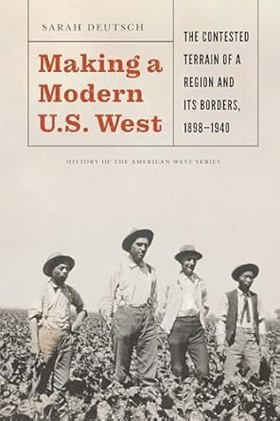
""Making a Modern U.S. West" provides an overview of the history of the U.S. West from 1898 to 1942 centering on what is often put at the margins in histories of the region-the flows of people, capital, and ideas across borders"-- Provided by publisher x, 640 pages ; 24 cm. CIRC [ 0 ]
|
2022 |
|
Pioneering death the violence of boyhood in turn-of-the-century Oregon by Peter Boag 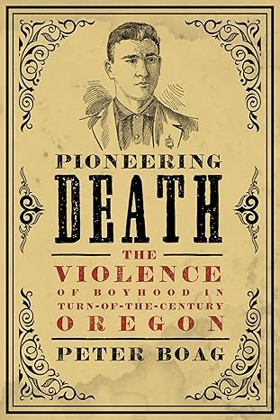
On an autumn day in 1895, eighteen-year-old Loyd Montgomery shot his parents and a neighbor in a gruesome act that reverberated beyond the small confines of Montgomery's Oregon farming community. The dispassionate slaying and Montgomery's consequent hanging exposed the fault lines of a rapidly industrializing and urbanizing society and revealed the burdens of pioneer narratives boys of the time inherited. In Pioneering Death, Peter Boag examines the Brownsville parricide as an allegory for the destabilizing transitions within the rural United States at the end of the nineteenth century. While pioneer families celebrated and memorialized founders of western white settler society, their children faced a present and future in frightening decline. Connecting a fascinating true-crime story with the broader forces that produced the murders, Boag uncovers how Loyd's violent acts reflected the brutality of American colonizing efforts, the anxieties of global capitalism, and the buried traumas of childhood in the American West. xii, 298 pages ; Illustrations, maps ; 24 cm. CIRC [ 0 ]
|
2022 |
|
Gifted earth the ethnobotany of the Quinault and neighboring tribes by Douglas Deur 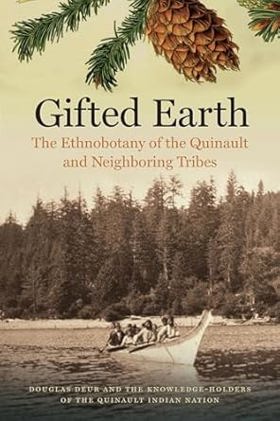
Gifted Earth features traditional Native American plant knowledge, detailing the use of plants for food, medicines, and materials. It presents a rich and living tradition of plant use within the Quinault Indian Nation in a volume collaboratively developed and endorsed by that tribe. The Quinault Reservation on the Olympic Peninsula of Washington state is a diverse tribal community, embodying the traditional knowledge of tribes along the entire Pacific Northwest coast. Its membership consists of descendants of many tribes—from the northwestern Olympic Peninsula to the northern Oregon coast—including the Quinault, but also many others who were relocated to the reservation in the nineteenth and early twentieth centuries. Individuals descended from these tribal communities, including Chinook, Chehalis, Hoh, Quileute, Queets, Cowlitz, Tillamook, Clatsop, and others, have contributed to Gifted Earth, giving it remarkable breadth and representation. A celebration of enduring Native American knowledge, this book will help non-specialists as they discover the potential of the region’s wild plants, learning how to identify, gather, and use many of the plants that they encounter in the Northwestern landscape. Part ethnobotanical guide and part “how-to” manual, Gifted Earth also prepares plant users for the minor hazards and pitfalls that accompany their quest—from how to avoid accidentally eating a bug hidden within a salal berry to how to prevent blisters when peeling the tender stalks of cow parsnip. As beautiful as it is informative, Gifted Earth sets the standard for a new generation of ethnobotanical guides informed by the values, vision, and voice of Native American communities eager to promote a sustainable, balanced relationship between plant users and the rich plant communities of traditional tribal lands. About the author: Douglas Deur is an associate research professor of anthropology at Portland State University and an adjunct professor of environmental studies at the University of Victoria. He is the author of Pacific Northwest Foraging and many other writings that explore the traditions, values, and ecological logic of Native American plant use. Gifted Earth is a product of his long-term collaboration with the Quinault Indian Nation to record plant knowledge of tribal members in order to guide modern land-use planning, ensure that this knowledge is passed on to future generations of tribal members, and share as appropriate with the outside world. xx, 250 pages : color illustrations, color map ; 23 cm CIRC [ 0 ]
|
2022 |
|
A force for nature Nancy Russell's fight to save the Columbia River Gorge by Bowen Blair , Oregon State University Press (Publisher) 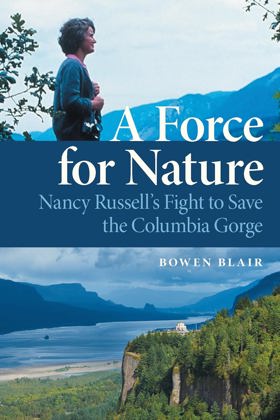
"By 1980, the Columbia Gorge's world-class vistas were on the brink of destruction. Every generation since 1907 had tried to protect the Gorge from development but had failed. A Force for Nature describes how Nancy Russell, a mother of four with no political, fundraising, or organizing experience, built a successful grassroots campaign to save the Gorge despite furious opposition, slashed tires, and threats to her life. Bowen Blair, former executive director of Friends of the Columbia Gorge and senior vice president of the Trust for Public Land, provides a behind-the-scenes account of how Russell thwarted factories and subdivisions proposed for the Gorge's most spectacular lands while overcoming intense resistance to federal legislation from both Oregon and Washington Governors, five of the six Gorge counties, 41,000 Gorge residents, and the Reagan administration. Blair provides previously unknown details on Russell's use of litigation, land acquisition, and legislation to achieve last-second, dramatic victories. He describes how Russell drove the purchase of the Gorge's most important land for public parks, and provided loans and bought property herself when the Trust for Public Land's strategy faltered. Blair recounts the National Scenic Area Act's fraught Congressional passage on the session's last day, and why President Reagan reversed his decision to veto the Act just hours before it would die. A Force for Nature should be read by anyone who cares about the Gorge or protecting nationally significant landscapes, or who will enjoy a suspenseful account of a woman overcoming daunting odds to save the place that she loved"-- Provided by publisher x, 306 pages, 8 unnumbered pages of plates : illustrations (some color), maps (some color), portraits (some color) ; 23 cm CIRC [ 0 ]
|
2022 |
|
The Washington apple orchards and the development of industrial agriculture by Amanda L. Van Lanen 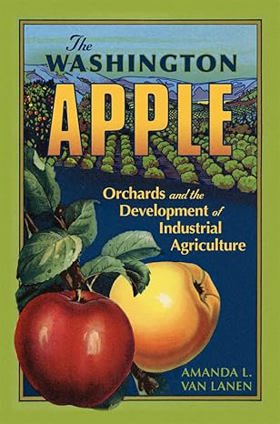
In the nineteenth century, most American farms had a small orchard or at least a few fruit-bearing trees. People grew their own apple trees or purchased apples grown within a few hundred miles of their homes. Nowadays, in contrast, Americans buy mass-produced fruit in supermarkets, and roughly 70 percent of apples come from Washington State. So how did Washington become the leading producer of America’s most popular fruit? In this enlightening book, Amanda L. Van Lanen offers a comprehensive response to this question by tracing the origins, evolution, and environmental consequences of the state’s apple industry. Washington’s success in producing apples was not a happy accident of nature, according to Van Lanen. Apples are not native to Washington, any more than potatoes are to Idaho or peaches to Georgia. In fact, Washington apple farmers were late to the game, lagging their eastern competitors. The author outlines the numerous challenges early Washington entrepreneurs faced in such areas as irrigation, transportation, and labor. Eventually, with crucial help from railroads, Washington farmers transformed themselves into “growers” by embracing new technologies and marketing strategies. By the 1920s, the state’s growers managed not only to innovate the industry but to dominate it. viii, 286 pages : illustrations, maps ; 24 cm. CIRC [ 0 ]
|
2022 |
|
A country strange and far the Methodist Church in the Pacific Northwest, 1834-1918 by Michael C. McKenzie 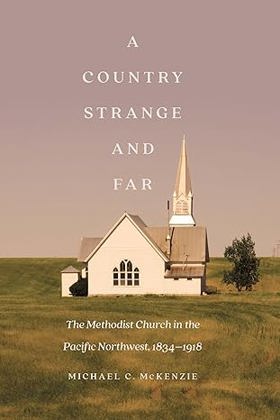
In 1834 the weary missionary Jason Lee arrived on the banks of the Willamette River and began to build a mission to convert the local Kalapuya and Chinook populations to the Methodist Church. The denomination had become a religious juggernaut in the United States, dominating the religious scene throughout the mid-Atlantic and East Coast. But despite its power and prestige and legions of clergy and congregants, Methodism fell short of its goals of religious supremacy in the northwest corner of the continent. In A Country Strange and Far Michael C. McKenzie considers how and why the Methodist Church failed in the Pacific Northwest and how place can affect religious transplantation and growth. Methodists failed to convert local Native people in large numbers, and immigrants who moved into the rural areas and cities of the Northwest wanted little to do with Methodism. McKenzie analyzes these failures, arguing the region itself—both the natural geography of the place and the immigrants’ and clergy’s responses to it—was a primary reason for the church’s inability to develop a strong following there. The Methodists’ efforts in the Pacific Northwest provide an ideal case study for McKenzie’s timely region-based look at religion. xviii, 330 pages : illustrations ; 24 cm CIRC [ 0 ]
|
2022 |
|
A failed vision of empire the collapse of Manifest Destiny, 1845-1872 by Daniel J. Burge 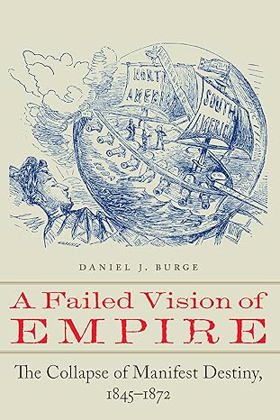
Since the early twentieth century, historians have traditionally defined manifest destiny as the belief that the United States was destined to expand from coast to coast. This generation of historians has posed manifest destiny as a unifying ideology of the nineteenth century, one that was popular and pervasive and ultimately fulfilled in the late 1840s when the United States acquired the Pacific Coast. However, the story of manifest destiny was never quite that simple. In A Failed Vision of Empire Daniel J. Burge examines the belief in manifest destiny over the nineteenth century by analyzing contested moments in the continental expansion of the United States, arguing that the ideology was ultimately unsuccessful. By examining speeches, plays, letters, diaries, newspapers, and other sources, Burge reveals how Americans debated the wisdom of expansion, challenged expansionists, and disagreed over what the boundaries of the United States should look like. A Failed Vision of Empire is the first work to capture the messy, complicated, and yet far more compelling story of manifest destiny’s failure, debunking in the process one of the most pervasive myths of modern American history. xvii, 246 pages : illustrations ; 24 cm CIRC [ 0 ]
|
2022 |
|
Camas Prairie Railroad by Robert Perret , Amy Thompson 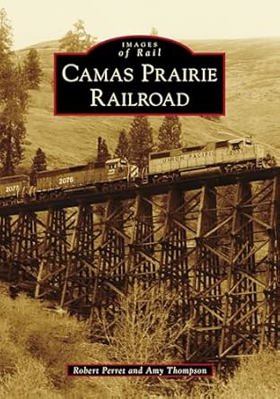
"Incorporated in 1909, the Camas Prairie Railroad (CPRR) was a successful joint venture between two major competing companies, the Union Pacific and Northern Pacific Railroads. Despite covering less than 300 miles total, the Camas Prairie Railroad connected the region's largest exporters of wheat and lumber and was the last vital section of rail to directly connect the eastern United States with the Pacific Northwest. In addition to freight, the CPRR was the most reliable method of transportation for people and the postal service in this rural area, even allowing for the creation of new towns along the line. The Camas Prairie itself ranged from desert to mountainous forests, with rugged river canyons in between. Infamously known as the "Railroad on Stilts," one subdivision alone boasts 44 bridges, many of them made from heavy timber. No longer in business, portions of the track have been removed while some remain active, carrying freight to larger markets. Trestles and tunnels still dot the landscape, giving a peek into the not-so-distant past" 127 pages : illustrations, map ; 24 cm. CIRC [ 0 ]
|
2022 |
|
Japanese Americans at Heart Mountain networks, power, and everyday life by Saara Kekki 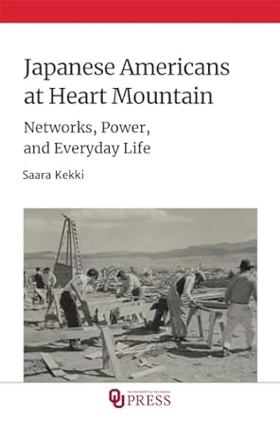
"On August 8, 1942, 302 people arrived by train at Vocation, Wyoming, to become the first Japanese American residents of what the U.S. government called the Relocation Center at Heart Mountain. In the following weeks and months, they would be joined by some 10,000 of the more than 120,000 people of Japanese descent, two-thirds of them U.S. citizens, incarcerated as "domestic enemy aliens" during World War II. Heart Mountain became a town with workplaces, social groups, and political alliances-in short, networks. These networks are the focus of Saara Kekki's Japanese Americans at Heart Mountain. Interconnections between people are the foundation of human societies. Exploring the creation of networks at Heart Mountain, as well as movement to and from the camp between 1942 and 1945, this book offers an unusually detailed look at the formation of a society within the incarcerated community, specifically the manifestation of power, agency, and resistance. Kekki constructs a dynamic network model of all of Heart Mountain's residents and their interconnections-family, political, employment, social, and geospatial networks-using historical "big data" drawn from the War Relocation Authority and narrative sources, including the camp newspaper Heart Mountain Sentinel. For all the inmates, life inevitably went on: people married, had children, worked, and engaged in politics. Because of the duration of the incarceration, many became institutionalized and unwilling to leave the camps when the time came. Yet most individuals, Kekki finds, took charge of their own destinies despite the injustice and looked forward to the day when Heart Mountain was behind them. Especially timely in its implications for debates over immigration and assimilation, Japanese Americans at Heart Mountain presents a remarkable opportunity to reconstruct a community created under duress within the larger American society, and to gain new insight into an American experience largely lost to official history."-- Provided by publisher xvii, 224 pages : illustrations, maps ; 24 cm. CIRC [ 0 ]
|
2022 |
|
Working boats an inside look at ten amazing watercraft by Tom Crestodina (Author, Illustrator) 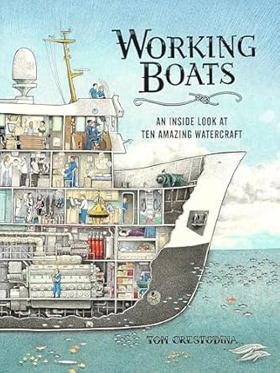
"Want to know what happens during a Coast Guard rescue, what it's like to work on a scientific research vessel, or what's involved when crabbing in the cold waters of the North Pacific? This visually engaging book includes cross sections and exploded views showing in great detail what it's like to live and work aboard ten amazing boats."-- Publisher's description 56 pages : color illustrations, color maps ; 32 cm CIRC [ 0 ]
|
2022 |
|
A history of Oregon ornithology territorial days to the rise of birding by Alan Contreras , Vjera E. Thompson , Nolan M. Clements , Paul R. Adamus , Lawrence B. McQueen (Illustrator), Junco Bullick (Illustrator), Oregon State University Press (Publisher) 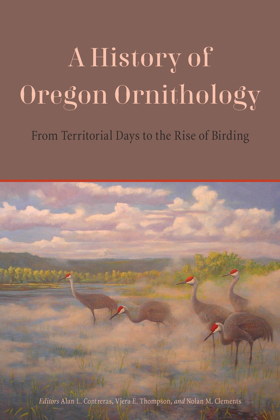
The study of birds was, in its early years, often driven by passionate amateurs in a localized context. A History of Oregon Ornithology takes readers from the Lewis and Clark expedition, through the professionalization of the field, and to the mid-twentieth century, focusing on how birding and related amateur field observation grew outside the realms of academia and conservation agencies. Editors Alan Contreras, Vjera Thompson, and Nolan Clements have assembled chapters exploring the differences and interplay between the amateur and professional study of birds, along with discussions of early birding societies, notable observers, and ornithological studies. The book includes chapters on such significant ornithologists as Charles Bendire, William L. Finley, Ira Gabrielson, Stanley Jewett, and David B. Marshall. It also notes the sometimes-overlooked contributions of women to our expanding knowledge of western birds. Special attention is paid to the development of seabird observation, the impact of the Internet, and the rise of digital resources for bird observers. Intended for readers interested in the history of Oregon, scientific explorations in the West, and the origins of modern birding and field ornithology, A History of Oregon Ornithology offers a detailed and entertaining account of the study of birds in the Pacific Northwest. xii, 284 pages, 8 unnumbered pages of plates : illustrations (some color), portraits ; 23 cm CIRC [ 0 ]
|
2022 |
|
A drum in one hand, a sockeye in the other stories of indigenous food sovereignty from the Northwest Coast by Charlotte Coté 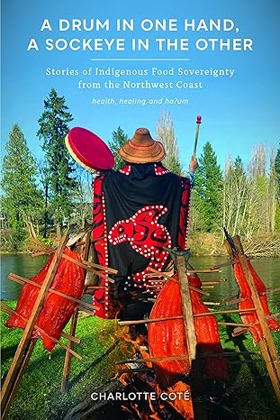
In the dense rainforest of the west coast of Vancouver Island, the Somass River (c̓uumaʕas) brings sockeye salmon (miʕaat) into the Nuu-chah-nulth community of Tseshaht. C̓uumaʕas and miʕaat are central to the sacred food practices that have been a crucial part of the Indigenous community's efforts to enact food sovereignty, decolonize their diet, and preserve their ancestral knowledge. In A Drum in One Hand, a Sockeye in the Other, Charlotte Coté shares contemporary Nuu-chah-nulth practices of traditional food revitalization in the context of broader efforts to re-Indigenize contemporary diets on the Northwest Coast. Coté offers evocative stories of her Tseshaht community's and her own work to revitalize relationships to haʔum (traditional food) as a way to nurture health and wellness. As Indigenous peoples continue to face food insecurity due to ongoing inequality, environmental degradation, and the Westernization of traditional diets, Coté foregrounds healing and cultural sustenance via everyday enactments of food sovereignty: berry picking, salmon fishing, and building a community garden on reclaimed residential school grounds. This book is for everyone concerned about the major role food plays in physical, emotional, and spiritual wellness. xxi, 184 pages : illustrations, maps ; 24 cm. CIRC [ 0 ]
|
2022 |
|
The art of ceremony voices of renewal from indigenous Oregon by Rebecca J. Dobkins (Author, Photographer) 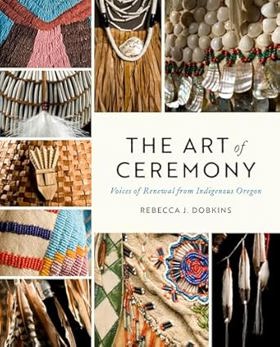
"The practice of ceremony offers ways to build relationships between the land and its beings, reflecting change while drawing upon deep relationships going back millennia. Ceremony may involve intricate and spectacular regalia but may also involve simple tools, such as a plastic bucket for harvesting huckleberries or a river rock that holds heat for sweat. The Art of Ceremony provides a contemporary and historical overview of the nine federally recognized tribes in Oregon, through rich conversations with tribal representatives who convey their commitments to ceremonial practices and the inseparable need to renew language, art, ecological systems, kinship relations, and political and legal sovereignty. Vivid photographs illuminate the ties between land and people at the heart of such practice, and each chapter features specific ceremonies chosen by tribal co-collaborators, such as the Siletz Nee Dosh (Feather Dance), the huckleberry gathering of the Cow Creek Umpqua, and the Klamath Return of C'waam (sucker fish) Ceremony. Part of a larger global story of Indigenous rights and cultural resurgence in the twenty-first century, The Art of Ceremony celebrates the power of Indigenous renewal, sustainable connection to the land, and the ethics of responsibility and reciprocity between the earth and all its inhabitants"-- Provided by publisher xix, 261 pages : illustrations (chiefly color), color maps ; 24 cm. CIRC [ 0 ]
|
2022 |
|
Transformations the George and Colleen Hoyt collection of Northwest Coast art by Rebecca J. Dobkins (Author, Curator), Tasia D. Riley , Hallie Ford Museum of Art (Host institution) 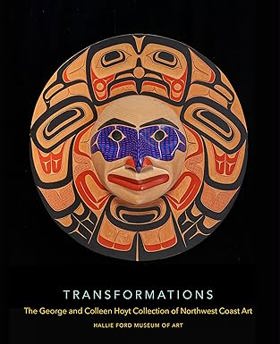
Since the 1980s, Oregon-based art collectors George and Colleen Hoyt have amassed one of the finest private collections of Northwest Coast art in the United States. Transformations traces the history of contemporary Northwest Coast Native art since the 1950s. Included are works by some of the region's foremost Native artists of the past half century, including Robert Davidson, Doug Cranmer, Beau Dick, and Susan Point. The collection of over six hundred prints and carvings by over one hundred artists is a promised gift from George and Colleen Hoyt to the Hallie Ford Museum of Art. Richly illustrated with color photographs, the book features a foreword by John Olbrantz, an essay by Rebecca J. Dobkins, and artist biographies by Tasia Riley 215 pages : color illustrations ; 31 cm CIRC [ 0 ]
|
2022 |
|
Long Beach wild a celebration of people and place on Canada's rugged western shore by Adrienne Mason 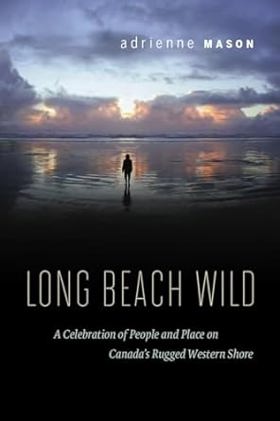
Each year, more than a million people visit the spectacular sweep of sand that stretches along Vancouver Island's west coast between Tofino and Ucluelet to watch waves crash ashore on a series of beaches-essentially one long beach separated by small rocky headlands, a shoreline steps away from howling wolves and towering red cedars. In Long Beach Wild: A Celebration of People and Place on Canada's Rugged Western Shore , local resident Adrienne Mason uses her intimate knowledge of the area and a selection of historic and contemporary photos to explore the region's rich natural and cultural history 215 p. : ill., maps, ports. ; 23 cm. CIRC [ 1 ]
|
2022 |
|
American burial ground a new history of the Overland Trail by Sarah Keyes 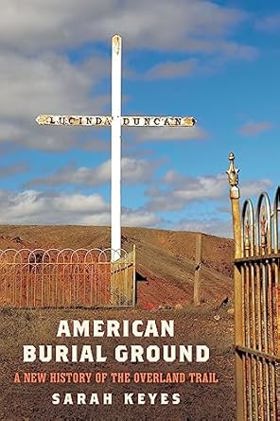
"This book reinterprets the historic touchstone of the Overland Trail as a story of death and Native activism. Emigrant graves became seeds of U.S. possession across the West. In response Native peoples defended their homelands by pointing to their graves as proofs of Indigenous persistence and enduring territorial claims"-- Provided by publisher 262 pages : illustrations, maps ; 24 cm. CIRC [ 0 ]
|
2023 |
|
Agents of empire the First Oregon Cavalry and the opening of the interior Pacific Northwest during the Civil War by James Robbins Jewell 
Agents of Empire expands the historiographical scope of Civil War studies to include the war’s intersection with the history of the American West, demonstrating how the war was transcontinental in scope. Much more than a traditional Civil War regimental history, James Robbins Jewell’s work delves into the operational and social conditions under which the First Oregon Cavalry Regiment was formed. In response to ongoing tensions and violent interactions with Native peoples determined to protect their way of life and lands, Colonel George Wright, head of the military’s District of Oregon, asked the governor of Oregon to form a voluntary cavalry unit to protect white settlers and farmers. By using local volunteers, and later two additional regiments of infantry from the region, the federal government was able to draw from the majority of Regular Army troops stationed in the Pacific Northwest, who were eventually sent to fight Confederate forces east of the Mississippi River. Had the First Oregon Cavalry failed to fulfill its responsibilities, the federal government would have had to recall Union forces from other threatened areas and send them to Oregon and Washington Territory to quell secessionist unrest and Indigenous resistance to land theft, resource appropriation, and murder. The First Oregon Cavalry ensured settlers’ security in the Union’s farthest northwest corner, thereby contributing to the Union cause. xxvi, 326 pages : illustrations, maps ; 24 cm CIRC [ 0 ]
|
2023 |