Clatsop County County
Clatsop County was created from the original Tuality District in 1844 and named for the Clatsop Tribe, one of the many Chinook tribes living in Oregon. The Journals of Lewis and Clark mention the tribe. Fort Clatsop, Lewis and Clark’s winter headquarters in 1805 and now a national memorial near the mouth of the Columbia River, also took the tribe’s name. Astoria, Oregon’s oldest city, was established as a fur trading post in 1811 and named after John Jacob Astor.
Mapped Location
Clatsop County: The mapped location is an approximation and should not be used for navigation or wayfinding.
Information
General information on Clatsop County
- Feature Type: County
- County Seat: City of Astoria
- Established: Saturday, June 22, 1844
Official, historical, colloquial and alternative toponyms for Clatsop County
A brief list of names that this geographic feature has been named
| Name | Description |
|---|---|
| Clatsop County | Official |
Related Catalog Titles
A Bibliography for Clatsop County, County
Comin' in over the rock a storyteller's history of Cannon Beach by Peter Lindsey
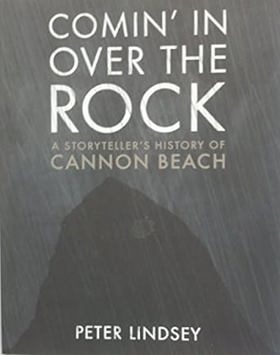
An anecdotal history of Cannon Beach, Oregon, written by someone who has been there for sixty years. Witness the beginnings, the character and the characters of this timeless ocean community.
170 pages : illustrations ; 23 cm
CIRC [ 1 ]
Life on "Clatsop" by Inez Stafford Hanson

Published in local editions by Inez Stafford Hanson, Life on "Clatsop" offers an evocative, intimate glimpse into early pioneering existence along the rugged, wind-swept coast of northwestern Oregon. The book captures the daily hardships, quiet triumphs, and resourceful self-reliance of families who carved homesteads out of the dense timber and tidal flats near the mouth of the Columbia River. Through personal recollections and historical anecdotes, the author preserves the vanishing rhythms of isolated rural schooling, seasonal fishing, and coastal community-building. A keen insight drawn from the text is how maritime frontier memoirs highlight the profound psychological duality of coastal living; the very ocean and river currents that provided isolation and existential peril were simultaneously the lifeline connecting isolated settlers to the wider world.
85 pages : illustrations ; 28 cm
CIRC [ 1 ]
Cannon Beach a place by the sea by Terence O'Donnell, Cannon Beach Historical Society
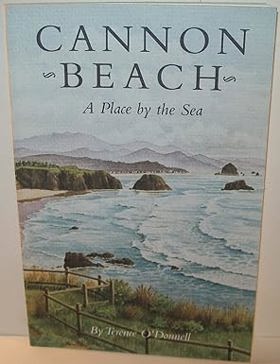
Cannon Beach: A Place by the Sea was published in 1996 by the Oregon Historical Society Press. The book chronicles the colorful heritage of this iconic Oregon coastal community. The book weaves together historical accounts and local lore to trace the area's evolution from a remote wilderness into a beloved seaside destination. O'Donnell highlights key figures, early homesteaders, and the enduring natural landscapes that defined the character of the northern Oregon coast. It stands as an informative and engaging chronicle for anyone interested in Pacific Northwest coastal history.
xxiii, 164 pages : illustrations, maps ; 23 cm
CIRC [ 1 ]
Arch Cape chronicles a bit of Oregon coast's past by David English, Alma English
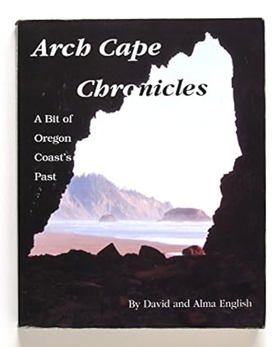
Published by local historians David and Alma English, Arch Cape Chronicles: A Bit of Oregon Coast's Past explores the intimate, isolated history of a windswept coastal community nestled between Cannon Beach and Nehalem. The book traces Arch Cape’s evolution from an untamed wilderness of dense old-growth timber and rocky headlands into a quiet haven for pioneering homesteaders, loggers, and vacationers. Drawing on historical documents, oral histories, and vintage photographs, the authors document how early travelers navigated the treacherous coastline before the construction of modern highways and tunnels carved open the rugged terrain. A keen insight drawn from the work is how the very geographic barriers that delayed Arch Cape's development—such as towering sea cliffs and impassable tides—ultimately preserved its secluded character, transforming what was once an existential travel hazard into an exclusive sanctuary for those seeking refuge from the modern world.
357 pages : illustrations ; 26 cm
CIRC [ 1 ]
Tillamook Light a true narrative of Oregon's Tillamook Rock Lighthouse by Jim Gibbs
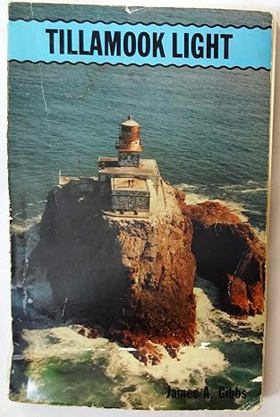
The lighthouse keeper has gone the way of the iceman and blacksmith, but in the case of Tillamook Rock Lighthouse, the story remains--a complete history of :Terrible Tilly,: seasoned with salty drama and some hilarious adventure. Gibbs, a former Coastguardsman stationed at the infamous rock off Oregon's northwest shores, knows that wild crag from the inside out, and he has supplemented his account with what happened before he arrived on the scene, and since closure of the light in 1957. Many fine photos keep pace with the action. 145 pages.
xi, 145 pages : illustrations ; 22 cm
CIRC [ 1 ]
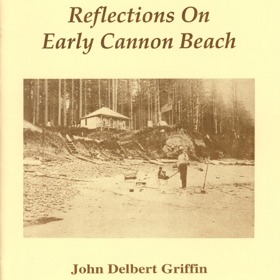
Reflections on early Cannon Beach by John Delbert Griffin
Astoria by Washington Irving
Lewis and Clark at Fort Clatsop by Lancaster Pollard
Clatsop County, Oregon a history by Emma Gene Miller
This book includes myths and legends of the Indians; historic anecdotes, and the story of lumbering and industrial growth
291 pages : illustrations ; 22 cm
CIRC [ 1 ]
Clatsop County
- Arch Cape
- City of Astoria
- Biddle (historical)
- Blind Slough (historical)
- Bradwood
- Brownsmead
- Burnside (historical)
- City of Cannon Beach
- Carnahan
- Chadwell (historical)
- Clifton
- Denver (historical)
- Elsie
- Fern Hill
- Flavel (historical)
- City of Gearhart
- Grand Rapids
- Hamlet
- Jeffers Garden
- Jewell
- Knappa
- Lukarilla
- Melville
- Miles Crossing
- Mishawaka
- Navy Heights
- Necanicum (historical)
- Oklahoma Hill
- Olney
- City of Seaside
- Sunset Beach
- Surf Pines
- Svensen
- Svensen Junction
- Taylorville
- Tideport
- Tolovana Park
- Tongue Point Village
- Uniontown
- Vinemaple
- City of Warrenton
- Wauna
- Westport
Political Boundaries
Last updated: 2013-01-08