Multnomah County County
Lewis and Clark made note of “Multnomah,” the tribal village on Sauvie Island, in 1805 and applied that name to all tribal people of the area. The name is derived from “nematlnomaq,” probably meaning “downriver.” Multnomah County was created from parts of Washington and Clackamas Counties by the Territorial Legislature in 1854, five years before Oregon became a state, because citizens found it inconvenient to travel to Hillsboro to conduct county business.
Mapped Location
Multnomah County: The mapped location is an approximation and should not be used for navigation or wayfinding.
Information
General information on Multnomah County
- Feature Type: County
- County Seat: City of Portland
- Established: Friday, December 22, 1854
Official, historical, colloquial and alternative toponyms for Multnomah County
A brief list of names that this geographic feature has been named
| Name | Description |
|---|---|
| Multnomah County | Official |
Related Catalog Titles
A Bibliography for Multnomah County, County
Portlandness a cultural atlas by David Banis , Hunter Shobe , Corinna Kimball-Brown (Cartographer), Randy Morris (Cartographer), Jon Franczyk (Cartographer), Daniel E. Coe (Cartographer), Kirk McEwen (Cartographer), Joan Lundell (Book designer)
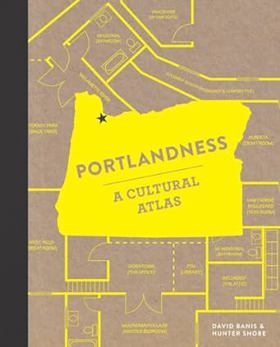
Summary: In 150 inforgraphic maps, two leading geographers explore Portland, Oregon, through unexpected topics such as city chickens, wild coyote encounters, food-truck trends, and coffee culture. Each map starts with the gathering of at least one data set about a given topic, then translating that into visual form which blends traditional cartographic skills with modern graphic design
190 pages : illustrations (chiefly color), color maps, color plans ; 26 cm
CIRC [ 1 ]
Vanport by Manly Maben
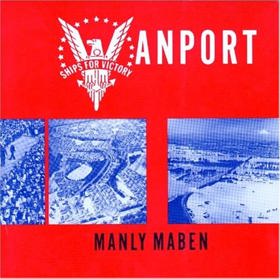
"Vanport City, Oregon, was conceived in 1942 as a temporary housing project for the families of men and women who came to the Pacific Northwest to work in the Kaiser shipyards and further the war effort (World War II). Situated on a flood plain between Vancouver, Washington, and Portland, Oregon, the Columbia River reclaimed the city for its own in a flood on Memorial Day, 1948. In its brief but vital lifetime, Vanport pushed the Portland area into a new era of change and development, leaving a legacy that is felt even today. During its time, Vanport was the largest housing project in the United States, (perhaps the world) and the second largest city in Oregon"--Cover
xiv, 151 pages : illustrations ; 23 cm
CIRC [ 1 ]
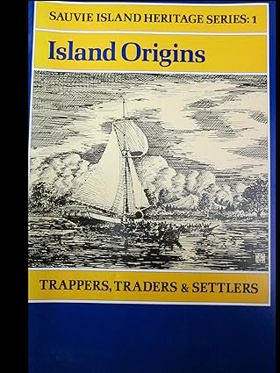
Island origins trappers, traders & settlers by J. D. Cleaver
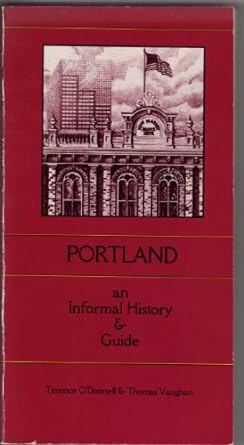
Portland an informal history & guide by Terence O'Donnell, Thomas Vaughan
Willamette landings, ghost towns of the river by Howard McKinley Corning, Federal Writers' Project (Or)
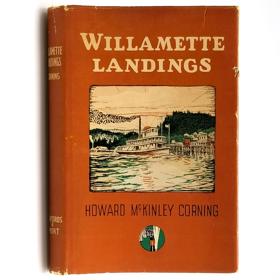
A history of the towns and landings on the Willamette River that were serviced by steamboats prior to the advent of railroads. Includes an index of almost 200 landings, as compiled by Capt. Arthur Riggs in 1940. Howard McKinley Corning (1896-1977) was a poet and historian. During the 1930s he served as an editor and supervisor for the Oregon Writers' Project of the Works Progress Administration, the work for which led to his writing of both this book (1947) and A Dictionary of Oregon History (1956).
vi, 224 pages illustrations 23 cm
CIRC [ 2 ]
Early Portland stump-town triumphant; rival towns on the Willamette, 1831-1854 by Eugene E. Snyder

I remember Portland by Laurence Pratt
Portland, Oregon, its history and builders by Joseph Gaston
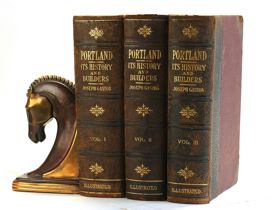
in connection with the antecedent explorations, discoveries, and movements of the pioneers that selected the site for the great city of the Pacific
3 volumes : illustrations, maps, portraits ; 27 cm
ONLINE CIRC [ 3 ]
History of Portland, Oregon by H. W. Scott
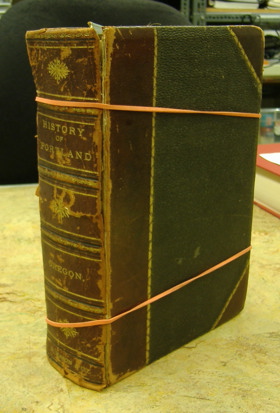
Published in 1890 and compiled by Harvey W. Scott, the formidable long-time editor of The Oregonian, History of Portland, Oregon offers a sweeping civic chronicle of the city's rise from a muddy clearing on the Willamette River to the dominant commercial metropolis of the Pacific Northwest. The exhaustive volume details early municipal struggles, infrastructural triumphs, and the fiercely competitive navigation of regional river trade, culminating in extensive biographical sketches of the city's pioneer elites. A keen insight drawn from the text is how Scott leverages his dual authority as a historian and the region's most powerful journalist to actively manufacture, rather than merely record, Portland's civic mythology. By inextricably linking the city's economic progress to the moral and financial virtues of its conservative merchant class, the book functions as a sophisticated ideological tool designed to cement the hegemony of the local business establishment while deliberately marginalizing labor movements and competing frontier narratives.
651 pages, 69 unnumbered leaves of plates : illustrations, portraits ; 26 cm
ONLINE CIRC [ 1 ]
Related Online Resources
Japanese American Museum of Oregon
Formerly known as the Oregon Nikkei Legacy Center, the Japanese American Museum of Oregon at Naito Center is a venue for culture and research as well as an invaluable resource for exploring Nikkei experiences and their role in Oregon’s multicultural community. Our permanent exhibit space highlights Issei immigration and early life in Oregon, Nihonmachi (Japantown), life after Executive Order 9066 (including the Portland Assembly Center), and contemporary Nikkei life.
WEB LINK
Multnomah County
- Alameda
- Arleta
- Barnes Heights
- Bertha (historical)
- Bonneville
- Bonny Slope
- Bridal Veil
- Bridlemile
- Burlingame
- Burlington
- Carson Heights
- Corbett
- Dodson
- Dunthorpe
- Englewood
- City of Fairview
- Faloma
- Folkenberg
- Fulton (historical)
- Gilbert
- Green Hills
- City of Gresham
- Hillsdale
- Holbrook
- Interlachen
- Johns Landing
- Kellogg Park
- Kings Heights
- Latourell
- City of Maywood Park
- Orient
- Plainview (historical)
- Pleasant Home
- City of Portland
- Portland Heights
- Powell Valley
- Powellhurst
- Riverview (historical)
- Riverwood
- Russellville
- South Portland (historical)
- Springdale
- City of Troutdale
- Twelvemile Corner
- University Park
- Vanport City (historical)
- Vermont Hills
- Villa Ridge
- Warrendale
- Westmoreland
- Whitwood Court
- Willamette Heights
- City of Wood Village
- Woodstock
Political Boundaries
Last updated: 2025-09-23