Albert G. Walling 1847-1928
Albert Gallatin Walling (1828–1896)—whose biographical details are frequently conflated with his nephew, the successful pioneer nurseryman Albert G. Walling (1847–1928)—was a prominent nineteenth-century American printer and publisher whose works provided an indispensable visual and written record of early Oregon. Operating one of the most sophisticated job-printing, bookbinding, and lithography establishments in Portland, Walling was responsible for publishing numerous foundational reference works, most notably a series of extensively illustrated county histories in the 1880s, including the comprehensive History of Southern Oregon (1884). By compiling detailed pioneer reminiscences, local statistics, and exhaustive accounts of regional development—often enlisting regional writers like Herbert O. Lang to synthesize the material—his publishing company actively preserved the crucial early narratives of the Pacific Northwest's settlement. Beyond his textual histories, Walling was highly regarded for producing exceptionally detailed lithographs that documented the rapidly developing cities, farms, and landscapes of the territory, leaving behind a commercial and artistic archive that remains a vital primary source for modern historians.
Mr. Walling was born June 24, 1847, on the plains while his father and mother, George and Frances Walling, were on their way to Oregon.
Biographical Overview
- Lived from 1847 to 1928
- Born: Jun 24, 1847, On the Oregon Trail
- Died: May 17, 1928, Portland, Oregon
Historical Events
- No referenced events linked
Bibliography for Albert G. Walling
A listing of books related by subject
History of southern Oregon, comprising Jackson, Josephine, Douglas, Curry and Coos counties by Albert G. Walling
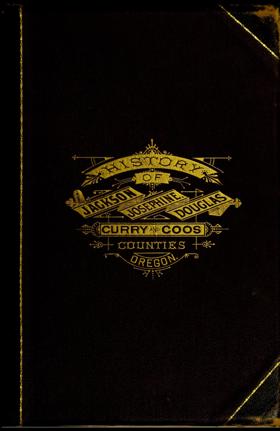
Albert G. Walling’s History of southern Oregon, comprising Jackson, Josephine, Douglas, Curry and Coos counties provides a sweeping encyclopedic record of the expansive pioneer settlement and resource extraction across the rugged Rogue and Umpqua river valleys. Moving beyond a standard chronological timeline, the text details how the region's earliest frontier infrastructure—including the grueling Siskiyou Mountain wagon roads, coastal shipping ports, and remote gold mining camps—was mapped directly onto the ancient, complex overland trails and riverine corridors long established and managed by the Takelma, Umpqua, Coos, and Tututni peoples. Walling chronicles the immense physical labor required by nineteenth-century miners, loggers, and homesteaders to exploit the dense coastal timberlands and fertile inland basins, highlighting how these isolated settlers relied on deep community bonds and interdependent alliances to survive profound geographic isolation and the volatile boom-and-bust cycles of the gold rush. Ultimately, this foundational regional history captures the rapid superimposition of Euro-American industry onto established indigenous geography, demonstrating how cooperative pioneer endurance successfully engineered the civic and economic foundations of modern southern Oregon.
545, [1] pages, [126] leaves of plates : illustrations, folded maps, portraits ; 30 cm
ONLINE Circulation [ 1 ]
Entry Details
Related Online Resources
- No external online resources or related links found
Last updated: 2026-09-30