Catalog of British Columbiana and Pacific Northwest Americana
Encyclopedia Cascadia Catalog contains book titles of mostly non-fiction Pacific Northwest Coast of North America Titles (primarially British Columbia, Idaho, Oregon and Washington State) in an easy-to-understand title catalog. If you see a link with this badge ONLINE CIRC it means that there is an online institution that provides free access to that title. In some cases there may be more than one institution hosting the title digitally.
| Catalog Title | Published |
|---|---|
|
Contested boundaries a new Pacific Northwest history by David J. Jepsen, David J. Norberg 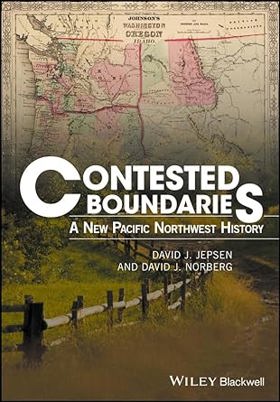
An engaging, contemporary look at the themes, events, and people that have shaped the history of the Pacific Northwest over the last two centuries xxi, 392 pages : illustrations, map, portraits ; 26 cm CIRC [ 1 ]
|
2017 |
|
Under Vancouver 1972-1982 by Greg Girard (Photographer), David Campany (Compiler) 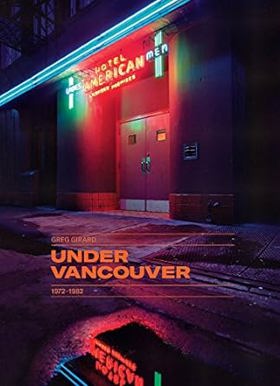
Greg Girard's photographs of Vancouver from the 1970s and early 1980s show us the city's final days as a port town at the end of the railway line. Soon after Vancouver began to be noticed by the wider world (Expo 86 is generally agreed on as the pivotal moment), the city began refashioning itself as an urban resort on nature's doorstep and attracting attention as a destination for real estate investment. At that time, long before post-9/11 security concerns sealed off the working waterfront from the city, many of Vancouver's downtown and east side streets ended at the waterfront, an area filled with commercial fishing docks, cargo terminals, and bars and cafes for waterfront workers and sailors. Pawn-shop windows downtown displayed outboard motors, chainsaws and fishing gear. Wandering these streets, living in cheap hotels, Girard photographed the workaday (and night) world of the city where he grew up. The photographs in Under Vancouver 1972-1982 were made before Girard began earning a living as a magazine photographer, later establishing a formal practice as an artist. They reveal an early interest in the hidden and the overlooked, the use of color film at night, and the extended photographic inquiry of a specific place, all of which became signature features of later books such as City of Darkness and City of Darkness Revisited (about the infamous Kowloon Walled City), Phantom Shanghai and Hanoi Calling. Under Vancouver 1972-1982 is the first comprehensive collection of Girard's early photographs of Vancouver. Made in and of the moment, a young photographer's earliest engagements (often featuring the underside of the city), the pictures now form an unintended photographic record of a Vancouver that has all but disappeared 196 pages : illustrations ; 26 cm CIRC [ 1 ]
|
2017 |
|
The west coast of Vancouver Island including Bunsby Islands & the Broken group by Anne Yeadon-Jones , Laurence Yeadon-Jones 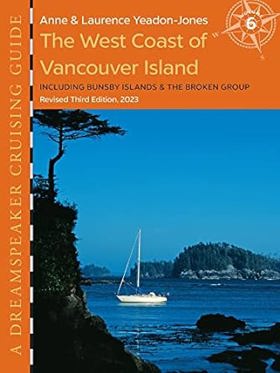
With its rugged, rock-studded shoreline, relentlessly crashing ocean swells, miles of sandy beaches, diversity of wildlife and countless coves and bays, Vancouver Island’s western shoreline presents a challenging and thrilling adventure. Volume 6 covers the best spots from Cape Scott to Sooke, including Bull Harbour, the Bunsby Islands and Barclay Sound. This new revised edition presents updated information along with Laurence’s charming hand-drawn shoreline plans of selected marinas and small boat anchorages, ranging from safe all-weather havens to secluded picnic spots and marine parks. With charts, tips and helpful data, this guide will enhance the enjoyment and safety of any voyage to the wild West Coast. 191 pages : color illustrations, color maps ; 31 cm. CIRC [ 1 ]
|
2017 |
|
Territorial hues the color print and Washington state, 1920-1960 by David F. Martin , Cascadia Art Museum 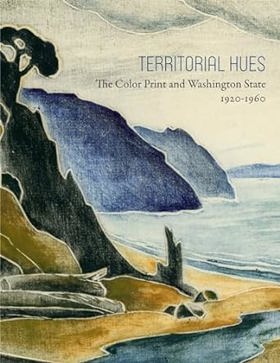
Territorial Hues: The Color Print and Washington State, 1920-1960' will consist of prints that display the cultural and stylistic influences used by Washington State artists to produce highly exceptional works that reflect the color, light, and atmosphere that is unique to this region. The book focuses on several mediums including color woodcut, intaglio, serigraphy, and lithography. The influences of Japanese prints and regional appropriations of international movements will be examined as well as the local production of white-line prints. Exhibition: Cascadia Art Museum, Edmonds, USA (05.10.2017-07.01.2018) 160 pages : illustrations (chiefly color), portraits ; 29 cm CIRC [ 1 ]
|
2017 |
|
The gift of knowledge = Ttn¿wit çtawish Nch'inch'imam¿ reflections on Sahaptin ways by Virginia Beavert , Janne L. Underriner 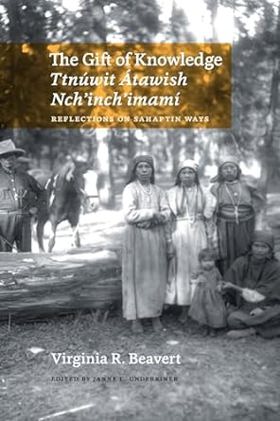
"The Gift of Knowledge / Ttnuwit Atawish Nch'inch'imamí is a treasure trove of material for those interested in Native American culture. Author Virginia Beavert grew up in a traditional, Indian-speaking household. Both her parents and her maternal grandmother were shamans, and her childhood was populated by people who spoke tribal dialects and languages: Nez Perce, Umatilla, Klikatat, and Yakima Ichishkíin. Her work on Native languages began at age twelve, when she met linguist Melville Jacobs while working for his student, Margaret Kendell. When Jacobs realized that Beavert was a fluent speaker of the Klikatat language, he taught her to read and write the orthography he had developed to record Klikatat myths. After a stint in the U.S. Air Force during World War II, Beavert went on to earn graduate degrees in education and linguistics, and she has contributed to numerous projects for the preservation of Native language and teachings. Beavert narrates highlights from her own life and presents cultural teachings, oral history, and stories (many in bilingual Ishishkíin-English format) about family life, religion, ceremonies, food gathering, and other aspects of traditional culture."--Provided by publisher 1 online resource. CIRC [ 1 ]
|
2017 |
|
The Salem Clique Oregon's Founding Brothers by Barbara S. Mahoney 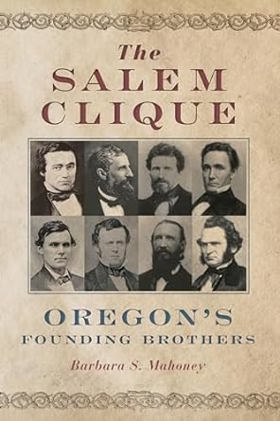
"During the decade of the 1850s, the Oregon Territory progressed toward statehood in an atmosphere of intense political passion and conflict. Editors of rival newspapers blamed a group of young men whom they named the 'Salem Clique' for the bitter party struggles of the time. Led by Asahel Bush, editor of the Oregon Statesman, the Salem Clique was accused of dictatorship, corruption, and the intention of imposing slavery on the Territory. The Clique, critics maintained, even conspired to establish a government separate from the United States, conceivably a 'bigamous Mormon republic.' While not in agreement with some of the more extreme contemporary accusations against the Clique, many historians have concluded that its members were vicious and unscrupulous men who were able, because of their command of the Democratic Party, to impose their hegemony on the Oregon Territory's inhabitants. Other scholars have seen them as merely another manifestation of the contentious politics of the period. Although the Salem Clique has been given considerable prominence in nearly every account of Oregon's Territorial period, there has not been a detailed study of its role until now. What sort of people were these men? What was their impact on the issues, events, and movements of the period? What role did they play in the years after Oregon became a state? Historian Barbara Mahoney sets out to answer these and many other questions in this comprehensive and deeply researched history"--Publisher description 1 online resource (xi, 212 pages) : illustrations, maps CIRC [ 1 ]
|
2017 |
|
Chinook resilience heritage and cultural revitalization on the lower Columbia River by Jon Darin Daehnke 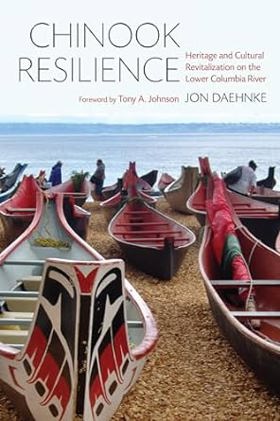
The Chinook Indian Nation--whose ancestors lived along both shores of the lower Columbia River, as well as north and south along the Pacific coast at the river's mouth--continue to reside near traditional lands. Because of its nonrecognized status, the Chinook Indian Nation often faces challenges in its efforts to claim and control cultural heritage and its own history and to assert a right to place on the Columbia River. Chinook Resilience is a collaborative ethnography of how the Chinook Indian Nation, whose land and heritage are under assault, continues to move forward and remain culturally strong and resilient. Jon Daehnke focuses on Chinook participation in archaeological projects and sites of public history as well as the tribe's role in the revitalization of canoe culture in the Pacific Northwest. This lived and embodied enactment of heritage, one steeped in reciprocity and protocol rather than documentation and preservation of material objects, offers a tribally relevant, forward-looking, and decolonized approach for the cultural resilience and survival of the Chinook Indian Nation, even in the face of federal nonrecognition xix, 233 pages : illustrations, maps ; 24 cm. CIRC [ 1 ]
|
2017 |
|
No place like home the unincorporated towns and communities of Coos County, Oregon by Andie E. Jensen , Bert Dunn , Yvonne-Cher Skye 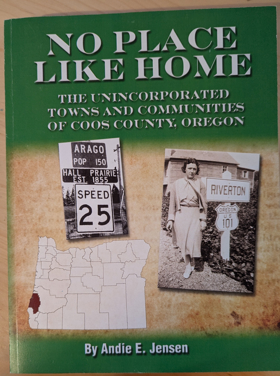
From Aberdeen to Yarrow, NO PLACE LIKE HOME: THE UNINCORPORATED TOWNS AND COMMUNITIES OF COOS COUNTY, OREGON provides the history of the past and present communities of Coos County. Nine chapters provide details of the communities of the Bandon, Coos Bay, Coal, Coos River, Coquille Valley, Isthmus Slough and Beaver Slough, Myrtle Point, North Bend, Powers and Tenmile regions. Additionally, there is a detailed Introduction and a chapter dedicated the Coos and Milluk Native-Americans who possessed the land before the Euro-American settlers. This text relied on several local books of local history by local authors, internet writings, newspaper articles, museum research and personal interviews. There are over 550 photographs, maps, business advertisements and other documents. 322 pages : illustrations, maps ; 28 cm CIRC [ 1 ]
|
2017 |
|
The last house at Bridge River the archaeology of an aboriginal household in British Columbia during the fur trade period by Anna Marie Prentiss 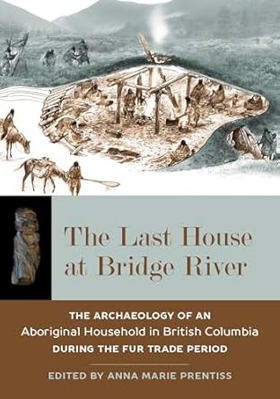
Offers a comprehensive archaeological study of a single-house floor and roof deposit dated to approximately 1835-1858 C.E. Although the Fur Trade period of the nineteenth century was a time of significant change for aboriginal peoples in the Pacific Northwest, it is a period that is poorly understood. These studies offer new insights. xiv, 267 pages : illustrations, maps ; 27 cm CIRC [ 0 ]
|
2017 |
|
Everything Shuswap by Jim Cooperman 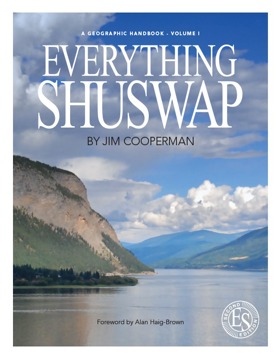
"The Shuswap has all the attributes to attract someone who enjoys four seasons -- nature, clean water, recreation, and culture and reasonably close access to larger cities. There is an amazing diversity of plant and animal life here and thankfully due to the small population, a minimum of pavement, crowds and pollution. Yet until now, there has been little written about the region. Author Jim Cooperman, a dedicated environmentalist and back-to-the-lander, spent 12 years researching and writing this comprehensive, bioregional guidebook that includes 36 maps and over 350 stunning photos. Tour through the watershed and explore the lakes region and each of the 12 sub-drainages. Learn about the region's ancient geology and its mostly unsuccessful mining ventures. Discover why the Shuswap is so ecologically diverse and why mountain caribou are endangered and how the sockeye salmon may be next. Learn about the Secwepemc people, who have lived on this land since time immemorial and understand why, after nearly two centuries of exploitation and mistreatment, they are regaining their heritage. Understand the factors behind the pattern of European settlement and discover details about the sternwheeler era. Everything Shuswap is more than a book; it is also an educational project. Proceeds from book sales will be used to support outdoor learning; the book will be used in the grade 10 social studies curriculum; and, there is a plan to involve students in the research for the next two volumes. Given that Dr. David Suzuki wrote after receiving a copy, 'Every part of the country should have something like Everything Shuswap,' the book can also serve as a template for other communities."-- Provided by publisher 240 pages : illustrations (some colour), maps ; 28 cm. CIRC [ 0 ]
|
2017 |
|
Bicycling the Oregon Trail by Don Weinell 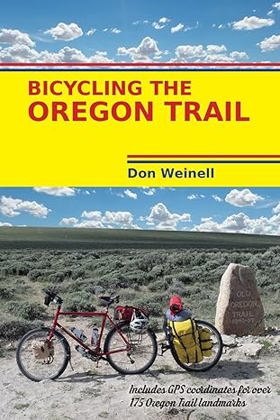
In 2012 author, blogger and long-distance bicyclist Don Weinell undertook a quest to retrace the 2100 miles of the Oregon Trail - on bicycle. Bicycling the Oregon Trail describes, in both word and picture, the history, landscape, landmarks, and people that Weinell encountered along the way. Bicycling the Oregon Trail includes GPS coordinates for important landmarks and maps showing the route Weinell took as he made his way from Missouri to Oregon on bicycle. --Amazon 212 pages : color illustrations, color maps ; 23 cm CIRC [ 0 ]
|
2017 |
|
How many islands? a history around Lake Washington by Richard W. Blumenthal 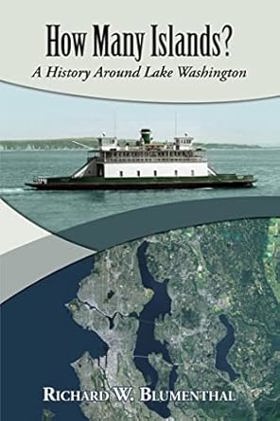
The early history of Lake Washington is fascinating enough all on its own. But combine conventional history with the oral tradition of imparting knowledge between generations, you’ve got a playful academic romp on your hands. In addition to an examination of early land owners around the lake and a tour of our first settlements, this text explores the islands that exist within the lake. Delivered with scholarly detail, the story is lovingly told by a doting grandfather to his precocious pre-teen granddaughter. This entertaining read is guided by the curiosity of a child and enlivened by the witty banter that bridges the generation gap. xvi, 332 pages : illustrations (chiefly color), maps (some color) ; 23 cm CIRC [ 0 ]
|
2017 |
|
Dangerous subjects James D. Saules and the rise of black exclusion in Oregon by Kenneth R. Coleman , Oregon State University Press (Issuing body) 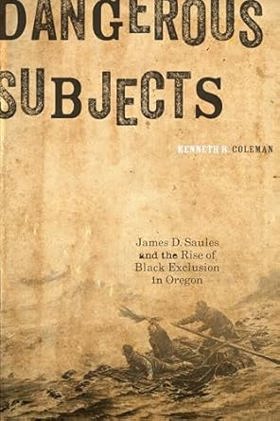
"Dangerous Subjects describes the life and times of James D. Saules, a black sailor who was shipwrecked off the coast of Oregon and settled there in 1841. Before landing in Oregon, Saules traveled the world as a whaleman in the South Pacific and later as a crew member of the United States Exploring Expedition. Saules resided in the Pacific Northwest for just two years before a major wave of Anglo-American immigrants arrived in covered wagons. In Oregon, Saules encountered a multiethnic population already transformed by colonialism--in particular, the fur industry and Protestant missionaries. Once the Oregon Trail emigrants began arriving in large numbers, in 1843, Saules had to adapt to a new reality in which Anglo-American settlers persistently sought to marginalize and exclude black residents from the region. Unlike Saules, who adapted and thrived in Oregon's multiethnic milieu, the settler colonists sought to remake Oregon as a white man's country. They used race as shorthand to determine which previous inhabitants would be included and which would be excluded. Saules inspired and later had to contend with a web of black exclusion laws designed to deny black people citizenship, mobility, and land. In Dangerous Subjects, Kenneth Coleman sheds light on a neglected chapter in Oregon's history. His book will be welcomed by scholars in the fields of western history and ethnic studies, as well as general readers interested in early Oregon and its history of racial exclusion."-- Provided by publisher x, 202 pages : illustrations ; 23 cm CIRC [ 0 ]
|
2017 |
|
Views of the Salish Sea one hundred and fifty years of change around the Strait of Georgia by Howard Macdonald Stewart 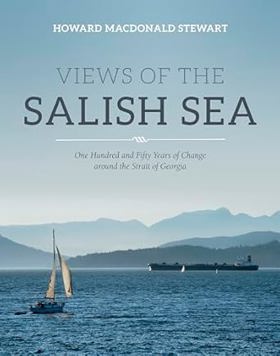
It is not mere coincidence that two-thirds of the population of British Columbia occupies lands bordering its great inland sea, the Strait of Georgia, and connected waterways collectively known as the North Salish Sea. Averaging forty kilometres in width and stretching some three hundred kilometres from Vancouver and Victoria in the south to Powell River and Campbell River in the north, the North Salish Sea has long sheltered a bounty of habitable lands and rich maritime resources ideal for human settlement. While the region's intricate shoreline of peninsulas, promontories, estuaries and plains has been occupied by human communities for millennia, the last century and a half has been an unprecedented age of rapid colonization, industrialization and globalization. Many books have been written about individual communities and industries around the great waterway, but none have examined the region as a geographical unit with its own dynamic systems, which can best be understood as an interrelated whole. The Strait of Georgia has influenced human affairs, even as people have changed the Strait, in a complex relationship that continues today. British colonization and the commodification of the Strait's resources launched a resource rush around the sea that began in earnest in the decades before the First World War, often at the expense of Indigenous populations. Coal mining developed earliest and grew rapidly. Fishing, lumbering and metal mining were also established by the 1880s and soon experienced exponential growth. From the earliest salmon canneries to today's cruise ship industry, all have depended on the Strait to ensure economic prosperity and the easy movement of people and goods. As competition for space and resources increases, and as the effects of climate change are amplified, the pressure on this ecologically vulnerable area will only intensify. If this precious sea is to be passed to future generations with any semblance of its inherent richness and diversity intact, then it will need to be effectively managed and vigorously defended. The first step is to understand the complex story of the region, making this essential reading not only for history buffs but anyone with an interest in the future of British Columbia. 288 pages : illustrations, maps ; 29 cm CIRC [ 0 ]
|
2017 |
|
On the ragged edge of medicine doctoring among the dispossessed by Patricia Kullberg 
On the ragged edge of medicine offers a unique and personal glimpse into a medical practice for the homeless and urban poor in Portland, Oregon. Told through 15 patient vignettes and drawn from the author's decades of experience on the front lines, this revealing memoir illuminates the impact of poverty on the delivery of health services and the ways in which people adapt and survive (or don't survive) in conditions of abuse and deprivation 162 pages ; ! 22 cm CIRC [ 0 ]
|
2017 |
|
"The only woman in the room" the Norma Paulus story by Norma Paulus , Gail Wells , Patricia Amacher 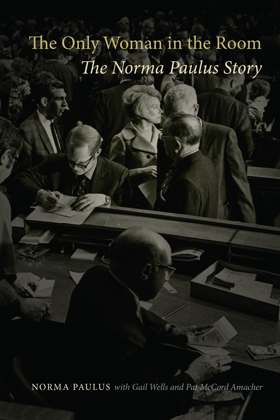
Norma Petersen Paulus grew up in Depression-era poverty in Eastern Oregon. She survived a bout with polio in her teens, taught herself to be a legal secretary, and graduated from law school with honors despite not attending college first. Anyone with such a story would be remarkable, but she was just getting started. Paulus came from a family of Roosevelt Democrats, but when a friend campaigned for a Republican seat in the state legislature, she switched parties. As she put it, "The Republicans were in politics for all the right reasons." Amid the nationwide political upheavals of the late 1960s, Oregon’s Republicans, led by popular governor Tom McCall, seemed to be her kind of people—principled, pragmatic, and committed to education, the environment, and equality for all citizens under the law. Paulus’s appointment by Governor McCall to the Marion-Polk Boundary Commission in 1969, a precursor to Oregon’s urban growth boundaries, helped launched her on a long and distinguished career of public service. She ran successfully for the Oregon House of Representatives in 1970. After three terms in the House, where she championed environmental causes, women’s rights, and government transparency, she was elected Oregon’s Secretary of State in 1976—the first woman to be elected to a statewide office in Oregon. She was the Republican candidate for governor in 1986, served a stint on the Northwest Power and Conservation Council, went on to become Oregon’s superintendent of public instruction, and headed the Oregon Historical Society. During her years of public service, spanning the 1970s through the early 2000s, Norma Paulus occupied a distinctive niche in Oregon’s progressive political ecosystem. Her vivid personality and strong convictions endeared her to a broad swath of citizens. Engaging and opinionated, charming and forceful, Paulus was widely covered in statewide and national newspapers and television during her eventful, sometimes controversial career. Now, The Only Woman in the Room documents her life and work in a lively, anecdotal history that will appeal to historians, political scientists, newshounds, and ordinary citizens alike. 284 pages : illustrations ; 23 cm. CIRC [ 0 ]
|
2017 |
|
My life reminiscences of a Grand Ronde Reservation childhood ; a text in Tualatin Northern Kalapuya by Louis Kenoyer , Jedd Schrock (Translator), Henry Benjamin Zenk (Translator) 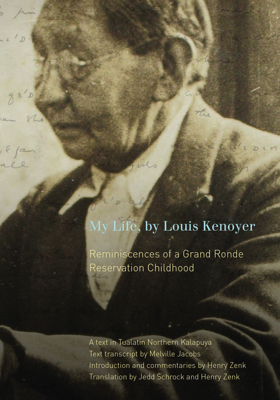
My Life, by Louis Kenoyer was dictated in Tualatin Northern Kalapuya by Louis Kenoyer, the last known speaker of that language. A rare, first-person narrative by a Native American describing life on an Oregon reservation, Kenoyer's account tells the story of his childhood on the late-nineteenth century Grand Ronde Reservation. It includes compelling descriptions of daily life in the reservation community, capturing the intermingling of new Euro-American ways with persisting indigenous beliefs and practices. The first quarter of the narrative was dictated to Jaime de Angulo and L. S. Freeland in 1928, the remainder to Melville Jacobs in 1936. Louis Kenoyer died in 1937, before Jacobs could complete a translation with him. Jacobs subsequently prepared a transcript from the translated portions of the text, but the last quarter of the complete narrative remained untranslated until now. Henry Zenk and Jedd Schrock drew on the previously translated portions of the narrative, as well as on available supporting linguistic, ethnographic, and historical documentation, to complete the work for this volume. The result is a complete bilingual English-Tualatin text, accompanied by extensive notes and commentary providing historical and ethnographic context. Louis Kenoyer (baχawádas) was born in 1868 at Grand Ronde Reservation, Oregon. He died in 1937 at Yakama Reservation, Washington. ix, 326 pages : illustrations, maps ; 26 cm CIRC [ 0 ]
|
2017 |
|
Eleanor Baldwin and the Woman's Point of View new thought radicalism in Portland's Progressive Era by Lawrence M. Lipin 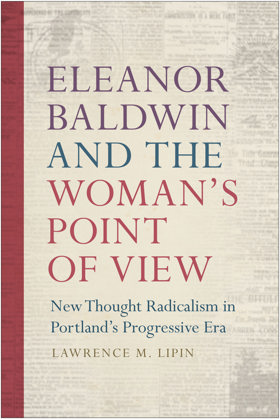
"Eleanor Baldwin and the Woman's Point of View is an intellectual biography of a long-forgotten radical female journalist in Portland, whose daily women's columns provide a window into the breadth of intellectual radicalism in Progressive Era journalism. Baldwin was one of an early generation of female journalists who were hired to lure female readers to the daily newspaper's department store advertisements. Instead of catering to the demands of consumerism, Baldwin quickly brought an anti-capitalist, antiracist agenda to her column, "The Woman's Point of View." She eschewed household hints and instead focused on the immorality of capitalists and imperialists while emphasizing the need for women to become independent and productive citizens. A century before the Occupy movement and the Women's March, Baldwin spoke truth to power. Imbued with a New Thought spirituality that presumed progressive thought could directly affect material reality, she wrote to move history forward. And yet, the trajectory of history proved as hard to forecast then as now. While her personal story seems to embody a modern progressivism, blending abolition with labor reform and anti-banker activism--positions from which she never wavered--her path grew more complicated as times changed in the aftermath of World War I, when she would advocate on behalf of both the Bolsheviks and the Ku Klux Klan. In this deeply researched and nuanced account of Eleanor Baldwin's intellectual journey, historian Larry Lipin reveals how even the most dedicated radical can be overcome by unforeseen events. Eleanor Baldwin and the Woman's Point of View restores a missing chapter in Portland's Progressive Era history and rescues this passionate, intriguing, and quixotic character from undeserved obscurity."-- Provided by publisher xiv, 253 pages : illustrations ; 23 cm CIRC [ 0 ]
|
2017 |
|
The people's school a history of Oregon State University by William G. Robbins 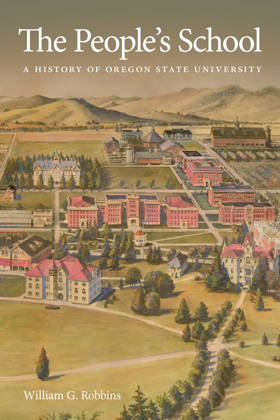
"The People's School is a comprehensive history of Oregon State University, placing the institution's story in the context of state, regional, national, and international history. Rather than organizing the narrative around presidencies, historian William Robbins examines the broader context of events, such as wars and economic depressions, that affected life on the Corvallis campus. Agrarian revolts in the last quarter of the nineteenth century affected every Western state, including Oregon. The Spanish-American War, the First World War, the Great Depression of the 1930s, and the Second World War disrupted institutional life, influencing enrollment, curricular strategies, and the number of faculty and staff. Peacetime events, such as Oregon's tax policies, also circumscribed course offerings, hiring and firing, and the allocation of funds to departments, schools, and colleges. This contextual approach is not to suggest that university presidents are unimportant. Benjamin Arnold (1872-1892), appointed president of Corvallis College by the Methodist Episcopal Church, South, served well beyond the date (1885) when the State of Oregon assumed control of the agricultural college. Robbins uses central administration records and grassroots sources--local and state newspapers, student publications (The Barometer, The Beaver), and multiple and wide-ranging materials published in the university's digitized ScholarsArchive@OSU, a source for the scholarly work of faculty, students, and materials related to the institution's mission and research activities. Other voices--extracurricular developments, local and state politics, campus reactions to national crises--provide intriguing and striking addendums to the university's rich history"-- Provided by publisher x, 414 pages ; 23 cm CIRC [ 0 ]
|
2017 |
|
Legends of the Northern Paiute by Wilson Wewa , James A. Gardner (Compiler, Editor) 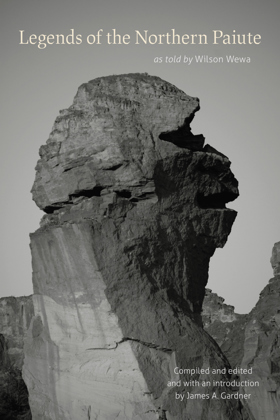
"Legends of the Northern Paiute shares and preserves twenty-one original and previously unpublished Northern Paiute legends, as told by Wilson Wewa, a spiritual leader and oral historian of the Warm Springs Paiute. These legends were originally told around the fires of Paiute camps and villages during the 'story-telling season' of winter in the Great Basin of the American West. They were shared with Paiute communities as a way to pass on tribal visions of the 'animal people' and the 'human people, ' their origins and values, their spiritual and natural environment, and their culture and daily lives. The legends in this volume were recorded, transcribed, reviewed, and edited by Wilson Wewa and James Gardner. Each legend was recorded, then read and edited out loud, to respect the creativity, warmth, and flow of Paiute storytelling. The stories selected for inclusion include familiar characters from native legends, such as Coyote, as well as intriguing characters unique to the Northern Paiute, such as the creature embodied in the Smith Rock pinnacle, now known as Monkey Face, but known to the Paiutes in Central Oregon as Nuwuzoho the Cannibal. Wewa's apprenticeship to Northern Paiute culture began when he was about six years old. These legends were passed on to him by his grandmother and other tribal elders. They are now made available to future generations of tribal members, and to students, scholars, and readers interested in Wewa's fresh and authentic voice. These legends are best read and appreciated as they were told--out loud, shared with others, and delivered with all of the verve, cadence, creativity, and humor of original Paiute storytellers on those clear, cold winter nights in the high desert."--Provided by publisher xliv, 127 pages : portrait ; 23 cm CIRC [ 0 ]
|
2017 |
|
Geology underfoot in Southern Idaho by Shawn Willsey 
Geology professor Willsey aims to inspire more Idahoans and visitors to take an interest in one of the most compelling and fascinating regions of the earth. He aims to bridge the gap between geologists and the interested public by passing along a collection of fascinating stories told by southern Idaho's rocks and landscapes. Southern Idaho's geologic history spans about 2.5 billion years--more than half that of the Earth. Chapters represent a sampling of the unique geologic features that formed during this immense amount of time. Willsey selects accessible locations that are exceptional in terms of either location or geologic history. --Publisher xi, 290 pages : color illustrations, color maps ; 23 cm. CIRC [ 0 ]
|
2017 |
|
The gift of knowledge = Ttnúwit Átawish Nchʼinchʼimamí reflections on Sahaptin ways by Virginia Beavert , Janne L. Underriner 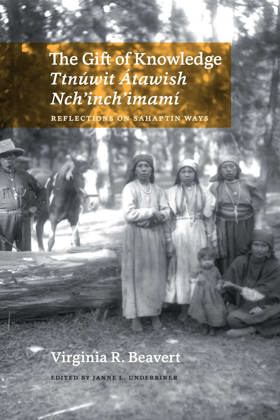
"The Gift of Knowledge / Ttnuwit Atawish Nch'inch'imamí is a treasure trove of material for those interested in Native American culture. Author Virginia Beavert grew up in a traditional, Indian-speaking household. Both her parents and her maternal grandmother were shamans, and her childhood was populated by people who spoke tribal dialects and languages: Nez Perce, Umatilla, Klikatat, and Yakima Ichishkíin. Her work on Native languages began at age twelve, when she met linguist Melville Jacobs while working for his student, Margaret Kendell. When Jacobs realized that Beavert was a fluent speaker of the Klikatat language, he taught her to read and write the orthography he had developed to record Klikatat myths. After a stint in the U.S. Air Force during World War II, Beavert went on to earn graduate degrees in education and linguistics, and she has contributed to numerous projects for the preservation of Native language and teachings. Beavert narrates highlights from her own life and presents cultural teachings, oral history, and stories (many in bilingual Ishishkíin-English format) about family life, religion, ceremonies, food gathering, and other aspects of traditional culture."--Provided by publisher xvii, 182 pages : illustrations, maps ; 24 cm. CIRC [ 0 ]
|
2017 |
|
Point Roberts backstory tales, trails and trivia from an American enclave by Mark Swenson 
"Point Roberts Backstory tells the fascinating story of a one-of-a-kind American town. Perched on the tip of a Canadian peninsula which extends into U.S. waters, Point Roberts is a community like no other. Residents--including the school kids--have to drive through Canada to get to this unique 'enclave' from the U.S. mainland. Point Roberts has seen i tall: mysterious middens, smugglers, pirates, squatters, Icelandic-speaking settlers, rock stars and thousands of Canadians. They all mix in an unbelievable history all the more amazing when you learn it all happened in its tiny five square miles. Join Point Roberts Backstory for a tour of this incredible town in an isolated corner of America, "--Page 4 of cover 587 pages : illustrations, maps ; 23 cm CIRC [ 0 ]
|
2017 |
|
In the valley of mystic light an oral history of the Skagit Valley arts scene by Claire E. Swedberg , Rita Hupy 
Claire Swedberg and Rita Hupy conducted hundreds of interviews to investigate what role a community plays in the arts, and what the arts can bring to a community. The result is In the Valley of Mystic Light, the first book to chronicle the unique story of the La Conner art scene, while exploring, on a personal level, what it means to be a Northwest artist. This remarkable story provides an illustration of the universal creative process as told by the mystic artists of the Northwest and the townspeople who provided them with support and inspiration. ix, 298 pages : illustrations (some color) ; 26 cm CIRC [ 0 ]
|
2017 |
|
Peace weavers uniting the Salish coast through cross-cultural marriages by Candace Wellman 
"Strategic cross-cultural marriages between Coast and Interior Salish families and pioneer men played a crucial role in mid-1800s regional settlement and spared Puget Sound's upper corner from tragic conflicts. Accounts of the husbands exist in a variety of records, but the native wives' contributions remained unacknowledged. Combining primary and secondary sources, genealogy, and family memories, author Candace Wellman illuminates this hidden history and shatters stereotypes surrounding these relationships. The four women she profiles exhibited exceptional endurance, strength, and adaptability. They ran successful farms and businesses and acted as cultural interpreters and mediators. Although each story is unique, collectively they and other intermarried individuals helped found Puget Sound communities and left a lasting legacy. They were peace weavers."--Publisher's website xii, 280 pages : illustrations, maps ; 23 cm CIRC [ 0 ]
|
2017 |