Whatcom County County
The county was created from Island County by the Washington Territorial Legislature on March 9, 1854. It originally included the territory of present-day San Juan and Skagit counties, which were later organized after additional settlement. Its name derives from the Lummi word Xwot'qom, meaning "noisy water."
Mapped Location
Whatcom County: The mapped location is an approximation and should not be used for navigation or wayfinding.
Information
General information on Whatcom County
- Feature Type: County
- County Seat: City of Bellingham
- Established: Thursday, March 9, 1854
Official, historical, colloquial and alternative toponyms for Whatcom County
A brief list of names that this geographic feature has been named
| Name | Description |
|---|---|
| Whatcom County | Official |
Origin Notes and History of Whatcom County
References to Whatcom County that document the origin of its place name
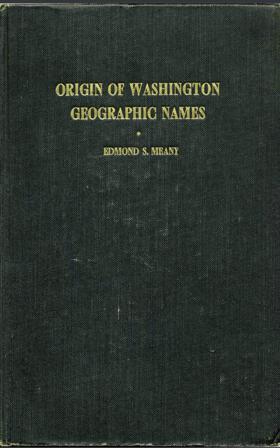
WHATCOM, a county, lake, creek and former city, were all named for an Indian chief. While a portion of the present City of Bellingham still bore the name of Whatcom, H. H. Bancroft wrote: "It was named after a chief of the Nooksacks, whose grave is a mile above the Bellingham Bay Coal mine." (Works, Volume XXXI., page 367.) Henry Gannett, of the United States Geological Survey, wrote of Whatcom: "An Indian word said to mean 'noisy water.'" (Origin of Certain Place Names in the United States, page 392.) George Gibbs, on March 1, 1854, wrote: "A considerable stream, the outlet of a lake, falls into Bellingham Bay. This which is called Whatcom Lake, is said by Mr. Kelly, a citizen who explored it, to be from twelve to fifteen miles in length, lying northeast and southwest, and is very deep. Its mouth affords a very fine waterpower, on which a saw-mill has been erected" (Pacific Railroad Reports, Volume I., page 471.) The act of the Territorial Legislature creating Whatcom County was approved on March 9, 1854. For a time during the Fraser River gold excitement of 1858, the town of Whatcom had 10,000 inhabitants. It soon declined but in later years rose again and was finally merged into the present prosperous county seat of Whatcom County. See Bellingham.
Related Catalog Titles
A Bibliography for Whatcom County, County
Maritime names of Washington by Richard W. Blumenthal
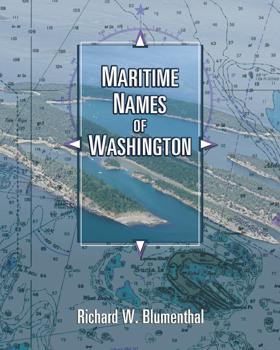
Maritime Names of Washington is a wonderful companion if you are a boating enthusiast or simply curious about Washington’s maritime history. This book is a scholarly study on the origins of place names for our coastal and inland waters. It covers every name that appears on current nautical charts, from the Pacific Coast to the Strait of Juan de Fuca, the San Juans, and Puget Sound from Port Townsend to Olympia. It includes every named island, bay, point, inlet, pass, harbor, rock, channel, strait, canal, peninsula, sound, and shoal. The book also features many local and historical names that are not shown on the charts. The manuscript generally identifies the individual who named the place, when, why, and for whom. It also identifies the chart where the name first appeared and the early settlement history of many places. The manuscript is richly annotated and uses many quotes from the observations of our earliest explorers to give readers a glimpse of what Puget Sound country looked like 200+ years ago. Each of our early explorations is discussed in detail as they relate to individual place names. The book contains 170 pictures and 44 historical nautical charts from 1790 to 1900 that show many of the names
ix, 501 pages : illustrations, maps, charts ; 26 cm
CIRC [ 1 ]
Peace weavers uniting the Salish coast through cross-cultural marriages by Candace Wellman
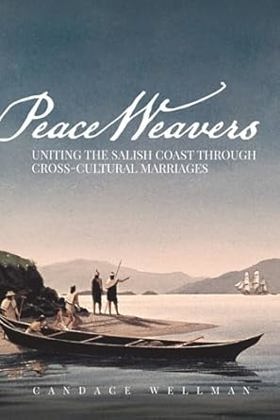
"Strategic cross-cultural marriages between Coast and Interior Salish families and pioneer men played a crucial role in mid-1800s regional settlement and spared Puget Sound's upper corner from tragic conflicts. Accounts of the husbands exist in a variety of records, but the native wives' contributions remained unacknowledged. Combining primary and secondary sources, genealogy, and family memories, author Candace Wellman illuminates this hidden history and shatters stereotypes surrounding these relationships. The four women she profiles exhibited exceptional endurance, strength, and adaptability. They ran successful farms and businesses and acted as cultural interpreters and mediators. Although each story is unique, collectively they and other intermarried individuals helped found Puget Sound communities and left a lasting legacy. They were peace weavers."--Publisher's website
xii, 280 pages : illustrations, maps ; 23 cm
CIRC [ 0 ]
Fairhaven a history by Brian L. Griffin
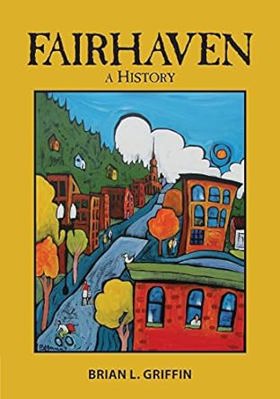
The complete history of that most southerly community on Bellingham Bay, one of the four original towns that were consolidated in 1904 to become the present City of Bellingham. Fairhaven, Washington--from the glaciers to today--the places, the participants, and the grand possibilities. A new arrival in 1889 said, "only crude raw beginnings, the primeval forest of giant firs and cedars barely pushed back to the hillsides, mud streets gouged out, raw with jumbled piles of burning stumps, flames and smoke obscuring the sky. On the beach, tents flap in the breeze and a few unpainted wooden structures suggest civilization is to come." In 2015, what would be recognizable to any of those old-timers would be the enterprising spirit of the latest inhabitants, who have done so much to create Fairhaven's modern growth and economic strength
xi, 275 pages : illustrations, maps ; 26 cm
CIRC [ 1 ]
A sound defense military sites, lighthouses, and memorials of Puget Sound by Nancy L. McDaniel
"A Sound Defense" is a comprehensive description of military sites of Puget Sound. Military historical sites in the twelve counties (Whatcom, Skagit, Snohomish, San Juan, Island, King, Pierce, Thurston, Mason, Kitsap, Clallam and Jefferson) are described with an emphasis on the unique things which happened there. Over 150 pictures and maps are included. Nancy McDaniel, Colonel, USAF, MSC (Retired) is a Washington State native and brings a love of the area and combines that with a perspective on the contributions that the military has had on Western Washington. "A Sound Defense" describes blockhouses built during the Indian conflicts. It addresses "The Pig War" and the politics of the international relationships which helped establish the boundaries of the United States. Forts built to protect Puget Sound as a result of the decisions of the Endicott Board are described along with the personalities of the commanders and personnel who were assigned there. Long forgotten installations established to provide early warning of approaching enemy aircraft are prominent in this comprehensive book. Lighthouses throughout the area are highlighted with the inclusion of historical photos and stories of early lightkeepers. Most importantly, "A Sound Defense" recognizes the contributions of military personnel throughout the years by the inclusion of memorials and facilities dedicated to recognizing their service to the country.
xvi, 365 pages : illustrations, maps ; 23 cm
CIRC [ 1 ]
To fish in common the ethnohistory of Lummi Indian salmon fishing by Daniel L. Boxberger , Chris Friday
"By focusing on the history of control over productive resources (in this case salmon, methods of harvest, processing, capital investment, and markets) Boxberger shows how the Lummi slid from independence and self-sufficiency to dependency, underdevelopment, and poverty. . . . Not only is it an excellent, in-depth study of the Lummi case, it can also serve as a metaphor for the larger question of Native American treaty rights and the resource provisions of agreements." --Pacific Historical Review
xviii, 212 pages : illustrations ; 22 cm.
CIRC [ 1 ]
Whatcom images an illustrated collection of prose and verse by Dorothy Koert, James W. Scott
The Fairhaven folktales of Dirty Dan Harris by Michael Sullivan
A biography of the storyteller Daniel Jefferson Harris (1826-1890) of the Puget Sound area of Washington State, USA.
74 pages : illustrations ; 14 x 22 cm
CIRC [ 1 ]
Whatcom scenes a miscellany of prose and verse by Dorothy Koert
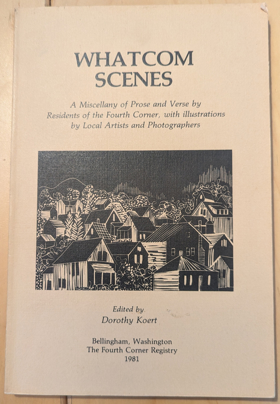
Whatcom Scenes, 1981, edited by Dorothy Koert. A miscellany of prose and verse by residents of the fourth corner, with illustrations by local artists and photographers. Paperback with 134 pages, published by The Fourth Corner Registry.
xvi, 134 pages : illustrations ; 23 cm
CIRC [ 1 ]
Point Roberts, U.S.A. the history of a Canadian enclave by Richard Eugene Clark , Runa Thordarson (Photographer), Robert B. Lindquist (Contributor)
When the June 15, 1846 Treaty of Washington was signed by representatives of the United States and Great Britain, it established the forty-ninth parallel of north latitude as the boundary to the middle of the channel which separates the North American continent from Vancouver Island. That decision, probably unknowingly, left a small piece of real estate below the line but isolated by marine waters from the rest of United States / Washington land. That promontory subsequently became known as Point Roberts, a unique and interesting community, greatly influenced by Canada but fiercely American. Point Roberts is a story of political and geographic accident; it is also a story of the people who settled there, who fished and farmed, who lived under difficult circumstances and isolation. It is a chronicle of good times and bad, rising expectations and tragic events. It includes the efforts of people to create social and cultural institutions to solve their problems and to pass their culture on from one generation to the next — governmental units, churches, schools, water districts, even a cemetery. Point Roberts is also a study of two nations and their people facing off, sharing, trying to learn how to live together. That chapter still is not complete, nor is the history of Point Roberts. But its history has begun, and we are indebted to Richard Clark for gathering the existing bits and pieces to date together in this book. It teaches some valuable lessons — that human perseverance can overcome adversity, that human institutions and social inventions do advance a people, and that Point Roberts is an extremely interesting and valuable part of Washington State and the United States of America.
viii, 137 pages : illustrations ; 23 cm
CIRC [ 0 ]
Portrait of Lynden by Dorothy Koert

The birth, death, and resurrection of Fairhaven by George Hunsby
Whatcom seascapes the influence of the sea on Whatcom County. An exhibition of the Whatcom Museum of History and Art, Bellingham, Washington, October 9, 1970--April 30, 1971 by Whatcom Museum of History and Art, Susan H. L. Barrow
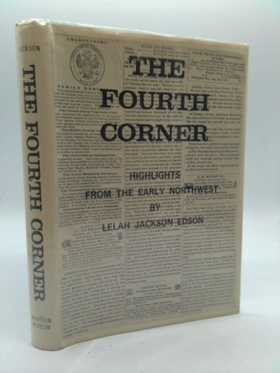
The fourth corner highlights from the early Northwest by Lelah Jackson Edson, Whatcom Museum of History and Art
Blanket Bill Jarman northwest Washington mystery man : first pioneer settler in Whatcom and Skagit counties by Percival Robert Jeffcott
Published in 1958, Percival Robert Jeffcott's book is a biographical account of William Robert "Blanket Bill" Jarman, recognized as the first white pioneer to settle in Washington's Whatcom and Skagit counties. The work seeks to untangle the factual history of Jarman's frontier life from the dense web of myths, legends, and tall tales that had grown around him over the decades. By meticulously cross-referencing interviews and local lore with documentary evidence—such as Hudson's Bay Company records—Jeffcott systematically investigates and debunks several exaggerated stories, including a famous tale about Jarman being ransomed. Ultimately, the text serves as both a detailed character study of an elusive regional figure and a rigorous examination of early Pacific Northwest pioneer folklore.
xii, 202 p. : ill. ; 24 cm.
CIRC [ 1 ]
Related Online Resources
Coast Salish Place Names of the San Juan Islands
An ongoing project of a present day look at historic Coast Salish locations throughout the San Juan Islands and Strait of Georgia compiled by the Samish Indian Nation
WEB LINK
Whatcom County
- Acme
- Agate Bay
- Alabama Hill
- Alderwood
- Anacortes Crossing
- Balford
- Barron
- Beach
- City of Bellingham
- Birch Bay
- Birch Bay Circle Grange
- Birchwood
- City of Blaine
- Blue Canyon
- Boundary
- Boundary Bay
- Brennan
- Cedar Crossing
- Cedarville
- Chuckanut
- Clearbrook
- Clipper
- Columbia
- Comar
- Cottonwood Beach
- Custer
- Delta
- Deming
- Dewey
- Diablo
- Doran
- Eureka
- City of Everson
- Fairhaven
- City of Ferndale
- Forest Ridge
- Geneva
- Glacier
- Goshen
- Greenwood
- Gulfaire Mobile Villa
- Hampton
- Haynie
- Hillsdale
- Huntingdon
- Kendall
- Kickerville
- Kulshan
- Lakeway
- Larson Mill
- Laurel
- Lawrence
- Limestone Junction
- Lummi
- Lummi Island
- City of Lynden
- Maple Beach
- Maple Falls
- Marietta
- Mirror Lake
- Mountain View
- Neptune Beach
- Newhalem
- City of Nooksack
- Nooksack Salmon Hatchery
- Noon
- Northwood
- Nugents Corner
- Parkview
- Peaceful Valley
- Pleasant Valley
- Point Roberts
- Roosevelt
- Ruby (historical)
- Saxon
- Semiahmoo
- South Beach
- Sudden Valley
- City of Sumas
- Sunnyside
- Tenmile
- Tsawwassen Beach
- Van Wyck
- Van Zandt
- Victor
- Wahl
- Warnick
- Washington Colony (historical)
- Welcome
- Wickersham
Political Boundaries
Last updated: 2025-09-23