Catalog of British Columbiana and Pacific Northwest Americana
Encyclopedia Cascadia Catalog contains book titles of mostly non-fiction Pacific Northwest Coast of North America Titles (primarially British Columbia, Idaho, Oregon and Washington State) in an easy-to-understand title catalog. If you see a link with this badge ONLINE CIRC it means that there is an online institution that provides free access to that title. In some cases there may be more than one institution hosting the title digitally.
| Catalog Title | Published |
|---|---|
|
The grail a year ambling & shambling through an Oregon vineyard in pursuit of the best pinot noir wine in the whole wild world by Brian Doyle 
From the red clay hills of Dundee, Oregon, come increasingly world-renowned pinot noir wines. After being startled and delighted by one winery's elixir, and the shaggy humor of the father and son who made it, Brian Doyle set out to spend a year in one Willamette Valley vineyard, chronicling the creative and chaotic labor as the winemakers chase after the perfect pinot noir. A self-described "wine doofus," Doyle follows closely at the elbow of Jesse Lange, son of Lange Winery founder Don Lange, peppering the young winemaker with questions about the growing of grapes and making of wine. With dry wit and otherworldly patience, Jesse Lange offers his interlocutor a primer on pinot, describing how acres of tiny black grapes are turned into complex and superb wines. Doyle is absorbed in the real work of winemaking, "the sheer labor of it, the creativity, the dust, the bugs, the machinery, the botany, the chemistry, the wild nuttiness of trying to make a great wine." He records the rhythms and cycles of winemaking: the fallow times, the times of wild energy, and always the worry about the precious crop. Doyle serves as a cheerful tour guide through the world of wine, alert to the colorful and riveting stories that swirl around its creation and consumption. In The Grail, he collects and shares dozens of these stories about the natural history of the vineyard, the fussiness of the pinot vine, the boom in pinot noir around the world, the surprising buying habits of tasting room visitors, and the subtle craft of winemakers who know, as Jesse Lange says, grinning, "how to get out of the way of great grapes." In short, The Grail is a spirited and entertaining chase for a truly special wine. 208 pages : illustrations ; 22 cm CIRC [ 0 ]
|
2006 |
|
The Gorge of summers gone a history of Victoria's inland waterway by Dennis Minaker
|
1989 |
|
The good times are all gone now life, death, and rebirth in an Idaho mining town by Julie W. Weston 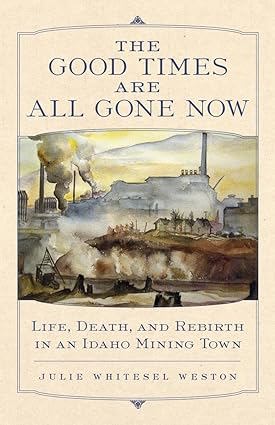
Julie Whitesel Weston left her hometown of Kellogg, Idaho, but eventually it pulled her back. Only when she returned to this mining community in the Idaho Panhandle did she begin to see the paradoxes of the place where she grew up. Her book combines oral history, journalistic investigation, and personal reminiscence to take a fond but hard look at life in Kellogg during "the good times." Kellogg in the late 1940s and fifties was a typical American small town complete with high school football and basketball teams, marching band, and anti-Communist clubs; yet its bars, gambling dens, and brothels were entrenched holdovers from a rowdier frontier past. The Bunker Hill Mining Company, the largest employer, paid miners good wages for difficult, dangerous work, while the quest for lead, silver, and zinc denuded the mountainsides and laced the soil and water with contaminants. Weston researched the late-nineteenth-century founding of Kellogg and her family's five generations in Idaho. She interviewed friends she grew up with, their parents, and her own parents' friends--miners mostly, but also businesspeople, housewives, and professionals. Much of this memoir of place set during the Cold War and post-McCarthyism is told through their voices. But Weston also considers how certain people made a difference in her life, especially her band director, her ski coach, and an attorney she worked for during a major strike. She also explores her charged relationship with her father, a hardworking doctor revered in the community for his dedication but feared at home for his drinking and rages. The Good Times Are All Gone Now begins the day the smokestacks came down, and it reaches far back into collective and personal memory to understand a way of life now gone. The company town Weston knew is a different place, where "Uncle Bunker" is a Superfund site, and where the townspeople, as in previous hard times, have endured to reinvent Kellogg--not once, but twice xv, 231 pages : illustrations, photographs ; 22 cm CIRC [ 0 ]
|
2009 |
|
The golden land a history of Sherman County, Oregon by Giles French
|
1958 |
|
The glorious mountains of Vancouver's North Shore a peakbagger's guide by David Crerar , Harry Crerar , Bill Maurer 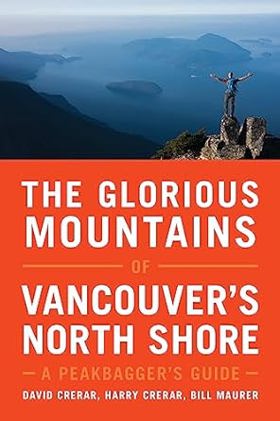
"The beautiful mountains of the North Shore define Vancouver, but few Vancouverites know of the natural beauty and adventure that lies within them, or even their names and history. The Glorious Mountains of Vancouver's North Shore: A Peakbagger's Guide offers something for everyone, from casual hikers to hard-core climbers, from gentle ramblers to ultra-fit trail runners, to parents introducing their children to the splendours of nature, and to those merely curious about what is out there, so close and yet so far. The book provides turn-by-turn route descriptions for climbing 66 North Shore peaks, including exhaustive facts and statistics, special cautions, first ascents, name origins, historic and cultural backgrounds, as well as little-known facts and secrets. Roads and access trails are provided. All peaks feature GPS-based maps, with elevation profiles. The glories of these mountains, creeks and lakes are enticingly illustrated with over 150 colour photographs. Covering all of the hikeable peaks from Capilano in the north, to the Howe Sound Islands in the west and the Seymour-Fannin peaks in the east, this book will encourage you to hop in your kayak or car, on your bike or your own two feet to explore this underappreciated paradise in our own backyard."--Amazon.com 503 pages : color illustrations, color maps ; 23 cm CIRC [ 0 ]
|
2018 |
|
The gift of knowledge = Ttn¿wit çtawish Nch'inch'imam¿ reflections on Sahaptin ways by Virginia Beavert , Janne L. Underriner 
"The Gift of Knowledge / Ttnuwit Atawish Nch'inch'imamí is a treasure trove of material for those interested in Native American culture. Author Virginia Beavert grew up in a traditional, Indian-speaking household. Both her parents and her maternal grandmother were shamans, and her childhood was populated by people who spoke tribal dialects and languages: Nez Perce, Umatilla, Klikatat, and Yakima Ichishkíin. Her work on Native languages began at age twelve, when she met linguist Melville Jacobs while working for his student, Margaret Kendell. When Jacobs realized that Beavert was a fluent speaker of the Klikatat language, he taught her to read and write the orthography he had developed to record Klikatat myths. After a stint in the U.S. Air Force during World War II, Beavert went on to earn graduate degrees in education and linguistics, and she has contributed to numerous projects for the preservation of Native language and teachings. Beavert narrates highlights from her own life and presents cultural teachings, oral history, and stories (many in bilingual Ishishkíin-English format) about family life, religion, ceremonies, food gathering, and other aspects of traditional culture."--Provided by publisher 1 online resource. CIRC [ 1 ]
|
2017 |
|
The gift of knowledge = Ttnúwit Átawish Nchʼinchʼimamí reflections on Sahaptin ways by Virginia Beavert , Janne L. Underriner 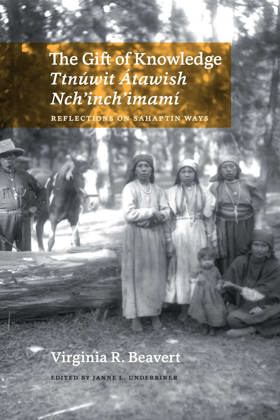
"The Gift of Knowledge / Ttnuwit Atawish Nch'inch'imamí is a treasure trove of material for those interested in Native American culture. Author Virginia Beavert grew up in a traditional, Indian-speaking household. Both her parents and her maternal grandmother were shamans, and her childhood was populated by people who spoke tribal dialects and languages: Nez Perce, Umatilla, Klikatat, and Yakima Ichishkíin. Her work on Native languages began at age twelve, when she met linguist Melville Jacobs while working for his student, Margaret Kendell. When Jacobs realized that Beavert was a fluent speaker of the Klikatat language, he taught her to read and write the orthography he had developed to record Klikatat myths. After a stint in the U.S. Air Force during World War II, Beavert went on to earn graduate degrees in education and linguistics, and she has contributed to numerous projects for the preservation of Native language and teachings. Beavert narrates highlights from her own life and presents cultural teachings, oral history, and stories (many in bilingual Ishishkíin-English format) about family life, religion, ceremonies, food gathering, and other aspects of traditional culture."--Provided by publisher xvii, 182 pages : illustrations, maps ; 24 cm. CIRC [ 0 ]
|
2017 |
|
The Ghostland people a documentary history of the Queen Charlotte Islands, 1859-1906 by Charles Lillard 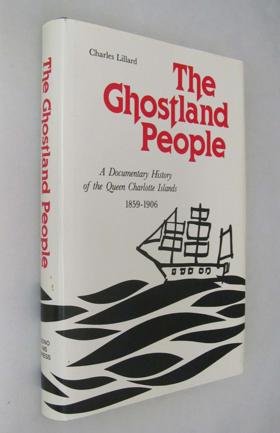
The Ghostland People was the name given by the Haida to the early white settlers. This book is a gathering of firsthand accounts of exploration and discovery in the Queen Charlotte Islands during the little-known period bordered on one side by the maritime fur traders, and on the other by the farmers and the fishermen, and the loggers and the miners. William Downie visited the islands in 1859 and filed his report with Governor James Douglas. Robert Brown made his way there aboard the Goldstream in 1866, and Judge James G. Swan made his first trip to the Charlottes in 1883/and left a fascinating yet forgotten account. In 1878 George Dawson, the “little giant,” wrote his classic study (here reproduced for the first time in 110 years) of the Islands and the Haida. Lord Dufferin and his wife, the Marchioness of Dufferin and Ava, toured the Queen Charlottes in 1876 and both left detailed accounts. So did Charles Horetzky, who was there two years earlier. The next visitor to leave important views of the Islands was George A. Dorsey, who, with James Deans, cruised the area in 1898 on the behalf of the Field Museum in Chicago. Just after the turn of the century, Charles Seldon, a professional hunter from the United States, visited the Islands to observe the long-fabled Queen Charlotte Island caribou. This is the fourth volume in the West Coast Heritage Series. In it, editor Charles Lillard has also provided the first detailed chronology of Island history, the first major bibliography, and chapters on the Islands’ mystique and prehistory. As was the case with the previous books, Lillard gathers together material which has not been accessible to the general reader for over eighty years. 318 pages : illustrations, maps ; 24 cm CIRC [ 0 ]
|
1989 |
|
The ghost ships of Royston by Rick James, Underwater Archaeological Society of British Columbia 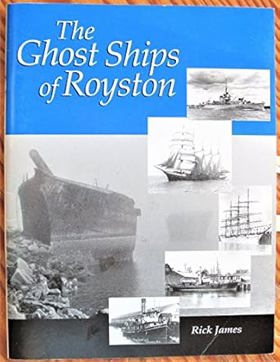
This UASBC report was so popular it had to be reprinted. The report documents the histories and present status of 14 ships beached as a hulk breakwater on Vancouver Island. Frigates, steam tugs, auxiliary schooners, whalers and other classic vessels lie partly submerged in this densely concentrated ships' graveyard. 2004, 8.5" x 11", 64 pages 61 pages : illustrations, maps ; 28 cm CIRC [ 0 ]
|
2004 |
|
The geography of memory reclaiming the cultural, natural and spiritual history of the Snayackstx (Sinixt) First People by Eileen Delehanty Pearkes 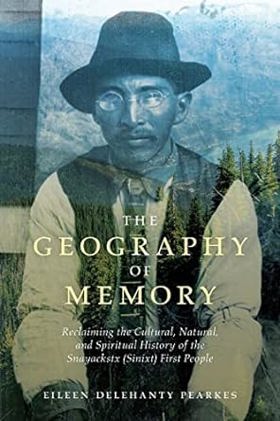
This compact book records a quest for understanding, to find the story behind the Snayackstx (Sinixt) First Nation. Known in the United States as the Arrow Lakes Indians of the Colville Confederated Tribes, the tribe lived along the upper Columbia River and its tributaries for thousands of years. In a story unique to First Nations in Canada, the Canadian federal government declared them "extinct" in 1956, eliminating with the stroke of a pen this tribe's ability to legally access 80 per cent of their trans-boundary traditional territory. Part travelogue, part cultural history, the book details the culture, place names, practices, and landscape features of this lost tribe of British Columbia, through a contemporary lens that presents all readers with an opportunity to participate in reconciliation -- Source other than Library of Congress xii, 261 pages : illustrations (some color), maps (some color) ; 23 cm CIRC [ 0 ]
|
2022 |
|
The Fraser Valley a history by John A. Cherrington 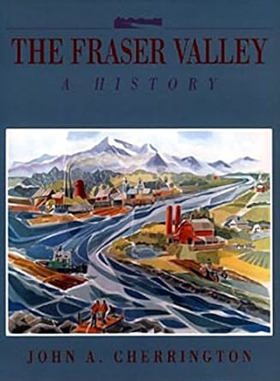
One of the world's most fertile agricultural regions, the Fraser Valley is in the midst of explosive change from the pressures of technology and urbanization. The author follows the Valley's history from the eighteenth century when Stalo natives were constantly on guard against visits from raiding Yacultas, through the Victorian era, when waves of settlers fought harsh winters, floods and mosquitoes to build a new community in the Valley, to the twentieth century, when the depredations of two world wars and the impact of the automobile changed the Valley forever. Throughout, Cherrington reminds us that beneath the serene, increasingly urbanized surface of the Fraser Valley, there is a turbulent past of Sasquatches and steamships, fur traders and fishermen, priests and prospectors - a recent past that, in an era of freeways and microchips, seems increasingly remote. 391 pages : illustrations, maps ; 29 cm CIRC [ 1 ]
|
1992 |
|
The Fraser canyon story, illustrated by Donald E. Waite 
Constable John Kirkup was called to a 'gambling and whiskey drive' in Yale, B.C. He wound up arresting the nude hostess. Kirkup, the local newspaper editor, and the pastor fought for abstinence while the unruly workers fought and laid railway tracks. Further up the canyon, the great railwayman Andrew Onderdonk was daring the little steamship Kuzzy through the impenetrable Hell's Gate. Don Waite also recounts the adventures of the gold rush, the fur brigade trails, and Cariboo wagon road. 96 p. : ill., ports. ; 22 cm. CIRC [ 1 ]
|
1983 |
|
The fourth corner highlights from the early Northwest by Lelah Jackson Edson, Whatcom Museum of History and Art
|
1968 |
|
The Formation and Administration of the Provisional Government of Oregon by H. W. Scott 
Harvey W. Scott's historical account details the 1843 establishment of Oregon's Provisional Government, chronicling how American pioneers in the Willamette Valley organically created their own civil authority prior to formal United States jurisdiction. A keen insight drawn from the text is that this localized governance was not born of political rebellion against the British Hudson's Bay Company, but rather out of the pragmatic necessity to manage land disputes, probate laws, and frontier security in a stateless vacuum. The narrative meticulously outlines the legislative and administrative milestones of this temporary state, highlighting the early settlers' inherent capacity for democratic organization. Ultimately, Scott demonstrates how this impromptu legal framework effectively secured American civilian control over the disputed Pacific Northwest, seamlessly paving the way for eventual territorial status without descending into frontier anarchy. 25 pages ONLINE CIRC [ 1 ]
|
1901 |
|
The flora and fauna of the Pacific Northwest coast by Collin Varner 
The Flora and Fauna of the Pacific Northwest Coast is an extensive, easy-to-follow resource guide to the plant and animal life of the vast and diverse bioregion stretching from Juneau, Alaska, south to coastal British Columbia, Washington, Oregon, down to California's San Francisco Bay. Encompassing over eight hundred native and invasive species, and including more than two thousand colour photos, this is the most complete book of its kind on the market. The book is divided into flora and fauna, with detailed subsections for flowering plants, berries, ferns, shrubs and bushes, trees, fungi, birds, mammals, amphibians, reptiles, and insects. Each species (identified by common and scientific name) is illustrated by clear photography and a concise description of its appearance, biology, and habitat, as well as its traditional use and medicinal properties (where applicable). The book also contains detailed maps, a glossary, and a complete index of species 461 pages : color illustrations, color map ; 26 cm CIRC [ 0 ]
|
2018 |
|
The Flora and Fauna of Stanley Park An Explorer's Guide by Collin Varner 
A concise, full-colour guide to more than 200 native and introduced plant and animal species found in Vancouver’s famed city park. Vancouver’s Stanley Park is known around the world as a natural oasis in the midst of western Canada’s largest city. Unlike many urban parks, which are mostly cultivated, the 1,000-acre area now known as Stanley Park is part of the natural rainforest of this region. As much of this natural habitat has been preserved as parkland, Stanley Park is an accessible place to observe much of the native plant and animal life that can be found throughout the south coast of British Columbia and the Pacific Northwest. The Flora and Fauna of Stanley Park is a practical and colourful keepsake, highlighting more than 200 trees, shrubs, wildflowers, berries, seaweeds, birds, land mammals, and shoreline creatures. With clear colour photography, detailed descriptions, etymology, and safety tips and warnings, this book is the perfect go-to guide for visitors to the park, and anyone interested in the rich biodiversity of the Vancouver area and beyond. 1 online resource (317 p.) CIRC [ 0 ]
|
2022 |
|
The first Oregonians by Laura Berg , Oregon Council for the Humanities (Issuing body) 
Originally published in 1991, The First Oregonians has been revised and expanded for a new generation of Oregonians. It provides a comprehensive view of Oregon's native peoples from the past to the present. In this remarkable volume, Oregon Indians tell their own stories—more than half of the chapters are written by members of Oregon's nine federally recognized tribes. Using oral histories and personal recollections, these chapters vividly depict not only a history of decimation and decline, but also a contemporary view of cultural revitalization, renewal, and continuity. The First Oregonians also includes essays by prominent Northwest scholars exploring geography, federal-Indian relations, language, and art. No other book offers as wide a variety of views and stories about the historical and contemporary experience of Oregon Indians. The First Oregonians is the definitive volume for anyone interested in the fascinating story of Oregon’s first peoples. Contributors: C. Melvin Aikens, Stephen Dow Beckham, Marilyn Couture, Douglas Deur, Yvonne Hajda, Eugene Hunn, Dell Hymes, Jennifer Karson, Robert Kentta, Bill Mercer, Brent Merrill, Wil Phinney, Michael Rondeau, Howard P. Roy, Minerva T. Soucie, Kathryn Anne Toepel, George B. Wasson, Jr., and Elizabeth Woody. xi, 348 pages : illustrations, maps, portraits ; 26 cm CIRC [ 1 ]
|
2007 |
|
The first nations of British Columbia an anthropological survey by Robert J. Muckle 
The First Nations of British Columbia, Second Edition, is a concise and accessible overview of First Nations peoples, cultures, and issues in the province. Robert Muckle familiarizes readers with the history, diversity, and complexity of First Nations to provide a context for contemporary concerns and initiatives. This fully revised edition explains the current treaty negotiation process and provides highlights of agreements between First Nations and governments. It also details past and present government policies, identifies the territories of major groups in the province, gives information on populations, reserves, bands, and language groups, and summarizes archaeological, ethnographic, historical, legal, and political issues. IX, 146 Seiten : Illustrationen, Karten CIRC [ 1 ]
|
2006 |
|
The first 100 years an illustrated celebration by Richard M. Steele, Vancouver (B.C.). Board of Parks and Recreation
|
1988 |
|
The fire still burns life in and after residential school by Sam George , Jill Yonit Goldberg , Liam Belson , Dylan MacPhee , Tanis Wilson 
"'My name is Sam George. In spite of everything that happened to me, by the grace of the Creator, I have lived to be an Elder.' The crimes carried out at St. Paul's Indian Residential School in North Vancouver scarred untold numbers of Indigenous children and families across generations. Sam George was one of these children. This candid account follows Sam from his idyllic childhood growing up on the Eslhá7an (Mission) reserve to St. Paul's, where he weathered physical, emotional, and sexual abuse. He spent much of his life navigating the effects of this trauma - prison, addiction, and challenging relationships - until he found the strength to face his past. Now an Elder and educator with the Indian Residential School Survivors Society, this is Sam's harrowing story, in his own words. An ember of Sam's spirit always burned within him, and even in the darkest of places he retained his humour and dignity. The Fire Still Burns is an unflinching look at the horrors of a childhood in the Indian Residential School system and the long-term effects on survivors. It illustrates the healing power of one's culture and the resilience that allows an individual to rebuild a life and a future."-- Provided by publisher xii, 133 pages : illustration ; 21 cm CIRC [ 0 ]
|
2023 |
|
The final voyage of the Valencia by Michael C. Neitzel 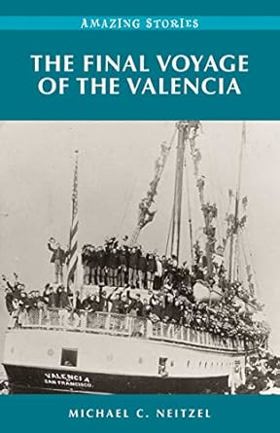
"A dynamic retelling of the deadly 1906 sinking of the SS Valencia off the southwest coast of Vancouver Island, one of the worst maritime disasters in Canadian history. There are few places on earth that have such a high record of marine casualties as the short yet treacherous stretch of coastline known as the Graveyard of the Pacific. In the late nineteenth and early twentieth century, the fifty-six kilometres between Port Renfrew and Cape Beale off Vancouver Island saw dozens of shipwrecks and claimed hundreds of lives. On a blustery night in late January 1906, the steamship SS Valencia, heading from San Francisco to Seattle and Victoria, met its tragic fate on the rocks near Pachena Point. With over one hundred passengers and sixty-five crew members on board, only thirty-seven people survived the wreck. All of the women and children perished. With journalistic precision, compassion for the victims, and condemnation for those who neglected to prevent the tragedy, author Michael C. Neitzel recounts the Valencia's ill-fated final voyage, drawing heavily on first-hand accounts of the survivors and witnesses. The Final Voyage of the Valencia is a must-read for anyone interested in the maritime history of Canada's west coast."-- Provided by publisher 139 pages : illustrations, map ; 22 cm CIRC [ 0 ]
|
2020 |
|
The final forest big trees, forks, and the Pacific Northwest by William Dietrich 
"Before Forks, a small town on Washington's Olympic Peninsula, became famous as the location for Stephenie Meyer's Twilight book series, it was the self-proclaimed "Logging Capital of the World" and ground zero in a regional conflict over the fate of old-growth forests. Since Pulitzer Prize-winning journalist William Dietrich first published The Final Forest in 1992, logging in Forks has given way to tourism, but even with its new fame, Forks is still a home to loggers and others who make their living from the surrounding forests. The new edition recounts how forest policy and practices have changed since the early 1990s and also tells us what has happened in Forks and where the actors who were so important to the timber wars are now."--Pub. desc 336 pages : maps ; 23 cm CIRC [ 0 ]
|
2010 |
|
|
1989 |
|
The Fernwood files by John J. Ellis, Charles Lillard
|
1989 |
|
The Fairhaven folktales of Dirty Dan Harris by Michael Sullivan 
A biography of the storyteller Daniel Jefferson Harris (1826-1890) of the Puget Sound area of Washington State, USA. 74 pages : illustrations ; 14 x 22 cm CIRC [ 1 ]
|
1981 |