Catalog of British Columbiana and Pacific Northwest Americana
Encyclopedia Cascadia Catalog contains book titles of mostly non-fiction Pacific Northwest Coast of North America Titles (primarially British Columbia, Idaho, Oregon and Washington State) in an easy-to-understand title catalog. If you see a link with this badge ONLINE CIRC it means that there is an online institution that provides free access to that title. In some cases there may be more than one institution hosting the title digitally.
| Catalog Title | Published |
|---|---|
|
The Construction of the Northern Pacific Railroad main line the years 1870-1888 by Louis T. Renz 
Excellent short history of the construction of the Northern Pacific Railroad between 1870-1888, describing the building of the Eastern Section, the Western Section and the Cascade Line. The author provides a well-written look at the people involved, the geography, financial difficulties and the engineering triumphs. With map. 64 pages with index. 64 pages ; 24 cm. CIRC [ 1 ]
|
1973 |
|
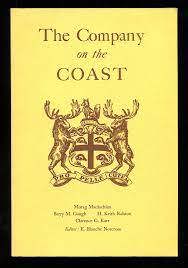
The Company on the coast by E. Blanche Norcross, Morag Maclachlan, Nanaimo Historical Society, Malaspina College
|
1983 |
|
The Comox Valley Courtenay, Comox, Cumberland and area by Paula Wild, Rick James, Boomer Jerritt 
From snowcapped mountains and delicate sub-alpine meadows to sandy beaches and secluded bays, The Comox Valley offers a fascinating look at one of the most popular regions on Vancouver Island--the area that stretches along the east coast of Vancouver Island from Fanny Bay to Black Creek, including the communities of Comox, Courtenay, Cumberland and Merville, as well as Denman and Hornby islands. The Comox Valley is known for its natural beauty, diverse recreational opportunities and as a vibrant centre of the arts. In a blend of stunning colour photographs and lighthearted, informative text, the book explores the mountains, rivers, beaches and sheltered waters of this unique geographic region. Journey to rural farms and lively urban centres, get a behind-the-scenes glimpse of a Canadian air force base and experience the laid back charm of Denman and Hornby islands. Discover a historic mining village, ancient sites of First Nations' battles and the fossilized remains of an 80 million-year-old elasmosaur. Learn why the Comox Valley has such a high concentration of artists and meet some genuine West Coast characters including a legend from the days of old-time logging. 143 pages : illustrations (chiefly color) ; 29 cm CIRC [ 1 ]
|
2006 |
|
The coming of the spirit of pestilence introduced infectious diseases and population decline among Northwest Coast Indians, 1774-1874 by Robert T. Boyd 
In the late 1700s when European colonizers arrived on the Northwest Coast, they reported the presence of vigorous, diverse cultures—Tlingit, Haida, Kwakwaka’wakw (Kwakiutl), Nuu-chah-nulth (Nootka), Coast Salish, and Chinookan—with a population conservatively estimated at more than 180,000. Just a century later the population had plummeted to only 35,000—a devastating loss of Indigenous lives caused by the introduction of diseases brought by settlers and colonizers. The Coming of the Spirit of Pestilence examines the first century of contact and the effects of introduced diseases such as smallpox, malaria, measles, and influenza on Native American population size, structure, interactions, and viability. Whereas in most parts of the Americas disease transfer and depopulation occurred early and were poorly documented, the later date of Euro-American contact in the Pacific Northwest means that records are relatively complete. Through doctors’ records, ships’ logs, diaries, censuses, and Native American oral traditions and testimonies, Robert Boyd reconstructs the process of disease transfer and the profound demographic and cultural impact of specific epidemics. This definitive study of introduced diseases in the Pacific Northwest illuminates the magnitude of human suffering and traces connections between these processes and cultural change. xv, 403 pages : illustrations, maps ; 24 cm CIRC [ 1 ]
|
1999 |
|
The Columbia River: Its History, Its Myths, Its Scenery, Its Commerce by William Denison Lyman 
Authored by historian William Denison Lyman, The Columbia River: Its History, Its Myths, Its Scenery, Its Commerce provides an expansive early 20th-century portrait of the Pacific Northwest's most vital waterway. The book chronicles the transformation of the mighty river from a wild, mythic landscape navigated by indigenous tribes and early fur traders into a heavily domesticated artery of steamboat commerce and regional agriculture. Through a blend of recorded Native American legends, pioneer chronologies, and glowing descriptions of geographic grandeur, the text captures the prevailing frontier optimism regarding the industrial subjugation of nature. A keen insight drawn from the work is how the juxtaposition of indigenous mythology and modern commerce exposes the inherent paradox of frontier boosterism; by romanticizing Native American legends as vanishing antiquities while simultaneously celebrating the aggressive industrial development of the river, the narrative illustrates how early historians actively mythologized the region's past to justify its colonial and ecological conquest. xx, 409 p : front., plates, ports., 2 fold. maps ; 25 cm. ONLINE CIRC [ 2 ]
|
1909 |
|
The Columbia River's "Ellis Island" the story of Knappton Cove by Nancy Bell Anderson, Heather Bell Henry 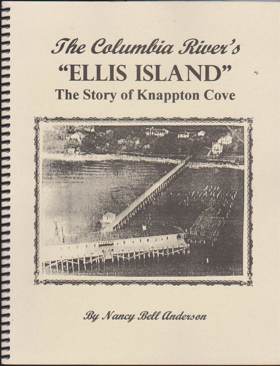
The United States mandated the medical inspection of all arriving immigrants in 1891. The Columbia River Quarantine Station in Knappton Cove, Washington, established 1899, was one of four points of entry on the west coast for immigrants coming to America. Thousands of European and Asian immigrants underwent health inspections at the station 98 pages : illustrations, maps ; 28 cm CIRC [ 0 ]
|
2012 |
|
The Columbia River Highway from the sea to the wheatfields of eastern Oregon by Clarence E. Mershon 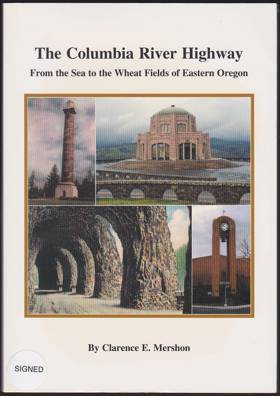
Published in 2007 by Clarence E. Mershon, The Columbia River Highway from the Sea to the Wheatfields of Eastern Oregon chronicles the grand engineering vision and historical evolution of one of America's most scenic roadways. The book details the monumental construction efforts led by Samuel C. Lancaster to carve a paved highway through the formidable cliffs of the Columbia River Gorge, connecting Portland's maritime climate to the vast agricultural interior. Through detailed historical narratives and vintage photographs, the text illustrates how the highway fundamentally transformed regional travel, commerce, and tourism by replacing precarious riverboats with a unified overland route. A keen insight drawn from the work is how the highway's pioneering design philosophy deliberately prioritized aesthetic wonder over pure utilitarian efficiency, transforming a piece of heavy civic infrastructure into a monumental landscape architecture project meant to romanticize the Pacific Northwest frontier for early motorists. x, 274 pages : illustrations, maps ; 26 cm CIRC [ 1 ]
|
2006 |
|
The Columbia River a historical travel guide by JoAnn Roe 
Throbbing with history of the Pacific Northwest of Canada and the United States, the mighty Columbia River is one of the longest rivers in North America. The Columbia has been an enemy at times. Before dams, vicious rapids claimed lives; and the river, swelled by ice melt from Canadas Columbia Ice Fields, flooded towns as distant as Portland, Oregon. Always it has been stunningly scenic. Read about the early river steamers on both sides of the border. Ponder the travels of salmon. Who built the Grand Coulee or Bonneville dams? What happened at the Hanford Project? Explore with David Thompson, who discovered the source of the river. Meet the real people who call the Columbia River shores their homes. xiii, 228 pages : illustrations ; 23 cm CIRC [ 1 ]
|
2013 |
|
The Columbia is coming! by Doris Andersen 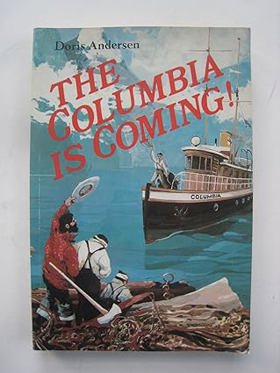
From 1905 to 1969, people along the British Columbia coast knew and loved the ships and men of the Columbia Coast Mission. The fiery John Antle started the service, primarily to provide isolated logging camps, Indians and settlers with much-needed medical facilities; in addition, there were religious services and social occasions - weddings, picnics, visits, libraries and the famous Christmas parties. This is the story of those sturdy little ships, their warm-hearted, practical skipper-chaplains and doctors, and their important role in the history of the coast 205 pages, 40 unnumbered pages of plates : illustrations, map, portraits ; 23 cm CIRC [ 1 ]
|
1982 |
|
The Columbia Gorge, a unique American treasure by Michael S. Spranger
|
1984 |
|
The Columbia by Stewart H. Holbrook, Ernest Richardson (Illustrator), Fitzgerald Rivers of America Collection (Library of Congress)
|
1956 |
|
The color of night race, railroaders, and murder in the wartime West by Max G. Geier 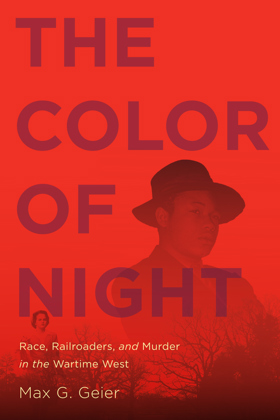
"On an unusually cold January night in 1943, Martha James was murdered on a train in rural Oregon, near the Willamette Valley town of Albany. She was White, Southern, and newly-married to a Navy pilot. Despite inconsistent and contradictory eyewitness accounts, a young Black cook by the name of Robert Folkes, a trainman from South Central Los Angeles, was charged with the crime. The ensuing investigation and sensational murder trial captured national attention during a period of intense wartime fervor and extensive Black domestic migration. Folkes' trial and controversial conviction--resulting in his execution by the state of Oregon--reshaped how Oregonians and others in the West thought about race, class, and privilege. In this deeply researched and detailed account, Geier explores how race, gender, and class affected the attitudes of local town-folk, law officers, and courtroom jurors toward Black trainmen on the West Coast, at a time when militarization skewed perceptions of virtue, status, and authority. He delves into the working conditions and experiences of unionized Black trainmen in their 'home and away' lives in Los Angeles and Portland, while illuminating the different ways that they, and other residents of Oregon and southern California, responded to news of 'Oregon's murdered war bride.' Reporters, civil rights activists, and curiosity seekers transformed the trial and appeals process into a public melodrama. The investigation, trial, and conviction of Robert Folkes galvanized civil rights activists, labor organizers, and community leaders into challenging the flawed judicial process and ultimately the death penalty in Oregon, serving as a catalyst for civil rights activism that bridged rural and urban divides. The Color of Night will appeal to 'true crime' aficionados, and to anyone interested in the history of race and labor relations, working conditions, community priorities, and attitudes toward the death penalty in the first half of the 20th century"-- Provided by publisher 374 pages : illustrations ; 23 cm CIRC [ 0 ]
|
2015 |
|
The colonial postal systems and postage stamps of Vancouver Island and British Columbia, 1849-1871 by Alfred Stanley Deaville 
A sketch of the origin and early development of the postal service on the Pacific seaboard of British North America 210 pages, 8 unnumbered leaves of plates : illustrations ; 24 cm CIRC [ 1 ]
|
1979 |
|
The collected poems of Ada Hastings Hedges by Ada Hastings Hedges , Alan Contreras , Ulrich H. Hardt , Ingrid Wendt 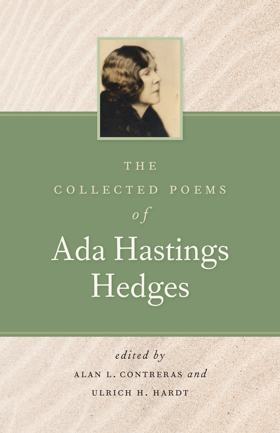
"Although for the most part forgotten today, Ada Hastings Hedges was among Oregon's foremost mid-twentieth-century poets. Famous in her lifetime, she was best known for her superb poems set in Oregon's high desert, which offer a fascinating counterpoint to C.E.S. Wood's seminal The Poet in the Desert. Except for a twelve-year sojourn in southeastern Oregon and two years in Los Angeles where her physician-husband served in the City Health Department, Hedges lived in Portland from 1912 until her death in 1980. She was assistant editor at Binfords and Mort Publishers and a supervising editor in the Works Progress Administration. She taught briefly at Warner Pacific College in the 1960s. Hedges wrote in a style notable for precision, clarity, and smoothness of line. More than half of her poems in this collection are sonnets. A poet of the city as well as the desert, her work offers a compelling perspective on mid-century Portland life. In 1933 she published her only book, Desert Poems. That collection is reprinted here in its entirety, along with scores of additional poems published in a wide variety of venues, making this the first comprehensive collection of Hedges's work. A detailed introduction by the editors and annotations to the text provide information about revisions, publication dates, and notable features. Also included is an essay by Hedges asking "Can Poetry Be Taught?" In her afterword, Oregon poet Ingrid Wendt writes of her admiration for Hedges's "fierceness of spirit, lack of sentimentality, and complex vision," accompanied by her "dogged determination to keep 'dreaming beauty from every land'." For readers interested in women's literature, Pacific Northwest poetry, and the literature of Eastern Oregon, this volume reintroduces a compelling regional voice"-- Provided by publisher xvi, 147 pages : illustrations, portraits ; 22 cm. CIRC [ 0 ]
|
2020 |
|
The Coast Salish of British Columbia by H. G. Barnett
|
1955 |
|
The Coast Salish of British Columbia by H. G. Barnett
|
1955 |
|
The coast of Puget Sound its processes and development by John Downing
|
1983 |
|
The coals of Newcastle a hundred years of hidden history by Lucile Saunders McDonald, Richard McDonald, Newcastle Historical Society (Wash) 
From 1864 to 1963, Newcastle, Washington was the center of a busy coal mining industry producing nearly 11 million tons of coal from a crisscross of tunnels under present day Cougar Mountain, Coal Creek Natural Area and The Golf Club at Newcastle. There were two main town sites as well as large mining structures, buildings and homes. A railroad ran from the mines to Renton and Seattle, and there were roads extending to Lake Sammamish, May Valley and Lake Washington. Very little evidence of the once bustling coal mining town of more than 1000 people remains. This book tells the story of the mines, coal companies, transportation and the people of an almost forgotten era. xii, 172 pages : illustrations (some color), maps (some color), portraits (some color) ; 28 cm CIRC [ 0 ]
|
2020 |
|
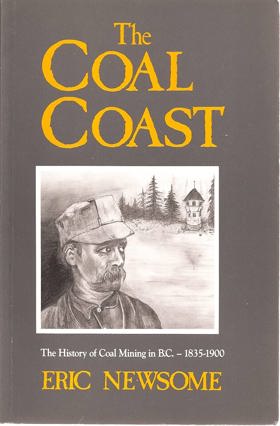
The coal coast the history of coal mining in B.C., 1835-1900 by Eric Newsome
|
1989 |
|
The climate of Oregon from rain forest to desert by George H. Taylor, Chris Hannan 
Weather is best understood as the state of the atmosphere on a given day or at a given time. Climate, on the other hand, looks at long-term averages of weather conditions. Or, as one 7-year-old explained to State Climatologist George Taylor, "weather is what you get and climate is what you're supposed to get." The Climate of Oregon gathers into a single volume a range of fascinating and useful climate information. Using state-of-the-art two-color maps and detailed tables, the authors describe various climate elements, including precipitation, temperature, winds, humidity, snow, clouds, and the growing season. Monthly maps for precipitation, snow, and temperature reveal how Oregon's climate changes throughout the year. The book defines the 9 distinct Oregon Climate Zones, examines the role of climate stations in reporting weather, and provides rich data from the state's most representative stations. Several years of unusual weather in the Pacific Northwest have generated great interest in large-scale climate change. Chapters on global warming and its impact on Oregon, El Niño and La Niña, climate changes and salmon populations, and long-term wet and dry cycles offer the latest findings on these topics. xi, 211 pages : illustrations, maps (some color) ; 26 cm CIRC [ 0 ]
|
1999 |
|
The Clearwater of Idaho by Cecil P. Dryden 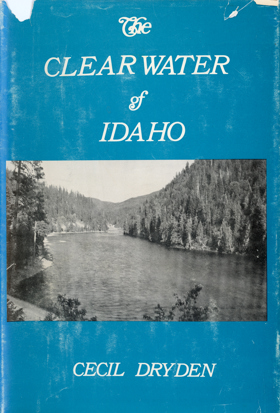
I write about a river I feel close to, having known it for well over a half century. My father's "benchland" ranch was just over the ridge from the narrow valley through which the Clearwater plows its urgent way to sea level. I have observed this river in all its vagaries; its spring rampagings which have set ferries adrift, lifted bridges from their piers, washed out trackage, and inundated highways; its summer somnolence; and its colorful September thinness which brings into view all the sumacbedecked islands, including "turkey-man's paradise," made safe by two channels against marauding coyotes. Although I know something about the land carved by the river, for this story I have relied in large measure on the works of numerous scholars whose research has left a legacy rich in Idaho lore. The book owes a special debt of gratitude to the following: Sister Alfreda Elsensohn for her monumental two-volume History of Idaho County; the late Robert G. Bailey, who produced the indispensable River of Not Return and Hell's Canyon, and his son, R. G. Bailey, Jr., for granting permission to use the photographs from River of No Return. Further, I am indebted to Potlatch Forests, Incorporated, for making available information and photographs. This book is an informal history of the Clearwater drainage area, including borderlands whose history naturally interweaves. I have not attempted to follow in detail all the threads of growth from their beginnings, but have stressed origins and directions in a setting of unfolding dramas. If certain characters and events have been omitted, the reason lies in the selective process that has had to be employed. -The Author, Cecil Dryden 258 pages illustrations 21 cm. CIRC [ 1 ]
|
1972 |
|
The claims to the Oregon territory considered by Adam Thom
Published in 1844 amidst escalating border tensions, Adam Thom’s The Claims to the Oregon Territory Considered serves as a rigorous legal rebuttal to American assertions of sovereignty over the Pacific Northwest. Written by a British judicial officer employed by the Hudson's Bay Company, the pamphlet meticulously dissects the historical categories of discovery, settlement, and contiguity to argue that Great Britain possessed a paramount legal title to the entire region. A keen insight drawn from the text is how Thom strategically restricts his analysis to "materials furnished by the Americans themselves"—specifically targeting the historical memoirs of U.S. diplomats like Robert Greenhow—thereby turning American logic against itself to portray British imperialism not as an aggressive conquest, but as the only valid application of international treaty law. pages 69-71. map ONLINE CIRC [ 1 ]
|
1844 |
|
The City of Rainbows a colourful history of Prince Rupert by Blair Mirau 
"A vivid and comprehensive history of the City of Prince Rupert, from its ancient roots as a rich, multicultural trading hub between different Indigenous Nations to its current state as an ethnically diverse community set against the stunning natural backdrop of the Great Bear Rainforest. Since time immemorial, rain has defined life on Kaien Island, now known as the townsite of Prince Rupert. As the rainiest and cloudiest city in Canada, Prince Rupert is the perfect environment for rainbows--and the rainbow is an apt metaphor for the city: a symbol of diversity and inclusion, a supernatural gateway between worlds, and a universal sign of hope and calm after a storm. From its original Ts'mysen inhabitants to the first European explorers and fur traders, the building of dozens of salmon canneries to the construction of the transcontinental railway, the global upheaval of two World Wars to decades of industrial boom and bust, Kaien Island, and Prince Rupert, has always been a rich, multicultural trading hub that has weathered countless storms. By weaving together historical events illustrated by compelling archival photographs, The City of Rainbows strives to tell the story of Prince Rupert from a modern perspective, one that confronts the impact of colonization head-on and moves away from a romanticized account of the development of a "pioneer" town. Balancing the histories of Indigenous Peoples, European and Asian settlers, and recent immigrants, this book reveals powerful, intriguing, uncomfortable, and beautiful truths about an undoubtedly colourful city."-- Provided by publisher vi, 251 pages, 14 unnumbered pages of plates : illustrations, map ; 22 cm CIRC [ 0 ]
|
2024 |
|
The Chinook jargon and how to use it a complete and exhaustive lexicon of the oldest trade language of the American continent by George C. Shaw
Authored by George C. Shaw, The Chinook Jargon and How to Use It: A Complete and Exhaustive Lexicon of the Oldest Trade Language of the American Continent serves as a foundational linguistic guide to the ubiquitous pidgin language that facilitated cross-cultural communication in the 19th-century Pacific Northwest. The book meticulously compiles the vocabulary, grammar, and pronunciation of a hybrid tongue—blending Chinookan, Nuu-chah-nulth, French, and English—that enabled commerce and diplomacy between diverse Indigenous nations and arriving European colonizers. Through its dictionary format and practical conversational examples, the text captures a fleeting historical moment when Native and settler communities were forced to operate on a relatively equal linguistic playing field for mutual economic survival. A keen insight drawn from the work is how the commercial codification of an indigenous trade language by colonial authors often signaled its impending obsolescence; by publishing standardized lexicons for English-speaking settlers, compilers like Shaw unwittingly transitioned Chinook Jargon from a living, fluid tool of mutual negotiation into a static frontier novelty precisely as regional assimilation policies were aggressively enforcing English linguistic dominance. 3 preliminary leaves, [ix]-xvi, 65 pages + [3] pages advertisements 22 cm ONLINE CIRC [ 1 ]
|
1909 |
|
The Chinook jargon by Myron Eells
Published in the late 19th century, Myron Eells's work on the Chinook Jargon serves as both a linguistic record and a practical guide to the widely used trade pidgin of the Pacific Northwest. The text documents the vocabulary and pronunciation of a language born from the blending of Indigenous dialects, French, and English, which originally facilitated commerce between diverse tribes and incoming white settlers,. A keen insight drawn from Eells's scholarship is how his rigorous documentation of the language was inextricably bound to his religious mission; because the Jargon was already broadly understood, he utilized it as the most efficient medium for rapidly spreading Christian hymns and teachings across multiple distinct linguistic groups,. Consequently, the work exists as both a valuable ethnographic artifact of a unique contact language and a practical tool designed to aid in the cultural assimilation of Indigenous populations. pages 300-312 CIRC [ 0 ]
|
1894 |