Catalog of British Columbiana and Pacific Northwest Americana
Encyclopedia Cascadia Catalog contains book titles of mostly non-fiction Pacific Northwest Coast of North America Titles (primarially British Columbia, Idaho, Oregon and Washington State) in an easy-to-understand title catalog. If you see a link with this badge ONLINE CIRC it means that there is an online institution that provides free access to that title. In some cases there may be more than one institution hosting the title digitally.
| Catalog Title | Published |
|---|---|
|
The best loved boat The Princess Maquinna by Ian Kennedy 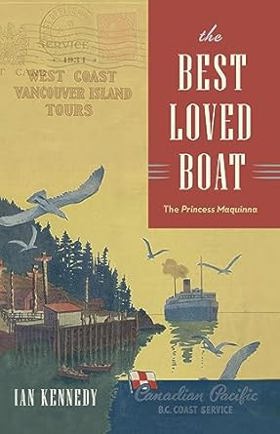
"Built in 1913, the Canadian Pacific Railway's ship Princess Maquinna steamed up and down the rugged west coast of Vancouver Island in summer and winter, calm weather and storms, for over forty years, and has become one of the most beloved boats in BC's maritime history. Princess Maquinna, sometimes referred to as the "Ugly Princess" but most often "Old Faithful," transported Indigenous people, settlers, missionaries, loggers, cannery workers, prospectors and travellers of all kinds up and down Vancouver Island's rugged and dangerous west coast, stopping at up to forty ports of call on her seven-day run. The Princess Maquinna faithfully served as the lifeline for all those who lived on the west coast of Vancouver Island before it became accessible by roads. Because of this strong connection she became the "Best Loved Boat" in BC's maritime history. Kennedy recounts battles through eighty-knot gales along the exposed coastline sailors called "The Graveyard of the Pacific," and reveals the bigotry that forced Indigenous and Chinese passengers to remain on the foredeck of the ship while other passengers sheltered from the elements inside. He brings the history of this beloved ship to life with rich detail, recalling a time when this remote part of British Columbia was alive with mines, canneries and now-forgotten settlements."-- Provided by publisher 1 online resource (viii, 239 pages) : illustrations, map CIRC [ 0 ]
|
2023 |
|
The Beer Baron of Boise the life of John Lemp, millionaire brewer of frontier Idaho by Herman W. Ronnenberg 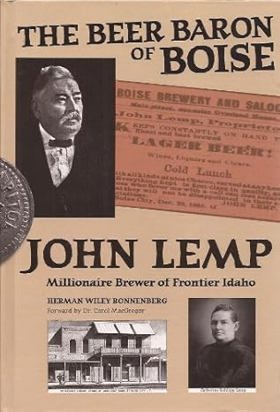
Although he arrived in America penniless, John Lemp became the most successful brewer in the history of Idaho. As befits a business leader of the Gem state, he cut a multitude of other facets into his personal and professional identity. As an early Idaho businessmen, his story gives insights into the early development of the state and, particularly, of Boise. This biography could be interpreted as fitting into the literature of various individual businessmen in the West. xxv, 436 pages : illustrations, maps ; 24 cm CIRC [ 0 ]
|
2008 |
|
The beadworkers stories by Beth H. Piatote 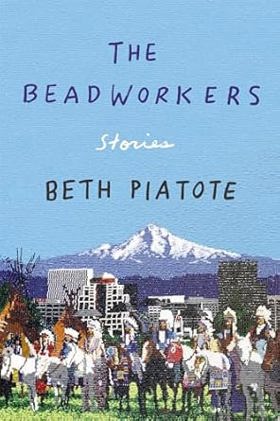
A woman teaches her niece to make a pair of beaded earrings while ruminating on a fractured relationship. An eleven-year-old girl narrates the unfolding of the Fish Wars in the 1960s as her family is propelled to its front lines. A Nez Perce-Cayuse family is torn apart as they debate the fate of ancestral remains in a moving revision of the Greek tragedy Antigone. Told with humor, subtlety, and spareness, the mixed-genre works of Beth Piatote’s first collection draw on Indigenous aesthetics and forms to offer a powerful, sustaining vision of Native life.. Beth Piatote's luminous debut collection opens with a feast, grounding its stories in the landscapes and lifeworlds of the Native Northwest, exploring the inventive and unforgettable pattern of Native American life in the contemporary world. 195 pages ; 22 cm CIRC [ 0 ]
|
2019 |
|
The ballad of Ginger Goodwin & Kitimat two plays for workers by Elaine Ávila 
"Two epic labour plays, based on true events, by the acclaimed author of Fado: The Saddest Music in the World. In The Ballad of Ginger Goodwin, discover how Canada got the eight-hour day - and in Kitimat, visit the fastest declining town in Canada, whose residents are suddenly offered a deal by Big Oil. The plays, performed from Los Angeles, California, to Lisbon, Portugal, are the recipient of many awards, including the Mellon Foundation Environment Arts Commission, and Best New Play, Audience Favourite, Best Production Awards from the Victoria Fringe and Victoria Critics Circle. The Ballad of Ginger Goodwin With a cast playing everyone from a radical socialist to an Italian laundress to a scientist-industrialist, The Ballad of Ginger Goodwin is about the dreams of immigrants, coal and smelter workers in Canada and the Pacific Northwest, and the battle for workers' rights. Featuring music of the period, including a new ballad by composer/activist Earle Peach, the play recreates the events surrounding the mysterious death of Albert "Ginger" Goodwin, who, through a strike at a Canadian zinc smelter in Trail, BC, brought the WWI British war machine to a halt. Kitimat Kitimat, British Columbia: an industry town in glorious wilderness finds itself the centre of international controversy when the town is asked to vote no or yes on an upcoming oil pipeline project. As election day approaches, the residents of Kitimat struggle to decide between economic prosperity or protection of the natural world. The Ballad of Ginger Goodwin: Cast of 2 women and 3 men Kitimat: Flexible, between 6 and 16 actors"-- Provided by publisher xi, 161 pages : illustrations ; 22 cm CIRC [ 0 ]
|
2023 |
|
The art of ceremony voices of renewal from indigenous Oregon by Rebecca J. Dobkins (Author, Photographer) 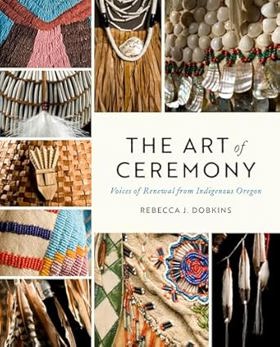
"The practice of ceremony offers ways to build relationships between the land and its beings, reflecting change while drawing upon deep relationships going back millennia. Ceremony may involve intricate and spectacular regalia but may also involve simple tools, such as a plastic bucket for harvesting huckleberries or a river rock that holds heat for sweat. The Art of Ceremony provides a contemporary and historical overview of the nine federally recognized tribes in Oregon, through rich conversations with tribal representatives who convey their commitments to ceremonial practices and the inseparable need to renew language, art, ecological systems, kinship relations, and political and legal sovereignty. Vivid photographs illuminate the ties between land and people at the heart of such practice, and each chapter features specific ceremonies chosen by tribal co-collaborators, such as the Siletz Nee Dosh (Feather Dance), the huckleberry gathering of the Cow Creek Umpqua, and the Klamath Return of C'waam (sucker fish) Ceremony. Part of a larger global story of Indigenous rights and cultural resurgence in the twenty-first century, The Art of Ceremony celebrates the power of Indigenous renewal, sustainable connection to the land, and the ethics of responsibility and reciprocity between the earth and all its inhabitants"-- Provided by publisher xix, 261 pages : illustrations (chiefly color), color maps ; 24 cm. CIRC [ 0 ]
|
2022 |
|
The archaeology of Manila galleons in the American continent the wrecks of Baja California, San Agustín, and Santo Cristo de Burgos (Oregon) by Scott S. Williams , Roberto Junco 
This is the first book devoted to the topic of Manila galleon shipwrecks; previous research on Manila galleons either has focused on the economics of the Manila galleon trade or has been limited to reports of the galleon wreck sites in the western Pacific salvaged for their cargoes. All three North American shipwrecks are protected under the historic preservation laws of the United States or Mexico, and each shipwreck site has been investigated by professional archaeologists seeking to answer research questions posed in peer-reviewed research designs. The majority of Manila galleon wrecks are found in the western Pacific and were salvaged by treasure hunters rather than recovered by archaeologists. The three North American shipwrecks represent the most protected Manila galleon archaeological sites, so their potential for future archaeological research is higher than for many of the extant shipwrecks of the western Pacific ix, 100 pages : illustrations (chiefly color), maps ; 24 cm CIRC [ 0 ]
|
2021 |
|
The Arbutus/Madrone files reading the Pacific Northwest by Laurence Ricou 
A lively and perceptive new look at twentieth-century Pacific Northwest writing, The Arbutus/Madrone Files explores the dynamics of this cross-border region using resonant quotations, poetry, song lyrics, and art to demonstrate and enhance author Laurie Ricou's critical readings and ideas. The Arbutus/Madrone Files is a wide-ranging, deeply felt meditation on the land, people, and literature of the U.S. and Canadian Pacific Northwest, gathered into twelve thematic essays or "files," including the Island File, Salmon File, Woodswords File, Sasquatch File, and, of course, the Rain File. A longtime student of literary regions, Ricou moves in this book from a scholarly perspective toward more personal and lyrical reflections about what constitutes "home" and "region." He explores the work of such Northwest authors as Emily Carr, H.L. Davis, David Guterson, Jack Hodgins, John Keeble, Ken Kesey, Joy Kogawa, Ursula Le Guin, John Okada, Kim Stafford, and David Wagoner, among others. This unique, stylishly written book will appeal to Pacific Northwest book-lovers interested in exploring the region's rich homegrown literature and art, and will be of great interest to scholars and students of regional literature, eco-criticism, and Pacific Northwest culture. xv, 239 pages : illustrations (some color), maps ; 23 cm CIRC [ 0 ]
|
2002 |
|
The American West and its interpreters essays on literary history and historiography by Richard W. Etulain 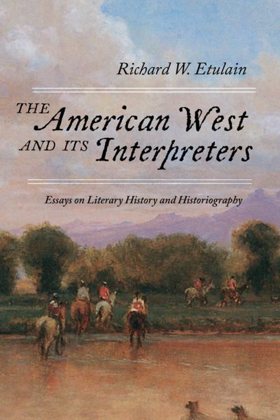
Distinguished historian Richard W. Etulain brings together a generous selection of essays from his sixty-year career as a specialist on the US West in this essential volume. Each essay provides an invaluable overview of the rise of western literary history and historiography--including insightful evaluations of individual historians--revealing summaries of regional literature and discussions of western stories yet to be told. Together these writings furnish readers with useful considerations of important subjects about the American West. All those interested in the American West and its interpreters will find these illuminative moments of literary history and historiography especially appealing xiii, 311 pages ; 23 cm CIRC [ 0 ]
|
2023 |
|
The Alpine lakes by Ed Cooper, Bob Gunning, Brock Evans, David Brower, Harvey Manning
|
1971 |
|
The adventures and sufferings of John R. Jewitt, captive of Maquinna by John R. Jewitt, Hilary Stewart
|
1987 |
|
The acid room the psychedelic trials and tribulations of Hollywood Hospital by Jesse Donaldson , Erika Dyck 
"From the street, New Westminster’s Hollywood Hospital didn’t look like much – just a rambling white mansion, mostly obscured behind the holly trees from which it took its name.But, between 1957 and 1968, it was the site of more than 6000 supervised acid trips, as part of the burgeoning (and controversial) field of psychedelic psychiatry. Under the care of Medical Director J Ross MacLean, and ex-spy/researcher Al “Captain Trips” Hubbard, it became a mecca for alcoholics, anxiety patients, and unhappy couples (as well as celebrities like Andy Williams), its unorthodox methods boasting a success rate of nearly 80%. But the same media attention that brought the hospital to prominence also assured its downfall, as prohibition forces drove their work underground for more than fifty years.Written by 49.2 regular Jesse Donaldson and academic historian Erika Dyck, The Acid Room takes readers into the hospital’s inner sanctum, charting its meteoric rise and fall as it opened up brave new worlds in medicine, and put Canada at the forefront of a movement that is only now being fully explored."-- Provided by publisher 155 pages : illustrations ; 17 cm. CIRC [ 0 ]
|
2022 |
|
The accidental hermit by Noël. Murchie, Nancy Spaulding 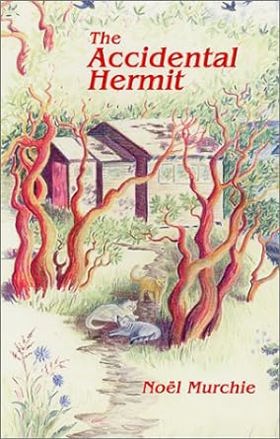
An amusing account of a 50-something woman living alone for a year in a rural cabin on a Puget Sound island. During her adventure she finds out more than she bargained for about pesky raccoons, wacky plumbing, foot infections, capricious weather, the effects of loneliness...and knowing herself. 170 pages ; 22 cm CIRC [ 1 ]
|
2001 |
|
The abandoned western Cascade Mountain railroad tunnels 1910 Wellington avalanche by Marques Vickers 
The creation of the train routes through the Cascade Mountains proved a monumental challenge. The conflict arose between the engineering capabilities of man and the treacherous topography and inclement weather of the region. The nine miles of track connecting the towns of Stevens Pass, Wellington and Scenic, Washington ultimately proved a failure for the Great Northern Railway. The Iron Goat Trail that retraces the former routing is a popular hiking destination. The trailhead is easily accessible by car. The well-maintained path leads you through traces of two ghost towns that were obliterated by avalanche. In the last decade of the 19th century, railroads were the primary mode of transportation for transcontinental passenger travel and freight. Previously isolated and inaccessible portions of the country became connected. Geographical impediments were merely obstacles to overcome. As profits swelled, ambitious and bold routings were designed and realized. During the 1890s, construction innovations enabled greater travel and more direct routes. These projects, employing tunneling and snow sheds, began lining the mountainous stretches immediately past Stevens Pass on the route to the Everett and Seattle stations. Immigrant laborers cleared the hillsides of mammoth trees. They drilled and blasted rock to create a flat grade. Camps were required for the hundreds of workers to maintain the tracks and keep them operational during the winter snows. Snowdrifts on the mountains often piled as high as 25 feet on either side of the tracks, creating artificial canyons and muffling warning noises. Snow slides often trapped and delayed trains for long periods of time until snowplows and large crews could manually shovel the paths. 69 pages : illustrations ; 23 cm CIRC [ 1 ]
|
2016 |
|
That balance so rare the story of Oregon by Terence O'Donnell
|
1988 |
|
Texada tapestry a history by Heather Harbord 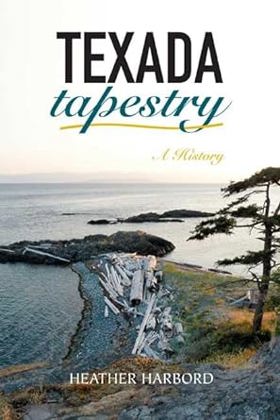
"Texada is the largest island in the Strait of Georgia, a long strip of richly mineralized granite and limestone dividing the upper gulf. Travel time from Vancouver is six hours via three ferries. A newcomer's first impression is of an idyllic place with a big sandy beach, a Sunday farmer's market and a scant population of aging loggers, miners, pot-growers and other retirees, but this belies Texada's intriguing history. Although today Texada is better known as the home of the illegal agricultural product called Texada Gold, it was once the focus of a real gold rush that lured no less a figure than cookie tycoon William Christie. Later, Texada was the site of British Columbia's first major political scandal when squabbles over a rich iron ore claim forced the resignation of Premier Amor de Cosmos in February 1874. The rich mineral deposits in time gave rise to three booming towns--Gillies Bay, Blubber Bay and Van Anda, noted as the town with everything: not just a whorehouse, but an opera house. Population ebbed and flowed with mineral prices and Texada went in and out of the news. Its association with illegal intoxicants dates back to 1928 when the biggest whisky still north of Vancouver was busted in romantic Pocahontas Bay. The bitter Blubber Bay strike of 1938 put Texada in the news again as the Pacific Lime Company faced off against the International Woodworkers' Association labour union in a bloody riot. This is also the feisty island that repelled the might of the Greater Vancouver Regional District when it wanted to dump metropolitan garbage in the abandoned pit of the once-famous Texada Mine. Author Heather Harbord has dedicated years to research, including over a hundred interviews of locals and old-timers to create a captivating book full of unforgettable characters, humorous anecdotes and well-researched fact, accompanied by many previously unpublished photographs. Once again, she has created a valuable volume on the history of the BC coast." --Publisher's description 288 p. : ill., map, ports. ; 24 cm. CIRC [ 1 ]
|
2011 |
|
Territorial hues the color print and Washington state, 1920-1960 by David F. Martin , Cascadia Art Museum 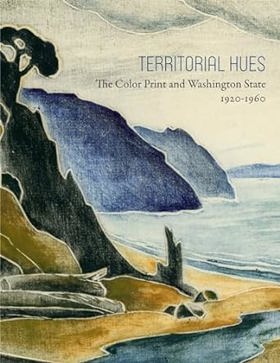
Territorial Hues: The Color Print and Washington State, 1920-1960' will consist of prints that display the cultural and stylistic influences used by Washington State artists to produce highly exceptional works that reflect the color, light, and atmosphere that is unique to this region. The book focuses on several mediums including color woodcut, intaglio, serigraphy, and lithography. The influences of Japanese prints and regional appropriations of international movements will be examined as well as the local production of white-line prints. Exhibition: Cascadia Art Museum, Edmonds, USA (05.10.2017-07.01.2018) 160 pages : illustrations (chiefly color), portraits ; 29 cm CIRC [ 1 ]
|
2017 |
|
Terrible trail the Meek Cutoff, 1845 by Keith Clark, Lowell Tiller, Maverick Publications 
In the winter of 1960, when Keith Clark and Lowell Tiller hit upon the idea of investigating the tragic history of the Meek Cutoff in Oregon, they formulated four goals: To write an investigative if not definitive work on the subject. To lay to rest the mass of misinformation about the route of those lost and wandering pioneers who made up the Meek Train. To narrate the passage of the emigrant train whose tragic experience rivaled - indeed, surpassed, in the number of deaths -that of the Donner Party of California. To help lay the groundwork for the solution of the Blue Bucket mystery. This book offers the results of the achievement of these goals. In 1845, when emigrant parties reached old Fort Boise on the Snake River, they still faced many tortuous miles through the Blue Mountains and down the Columbia to The Dalles. A shortcut which would avoid this fearsome part of the journey seemed to have been discovered by Stephen H. L. Meek, older brother of Joe Meek. Confident that he could lead wagons through territory where he had trapped, and west across the Cascades through country he knew only by description, Meek, an intrepid mountain man, persuaded two hundred families to follow him through the trackless desert country of central Oregon. The emigrants made their way up the Malheur River, building their road as they went; and the story of their suffering, despair, and eventual rescue is presented in the pages of this book. Somewhere along the route to the Willamette Valley a group of these wandering people stumbled onto gold only to lose sight of it again. Subsequent searchers have traced and retraced the trail for more than a hundred years but to no avail. The book throws new light on the possibility of a rediscovery of the long-lost Blue Bucket gold. There are thirty-three illustrations from photographs, three maps and an endsheet map, a bibliography, an index, and a roster of names of pioneers. xx, 279 pages : illustrations, maps ; 22 cm CIRC [ 1 ]
|
1993 |
|
Terra Pacifica people and place in the northwest states and western Canada by Paul W. Hirt 
"Ten widely-recognized historians from the United States and Canada present thought provoking insights about society, culture, and change in the great, resource-laden Northwest. Essays examine early Spanish exploration of the Northern coast; the long-term relationship of a fragile Canadian union with its powerful southern neighbor; regional novelists and literature; important aspects of black and white immigration; the iconography of nuclear energy; and the continuing interaction of the region's many Indian reservations with the dominant society's economic, conservation, and legal institutions."--BOOK JACKET xvii, 223 pages : illustrations, map ; 24 cm CIRC [ 1 ]
|
1998 |
|
Terminus Town Port Moody's transition through time by Ralph Drew 
Port Moody owes its existance to the order-in-council by the 'Dominion Government of Canada' on October 4th, 1879, that established 'Port Moody' as the 'Western Terminus' of the transcontinental railway. Terminus Town describes the construction of the CPR railway along the north shore of the Fraser River between Port Moody and Yale making extensive use of photographs taken during construction. x, 385 pages : illustrations, maps, portraits ; 23 cm. CIRC [ 0 ]
|
2023 |
|
Tent City, Seattle refusing homelessness and making a home by Tony Sparks 
Transforms our understanding of being unhoused in the United States. Tent City 3 provides Seattle’s unhoused people with a place to create and sustain not just shelter but a home. In 2000 it became one of the first organized, peer-operated tent encampments in the city, a type of community that has become more common throughout the West Coast and the United States in the intervening years. Based on groundbreaking participatory research and interviews, this book explores the lives of Tent City 3’s residents and their efforts to reclaim dignity, freedom, and the deep human connection to one’s own space. Tent City 3 upends stereotypes of homelessness by being a self-managed, self-governing, and largely self-supporting community of informal housing. Residents enact ongoing and relational homemaking practices that challenge widely accepted notions of private and public, self and other, and home and homeless. Tony Sparks reveals how small tasks undertaken in Tent City 3 contribute to a larger process of homemaking through practices of care, collectivity, and the creation of a commons. He also shows how the encampment’s residents refuse the normative boundaries of private property to create and sustain a sense of home and resist the ongoing settler colonialism that justifies their exclusion. Brimming with insightful analysis and rich storytelling, Tent City, Seattle dispels myths about homelessness while placing the issue within the arc of American history. viii, 181 pages : illustrations ; 23 cm CIRC [ 0 ]
|
2024 |
|
Tenino, Washington the decades of boom & bust by Scott McArthur 
Published in local editions by Scott McArthur, Tenino, Washington: The Decades of Boom & Bust chronicles the colorful economic highs and lows of a historic south Sound community shaped by sandstone quarrying, timber, and coal mining. The book details the town's late 19th-century industrial peak, its struggles through the Great Depression, and its famous emergency response of printing wooden money during the banking crisis of 1933. Through archival photographs and engaging local history, the text captures the gritty resilience of a working-class town repeatedly forced to reinvent itself as its primary resource industries faded. A keen insight drawn from the work is how severe economic isolation can spark profound civic innovation; by turning local wood veneer into legal tender, Tenino transformed a debilitating banking failure into an ingenious piece of public theater and enduring numismatic history. 143 pages : illustrations ; 22 cm CIRC [ 1 ]
|
2005 |
|
Tendoy, chief of the Lemhis by David L. Crowder
Monograph which presents a biography of Chief Tendoy, the leader of the Lemhi Indian Tribe in Idaho for forty-four years 139 pages : illustrations, 3 maps, portraits ; 23 cm CIRC [ 1 ]
|
1969 |
|
Ten years in Oregon by Daniel Lee, Joseph Frost 
Containing also a brief history of the missions and settlement of the country, origin of the provisional government, number and customs of the Indians, incidents witnessed while traversing and residing in the territory, description of the soil, production and climate of the country. This work details the travels and adventures of Doctor E. White and his wife to the Oregon Territory and the incidents witnessed during their residence, with a brief history of the missions and settlement of the country, origin of the provisional government, number and customs of the Indians, and a description of the soil, production and climate. Excerpts from John Charles Frémont's Narrative Sabin are included. 399 pages : 1 portrait ; 20 cm ONLINE CIRC [ 1 ]
|
1844 |
|
Teaching Oregon native languages by Joan Gross 
In a world where over half of the remaining 6000 languages will most likely disappear by the end of the century, attention has finally begun to focus on the struggles of indigenous people to save their languages. Lack of knowledge concerning the vast linguistic diversity of Oregon's languages has been a major obstacle to language revitalization in this state. Native peoples were subjected to disease, displacement, and forced linguistic assimilation, leaving many languages with only a few speakers. Some languages died out, but others prevailed in the privacy of homes and longhouses. This book tells the story of perseverance and survival against unbelievable odds, using the words of today's speakers and learners of Oregon's languages. Interviews with 52 native speakers provide valuable insights into how languages are lost and how a linguistic heritage can be brought to life. Teaching Oregon Native Languages discusses the role of state and federal language policies, explores how archival collections can be used in language revitalization, and describes strategies for creating a successful teaching environment. A timely and necessary resource, it will educate all readers about the important efforts underway to revitalize Oregon's first languages. viii, 168 pages : illustrations, maps ; 24 cm CIRC [ 0 ]
|
2007 |
|
Teaching Native pride Upward Bound and the legacy of Isabel Bond by Tony Tekaroniake Evans 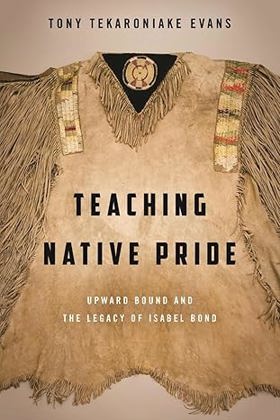
Based on more than thirty interviews with students and staff, Teaching Native Pride employs both Native and non-Native voices to tell the story of the University of Idaho’s Upward Bound program. Their personal anecdotes and memories intertwine with accounts of the program’s inception and goals, as well as regional tribal history and Isabel Bond’s Idaho family history. A federally sponsored program dedicated to helping low-income and at-risk students attend college, Upward Bound came to Moscow, Idaho, in 1969. Isabel Bond became director in the early 1970s and led the program there for more than three decades. Those who enrolled in the experimental initiative—part of Lyndon B. Johnson’s War on Poverty—were required to live within a 200-mile radius and be the first in their family to pursue a college degree. Living on the University of Idaho campus each summer, they received six weeks of intensive instruction in mathematics, laboratory sciences, composition, literature, foreign languages, and study skills. Recognizing that most participants came from nearby Nez Perce and Coeur d’Alene communities, Bond and her teachers designed a curriculum that celebrated and incorporated their Native American heritage—one that offers insights for educators today. Many of the young people they taught overcame significant personal and academic challenges to earn college degrees. Native students broke cycles of poverty, isolation, and disenfranchisement that arose from a legacy of colonial conquest, and non-Indians gained a new respect for Idaho’s first peoples. Today, Upward Bounders serve as teachers, community leaders, entrepreneurs, and social workers, bringing positive change to future generations. x, 230 pages : illustrations (black and white) ; 23 cm CIRC [ 0 ]
|
2020 |