Catalog of British Columbiana and Pacific Northwest Americana
Encyclopedia Cascadia Catalog contains book titles of mostly non-fiction Pacific Northwest Coast of North America Titles (primarially British Columbia, Idaho, Oregon and Washington State) in an easy-to-understand title catalog. If you see a link with this badge ONLINE CIRC it means that there is an online institution that provides free access to that title. In some cases there may be more than one institution hosting the title digitally.
| Catalog Title | Published |
|---|---|
|
Sketch of the Oregon territory Emigrant's guide by Philip Leget Edwards 
Published in 1842, Philip Leget Edwards’s Sketch of the Oregon Territory: Or, Emigrants' Guide stands as one of the earliest practical manuals designed to facilitate American overland migration to the Pacific Northwest. Drawing from his firsthand experiences as an educator at Jason Lee’s Methodist mission in the 1830s, Edwards provided prospective pioneers with critical logistical details regarding the region's geography, climate, indigenous populations, and agricultural potential. A keen insight drawn from the publication is how its strategic printing in Missouri—the primary launching point for the Oregon Trail—demonstrates how seemingly objective frontier guidebooks functioned as deliberate promotional propaganda to accelerate American mass settlement and physically preempt British claims to the disputed territory. 20 pages 19 cm ONLINE CIRC [ 1 ]
|
1842 |
|
Skeena River fish and their habitat by Allen Gottesfeld, Ken A. Rabnett, Ecotrust, Skeena Fisheries Commission 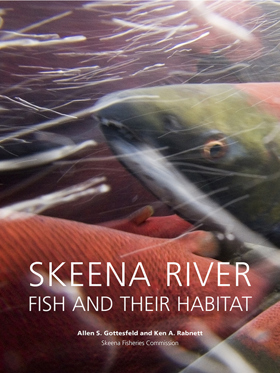
British Columbia's Skeena River is one of the great salmon rivers of the North Pacific. The river and its fish have supported indigenous peoples for thousands of years. More recently, the Skeena has earned world renown for its recreational fishery and magnificent wilderness setting. Yet, over the last century, fish populations have declined from overfishing, habitat alteration and, to an unknown degree, climate change. Development of mining as well as oil and gas resources may also pose threats to fish populations. This book presents the first thorough review of the salmon stocks and freshwater species of the Skeena River. Initial chapters summarize the river's environment, fish, and fisheries. The book then examines the physical geography, development history, indigenous use, and major salmon stocks of each of the watershed's sub-basins. This volume makes available for the first time – to researchers, field biologists, fishermen and natural history enthusiasts – both the published, and largely unpublished, literature on this productive salmon ecosystem. 341 pages : illustrations, maps ; 26 cm CIRC [ 0 ]
|
2008 |
|
Skeena country the people and the landscape by Provincial Archives of British Columbia Aural History
|
1976 |
|
Skagit settlers trials and triumphs, 1890-1920 by Skagit County Historical Society, Margaret Willis
|
1975 |
|
Skagit memories stories of the settlement years as written by the pioneers themselves by Charles M. Dwelley, Helen May Dwelley
|
1979 |
|
Sixty-four years as a writer by Bill Gulick 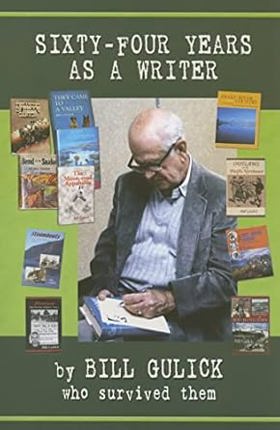
"Bill Gulick's writing career, spanning more than six decades, is truly remarkable. He has written twenty-seven novels, eight nonfiction books and several plays. He was a regular contributor to The Saturday Evening Post and other national magazines. His stories have become major motion pictures starring screen legends like Burt Lancaster, and Jimmy Stewart. A list of his literary friends reads like a whose who of western wrtiting. Gulick is considered one of the foremost authorities on Pacific Northwest history. In Sixty-four Years as a Writer, he details the journey from his Depression era Oklahoma roots to his position as one of the nation's premier western authors."--Publisher's description 344 pages : illustrations ; 23 cm CIRC [ 0 ]
|
2006 |
|
Sixty years in the Scablands a wildlife career in the Palouse Hills in the Pacific Northwest by Gerald Hickman, Tea Joe Hickman, Sabrina Boling 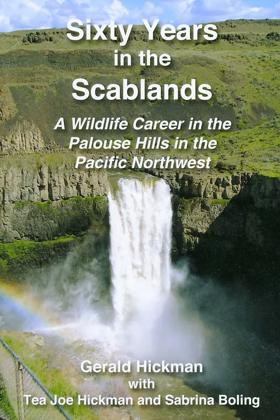
"The author, Gerald Hickman, has lived and worked in the Channeled Scablands since his birth and still lives in Cheney, WA on the northern extent of the geologic area known as the Scablands. The book describes the creation of the Scablands as determined by scientists, the wildlife and people who live there and the author's travels to similar habitats in other parts of our planet from Alaska to Africa." -- Back cover vii, 125 pages : illustrations, maps ; 23 cm CIRC [ 0 ]
|
2019 |
|
Six decades back early days on the Snake River Plain by Charles S. Walgamott 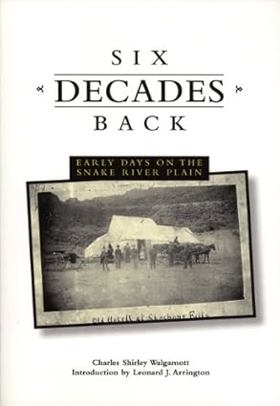
Charles Shirley Walgamott arrived by stage at Rock Creek Station, Idaho Territory in 1875. In an untamed land, far from his native Iowa, he survived illness, hardship, and lawlessness. Walgamott mined, trapped, ranched and hunted, while living with settlers, Indians and outlaws. xxv, 357 pages : illustrations ; 21 cm. CIRC [ 0 ]
|
2004 |
|
Siuslawan (Lower Umpqua) an illustrative sketch by Leo Joachim Frachtenberg, Franz Boas, Smithsonian Institution Bureau of American Ethnology
Co-authored by anthropologists Leo Joachim Frachtenberg and Franz Boas under the auspices of the Smithsonian Institution, Siuslawan (Lower Umpqua): An Illustrative Sketch provides a rigorous grammatical analysis of a severely endangered language native to the central Oregon coast. Published as part of Boas’s monumental Handbook of American Indian Languages, the monograph meticulously diagrams the phonetics, morphology, and complex verbal structures of the Siuslaw and Lower Umpqua dialects. By documenting these intricate linguistic mechanics directly from a dwindling number of fluent elders, the researchers created an invaluable, highly technical repository of a coastal culture that had been systematically fractured by pioneer settlement and forced relocations to the Siletz Reservation. A keen insight drawn from the work is how the federal sponsorship of "salvage anthropology" created a profound institutional hypocrisy; by utilizing the Bureau of American Ethnology to painstakingly catalog the structural brilliance of the Siuslaw language, the United States government funded the academic preservation of Indigenous intellectual heritage while simultaneously enforcing the devastating assimilation policies that actively drove these very languages to the brink of extinction. pages 433-629 ; 25 cm. ONLINE CIRC [ 1 ]
|
1917 |
|
Sitting on a salt spring by David Conover 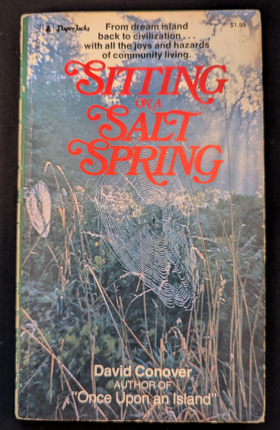
From dream island back to civilization ... with all of the joys and hazards of community living. 160 pages ; 18 cm CIRC [ 1 ]
|
1978 |
|
Sisters of the ice the true story of how St. Roch and North Star of Herschel Island protected Canadian Arctic sovereignty by R. Bruce Macdonald 
"This book is a biography of two British Columbian ships that performed legendary service in the Canadian Arctic. The St. Roch, now on permanent display at the Vancouver Maritime Museum, is the better known of the two, although North Star of Herschel Island is still sailing and still adding to her legend. Historian Bruce Macdonald--who, along with his wife, owns North Star of Herschel Island--has meticulously researched the origins and service logs of each ship and created a book that will enthrall old Arctic hands, maritime history buffs and anyone who appreciates well-written Canadian history. Under the command of Captain Henry Larsen, the sturdy RCMP vessel St. Roch spent years showing the Canadian flag in the Arctic, performing many duties including delivering medical supplies and taking census information in addition to enforcing the law in the North. St. Roch is world renowned for achieving many firsts, including being the first vessel through the Northwest Passage west to east, the first vessel to navigate the passage in both directions and the first vessel to circumnavigate North America. Inspired by St. Roch, renowned trapper and Inuit leader Fred Carpenter designed the elegant North Star, the ultimate ice vessel used to transport furs and people to and from remote Banks Island. Together, the two iconic ships have helped to solidify Canadian sovereignty in the Arctic and have become symbols of unity among Northern communities. In Sisters of the Ice, Macdonald documents in vivid detail the adventurous histories of these two vessels, as well as the history of the Northern communities in which they gained renown. Detailing daring escapes from dangerous ice conditions to thrilling sea voyages to raucous whaling towns, Macdonald reveals the perilous and often lawless climate in which these vessels operated and the ties of Canadian identity that they helped forge."-- Provided by publisher xiii, 146 pages : black and white illustrations, map ; 23 cm CIRC [ 0 ]
|
2021 |
|
Sir James Douglas and British Columbia by W. N. Sage
Authored in 1930 by University of British Columbia historian Walter Noble Sage, Sir James Douglas and British Columbia is a foundational academic biography chronicling the life of the man widely heralded as the "Father of British Columbia." The text meticulously traces the geopolitical transition of the Pacific coast from the sprawling, resource-extracting corporate fiefdom of the Hudson’s Bay Company into a formal, legally structured British Crown colony. Sage emphasizes Douglas’s autocratic but stabilizing governance during the chaotic influx of tens of thousands of American miners during the 1858 Fraser River Gold Rush, framing his tenure as the critical administrative bulwark that successfully secured British sovereignty in the Pacific Northwest against the aggressive tide of American Manifest Destiny. A keen insight drawn from the work is how the academic reliance on the "Great Man" theory of history functions to morally validate the mechanics of imperial state formation. By framing Douglas as a pragmatic, enlightened patriarch who single-handedly imposed civilized British law upon an unruly frontier of rowdy prospectors and "untamed" Native populations, Sage effectively sanitizes the inherent violence of colonization. This historiographical maneuver subtly recasts the systemic dispossession of First Nations peoples—including Douglas's own highly contested, paternalistic land policies and inadequate reserve allocations—not as acts of territorial theft, but as necessary, sober administrative burdens managed by a benevolent British bureaucracy. Consequently, the establishment of the modern province is memorialized as a triumph of dignified imperial order over wilderness, structurally obscuring the profound colonial trauma embedded in its legal foundation. 398 pages folded map 25 cm. ONLINE CIRC [ 1 ]
|
1930 |
|
Sine die a guide to the Washington State legislative process by Edward D. Seeberger 
This 1997 edition of Sine Die is a completely new book. Since the first edition of Sine Die was published in 1987, there have been dramatic changes in the Washington State Legislature and in state politics. Limits have been placed on campaign contributions and reporting requirements are expanded; ethics laws were passed following revelations of improper use of caucus staff; Initiative 601 was passed by the voters imposing limitations on state taxing and spending powers; the legislative process has been computerized and information is now easily and quickly accessible electronically to all; and term limits, passed in 1992, start taking their toll on state legislators in 1998. Even more significant, there has been a gender revolution in the legislature. Women are on the verge of having an equal place in numbers and power and are having a dramatic effect on the legislative climate and on state policy. Sine Die is a clear and up-to-date description of how the Washington State Legislature works. Presenting substantially more information on women in the legislature, the role of the governor, and the various origins of legislation, the 1997 edition explains the process by which thousands of proposed laws are introduced each year and are culled down to the approximately twenty percent that are eventually enacted. xiii, 203 pages : illustrations ; 23 cm CIRC [ 1 ]
|
1989 |
|
Since the time of the transformers the ancient heritage of the Nuu-chah-nulth, Ditidaht and Makah by Alan D. McMillan 
"The Nuu-chah-nulth, Ditidaht, and Makah occupy western Vancouver Island and the northern tip of the Olympic Peninsula in Washington. This book examines the long culture history of these closely related peoples, a history that extends back to mythic times, when the powerful transformers put the landscape and the animals in their present forms." "Alan McMillan brings together an impressive array of sources and integrates them into a single account. Archaeological evidence dating back more than 4,000 years is discussed in detail. Native oral traditions, linguistic studies, and historic evidence also contribute to a rounded picture of these societies and to an understanding of the changes that have occurred over time."--Jacket xii, 252 pages : illustrations, maps ; 24 cm CIRC [ 1 ]
|
1999 |
|
Silviculture and ecology of western U.S. forests by John C. Tappeiner, Douglas A. Maguire, Timothy B. Harrington 
Silviculture, once regarded solely as reforestation and growing trees for timber, is understood today as also maintaining forest health, reducing fire potential, benefitting wildlife and aesthetics, and ensuring multiple options for the future against the uncertainties of a changing climate. Silviculture and Ecology of Western U.S. Forests, Second Edition, is a text for students, professional forest managers, and scientists that summarizes both early and contemporary research and principles relevant to the silviculture, ecology, and multi-purpose management of western U. S. forests. Based on its authors’ significant experiences and contributions in the field, as well as nearly 1000 additional references, Silviculture and Ecology remains the only text that focuses on silviculture in western U.S. forests—providing background and basis for current biological, ecological, and managerial practices. Detailed chapters on fire, tree growth, and management of complex stand structures, as well as shrub ecology and an ecosystem framework, are bolstered in the second edition. A new series of case studies illustrates how silvicultural practices are developed and modified as forests grow and new challenges and opportunities occur. Contemporary silvicultural practices, particularly pertaining to fire use, vegetation management, soil fertility, and fertilization have been updated, and modifications that enhance standard practices are demonstrated throughout the text. In this comprehensive reference, readers entering the field will come to understand the significance of carefully managing forests by conscious design, and experienced silviculturists will benefit from the edition’s up-to-date information, providing forest users with a greater range of ecosystem services and consumable products alike. vii, 440 pages : illustrations ; 23 cm CIRC [ 0 ]
|
2007 |
|
Silver rush British Columbia's silvery Slocan, 1891-1900 by Peter J. Smith 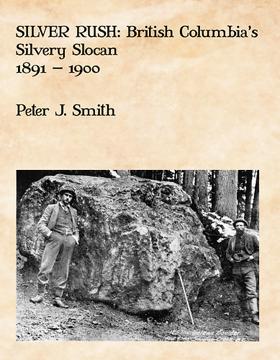
Silver Rush tells the story of British Columbia’s “Silvery Slocan.” In the 1890s, mining camps like Sandon, Three Forks, Whitewater and their neighbours; New Denver, Silverton, Slocan City, Kaslo and Nakusp, thrived. Once the most productive mining region in British Columbia, prospectors and miners came from Idaho, Montana and other mining centres to reap the silver harvest. Capitalists flooded in from Spokane, Seattle, Vancouver, and investment centres across North America and the world. Plummeting silver prices, labour troubles and the Klondike gold rush eventually put an end to the silver rush but the legacy of that rush endures to this day. vi, 642 pages : illustrations (some colour), maps ; 28 cm CIRC [ 0 ]
|
2020 |
|
Silver Creek Idaho's fly fishing paradise by Dave Clark, Dave Glasscock 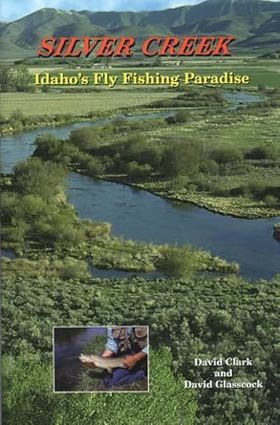
This is the story of one of the most revered trout fisheries in the world. The book includes color photographs, detailed Silver Creek area map, Nature Conservancy map, s-curves map, Silver Creek hatch chart, fly chart, and tips on equipment, flies, and techniques. xiv, 210 pages : illustrations (some color), maps ; 23 cm CIRC [ 0 ]
|
1997 |
|
Shrubs to know in Pacific Northwest forests by Edward C. Jensen (Author, Photographer), Erik D. Simmons (Illustrator), David A. Zahler (Illustrator), Alan Dennis (Illustrator), Oregon State University Press (Publisher) 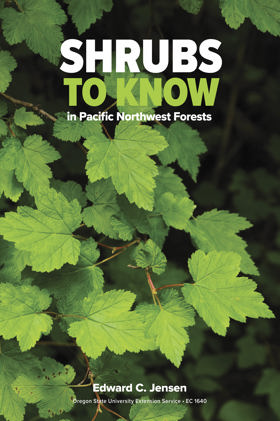
This full-color, simple-to-use field guide makes shrub identification easy and fun. It features 100 of the most common shrubs that grow in and around Pacific Northwest forests—from southern British Columbia to northern California and from the Pacific Ocean to the northern Rockies. It includes an overview of shrub communities in the Pacific Northwest; more than five hundred color photos; individual range maps and complete descriptions for each species; notes on range and habitat, response to disturbance, traditional and current uses, and origin of names; glossary of identification terms; and an easy-to-use, well-tested identification key. 141 pages : color illustrations, color maps ; 23 cm. CIRC [ 0 ]
|
2022 |
|
Shoshoni pony by Carol Lynn MacGregor, Dick Lee (Illustrator) 
An overview of how horses came to be used by various peoples in the American West, particularly the Shoshoni Indians, discussing the difference that horses made in their lives 32 pages : illustrations (some color) ; 22 cm CIRC [ 0 ]
|
2003 |
|
Short trips and trails the Columbia Gorge by Oral Bullard, Don Lowe (Illustrator)
|
1974 |
|
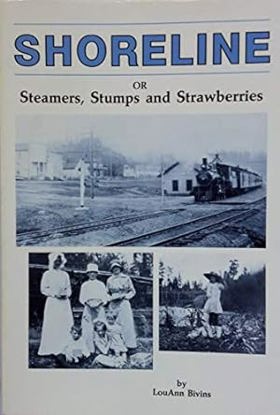
Shoreline, or, Steamers, stumps and strawberries by LouAnn Bivins, Shoreline Historical Museum
|
1987 |
|
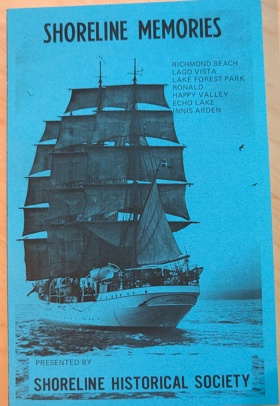
Shoreline memories Volume 1 by Shoreline Historical Society
|
1975 |
|
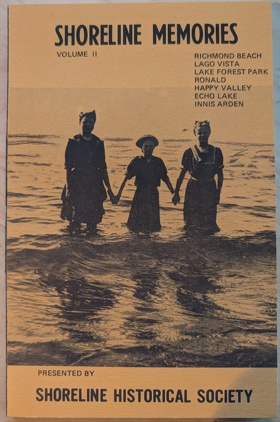
Shoreline memories Volume 2 by Shoreline Historical Society
|
1975 |
|
Shipyard short histories of Whatcom County's boatbuilders & shipyards, with remembrances from those who worked them by Todd Warger 
For over 120 years, Whatcom County has been at the forefront of boatbuilding and ship construction. Its shipwrights, carpenters, and manufacturers have led the way in marine technology and innovation, never afraid of embracing the use of new building materials, methods--and at time, pioneering the industry itself xv, 282 pages : illustrations ; 20 x 26 cm CIRC [ 0 ]
|
2023 |
|
Shipwrecks off Juan de Fuca by Jim Gibbs
|
1968 |