Catalog of British Columbiana and Pacific Northwest Americana
Encyclopedia Cascadia Catalog contains book titles of mostly non-fiction Pacific Northwest Coast of North America Titles (primarially British Columbia, Idaho, Oregon and Washington State) in an easy-to-understand title catalog. If you see a link with this badge ONLINE CIRC it means that there is an online institution that provides free access to that title. In some cases there may be more than one institution hosting the title digitally.
| Catalog Title | Published |
|---|---|
|
Propagation of Pacific Northwest native plants by Robin Rose, Caryn E. C. Chachulski, Diane L. Haase 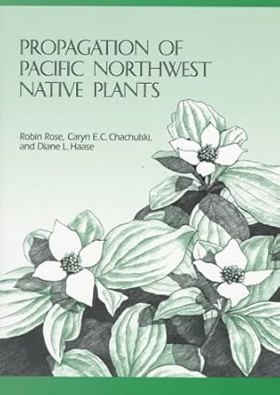
Increasing awareness of the beneficial role of native plants in promoting healthy ecosystems has generated new interest in propagation techniques. Native plants have been recognized as a crucial component of land management, especially after fires or other disturbances, and are widely used in habitat conservation efforts. In addition, native plants are increasingly desirable for landscaping and gardening. Propagation of Pacific Northwest Native Plants, the first publication of its kind, provides propagation information on nearly one hundred and forty native plants. Designed for use by both nursery professionals and home gardeners, this working manual presents the most current and comprehensive information in this emerging field. Drawn from forestry and agricultural journals, as well as gardening and horticultural handbooks and personal sources, the techniques presented here offer invaluable direction to the many who wish to grow native plants. The book is divided into four plant sections: shrubs, trees, forbs, and grasses. In addition to propagation techniques, the species accounts feature physical descriptions and information on habitat and geographic range. Abundant line drawings and an illustrated glossary help to ensure accurate use of this important new resource. viii, 248 pages : illustrations ; 26 cm CIRC [ 0 ]
|
1998 |
|
Pronunciation guide of Oregon place names by Robert Monaghan
|
1961 |
|
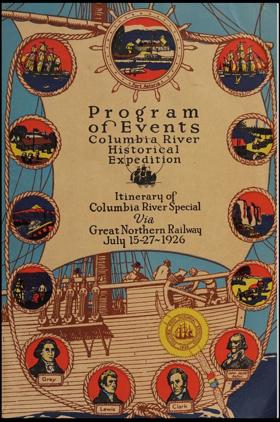
Program of Columbia River Historical Expedition, July 15-27, 1926. Itinerary of Columbia River special via Great Northern Railway by Columbia River Historical Expedition
|
1926 |
|
Profanity Hill by Irene Burns Miller 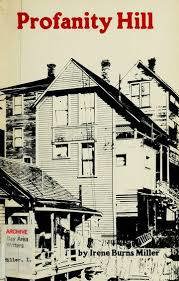
In Profanity Hill, Irene Burns Miller recounts her 1940 experience as the sole relocation supervisor tasked with clearing a decaying Seattle neighborhood to make way for the Yesler Terrace public housing project. The book details her daily interactions with the area's diverse and marginalized residents, including sex workers, immigrants, and impoverished families who were facing eviction despite the city having almost no rental vacancy. Through personal anecdotes, Miller highlights the stark power dynamics and emotional toll of dismantling a tightly knit, albeit crumbling, community in the name of urban progress. Ultimately, the narrative chronicles the complete displacement of the neighborhood's original inhabitants to pave the way for a newly constructed vision of public housing. iv, 139 pages : illustrations ; 22 cm CIRC [ 1 ]
|
1979 |
|
Printer's devils a feisty pioneer newspaper shaped the history of British Columbia, 1895-1925 by Ron Verzuh 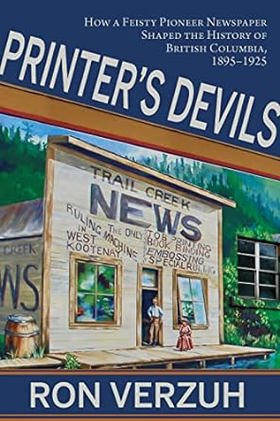
"The grisly murder of a nurse, a crippling 1917 strike, death on the wartime battlefield, the 1918–19 flu pandemic, life on the home front—these are just some of the historic events covered in the early days of the Trail Creek News. In Printer’s Devils, historian Ron Verzuh offers both a study of pioneer journalism and a social history of the smelter city of Trail as it grew into a small but prosperous community. He traces the stories of residents and their evolving attitudes, pastimes and opinions as they respond in times of economic crisis, war, labour strife and life-threatening disease against the backdrop of one of Canada’s pioneer industrial centres. Beneath these stories is a revealing exploration into the lives of six Trail News editors—Trail’s printer’s devils—in which we see firsthand how their editorial choices were honed by their education, business priorities and experience as tramp printers in the early days of newspaper publishing in the region. Delving back through layers of history, Printer’s Devils: The Feisty Pioneer Newspaper That Shaped the History of British Columbia’s Smelter City is a tribute to the lasting impact of journalism in Canadian society, as chronicled in one single-industry town."-- Provided by publisher pages cm CIRC [ 0 ]
|
2023 |
|
Prince Rupert, a gateway to Alaska by R. Geddes Large
|
1960 |
|
Preserving Washington's history a Bicentennial report by Washington State Parks and Recreation Commission
|
1976 |
|
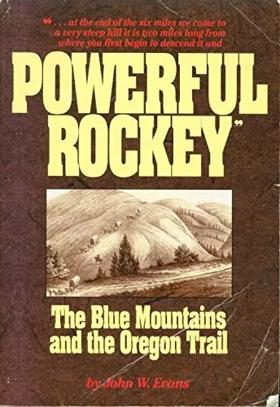
Powerful rockey the Blue Mountains and the Oregon Trail, 1811-1883 by John W. Evans, Eastern Oregon State College
|
1990 |
|
Power lines giant hydroelectric power in the Pacific Northwest, an era and a career by Russell McCormmach , Palimpsest Books (Publisher) 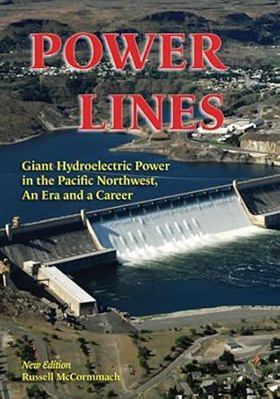
"The Columbia River and its tributaries hold the greatest hydroelectric power potential of any river system in America. The systematic development of the potential began with a survey of the Columbia River Basin by the US Army Corps of Engineers. Its subsequent report to Congress in 1931 recommended construction of a system of multipurpose dams of unprecedented size, difficulty, and expense. During the Great Depression, as part of President Roosevelt's efforts to remove men from relief roles, the federal government undertook to build two dams on the Columbia River following the Corp's master plan. They were completed in time to aid to the production of weaponry in World War II. Through the postwar economic boom, the government built more dams, distributing giant blocks of power to industry in a region whose economy until then had been mainly extractive. With a focus on the Pacific Northwest, this book treats of federal power in the dam-building era in America. The legacy of that era is conflicted. The hydroelectric development of the Columbia River Basin is incontrovertibly both one of the great technological achievements of the twentieth century and a massive incursion into nature. In keeping, this book discusses the development both from the side of engineering, the source of problems in the dam-building era, and from the side of nature, the source of problems in the era that succeeded it, the environmental. The Columbia River Basin is home to the country's greatest salmon runs, and dams have threatened their survival, even as nowhere else has so much effort and expense been directed to preserving them. Problems of power and of the environment have an urgency in today's world, and measures that address them are often contradictory. This book considers the measures and the place of hydroelectricity among alternative sources of energy."--page 4 of cover xii, 244 pages : illustrations (some color), maps ; 26 cm CIRC [ 0 ]
|
2023 |
|
Power in the telling Grand Ronde, Warm Springs, and intertribal relations in the casino era by Brook Colley , David G. Lewis 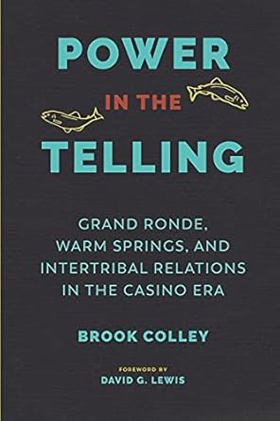
From 1998 through 2013, the Confederated Tribes of Warm Springs sought to develop a casino in Cascade Locks, Oregon. This prompted objections from the Confederated Tribes of Grand Ronde, who already operated a lucrative casino in the region. Brook Colley’s in-depth case study unravels the history of this disagreement and challenges the way conventional media characterizes intertribal casino disputes in terms of corruption and greed. Instead, she locates these conflicts within historical, social, and political contexts of colonization. Through extensive interviews, Colley brings to the forefront Indigenous perspectives on intertribal conflict related to tribal gaming. She reveals how casino economies affect the relationship between gaming tribes and federal and state governments, and the repercussions for the tribes themselves. Ultimately, Colley’s engaging examination explores strategies for reconciliation and cooperation, emphasizing narratives of resilience and tribal sovereignty. xx, 203 pages : illustration, maps ; 23 cm CIRC [ 0 ]
|
2018 |
|
Potluck community on the edge of wilderness by Ana Maria Spagna 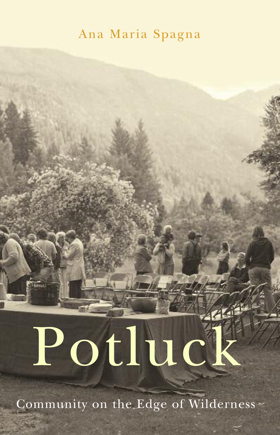
In Potluck, Ana Maria Spagna explores the enduring human connection to place, journeying from Tijuana to a California beach to Utah’s canyon country—and, always, back to the sparsely populated valley in the North Cascades that she calls home. Potluck homes in on the everyday gatherings that, over time, define a community: a makeshift wedding, an art gallery opening, a farewell potluck, a work party, a work party, a campfire, a political caucus, a funeral. “What connects us?” Spagna asks, and she reveals, again and again, the gift of community—easy and uneasy, deep and enduring and essential. 175 pages ; 22 cm CIRC [ 0 ]
|
2011 |
|
Potlatch people Indian lives & legends of British Columbia by Mildred Valley Thornton 
"Mildred Valley Thornton had an abiding passion which she pursued with almost missionary fervor throughout her life - the preservation of Canada's Native culture. For over fifty years she dedicated herself to that purpose through the medium of her paintings, writings and lectures. During the course of her career, Mildred not only painted the portraits of many prominent and historical Native Canadians, but she assembled an accompanying catalogue of anecdotes, folklore and legends, which today provide a unique chronicle of a vanished age. This publication is a collection of both Thornton's colorful portraits and the fascinating story behind each one."--pub. desc 317 pages : illustrations (some color) ; 22 cm CIRC [ 0 ]
|
2003 |
|
Potlatch by George Clutesi
|
1973 |
|
Postmarked Washington Okanogan County by Guy Reed Ramsey, Okanogan County Historical Society
|
1977 |
|
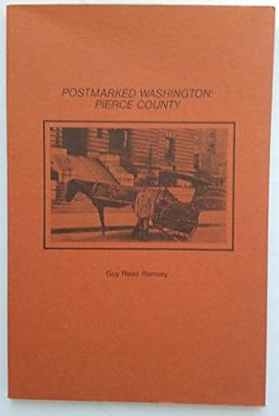
Postmarked Washington Pierce County by Guy Reed Ramsey, Jeanne Engerman
|
1981 |
|
|
1987 |
|
Postmarked Washington Pacific and Wahkiakum counties by Guy Reed Ramsey, Alan H. Patera 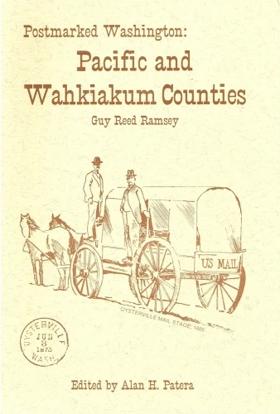
This volume is also a history of postal operations in these 2 counties 148 pages : illustrations ; 22 cm CIRC [ 1 ]
|
1987 |
|
Postmarked Washington Lewis and Cowlitz counties by Guy Reed Ramsey, Lewis County Historical Society
|
1978 |
|
Postmarked Washington Jefferson, Clallam & Mason counties by Guy Reed Ramsey 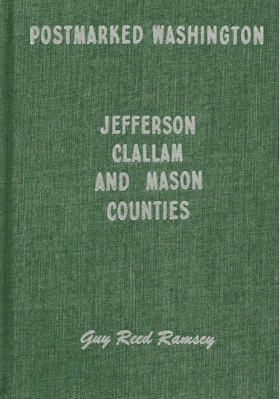
This is the story of the settlers and settlements of three counties on the Olympic Peninsula of Washington, with emphasis on stories of the postal service and postmasters that served the area. Examples of towns included are Port Angeles, Port Townsend, Sequim, Shelton, Forks, and Neah Bay. Hardbound, 180 pages, 6 x 9 inches. Included are maps, photographs, and sketches. 180 pages : illustrations ; 24 cm CIRC [ 1 ]
|
1978 |
|
Postmarked Washington Island County, San Juan County by Guy Reed Ramsey 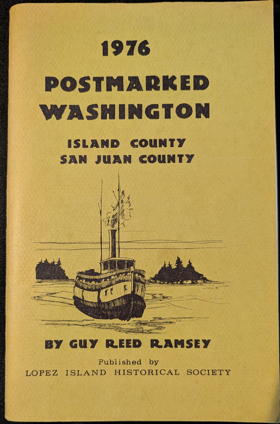
This volume is also a history of postal operations in these 2 counties. 62 pages : illustrations, facsimiles, maps ; 23 cm CIRC [ 1 ]
|
1976 |
|
Post offices of Oregon, Washington, and Idaho by Robert L. Landis
|
1969 |
|
Possessing Meares Island a historian's journey into the past of Clayoquot Sound by Barry M. Gough 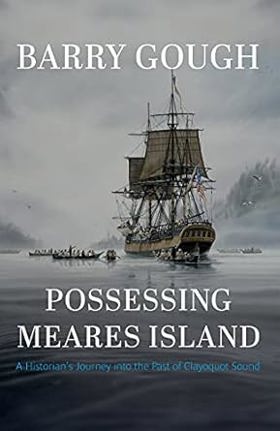
"A fascinating account that links early maritime history, Indigenous land rights, and modern environmental advocacy in the Clayoquot Sound region by award-winning author and historian Barry Gough. Centred on Meares Island, located near Tofino on Vancouver Island's west coast, Possessing Meares Island weaves a unique history out of the mists of time by connecting eighteenth century Indigenous-colonial trade relations to more recent historical upheavals. Gough invites readers to enter a dramatic epoch of BC's coastal history and watch the Nuu-chah-nulth nations spearhead the maritime sea otter trade, led by powerful chiefs like Wickaninnish and Maquinna. Eventually, Meares Island declines into an economic backwater due to overhunting the sea otter, the bloody Clayoquot War of 1855, and most importantly, the proxy of empire--the Hudson's Bay Company--establishing colonial roots in nearby Victoria. Caught up in the tides of change, the Oregon Treaty of 1846 ushers in a new era as the island is officially declared property of the British Crown. Gough bridges the gap between centuries as he describes how the Nuu-chah-nulth Tribal Council draw on this complicated history of ownership to invoke their legal claim to the land and defend the majestic wilderness from the indiscriminate clear-cut saw. Possessing Meares Island will not only appeal to history buffs, but to anyone interested in a momentous triumph for Indigenous rights and environmental protection that echoes across the nation today."-- Provided by publisher xxv, 230 pages, 8 pages of plates : illustrations, maps ; 24 cm CIRC [ 0 ]
|
2021 |
|
Portrait of Lynden by Dorothy Koert
|
1976 |
|
Portlandness a cultural atlas by David Banis , Hunter Shobe , Corinna Kimball-Brown (Cartographer), Randy Morris (Cartographer), Jon Franczyk (Cartographer), Daniel E. Coe (Cartographer), Kirk McEwen (Cartographer), Joan Lundell (Book designer) 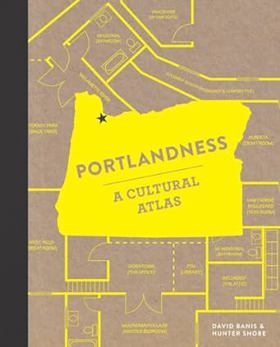
Summary: In 150 inforgraphic maps, two leading geographers explore Portland, Oregon, through unexpected topics such as city chickens, wild coyote encounters, food-truck trends, and coffee culture. Each map starts with the gathering of at least one data set about a given topic, then translating that into visual form which blends traditional cartographic skills with modern graphic design 190 pages : illustrations (chiefly color), color maps, color plans ; 26 cm CIRC [ 1 ]
|
2015 |
|
Portland, then & now by Linda Dodds, Carolyn M. Buan 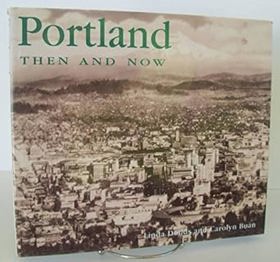
Celebrating America's favorite cityscapes, this series combines historic interest and contemporary beauty. Then and Now features fascinating archival photographs contrasted with specially commissioned, full-color images of the same scene today. A visual lesson in the historic changes of our greatest urban landscapes 144 pages : chiefly illustrations (some color) ; 26 x 29 cm CIRC [ 1 ]
|
2001 |