Catalog of British Columbiana and Pacific Northwest Americana
The Encyclopedia Cascadia Catalog indexes mostly non-fiction literature covering the Pacific Northwest coast of North America, with an emphasis on British Columbia, Idaho, Oregon, and Washington State.
| Catalog Title | Published |
|---|---|
|
Human impacts on seals, sea lions, and sea otters integrating archaeology and ecology in the northeast Pacific by Todd J. Braje, Torben C. Rick 
Brings together archaeologists, biologists, and other scientists to consider how archaeology can inform the conservation and management of pinnipeds and other marine mammals along the Pacific Coast. viii, 320 pages : illustrations, maps ; 27 cm Desiderata
|
2011 |
|
Hudson's Bay to Haro Strait books on Western Canada and the Pacific Northwest : a collectors' guide by G. J. Kim Whale 
A comprehensive reference bibliography on Western Canada, including important works on the Arctic, the Klondike, Hudson's Bay, and some nautical titles relating to that area, with descriptions and price guide to approximately 1,800 of the most important books. 1,754 books described with pricing guidance. 316, xii ; 24 cm. Non-circulating [ 1 ]
|
1998 |
|
How the twig was bent by Ted Robertson 
How the twig was bent examines the civic maturation and agrarian expansion situated within the expansive, sun-baked rain-shadow basins and sagebrush steppes of central Washington's Yakima Valley. Robertson details how the region's imposing interior macro-geography—specifically the towering climatic barrier of the Cascade Range to the west, the sprawling arid plateaus, and the vital riparian corridors of the Yakima and Naches rivers—strictly dictated the margins of permanent settlement and commercial growth. By mapping the transformation of this isolated desert landscape through extensive, terrain-altering irrigation networks into a highly ordered grid of thriving orchards, the narrative highlights how these specific hydrological realities anchored the region's socio-economic development. Ultimately, this historical record serves as a localized spatial history, demonstrating how the stark arid topography and critical riverine lifelines of this Pacific Northwest interior fundamentally shaped the highly engineered, agriculturally dependent character of the Yakima community. 72, xi pages illustrations Non-circulating [ 1 ]
|
1974 |
|
How many islands? a history around Lake Washington by Richard W. Blumenthal 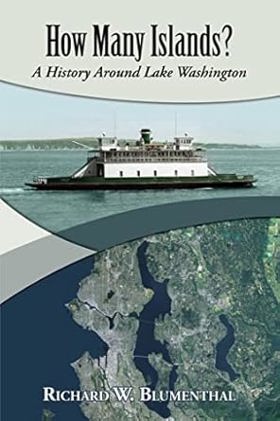
The early history of Lake Washington is fascinating enough all on its own. But combine conventional history with the oral tradition of imparting knowledge between generations, you’ve got a playful academic romp on your hands. In addition to an examination of early land owners around the lake and a tour of our first settlements, this text explores the islands that exist within the lake. Delivered with scholarly detail, the story is lovingly told by a doting grandfather to his precocious pre-teen granddaughter. This entertaining read is guided by the curiosity of a child and enlivened by the witty banter that bridges the generation gap. xvi, 332 pages : illustrations (chiefly color), maps (some color) ; 23 cm Desiderata
|
2017 |
|
How Coupeville grew a short history of town development : excerpts from the Town of Coupeville's Historic Preservation Plan by Mimi Sheridan , McConnell/Burke, United States National Park Service, Ebey's Landing National Historical Reserve (Wash) 
Authored by preservation planner Mimi Sheridan in collaboration with McConnell/Burke, the National Park Service, and Ebey's Landing National Historical Reserve, How Coupeville Grew: A Short History of Town Development charts the architectural and spatial evolution of Washington’s second-oldest European settlement. Excerpted from the town's Historic Preservation Plan, the work traces Coupeville's transformation from a mid-19th-century maritime trading post and donation land claim into a preserved historic district defined by 19th-century New England-style architecture. Through municipal records, planning documents, and spatial analysis, the text details how maritime commerce and geographic isolation shaped the town's compact, pedestrian-oriented urban fabric. A keen insight drawn from the work is how modern historic preservation can intentionally weaponize municipal planning against suburban sprawl; by codifying vernacular architecture and historic spatial layouts into law, Coupeville successfully turned its historic isolation into an economic and cultural asset that safeguards its 19th-century character from modern erasure. 58 pages : illustrations ; 28 cm Non-circulating [ 1 ]
|
2002 |
|
Horse Heaven Hills their lengthening shadows by Harry Stanley Ganders
Horse Heaven Hills: their lengthening shadows chronicles the grueling agricultural settlement and precarious pioneer existence atop the vast, rolling ridge system that dominates the arid landscape of south-central Washington. Ganders details how the region's formidable environmental constraints—specifically the profound lack of surface water, the relentless winds, and the sweeping, semi-arid bunchgrass steppes situated deep within the rain shadow of the Cascade Range—strictly dictated the margins of human survival. By mapping the immense physical labor required to carve expansive dryland wheat farms from this massive topographical divide, the narrative highlights how the utter lack of natural hydrography initially forced homesteaders into the punishing daily routine of hauling water over steep, rugged terrain from distant rivers or deep canyons. The profound geographic isolation of these high plains from the more easily irrigated valleys below mandated an absolute, uncompromising self-sufficiency among its earliest inhabitants. Ultimately, this historical record serves as a deeply localized spatial history, demonstrating how the severe climatic extremes and vast, waterless topography of this inland Pacific Northwest frontier fundamentally shaped the fiercely resilient, agrarian character of the Horse Heaven communities. v, 268 pages : illustrations, maps ; 23 cm Non-circulating [ 1 ]
|
1977 |
|
Hops historic photographs of the Oregon hopscape by Kenneth I. Helphand 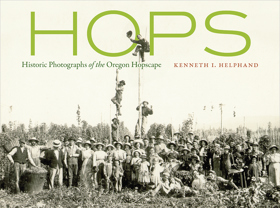
"Hops: Historic Photographs of the Oregon Hopscape is a visual dive into the physical presence of a plant that many people discuss but few could identify. Oregon was once the leading producer of hops in the United States (a title now held by Washington). Kenny Helphand has scoured archives across the state to bring together historic photos of hop pickers in the late nineteenth and early twentieth centuries. Hops brings to life pickers of all backgrounds, through different eras of agricultural practice. Here are children, nuns, families, immigrants, and college students in fields, hop driers, and tent camps. The photos range from the candid to the highly professional - including five images from Dorothea Lange's iconic Farm Service Administration work. The 85 high quality photos are accompanied by captions that provide, variously, historical background, selections from oral histories, and visual guidance. A historical essay gives interested readers a short overview of the plant's history and the world of hop growing and picking"-- Provided by publisher x, 181 pages : illustrations (some color), map ; 21 x 26 cm Desiderata
|
2020 |
|
Hood Canal--splendor at risk by Jeff Brody , Christopher Dunagan 
Jeff Brody and Christopher Dunagan’s Hood Canal—splendor at risk explores the profound ecological vulnerability and the modern imperative for cooperative environmental stewardship within one of Washington state's most distinct marine ecosystems. The narrative illustrates how the specific environmental realities of this coastal topography—defined by a deep, glacier-carved fjord with exceptionally slow-moving tidal currents, flanked by the rugged Olympic Mountains and the Kitsap Peninsula—require immense ecological sensitivity and shared, modern adaptation from its surrounding human communities. By detailing the gradual transition from an era of unchecked shoreline development, logging, and unregulated septic infrastructure to the urgent, cooperative response to severe hypoxic (low-oxygen) events threatening the local marine life, the text highlights how the region's biological survival relies heavily on community-driven watershed management. Ultimately, the account demonstrates that patiently recognizing the complex physical limits of the canal and collaboratively forging robust, cross-jurisdictional alliances among local citizens, indigenous tribes, and state agencies are essential steps in transforming a rapidly degrading natural resource into a sustainably governed, enduring component of the maritime Pacific Northwest. viii, 264 pages : illustrations ; 28 cm Non-circulating [ 1 ]
|
1991 |
|
Honey in the horn by H. L. Davis 
H.L. Davis' earthy and humorous look at a young man learning self-reliance in the Oregon wilderness after family complications and problems from a jailhouse delivery push him out on his own among horse traders, jail breakers, fortune hunters, suspected murderers, and wide-eyed innocents. His tale of regional history is the story of our American culture. Set in Oregon in the early years of the twentieth century, H. L. Davis’s Honey in the Horn chronicles the struggles faced by homesteaders as they attempted to settle down and eke out subsistence from a still-wild land. With sly humor and keenly observed detail, Davis pays homage to the indomitable character of Oregon’s restless people and dramatic landscapes without romanticizing or burnishing the myths. Clay Calvert, an orphan, works as a hand on a sheep ranch until he stumbles into trouble and is forced to flee. Journeying throughout the state, from the lush coastal forests, to the Columbia Gorge, to the golden wheat fields east of the Cascades, he encounters a cast of characters as rich and diverse as the land, including a native Tunne boy and a beautiful girl named Luce. Originally published in 1935, Honey in the Horn reveals as much about the prevailing attitudes and beliefs during H. L. Davis’s lifetime as it does about the earlier era in which it is set. It transcends the limitations of its time through the sheer power and beauty of Davis’s prose. Full of humor and humanity, Davis’s first novel displays a vast knowledge of Pacific Northwest history, lore, and landscape. The only Oregon book that has ever won a Pulitzer Prize for fiction, this classic coming-of-age novel has been called the “Huckleberry Finn of the West.” With a new introduction by Richard W. Etulain, this important work from one of Oregon’s premier authors is once again available for a new generation. 380 pages ; 22 cm Desiderata
|
1935 |
|
Homewaters a human and natural history of Puget Sound by David B. Williams 
"Not far from Seattle skyscrapers live 150-year-old clams, more than 250 species of fish, and underwater kelp forests as complex as any terrestrial ecosystem. For millennia, vibrant Coast Salish communities have lived beside these waters dense with nutrient-rich foods, with cultures intertwined through exchanges across the waterways. Transformed by settlement and resource extraction, Puget Sound and its future health now depend on a better understanding of the region's ecological complexities. Focusing on the area south of Port Townsend and between the Cascade and Olympic mountains, Williams uncovers human and natural histories in, on, and around the Sound. In conversations with archaeologists, biologists, and tribal authorities, Williams traces how generations of humans have interacted with such species as geoducks, salmon, orcas, rockfish, and herring. He sheds light on how warfare shaped development and how people have moved across this maritime highway, in canoes, the mosquito fleet, and today's ferry system. The book also takes an unflinching look at how the Sound's ecosystems have suffered from human behavior, including pollution, habitat destruction, and the effects of climate change. Witty, graceful, and deeply informed, Homewaters weaves history and science into a fascinating and hopeful narrative, one that will introduce newcomers to the astonishing life that inhabits the Sound and offers longtime residents new insight into and appreciation of the waters they call home"-- Provided by publisher xiv, 245 pages : illustrations (black and white), maps (black and white) ; 23 cm Desiderata
|
2022 |
|
Homesteads and snug harbours the Gulf Islands by Peter Murray 
Authored by regional historian Peter Murray, Homesteads and Snug Harbours: The Gulf Islands chronicles the colorful pioneering history, maritime isolation, and rugged settlement of British Columbia's picturesque Strait of Georgia archipelago. The book explores how eccentric pioneers, fishermen, farmers, and self-reliant families carved out sustainable lives across islands defined by sheltered anchorages, rocky terrain, and a remarkably mild maritime climate. Drawing on extensive archival research and local oral histories, the text preserves the vanishing stories of an independent coastal community that lived at the mercy of wind, tide, and steamboat schedules. A keen insight drawn from the work is how the geography of island life fostered an intense culture of self-reliance juxtaposed with deep community interdependence; because these isolated maritime havens lacked roads and mainland infrastructure, early Gulf Islanders relied entirely on mutual aid and maritime mobility to survive the very isolation that drew them to the frontier. 213 pages : illustrations, maps ; 22 cm Non-circulating [ 1 ]
|
1991 |
|
Homesteads and heritages a history of Morrow County, Oregon by Giles French
Homesteads and heritages a history of Morrow County, Oregon examines the extensive agrarian settlement and vast livestock-ranching economy situated across the rolling, semi-arid plateau of north-central Oregon. French details how the region's formidable interior topography—specifically the sprawling, sun-baked bunchgrass steppes of the Columbia Basin, the deeply incised basalt canyons, and the rugged, timbered foothills of the Blue Mountains—strictly dictated the margins of early pioneer homesteading, dryland wheat cultivation, and massive sheep and cattle operations. By mapping the grueling transformation of these arid uplands from isolated pioneer sheep camps into highly resilient dry-farming communities entirely dependent on precarious seasonal rainfall and eventual rail access to the Columbia River gorge, the narrative highlights how this specific high-desert geography anchored a deeply enduring, agriculturally driven frontier economy. Ultimately, this regional record serves as a macro-level spatial history, demonstrating how the immense overland distances, severe arid constraints, and vital bunchgrass forage of this interior Pacific Northwest landscape fundamentally shaped the highly rugged, ranching and wheat-bound character of early Morrow County. 127 pages illustrations 29 cm Non-circulating [ 1 ]
|
1971 |
|
Homesteading in the Bear Lake Valley pioneer life in Georgetown and Bear Lake County, Idaho by Ezra S. Stucki
Ezra S. Stucki’s Homesteading in the Bear Lake Valley offers an intimate social and agricultural record of pioneer settlement across the northern margins of Bear Lake County. Stucki traces the arduous physical labor required to clear sagebrush benchlands, construct hand-hewn log cabins, and engineer cooperative gravity-flow water ditches diverted from Georgetown Creek. The narrative captures the daily realities of dry-farming, livestock wintering, and cheese production, illuminating the strong communal alliances that sustained isolated families through harsh subalpine winters. Stucki preserves pioneer genealogies, early school records, and municipal developments spanning Georgetown, Bennington, and Nounan, documenting the agrarian perseverance that forged the valley’s rural heritage. 146 pages : illustrations, portraits ; 22 cm Desiderata
|
1976 |
|
Home port Victoria a collection of true stories of men and ships that sailed from this port, told by seamen at meetings of the Thermopylae Club, Victoria, B.C., including short sketches of their narrators, articles on relevant history of the Port of Victoria, and two maps by Ursula Jupp, Thermopylae Club 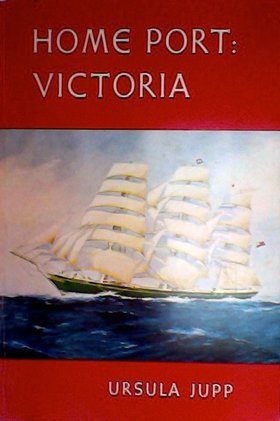
Home Port Victoria, compiled by Ursula Jupp in collaboration with Victoria's maritime-focused Thermopylae Club in 1967, is a rich anthology of authentic nautical history and personal seafaring narratives. The book preserves the firsthand accounts of veteran seamen, detailing the rugged voyages of the men and ships that sailed out of British Columbia's capital city. Alongside these captivating true stories, the volume features biographical sketches of the narrators, historical essays on the port's development, and detailed maps that anchor the region's proud maritime legacy. 168 pages illustrations, maps, portraits 24 cm Non-circulating [ 1 ]
|
1967 |
|
Home mountains reflections from a Western middle age by Susan H. Swetnam 
A collection of personal essays from the author's middle-age surprise of finding herself at home in the intermountain region of southeastern Idaho [6], 119, [2] pages : illustrations ; 21 cm. Desiderata
|
2000 |
|
Home below Hell's Canyon by Grace Edgington Jordan 
During the depression days of the early 1930s the Jordan family – Len Jordan (later governor of Idaho and a United States senator), his wife Grace, and their three small children – moved to an Idaho sheep ranch in the Snake River gorge just below Hell’s Canyon, deepest scratch on the face of North America. “Cut off from the world for months at a time, the Jordans became virtually self-sufficient. Short of cash but long on courage, they raised and preserved their food, made their own soap, and educated their children” (Sterling North, New York World-Telegram). 243 pages illustrations 21 cm Non-circulating [ 1 ]
|
1954 |
|
Holy rollers murder and madness in Oregon's love cult by T. McCracken, Robert B. Blodgett 
T. McCracken and Robert B. Blodgett’s Holy rollers: murder and madness in Oregon's love cult explores the complex social boundaries and the intense, often turbulent civic maturation of the Willamette Valley during the early twentieth century. The narrative illustrates how the contrasting environmental realities of this topography—spanning from the established, structured agricultural communities of Corvallis to the rugged, geographically isolated refuge of the central Oregon coast—provided the stark backdrop for radical frontier movements to isolate themselves and challenge emerging societal norms. By detailing the gradual transition of a fringe religious sect into a secluded coastal commune, and the ensuing violent clashes with mainstream society, the text highlights the profound struggles inherent in establishing a cohesive legal and moral order in a rapidly developing region. Ultimately, the account demonstrates that navigating these deep social fractures, and patiently developing robust judicial institutions capable of addressing both radical zealotry and frontier vigilantism, were essential, albeit painful, steps in forging the enduring civic identity and legal foundation of modern Oregon. xv, 295 pages : illustrations ; 23 cm Desiderata
|
2002 |
|
History vs. the Whitman saved Oregon story : three essays towards a true history of the acquisition of the old Oregon Territory by William Isaac Marshall
Published in the early 20th century, William Isaac Marshall’s collection of essays meticulously dismantles the highly romanticized myth that missionary Marcus Whitman single-handedly saved the Oregon Territory from British control through a heroic cross-country winter ride in 1842. Relying heavily on primary source documents, Marshall proves that the United States government was already fully committed to retaining Oregon, and that Whitman’s arduous journey was actually undertaken to prevent the closure of his own struggling mission by its governing board. A keen insight drawn from the text is how the enduring popularity of the "Whitman saved Oregon" legend exposes the vulnerability of historical narratives to religious and nationalist propaganda, demonstrating how early writers eagerly embraced a fabricated, providential savior figure to retroactively justify America's westward expansion. By prioritizing rigorous archival evidence over emotional storytelling, Marshall's work fundamentally corrected the historical record and set a new standard for historiography regarding the acquisition of the Pacific Northwest. 236 pages ; 24 cm ONLINE Circulation [ 1 ]
|
1904 |
|
History of Weston, Idaho by Jay D. Schvaneveldt 
Published in 2010, Jay D. Schvaneveldt’s History of Weston, Idaho chronicles the founding and evolution of one of the Gem State’s oldest permanent European-American settlements, established by Mormon pioneers in the mid-1860s. The book meticulously documents the community's early trials—ranging from harsh frontier winters and tense resource management to its strategic growth as an agricultural and freighting hub along the route to northern mining camps. Drawing on rich local lore, diaries, and genealogical records, Schvaneveldt captures the grit and resilience required to transform a rugged southeastern Idaho wilderness into a tightly knit farming community. A keen insight drawn from the text is how it illuminates the profound, everyday impact of religious and familial cohesion on frontier survival, demonstrating that tight kinship networks and shared communal values were just as vital to subduing the rural West as physical labor and infrastructure. xvi, 702 pages : illustrations ; 24 cm Non-circulating [ 1 ]
|
2011 |
|
History of Washington, Idaho, and Montana 1845-1889 by Hubert Howe Bancroft
Published in 1890 as the thirty-first volume of his exhaustive western history series, Hubert Howe Bancroft’s History of Washington, Idaho, and Montana 1845-1889 chronicles the violent transition of the Pacific Northwest's rugged interior from indigenous homelands to industrialized American states. The narrative meticulously documents the chaotic influx of prospectors during the inland gold rushes, the establishment of early territorial governments, and the brutal succession of regional Indian Wars that systematically cleared the land for transcontinental railroads. A keen insight drawn from the volume is how its rigorous documentation of these conflicts—painstakingly researched and written by the uncredited historian Frances Fuller Victor—serves as a surprisingly sharp indictment of federal incompetence and broken treaty promises. Yet, despite explicitly exposing the government's corrupt mismanagement of indigenous affairs, the text ultimately rationalizes this systemic violence as the tragic but inevitable cost of securing the inland frontier for capitalist expansion. xxvi, 836 pages : illustrations, maps ; 24 cm. ONLINE Circulation [ 1 ]
|
1890 |
|
History of Washington the rise and progress of an American state by Clinton A. Snowden, C. H. Hanford , Miles C. Moore , William D. Tyler , Stephen James Chadwick
Authored by Clinton A. Snowden and overseen by a prominent advisory board of early political leaders, History of Washington: The Rise and Progress of an American State is a sweeping, multi-volume chronicle of the region's transition from indigenous territory to an industrialized modern commonwealth. The expansive work traces the narrative arc of maritime exploration, the fur trade, and grueling pioneer settlement, framing the political and economic development of the Pacific Northwest as an inevitable triumph of American enterprise. Drawing upon early archival records and the firsthand accounts of territorial founders, the text serves as a definitive, progressive-era monument to the state’s founding generation. A keen insight drawn from the work is how the overt involvement of powerful civic figures on the book's advisory board functioned to canonize a highly curated, top-down historical narrative; by having former governors and judges directly steer the project, the publication operated less as objective history and more as a state-sponsored ideological tool to legitimize the political authority and territorial conquests of Washington's pioneer elite. 6 volumes : illustrations, maps, portraits ; 25 cm ONLINE Circulation [ 5 ] Non-circulating [ 4 ]
|
1909 |
|
History of Vashon-Maury Islands by O. S. Van Olinda 
History of Vashon-Maury Islands provides a foundational, firsthand pioneer account of the intense physical labor required to settle these twin, bluff-ringed landmasses situated in the deep marine waters of Washington’s central Puget Sound. Van Olinda details how the islands' steep, heavily timbered interiors initially dictated community development, forcing early homesteads, logging operations, and vital agricultural tracts to cling strictly to the shoreline where protected coves offered the only viable access to outside markets. By chronicling the arduous process of carving the first inland wagon roads through dense old-growth forests to connect these disparate waterfront landings, the narrative underscores the profound geographic isolation of an environment entirely dependent on the Mosquito Fleet for survival and trade. Ultimately, the book serves as a deeply localized spatial record of early maritime homesteading, demonstrating how the formidable, water-bound topography of this Pacific Northwest island demanded extreme self-reliance and fundamentally shaped its distinct pioneer evolution. 106 pages : illustrations, map ; 21 cm Non-circulating [ 1 ]
|
1978 |
|
History of the Yakima Valley, Washington; comprising Yakima, Kittitas, and Benton Counties by W. D. Lyman
Authored in 1919 by Whitman College professor William Denison Lyman, History of the Yakima Valley, Washington is an expansive, subscription-based chronicle detailing the rapid agricultural and industrial transformation of the region's arid interior. The multi-volume text traces the development of Yakima, Kittitas, and Benton counties, emphasizing the shift from the violent frontier conflicts of the Yakima War to the systematic implementation of massive irrigation projects that turned sagebrush plains into highly profitable orchards. Heavily subsidized by the inclusion of flattering biographical sketches of prominent local ranchers, politicians, and businessmen, the work serves as a triumphant civic monument celebrating Anglo-American engineering and agrarian capitalism. A keen insight drawn from the work is how the narrative weaponizes the rhetoric of ecological transformation to justify colonial occupation; by framing the irrigation and agricultural cultivation of the valley as the heroic redemption of a "useless" desert, Lyman’s text morally validates the dispossession of the Yakama Nation by equating legitimate land ownership exclusively with capitalist, industrial-scale agricultural productivity. 2 volumes : illustrations, portraits ; 27 cm ONLINE Circulation [ 2 ]
|
1919 |
|
History of the Willamette Valley by Herbert O. Lang
being a description of the valley and its resources, with an account of its discovery and settlement by white men, and its subsequent history : together with personal reminiscences of its early pioneers xiv, [17]-902, xiii pages, 8 unnumbered leaves of plates : illustrations, facsimiles, portrait ; 25 cm ONLINE Circulation [ 1 ]
|
1885 |
|
History of the state of Washington by Harold E. Barto , Catharine Bullard
Harold E. Barto and Catharine Bullard’s History of the State of Washington chronicles the comprehensive pioneer and industrial subjugation of a vast, aggressively bisected territorial expanse defined by the towering, impassable alpine barricade of the Cascade Range. The narrative maps how the severe environmental realities of this fractured topography—spanning the impenetrable, rain-gorged coastal timberlands of the Pacific edge, the volatile maritime labyrinth of Puget Sound, and the sprawling, arid high-desert plateaus of the inland empire—initially dictated all human migration and economic expansion. By detailing the grueling transition from precarious overland wagon migrations and isolated fur-trading outposts to the explosive deployment of transcontinental railways, heavy maritime mosquito fleets, and colossal hydroelectric dams, the text illustrates how the systematic extraction of the region's massive timber and agricultural wealth was strictly governed by the necessity of mastering these imposing geographic extremes. Ultimately, the account demonstrates that artificially harnessing the violent hydrology of the Columbia River basin and aggressively carving mechanized terrestrial transit corridors through sheer mountain passes were the absolute prerequisites for binding a profoundly segmented, untamed wilderness into a unified, highly industrialized powerhouse on the Pacific seaboard. 320 pages : illustrations ; 22 cm Non-circulating [ 1 ]
|
1953 |