Catalog of British Columbiana and Pacific Northwest Americana
Encyclopedia Cascadia Catalog contains book titles of mostly non-fiction Pacific Northwest Coast of North America Titles (primarially British Columbia, Idaho, Oregon and Washington State) in an easy-to-understand title catalog. If you see a link with this badge ONLINE CIRC it means that there is an online institution that provides free access to that title. In some cases there may be more than one institution hosting the title digitally.
| Catalog Title | Published |
|---|---|
|
Hiking close to home Whidbey, Fidalgo, and Guemes Islands : 2023 edition by Maribeth Crandell 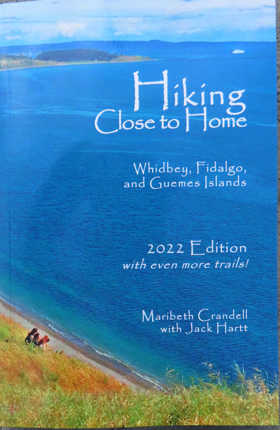
Forests, fields, beaches and bluffs -- our islands provide plenty of options for just about any hiking ability. You don't have to go very far. Explore your own backyard with this handy guide to more than seventy hikes that are Close to Home. Maribeth Crandell has over twenty years of experience as a hiking guide in the Pacific Northwest. For decades she's made Whidbey and Fidalgo Islands her home. Jack Harrt managed Deception Pass State Park for 14 years and now works with trail organizations in Skagit County. Here they share some of their favorite local trails with you."--Page 4 of cover xii, 160 pages : color illustrations, color maps ; 22 cm CIRC [ 1 ]
|
2022 |
|
DeeDee's Indigenous dream families between St. Elmo and Lytton by Vera Isabel Creighton 
Published in 2022 by Vera Isabel Creighton, DeeDee's Indigenous dream families between St. Elmo and Lytton explores the deeply intertwined familial, cultural, and geographic histories of Indigenous communities inhabiting the rugged corridor between St. Elmo and Lytton in British Columbia. Drawing on regional archives, personal narratives, and local genealogies, the book documents the enduring social networks and resilience of families navigating the disruptions of colonial encroachment along the Fraser Canyon. A keen insight drawn from the text is how it shifts the focus away from macroeconomic frontier histories to center kinship and oral tradition, revealing how indigenous family structures served as the primary vehicle for cultural survival and continuity through decades of systemic displacement 122 pages CIRC [ 0 ]
|
2022 |
|
Between the tides in Washington and Oregon exploring beaches and tidepools by Ryan P. Kelly , Terrie Klinger , John J. Meyer 
"In the intertidal zone-the space between low and high tide-a rich and complex ecosystem thrives. It's an easily overlooked space, but the porcelain crabs, ochre stars, and other curious species that call this place home provide a window into the hidden workings of the natural world. Drawing on the authority of two leading scientists and the storytelling power of a science writer, this guidebook to the coasts of Washington and Oregon offers general readers a highly-accessible overview of the rich and surprising ways that water and land interact to create seashore ecologies. The authors systematically take readers along the coast, highlighting what makes each location fascinating and unique. (For example, pointing out where to find bioluminescent dinoflagellates, the single-celled algae that light up and trace any disturbance in the shallow water.) At the heart of this richly-illustrated book is a desire to help readers understand the scientific forces that shape the plants, animals, and landscapes at each location; it's the essential guidebook to keep in the car for the reader who wants to know why."-- Provided by publisher 253 pages : color illustrations, color maps ; 22 cm CIRC [ 0 ]
|
2022 |
|
Inventing Idaho the Gem State's eccentric shape by Keith C. Petersen 
"As Idaho's State Historian, the question author Keith C. Petersen heard most was, "How did Idaho get such a strange shape?" In this book, he answers that popular inquiry, breaking the state's intriguing border story into six sections covering the fascinating events and people involved in creating the peculiar borders-boundaries that have held enormous influence on much of Idaho's political, economic, and cultural history"-- Provided by publisher x, 217 pages : illustrations, maps ; 23 cm CIRC [ 0 ]
|
2022 |
|
Tree fruit trade an agricultural economist reviews fifty years of Washington state's key orchard crops by Desmond O'Rourke 
"Filled with personal anecdotes as well as expert observation, investigation, and analysis, longtime agricultural economist Desmond O'Rourke recounts fifty years of Washington State's dynamic, internationally competitive tree fruit industry. He discusses major changes, players, and organizations, as well as significant challenges and emerging threats"--Provided by publisher xiii, 277 pages : illustrations ; 23 cm CIRC [ 0 ]
|
2022 |
|
Fish Lake in the high Cascades a historic legacy by David G. Turner , Rolf Anderson , Jim, ‡e contributor Denney, Cheryl, ‡e contributor Friesen, Steve, ‡e contributor Mealey, Don, ‡e contributor Allen, Friends of Fish Lake (Publisher) 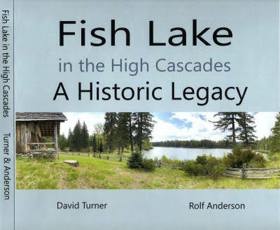
"Early lava flows near the headwaters of the McKenzie River dammed Hackleman Creek, creating a body of water eventually named Fish Lake. The seasonal lake has since attracted people and animals, seeking a resting place in the dense forest. The authors describe the ecological setting of Fish Lake and its evolution of human use, from Native Americans, to a popular waystation for travelers along the Santiam Wagon Road, to a U.S. Forest Service base of oeprations for fire management, including a Remount Depot to pack crews into the back country. Their narration is interspersed with contemporary and historic stories and photos"-- back cover xvi, 198 pages : color illustrations, maps ; 23 cm CIRC [ 0 ]
|
2022 |
|
Connecting the Kootenays the Kootenay Lake ferries : a hundred years of service, 1921-2020 by Michael A. Cone 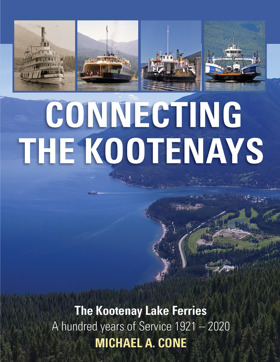
Connecting the Kootenays: The Kootenay Lake Ferries is the authoritative history of a century of ferry service across Kootenay Lake. Historian Michael A. Cone follows the service from its genesis in 1921, when it first linked the East and West Kootenays together as part of the visionary Southern Trans-Provincial highway, right up until its 100th anniversary in 2020, when the existing two-ferry operation is on the verge of turning another page with the introduction of a new ‘electric ready’ ferry with state-of-the-art technology. The story starts with coal-fired CPR sternwheelers – graceful and luxurious in their accommodations – carrying automobiles between Kuskanook and Nelson and then progresses to a ferry service owned and operated by the Provincial Government. From 1931 until 1947, the ferry ran between Fraser’s Landing and Gray Creek. In the post-War boom, the route was shortened to what it is today. For the next 73 years, Kootenay Lake ferries have crossed between Balfour and Kootenay Bay, always ready to provide a safe, convenient, sometimes vital year-round link to the communities they serve, regardless of how bad the weather is. Michael Cone’s book chronicles the changes that have taken place over the century, from transformations in ferry designs and docking facilities, improvements in navigation techniques, evolution in crew uniforms and safety, to privatization of operations, revised scheduling and, not to forget, the removal of the ferry tolls in 1963. Over the years the operation has altered to keep pace with the changes in public taste, ranging from demands for shorter routes and less congestion, and improved on board and terminal conveniences, to changes in automobile styling, including the advent of RVs and larger commercial trucks. Connecting the Kootenays: The Kootenay Lake Ferries is a local history book you’ll want to curl up and read. It is filled with colourful first-hand accounts from crew members who were there, with black and white and period colour photos, many of which will be new for even the most ardent Kootenay historians. xii, 354 pages : illustrations (some colour), maps ; 28 cm CIRC [ 0 ]
|
2022 |
|
Making a chaputs the teachings and responsibilities of a canoe maker by Joe Martin , Alan L. Hoover , Royal British Columbia Museum (Issuing body) 
"Tla-o-qui-aht master canoe maker Joe Martin, in collaboration with former museum curator Alan Hoover, describes the meaning and method behind one of the most vivid and memorable symbols of the Northwest Coast: the dugout canoe. Both artform and technological marvel, the chaputs carries Indigenous cultural knowledge passed down through generations, not only of the practical forestry and woodworking that shape every canoe, but also of the role and responsibilities of the canoe maker. The text includes both a step-by-step explanation of the canoe-making process from tree selection onward (carefully described and dynamically illustrated) and the personal histories of a number of Joe's canoes, encompassing their planning, creation, cultural significance and role in the process of reconciliation. The teachings Joe received from his father and the expertise he has gained in a lifetime of canoe-making are recorded here in his own words for generations to come."-- Provided by publisher 86 pages : illustrations (chiefly color), map ; 23 cm CIRC [ 0 ]
|
2022 |
|
Mayne Queen the passing of a ferry by John Wiznuk 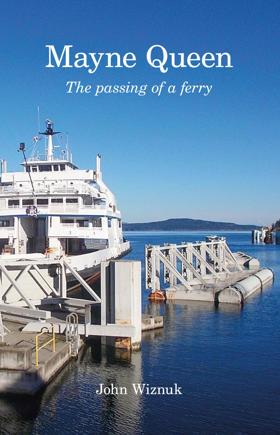
"A history of one of the first ships in the fleet of the British Columbia Ferries system. It is a memoir of the ship, her role in serving the Southern Gulf Islands (SGI) and other parts of coastal B.C., and a description of the her relationship with the people of the SGI and elsewhere who rode her over the decades. It celebrates her retirement from regular service, and the 60th anniversary of the B.C. Ferries service in 2022."-- Provided by publisher pages cm CIRC [ 0 ]
|
2022 |
|
Religion at the edge nature, spirituality, and secularity in the Pacific Northwest by Paul Bramadat , Patricia O'Connell Killen , Sarah Wilkins-Laflamme 
"The Cascadia bioregion-- British Columbia, Washington, and Oregon-- has long been at the forefront of cultural shifts occurring throughout North America, in particular regarding religious institutions, ideas, and practices. Religion at the Edge explores the rise of religious "nones," the decline of mainstream Christian denominations, spiritual and environmental innovation, increasing religious pluralism, and the growth of smaller, more traditional faith groups. The first research-driven book to address religion, spirituality, and irreligion in the Pacific Northwest, Religion at the Edge expands our understanding of the nature, scale, and implications of socioreligious changes in North America, and the relevance of regionalism to that discussion."-- Provided by publisher viii, 266 pages : illustrations, maps, charts ; 24 cm CIRC [ 0 ]
|
2022 |
|
The acid room the psychedelic trials and tribulations of Hollywood Hospital by Jesse Donaldson , Erika Dyck 
"From the street, New Westminster’s Hollywood Hospital didn’t look like much – just a rambling white mansion, mostly obscured behind the holly trees from which it took its name.But, between 1957 and 1968, it was the site of more than 6000 supervised acid trips, as part of the burgeoning (and controversial) field of psychedelic psychiatry. Under the care of Medical Director J Ross MacLean, and ex-spy/researcher Al “Captain Trips” Hubbard, it became a mecca for alcoholics, anxiety patients, and unhappy couples (as well as celebrities like Andy Williams), its unorthodox methods boasting a success rate of nearly 80%. But the same media attention that brought the hospital to prominence also assured its downfall, as prohibition forces drove their work underground for more than fifty years.Written by 49.2 regular Jesse Donaldson and academic historian Erika Dyck, The Acid Room takes readers into the hospital’s inner sanctum, charting its meteoric rise and fall as it opened up brave new worlds in medicine, and put Canada at the forefront of a movement that is only now being fully explored."-- Provided by publisher 155 pages : illustrations ; 17 cm. CIRC [ 0 ]
|
2022 |
|
Pioneer churches of the gold rush trail an explorer's guide by Liz Bryan 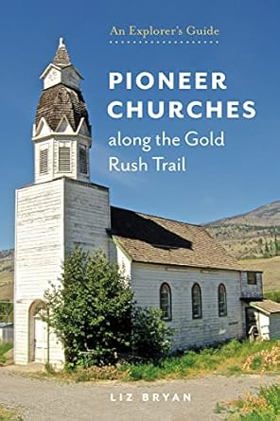
"A fascinating tour through BC's historical gold rush trails, focusing on the nineteenth-century churches that were pivotal to the establishment of early settler communities. Much has been written about the Cariboo gold rush--from the trails and wagon roads to the rowdy mining camps, from tales of great luck to those of disappointment and despair. This book paints a different picture of those pioneer days. It is a guide to the nineteenth-century churches that were built during the gold rush or in the settlement days that followed. Most of these historic structures were handmade of local wood, though they differed greatly in size and style. Some are now abandoned, untenanted but still worthy of inspection. All were built to fill the spiritual need of the European migrants who flooded to the area, to nurture a sense of community that survived even after the gold was gone. Filled with beautiful colour photography and detailed maps, Pioneer Churches along the Gold Rush Trail highlights the history, geography, architecture, craftsmanship, and social context of dozens of gold rush-era churches, preserving them, in their varying states of decay, for posterity. While acknowledging the destructive forces of colonialism, including Christianity, on Indigenous Peoples, this book also examines the historical role of churches in community building and invites the reader to consider this dichotomy with an open and curious mind."-- Provided by publisher 218 pages : color illustrations, color maps ; 23 cm CIRC [ 0 ]
|
2022 |
|
Adventure roads of BC’s Northwest Heartland by Liz Bryan 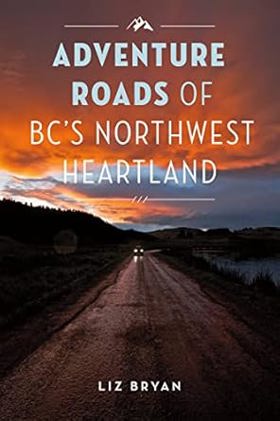
"An off-the-beaten track exploration of Interior BC, full of scenic photography, maps, and fascinating information for tourists and armchair travellers alike. From lush forests to majestic mountains, sleepy ghost towns to pastoral farmland, Adventure Roads of BC’s Northwest Heartland captures the beauty, history, and unexpected twists and turns of a region often overlooked by tourists and ideal for would-be road trippers. Fuelled by the philosophy that any road can lead to adventure—not always of the visceral sort, but of the mind and heart—travel writer, historian, and photographer Liz Bryan takes readers on a virtual tour. Taking scenic routes from Merritt to Barkerville, Kamloops to Bella Coola, and into the valleys of the Bulkley and Skeena Rivers, Bryan tells the story of this land, its peoples, and their history. With stunning photography and fascinating prose, this book will compel anyone to follow their own adventure road, wherever it may take them."-- Provided by publisher 221 pages : color illustrations, color maps ; 23 cm CIRC [ 0 ]
|
2022 |
|
Out of the fire metalworkers along the Salish Sea by Pirjo Raits 
"A stunning art book featuring twenty-three west coast artists and craftspeople who work in metal as their primary medium. Out of the Fire: Metalworkers along the Salish Sea is a breathtaking celebration of a diverse group of contemporary artists and artisans, who explore the creative possibilities of an ancient medium. From sculptors to farriers, forgers to blacksmiths, jewellers to metalsmiths, and weapons makers to welders, the twenty-three people featured in this book reflect the wide range of talent, skill, and ingenuity that exists on Canada's southwest coast. Miran Elbakyan captures movement and whimsicality in his Surrealist-inspired sculptures. Nycki Samuels earned the moniker "Tough Tiny Welder" on the road to artistic freedom, as she fought her way through the male-dominated world of industrial metalwork. Ts'uts'umutl Luke Marston began making jewellery when he was still a teenager, honing the skills of his craft at the same time as he was learning about the imagery and oral narratives of the Coast Salish Peoples. Combining a love of technology, fashion, and the industrial arts, Bev Petow has the remarkable ability to transform cold, hard steel into delicate-looking dresses. With over one hundred spectacular colour and black-and-white photographs of the artists and their works, this book is a stunning behind-the-scenes look at those who choose fire as their tool and metal as their raw material."-- Provided by publisher xiv, 206 pages : illustrations (some color), map ; 22 x 28 cm CIRC [ 0 ]
|
2022 |
|
Invasive flora of the West Coast British Columbia and the Pacific Northwest by Collin Varner 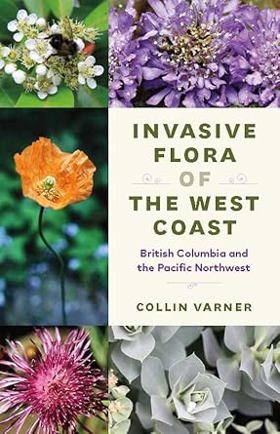
A compact, full-colour field guide to the growing number of invasive plant species spreading across coastal BC and the Pacific Northwest, highlighting their hazards and uses. The spread of invasive plant species is a growing concern across the coastal Pacific Northwest. Invasive plants compete for space with native plants, alter the natural habitat, and even interfere with the diet of local wildlife. Hundreds of these species are so commonly seen in our backyards, forests, and roadsides, that many people do not even realize that these plants are not native to this region. Designed for amateur naturalists, gardeners, and foragers, Invasive Flora of the West Coast is a clear, concise, full-colour guide to identifying and demystifying more than 200 invasive plant species in our midst, from Scotch broom to Evening Primrose. Featuring colour photography, origin and etymology, safety tips and warnings, as well as common uses, this book is practical, user-friendly, and portable for easy, on-the-go identification 207 pages : color illustrations, color map ; 22 cm CIRC [ 0 ]
|
2022 |
|
The Flora and Fauna of Stanley Park An Explorer's Guide by Collin Varner 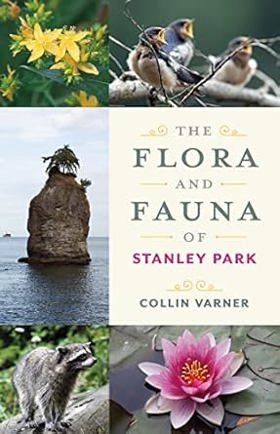
A concise, full-colour guide to more than 200 native and introduced plant and animal species found in Vancouver’s famed city park. Vancouver’s Stanley Park is known around the world as a natural oasis in the midst of western Canada’s largest city. Unlike many urban parks, which are mostly cultivated, the 1,000-acre area now known as Stanley Park is part of the natural rainforest of this region. As much of this natural habitat has been preserved as parkland, Stanley Park is an accessible place to observe much of the native plant and animal life that can be found throughout the south coast of British Columbia and the Pacific Northwest. The Flora and Fauna of Stanley Park is a practical and colourful keepsake, highlighting more than 200 trees, shrubs, wildflowers, berries, seaweeds, birds, land mammals, and shoreline creatures. With clear colour photography, detailed descriptions, etymology, and safety tips and warnings, this book is the perfect go-to guide for visitors to the park, and anyone interested in the rich biodiversity of the Vancouver area and beyond. 1 online resource (317 p.) CIRC [ 0 ]
|
2022 |
|
George Tsutakawa early works on paper by David F. Martin , George Tsutakawa (Artist), Cascadia Art Museum (Organizer, Host institution) 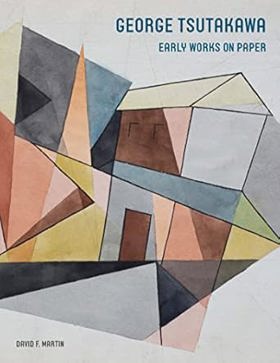
"One of the leading Northwest artists of his generation, George Tsutakawa (1910-97) is internationally known for his sculpture and fountain designs. However, a lesser-known aspect of his career was the production of blockprints, watercolors, and works on paper that began in the 1920s and continued throughout his career. Born in Seattle and educated in Japan, Tsutakawa had early success while still in high school. He attended the University of Washington, where he received an MFA in sculpture in 1950, and became an influential instructor at the university's School of Art from 1947 to 1976. Drawn from the Tsutakawa estate, most of the works shown here have never been seen previously by the public. These early works display concepts and inspirations that would inform Tsutakawa's aesthetic throughout a long and distinguished career. Contextual works by Tsutakawa's instructors and contemporaries provides a broader understanding of his oeuvre."--Provided by distributor 143 pages : illustrations (chiefly color) ; 29 cm CIRC [ 0 ]
|
2022 |
|
Willamette River greenways navigating the currents of conservation policy and practice by Travis Williams 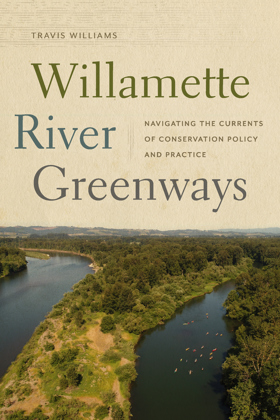
"The Willamette River Greenway Program, first proposed in 1966 by future Oregon governor Bob Straub, envisioned a nearly two-hundred-mile assemblage of public lands along the Willamette River for public use and environmental protection. While the Greenway Program fell far short of Straub's original proposal, today it provides for significant riverside lands with a range of public benefits. The Greenway Program also offers a useful lens through which to view the successes and failures of Oregon's environmental protection policies over the past few decades. Travis Williams, executive director of Willamette Riverkeeper, has spent countless hours paddling the Willamette, becoming familiar with its flora, fauna, and human neighbors. In Willamette River Greenways, he combines personal narrative about his experiences on the river with nuanced consideration of the controversies and challenges of the Greenway Program. Williams sheds light on current land stewardship practices, revealing the institutional and leadership failures that endanger the river's water quality and habitat, and looks to the program's future. He also takes readers with him onto the water, sharing what it's like to travel the river by canoe, paying homage to the river's natural beauty and the host of wildlife species that call it home. Part policy analysis, part advocacy, and all love letter to one of Oregon's great rivers, Willamette River Greenways offers valuable perspective to policymakers, land use managers, and recreational river users alike"-- Provided by publisher x, 196 pages : illustrations, map ; 23 cm CIRC [ 0 ]
|
2022 |
|
Bernard Daly's promise the enduring legacy of a place-based scholarship by Sam Stern 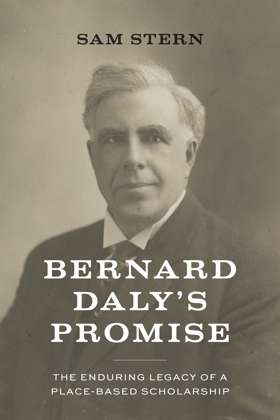
"Bernard Daly escaped the Irish Famine and with his family emigrated to America, where he became the town doctor in Lakeview, Oregon, and then a state legislator, Oregon Agricultural College regent, county judge, rancher, and banker. When he died in 1920, his estate, valued at about a million dollars, established a college scholarship for the youth of Lake County. Daly's scholarship fund would ensure that most of the youth of tiny, remote Lake County could attend college. Drawing on more than a hundred personal interviews, an extensive web-based survey, and archival materials, this book tells the story of Daly's life, the scholarship fund, and its impact on the recipients, who went on to remarkable careers and lives. At a time when almost no one went to college, Daly created a "college for all" possibility in a remote corner of America. The impact of the Daly Fund, one of America's oldest continuously operating place-based scholarship, offers unique insights into the benefits of higher education and how it might best be supported - questions that we are struggling with today"-- Provided by publisher xii, 149 pages : illustrations, portraits, 23 cm CIRC [ 0 ]
|
2022 |
|
The origin and distribution of birds in coastal Alaska and British Columbia the lost manuscript of ornithologist Harry S. Swarth by Christopher W. Swarth 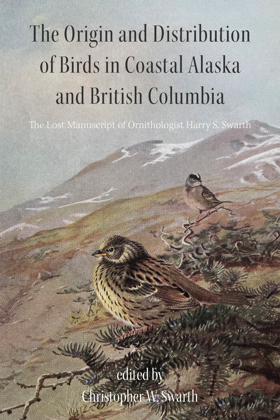
"At the time of his death in 1935, Harry S. Swarth, head of the Mammalogy and Ornithology Departments at the California Academy of Sciences in San Francisco, had been preparing a manuscript reflecting on twenty-five years of research in Alaska and British Columbia. "The Distribution and Migrations of Birds in Adjacent Alaska and British Columbia" summarized Swarth's research, ideas, and conjectures on bird life in the region, including theories on when and how birds populated this vast territory after the retreat of glaciers near the end of the Pleistocene. Drawing on his field experiences and the forty scientific papers on the region he published from 1908 on, Swarth's manuscript represented state-of-the-art science for the time. And it holds up; his work is still cited by ornithologists today. In 2019, Christopher Swarth, Harry's grandson and a scientist in his own right, discovered the forgotten manuscript. The edition he proposes here will include the original unpublished manuscript, accompanied by contextual essays from contemporary scientists, including Steven Heinl (Alaska Fish & Wildlife) and Philip Unitt (San Diego Natural History Museum). He has also included excerpts from Harry Swarth's field notes to bring additional color and insight to the project. Appendices include expedition locations, a comprehensive list of Harry Swarth's publications, and a glossary with historic and contemporary bird names"-- Provided by publisher xviii, 152 pages : illustrations, maps ; 23 cm CIRC [ 0 ]
|
2022 |
|
Children of the stars indigenous science education in a reservation classroom by Ed Galindo , Lorelei A. Lambert 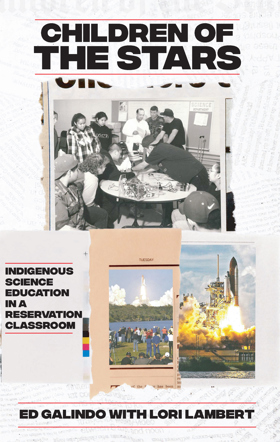
"In the 1990s, Ed Galindo (Yaqui), a high school science teacher on the Fort Hall Reservation in Idaho, took a team of Shoshone-Bannock students first to Johnson Space Center in Texas and then to Kennedy Space Center in Florida. These students had entered a project in a competitive NASA program that was usually intended for college students-and they earned a spot to see NASA astronauts test out their experiment in space. The students designed and built the project themselves: a system to mix phosphate and water in space to create a fertilizer that would aid explorers in growing food on other planets. In Children of the Stars, Galindo narrates his experience with this first team and with successive student teams, who continued to participate in NASA programs over the course of a decade. This is a story indelibly grounded in place and Indigenous communities: students chose a project influenced by their local knowledge of and easy access to phosphate fertilizer (mined on the reservation); found creative ways to build their project with cheap materials, often donated by local businesses; raised funds in the tribe and community to cover travel expenses; asked questions about space exploration and agriculture based on their own understanding of the colonization of North America; and involved their families at every step. Galindo discusses the challenges of teaching Indigenous students: understanding the practical limits of a rural reservation school, the importance of community and family support, respecting and incorporating Indigenous knowledge systems, and meeting students where they are in order to help them succeed. In describing how he had to earn the trust of his students to truly be successful as their teacher, Galindo also touches on the complexities of community belonging and understanding; although Indigenous himself, Galindo is not a member of the Shoshone-Bannock Tribes and was still an outsider who had as much to learn as the students. Written in a conversational style, Children of the Stars is an accessible story of success, of students who were supported and educated in culturally relevant ways and so overcame the limitations of an underfunded reservation school to reach (literal) great heights"-- Provided by publisher xii, 155 pages : illustrations ; 23 cm CIRC [ 0 ]
|
2022 |
|
Shrubs to know in Pacific Northwest forests by Edward C. Jensen (Author, Photographer), Erik D. Simmons (Illustrator), David A. Zahler (Illustrator), Alan Dennis (Illustrator), Oregon State University Press (Publisher) 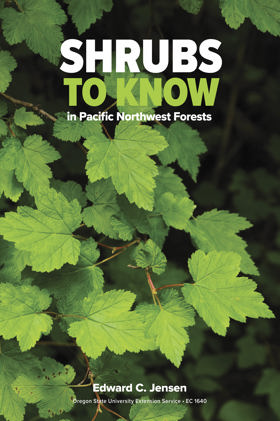
This full-color, simple-to-use field guide makes shrub identification easy and fun. It features 100 of the most common shrubs that grow in and around Pacific Northwest forests—from southern British Columbia to northern California and from the Pacific Ocean to the northern Rockies. It includes an overview of shrub communities in the Pacific Northwest; more than five hundred color photos; individual range maps and complete descriptions for each species; notes on range and habitat, response to disturbance, traditional and current uses, and origin of names; glossary of identification terms; and an easy-to-use, well-tested identification key. 141 pages : color illustrations, color maps ; 23 cm. CIRC [ 0 ]
|
2022 |
|
Native and ornamental conifers in the Pacific Northwest identification, botany, and natural history by Elizabeth A. Price 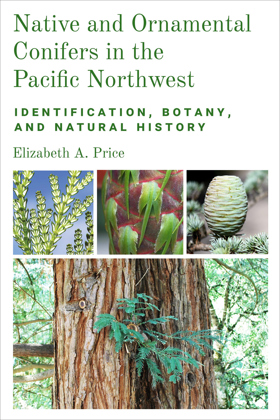
"There are a number of conifer guides available for the Pacific Northwest. Most of these guides, however, focus on native cultivars. Master gardener Elizabeth Price has put together a new guide that includes ornamentals alongside natives, arguing that most people are not necessarily concerned with distinguishing between the two, especially in a residential setting. Based on her experiences teaching workshops on conifer identification and cultivation, Price has developed identification charts that are suitable for specialists but focused on making the information as accessible as possible for amateurs. Although the book's primary goal is identification, it also weaves in natural history and a little personal narrative"-- Provided by publisher xii, 330 pages : color illustrations ; 23 cm CIRC [ 0 ]
|
2022 |
|
The Tower on Top of Mount Constitution by Rolf Eriksen 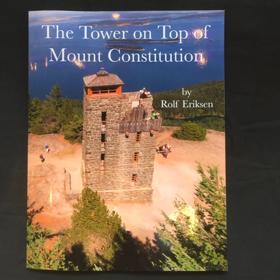
Mount Constitution is a dramatic mountain crowning Orcas Island in the central Salish Sea. On the very tip of the mountain is a 60 foot Medieval stone tower. From its dramatic vantage point it looks south beyond Mount Rainer and the Olympic Peninsula, east to Mount Baker and the Cascades, west over Vancouver Island, and North beyond the city of Vancouver and the southern ranges of Canada. The tower was built in the Great Depression by the Civilian Conservation Corps (CCC) when young men relocated to camps across the United States and built things. Many useful and many romantic ideals, often both. The CCC built a beautiful romantic tower in a stunning location on the top of a mountain on an Emerald Isle in the Salish Sea. That tower still stands proud today and hosts a million visitors a year. Some visit it regularly like a secular church. Rolf Eriksen has been intimately involved with Orcas Island, Mount Constitution and the CCC tower over many years since the 1950’s. He has rebuilt parts of it and surveys it with a loving eye every week. The tower and that mountain are a part of Rolf and he is a part of them. This book is Rolf ’s story of the tower and a scrapbook of collected images. 94 pages : illustrations (some color) ; 22 cm CIRC [ 0 ]
|
2022 |
|
Cashup Davis the inspiring life of a secret mentor by Jeff Burnside , G. W. Davis 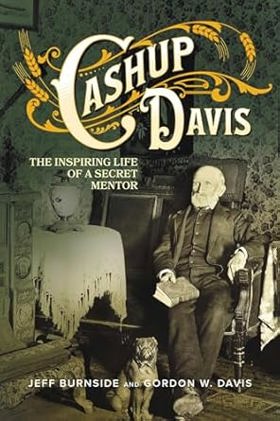
Enamored by the western frontier, British immigrant Cashup Davis, his wife Mary, and eleven children became one of the first white families to settle on the Palouse’s spectacular rolling hills in eastern Washington Territory. Living at first in a simple sod house, they turn their bunchgrass acreage into a farm, befriend Native Americans during a war ignited by the U.S. government’s treaty violations, and eventually open an immensely popular and prosperous stagecoach stop. But Cashup has another dream: he is resolutely determined to build a grand luxury hotel on one of the region’s highest points, the summit of Steptoe Butte. People tell him it is a ridiculous idea, but Cashup never listens to the doubters. He’s brash, confident, and full of charisma. xv, 214 pages : illustrations, facsimiles, maps, portraits ; 23 cm CIRC [ 0 ]
|
2022 |